Marie de France (fl. late twelfth century) is the earliest known French woman poet and her lais - stories in verse based on Breton tales of chivalry and romance - are among the finest of the genre. Recounting the trials and tribulations of lovers, the lais inhabit a powerfully realized world where very real human protagonists act out their lives against fairy-tale elements of magical beings, potions and beasts. De France takes a subtle and complex view of courtly love, whether telling the story of the knight who betrays his fairy mistress or describing the noblewoman who embroiders her sad tale on the shroud for a nightingale killed by a jealous and suspicious husband.
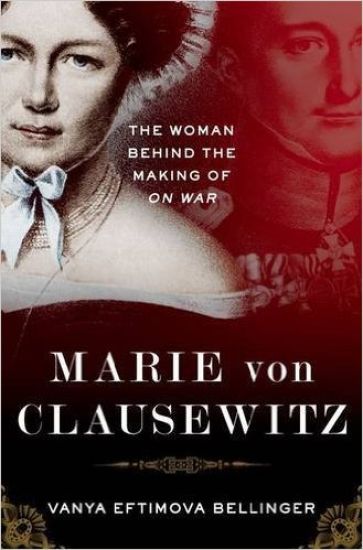
The marriage between Carl von Clausewitz and Countess Marie von Brühl was a remarkable intellectual partnership. Many historians have noted the instrumental role Marie played in the creation, development, and particularly in the posthumous editing and publishing of Clausewitz's opus, On War, which remains the seminal text on military theory and strategic thinking. Highly intelligent and politically engaged, Marie was also deeply involved in her husband's military career and advancement, and in the nationalist politics of 19th-century Prussia. Yet apart from peripheral consideration of her obvious influence on Clausewitz and on the preservation of his legacy, very little has been written about Marie herself. In Marie von Clausewitz, Vanya Eftimova Bellinger proposes to address this oversight, capitalizing on the recent discovery of a vast archive of material--including hundreds of previously unknown letters between Marie and Clausewitz--to produce the first complete biography of this understudied figure. Delving into the private correspondence between the two, Bellinger shows how Marie, a highly educated woman of Prussia's upper echelon, broadened Clausewitz's understanding of the cultural and political processes of the time; provided him with insights into the practical side of daily politics; sharpened his writing style; and served as the catalyst for his ideas. The depth of her influence on and contribution to Clausewitz's theoretical writings, Bellinger argues, is greater than historians have previously suggested. Bellinger also establishes Marie as an impressive figure in her own right, both politically outspoken and socially adept at moving among the ranks of Prussian nobility. The marriage between Marie, an intimate of the royal family, and Clausewitz, an obscure young lieutenant with dubious claims to nobility, allows Bellinger to engage in a broader discussion of gender and class relations in 19th-century Europe; and her study of their epistolary debates also sheds light on the political climate of the time, particularly incipient German nationalist fervor.
for SSAA, body percussion & spoons Gallant's take on this Acadian folksong is lively and engaging, featuring the quintessential elements of the tradition: podorythmie (seated foot-tapping), diddlage (mouth music), and the spoons. With playful vocal slides and energetic rhythmic motifs, this arrangement offers a modern twist on this well-loved melody from the French-Canadian oral tradition. An English (non-singing) translation is included in the leaflet, while a studio recording, pronunciation guides, and an instructional video on playing techniques are accessible through the companion website. Also available in a version for SATB, body percussion, and spoons.
for SATB, body percussion, & spoons Gallant's take on this Acadian folksong is lively and engaging, featuring the quintessential elements of the tradition: podorythmie (seated foot-tapping), diddlage (mouth music), and the spoons. With playful vocal slides and energetic rhythmic motifs, this arrangement offers a modern twist on this well-loved melody from the French-Canadian oral tradition. An English (non-singing) translation is included in the leaflet, while a studio recording, pronunciation guides, and an instructional video on playing techniques are accessible through the companion website. Also available in a version for SSAA, body percussion, and spoons.
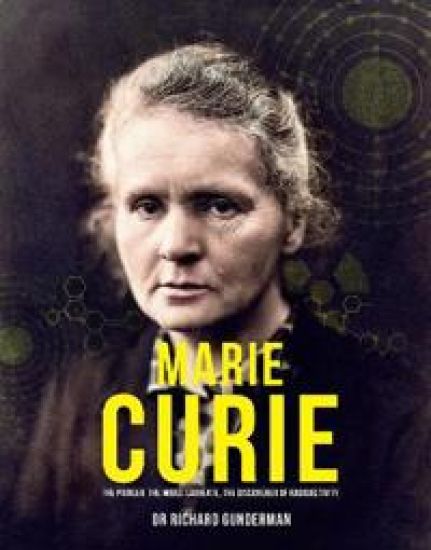
Marie Curie discovered radium and went on to lead the scientific community in studying the theory behind and the uses of radioactivity. She left a vast legacy to future scientists through her research, her teaching, and her contributions to the welfare of humankind. She was the first person to win two Nobel Prizes, yet upon her death in 1934, Albert Einstein was moved to say, "Marie Curie is, of all celebrated beings, the only one whom fame has not corrupted." She was a physicist, a wife and mother, and a groundbreaking professional woman. This biography is an inspirational and exciting story of scientific discovery and personal commitment.
A biographical study of the Nobel-Prize-winning physicist discusses her scientific research and contributions, the discovery of radium, and her personal life and relationships
Marie Curie coined the term 'radioactivity', and it is to her and her husband, Pierre Curie, that we owe much of our current understanding of the very fabric of reality. Born in Warsaw, Marie was the fifth and youngest child of teachers. Her father taught mathematics and science, for which she showed an early affinity, and she later went to study in Paris, where she met Pierre. The work they did together revolutionized modern science. As well as discovering the atomic rather than chemical nature of radioactivity, the Curies isolated two new elements: polonium and radium. This biography does full justice to the scientific and human aspects of Marie's life, detailing her tumultuous personal history at a time of social upheaval, and her struggle to gain recognition in an era when female scientists were almost unknown. Marie Curie died in 1934, succumbing to aplastic anaemia that may have stemmed from her scientific investigations. Her work not only contributed to our understanding of the structure of the atom - and therefore the structure of the physical world itself - but also laid the foundations for modern medical innovations such as radiotherapy. Her example continues to inspire millions of people across the world.
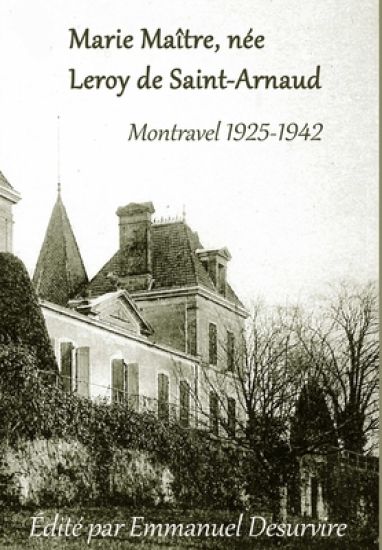
Au soir de leur vie, Marie Ma tre et son poux L on choisissent de s' tablir en Dordogne, au ch teau de Montravel. Peu apr s, Marie se retrouvera veuve, et fera le choix d'y poursuivre son existence dans le souvenir de son mari, bravant les difficult s de la solitude, des intemp ries et de l'infortune. C'est le t moignage touchant d'une r sistance toute preuve contre le vieillissement et le d sespoir, s'appuyant sur la foi et sur l'amour de ses enfants, petits- et arri re-petits enfants, au moyen d'une correspondance assidue, lucide et loquente avec tout le monde. Ce 4 me ouvrage de la s rie fait cho la jeunesse de Marie Ma tre, ses voyages lointains, ses hautes origines sa proximit avec sa descendance, r v lant le courage et la d termination d'une femme presque centenaire, n e entre deux si cles.
Marie-Dominique Chenu demonstrates how this once condemned theologian influenced the major shifts of twentieth-century Catholicism and reveals the relevance of his thought for contemporary theology. In 1942, historian Marie-Dominique Chenu was removed from his teaching position at Le Saulchoir, the French Dominican school of theology, and his groundbreaking new publication was placed on the Catholic Church's Index of Forbidden Books. Yet only two decades later, the Catholic hierarchy embraced many of his ideas at the Second Vatican Council. Although Chenu's pioneering work helped to usher in a new era, his influence on the Catholic Church remains overlooked and underexplored. Drawing upon extensive new archival research, Mary Kate Holman provides a captivating account of Chenu's life and how his theology contributed to the church's opening to the modern world and shaped the next generation of theologians. Holman presents the distinctive elements of Chenu's theology, identifies his major contributions to contemporary Catholic theology, and proposes a constructive retrieval of his thought for a renewed ecclesiology in the twenty-first century.
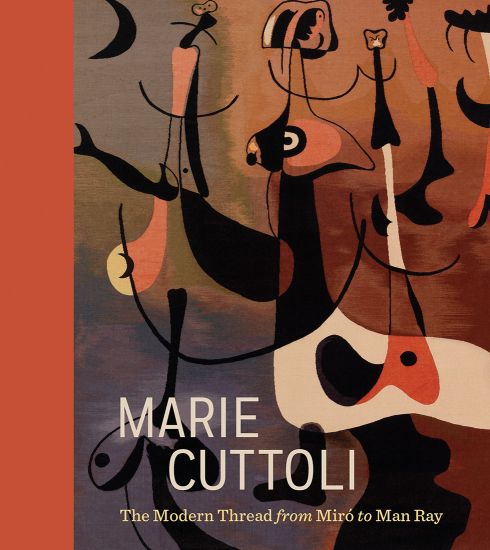
One woman’s influential contribution to modernism, achieved through a fascinating revival of tapestry Marie Cuttoli (1879–1973) lived in Algeria and Paris in the 1920s and collected the work of avant-garde artists such as Georges Braque, Joan Miró, and Pablo Picasso. In the ensuing decades, she went on to revive the French tapestry tradition and to popularize it as a modernist medium. This catalogue traces Cuttoli’s career, beginning with her work in fashion and interiors under her label Myrbor. She subsequently commissioned artists including Braque, Le Corbusier, Fernand Léger, Man Ray, Miró, and Picasso to design cartoons to be woven at Aubusson, a center of tapestry production since the 17th century. Today these cartoons—paintings and collages by canonical artists—are often understood as autonomous works of art, but this catalogue uncovers their original purpose as textile designs. Beautifully illustrated with rarely exhibited works by giants of European modernism, Marie Cuttoli reveals the significant contributions of a shrewd and visionary woman as well as the role of the decorative arts in the development of the movement.Distributed for the Barnes FoundationExhibition Schedule:The Barnes Foundation, Philadelphia (February 23–August 23, 2020)
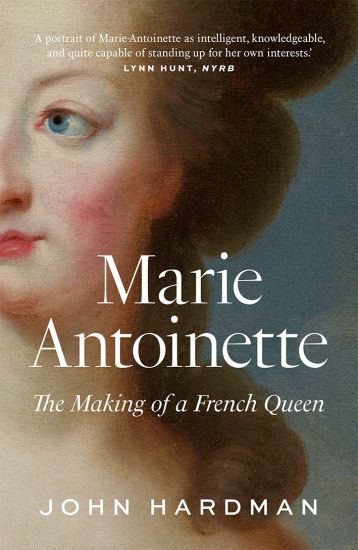
A new look which fundamentally overturns our understanding of this famously "out of touch" queen“Presents [Marie-Antoinette] as much more than a symbol whose meaning is in the eye of her beholder . . . neither martyr nor voluptuary but rather a serious participant in politics.”—Lynn Hunt, New York Review of Books“Splendid. . . . Masterly. . . . A wonderfully gripping biography.”—Allan Massie, Wall Street JournalNamed a Book of the Year (2020) by The Spectator Who was the real Marie-Antoinette? She was mistrusted and reviled in her own time, and today she is portrayed as a lightweight incapable of understanding the events that engulfed her. In this new account, John Hardman redresses the balance and sheds fresh light on Marie-Antoinette’s story. Hardman shows how Marie-Antoinette played a significant but misunderstood role in the crisis of the monarchy. Drawing on new sources, he describes how, from the outset, Marie-Antoinette refused to prioritize the aggressive foreign policy of her mother, Maria-Theresa, bravely took over the helm from Louis XVI after the collapse of his morale, and, when revolution broke out, listened to the Third Estate and worked closely with repentant radicals to give the constitutional monarchy a fighting chance. For the first time, Hardman demonstrates exactly what influence Marie-Antoinette had and when and how she exerted it.
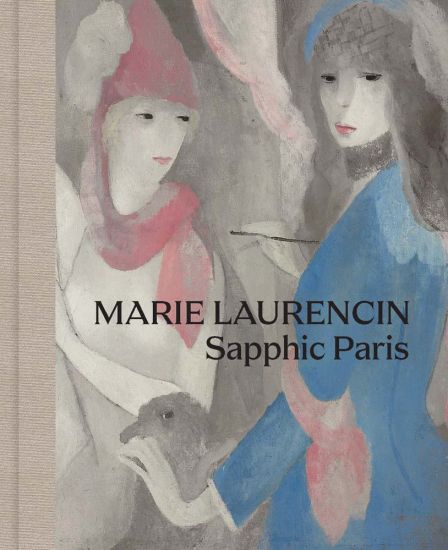
Revealing the vital influence of the French artist Marie Laurencin, her visual idiom, and her sexual expression on the modernism of twentieth-century Paris This book offers a long-overdue reassessment of the career of the Parisian-born artist Marie Laurencin (1883–1956), who moved seamlessly between the Cubist avant-garde and lesbian literary and artistic circles, as well as the realms fashion, ballet, and decorative arts. Critical essays explore her early experiments with Cubism; her exile in Spain during World War I; her collaborative projects with major figures of her time such as André Mare, Serge Diaghilev, Francis Poulenc, and André Groult; and her role in the emergence of a “Sapphic modernity” in Paris in the 1920s. Along with more than 60 full-color plates, Laurencin’s life and career are documented through an illustrated chronology and exhibition history, as well as an appendix charting her network of female patrons and associates. Laurencin became a fixture of the contemporary art scene in pre–World War I Paris, including as a muse and romantic partner of the poet Guillaume Apollinaire. She returned to the city after the war, having developed her signature style of diaphanous female figures in a blue-rose-gray palette. Laurencin’s feminine yet sexually fluid aesthetic defined 1920s Paris, and her work as an artist and designer met with high demand, with commissions by Ballets Russes and Coco Chanel, among others. Her romantic relationships with women inspired homoerotic paintings that visualized the modern Sapphism of contemporary lesbian writers like Nathalie Clifford Barney. Indeed, one of Laurencin’s final projects was to illustrate the poems of Sappho in 1950. Distributed for the Barnes Foundation Exhibition Schedule: Barnes Foundation, Philadelphia (October 22, 2023–January 21, 2024)
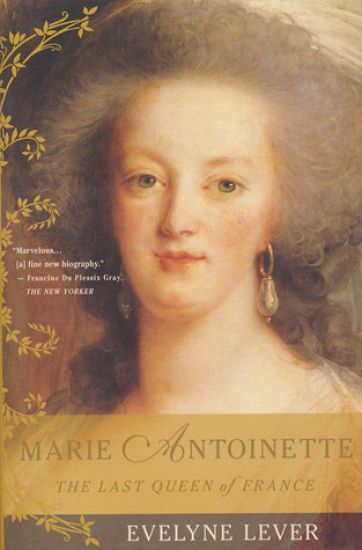
A biography of the French queen explores the intrigue surrounding her life from her birth, through her unhappy marriage, her lavish life at Versailles, to the events leading up to her death by beheading during the French Revolution.
Presents the life of the Polish scientist, including her childhood, her marriage and collaboration with Pierre Curie, and her research which led to the discovery of polonium and radium, for which she was awarded two Noble Prizes.
The spells within this book had never been seen by anyone except Marie Laveau herself for the longest time...until last year they were uncovered. It took almost a year, but finally everything was deciphered and translated from French and in some cases Latin.The first page in the book in which these spells were found had been dated 1895 and it had been signed by the Voodoo Queen herself, Marie Laveau (Clapion). These are authentic spells from one of the many grimoires the Voodoo Queen of New Orleans kept.
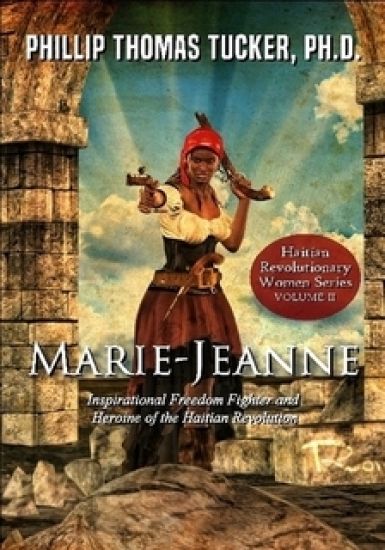
As part of the ground-breaking Haitian Revolutionary Women Series dedicated to honoring the remarkable heroines of Haiti, Phillip Thomas Tucker, Ph.D. has presented a much-needed biography of another Haitian heroine, affectionately known as Marie-Jeanne. This book, Volume II of the series, is the first-ever biography about the life of this distinguished heroine who won fame during the Haitian War of Independence. Marie-Jeanne Lamartini?re won recognition for her bravery and heroics during one of the revolution's most famous battles, with much at stake. Most importantly, Marie-Jeanne's inspirational and symbolic example on the field of strife helped to unite black and mulatto fighting men in their successful war against slavery, that led to the declaration of the world's first black republic on January 1, 1804. Marie-Jeanne was a founding mother of Haiti, and to this day, the heroic legacy of Marie-Jeanne is alive and well in the hearts and minds of the citizens of the Republic of Haiti.