Kirjojen hintavertailu. Mukana 11 717 486 kirjaa ja 12 kauppaa.

Kirjahaku

Etsi kirjoja tekijän nimen, kirjan nimen tai ISBN:n perusteella.

1000 tulosta hakusanalla Mark Chan

Sustainable Energy Solutions for Climate Change
Renewable energy expert Mark Diesendorf issues a powerful challenge in this clear and comprehensive guide to the technology and policies we need to adopt to ensure an ecologically sustainable energy future for the planet.Sustainable Energy Solutions for Climate Change brings together the science, technology, economics and policy issues to provide a unique and truly interdisciplinary approach. It details the enormous recent changes in the energy sector and profiles the renewable energy technologies that can transform our fossil-fuelled energy systems into ecologically sustainable ones.The book provides in-depth analysis of:• scenarios for transitioning our polluting energy system to one basedon the efficient use of renewable energy• sustainable transport and planning for better cities• why nuclear energy is not the answer• the politics and policies of climate change mitigation• myths about wind and solar energy and energy efficiency• what people can do to overcome vested interests and push reluctant governments to take effective action.Taking stock of the latest advances in energy efficiency and energy storage, the book is of interest to students at undergraduate and postgraduate level studying energy policy and economics, environmental policy and environmental politics as well as professionals and policy makers.

Sustainable Energy Solutions for Climate Change
Renewable energy expert Mark Diesendorf issues a powerful challenge in this clear and comprehensive guide to the technology and policies we need to adopt to ensure an ecologically sustainable energy future for the planet.Sustainable Energy Solutions for Climate Change brings together the science, technology, economics and policy issues to provide a unique and truly interdisciplinary approach. It details the enormous recent changes in the energy sector and profiles the renewable energy technologies that can transform our fossil-fuelled energy systems into ecologically sustainable ones.The book provides in-depth analysis of:• scenarios for transitioning our polluting energy system to one basedon the efficient use of renewable energy• sustainable transport and planning for better cities• why nuclear energy is not the answer• the politics and policies of climate change mitigation• myths about wind and solar energy and energy efficiency• what people can do to overcome vested interests and push reluctant governments to take effective action.Taking stock of the latest advances in energy efficiency and energy storage, the book is of interest to students at undergraduate and postgraduate level studying energy policy and economics, environmental policy and environmental politics as well as professionals and policy makers.

Awake to Righteousness: A Life-Changing Look at the Substance of Salvation
FULL ACCESS GRANTED Far more happened to us on the cross than we realize Righteousness: It's so much more than a call to holy living or a theological notion. What you discover about this truth will alter your reality and revolutionize your walk with God. Learn to: -Intimately know the Father in a tangible and constant way -Walk free from sin with a proper understanding of your new nature in Christ -Discover and enjoy your inheritance as a child of God -Put off guilt, shame, fear, and condemnation for good -Live a life of assurance in the knowledge of the will and nature of God In Awake to Righteousness, Mark Greenwood systematically unpacks the truth that the sinful condition was removed at the cross, giving us unveiled access to the Father through receiving His righteousness in Christ. Awaken to an intimate walk with the Father, fueled by the reality of righteousness and marked by Christlike power and love.
The Team That Forever Changed Baseball and America

The Team That Forever Changed Baseball and America

Mark Langill

University of Nebraska Press
2012
pokkari
Of all the teams in the annals of baseball, only a select few can lay claim to historic significance. One of those teams is the 1947 Brooklyn Dodgers, the first racially integrated Major League team of the twentieth century. The addition of Jackie Robinson to its roster changed not only baseball but also the nation. Yet Robinson was just one member of that memorable club, which included Carl Furillo, Gil Hodges, Pee Wee Reese, Pete Reiser, Duke Snider, Eddie Stanky, Arky Vaughan, and Dixie Walker. Also present was a quartet of baseball's most unforgettable characters: co-owners Branch Rickey and Walter O'Malley, suspended manager Leo Durocher, and radio announcer Red Barber. This book is the first to offer biographies of everyone on that incomparable team as well as accounts of the moments and events that marked the Dodgers' 1947 season: Commissioner Happy Chandler suspending Durocher, Rickey luring his old friend Burt Shotton out of retirement to replace Durocher, and brilliant outfielder Reiser being sidelined after running into a fence. In spite of all this, the Dodgers went on to win the National League pennant over the heavily favored St. Louis Cardinals. And of course, there is the biggest story of the season, where history and biography coalesce: Jackie Robinson, who overcame widespread hostility to become Rookie of the Year—and to help the Dodgers set single-game attendance records in cities around the National League.
Changing Stories in the Chinese World

Changing Stories in the Chinese World

Elvin Mark

Stanford University Press
1997
pokkari
This book is an innovative attempt to convey something of how it has felt since the early nineteenth century to be Chinese. It is based on the assumption that people live their lives in stories, or as if they themselves were in stories—stories that are largely a social inheritance but are also in some measure self-created or at least continually adapted, edited, or extended. The author describes and interprets some of the most important stories through which the Chinese have lived their lives in the last two hundred years and their understanding of them. He shows how largely forgotten works of popular literature, novels and poems in particular, can admit the reader to a number of different emotional worlds. Together they suggest that there is no such thing as the Chinese story, let alone mind, but rather a historical palimpsest of extraordinary and often internally contradictory complexity. The book begins with an examination of Li Ruzhen's Destinies of the Flowers in the Mirror, which reveals a microcosm of the educated Chinese world predating major Western influences. Balancing this emphasis on the elite are the poems collected by Zhang Yingchang in Our Dynasty's Bell of Poesy, which portray the universe of peasants, women, artisans, soldiers, and prisoners. A bestseller of the 1930's, Tides in the Human Sea, shows the 'crisis of absurdity' that arises when feelings no longer coincide with inherited patterns of behavior as modernization begins to take hold. Hao Ran's Children of the Western Sands, a popular Communist work of the early 1970's, allows us to be drawn into at least a momentary empathy with the idealism of the Maoist faithful. Almost as different as can be imagined is The Bastard, by Sima Zhongyuan, one of Taiwan's most widely read writers. Its characters interpret the Communist revolution in terms derived from traditional Chinese religion, as a deserved punishment inflicted on the Chinese for the filthy impropriety of their sexual conduct. The final work considered is a book of essays, A Commonplace Fellow, by Yuan Ze'nan, a Chinese-American writer who has reached the point where his Chineseness has all but vanished, and who is consciously exploring its disappearance.
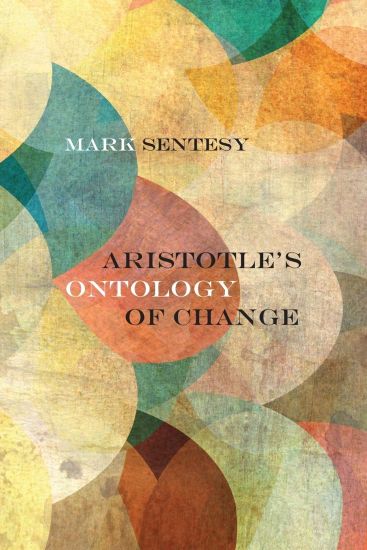
Aristotle's Ontology of Change

Aristotle's Ontology of Change

Mark Sentesy

Northwestern University Press
2020
nidottu
This book investigates what change is, according to Aristotle, and how it affects his conception of being. Mark Sentesy argues that change leads Aristotle to develop first-order metaphysical concepts such as matter, potency, actuality, sources of being, and the teleology of emerging things. He shows that Aristotle’s distinctive ontological claim—that being is inescapably diverse in kind—is anchored in his argument for the existence of change. Aristotle may be the only thinker to have given a noncircular definition of change. When he gave this definition, arguing that change is real was a losing proposition. To show that it exists, he had to rework the way philosophers understood reality. His groundbreaking analysis of change has long been interpreted through a Platonist lens, however, in which being is conceived as unchanging. Offering a comprehensive reexamination of the relationship between change and being in Aristotle, Sentesy makes an important contribution to scholarship on Aristotle, ancient philosophy, the history and philosophy of science, and metaphysics.
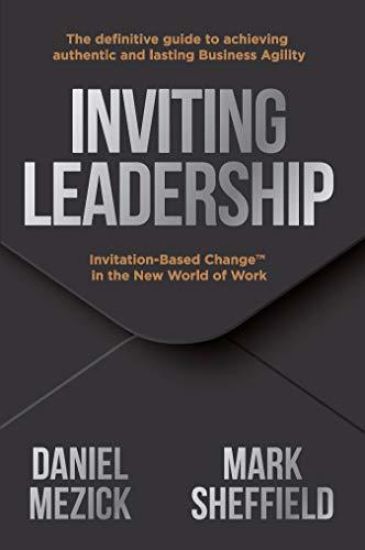
Inviting Leadership: Invitation-Based Change(tm) in the New World of Work
Business agility is no longer an option. Rapidly accelerating change, driven by technology, is disrupting the world of work and redefining the game of leadership. Slow-moving, top-down, "command and control" leadership styles are less and less effective with each passing day. The successful leaders of today are finding ways to engage the entire workforce. They are focusing the attention of the whole enterprise on higher performance. These leaders are pivoting from delegation to invitation.INVITING LEADERSHIP is your tutorial and reference guide for implementing Invitation-Based Change(TM) in the new world of work. This book shows you how to leverage authentic invitations to engage your workforce and generate the positive business outcomes that emerge from self-managed teams. INVITING LEADERSHIP shows you how to do more with less. With this book, you will learn how to safely and pragmatically transform your leadership style and maximize your results: --Greatly increase employee engagement--Improve overall business efficiency with self-managed teams--Attract and retain top talent--Achieve higher scores in every business outcome you are measuring--Help your entire organization become more competitive and adaptive--Scale these business outcomes across the entire enterpriseINVITING LEADERSHIP is your road map for achieving authentic and lasting Business Agility.
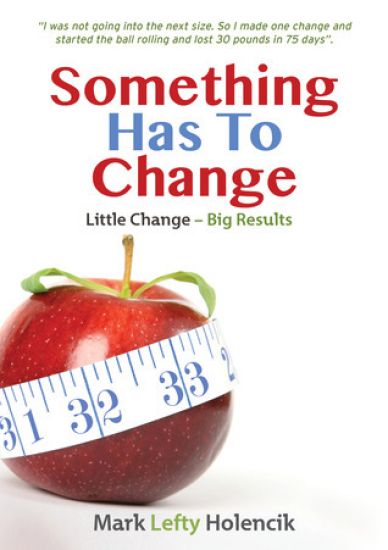
Something Has to Change: Little Change - Big Results
Through Lefty's auto-biographical story of losing 30 pounds in the first 10 weeks, you will get the belief that you can also lose your excess weight. Lefty tells his own story of how he got to the point where "Something Has To Change". The story covers the last 2 years. The first year was making the changes to reach his goal of what he weighted and the waist he had when he left school 41 years ago. It starts with the desperation of looking at moving up yet another waist size. This is after years of having to constantly adjust his pants. It has been 18 months since adjusting pants was a part of everyday life. Without dieting the first 30 pounds fell off in the first 10 weeks. There was no feeling hungry or of doing without. It was actually adding some foods to the regular diet. Adding these new foods to the diet made the change was so natural and almost effortless. In no way is this to say it took no discipline. There is no magic wand. When I found out what to start eating to make the body ask for more of the right foods the cravings for the junk food subsided. Lefty tells about the conversations that went on with himself that he had lost up till this point. Then explains in simple detail how he won the battle to keep the weight off.
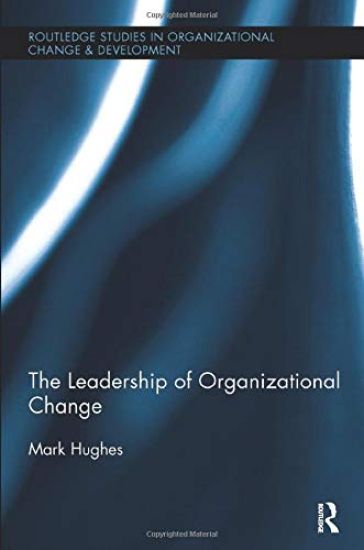
The Leadership of Organizational Change
Understanding both leadership and change have been recurrent and popular themes within the business, management and organization studies literature. However, our understanding of leadership and organizational change in combination is far more limited. The Leadership of Organizational Change offers a critical review of the evolution of leadership and organizational change for the past thirty-five years, taking stock of what we know, identifying what we do not know, and establishing how the study of the leadership of change should advance. In the late seventies and early eighties, as interest in managing and leading change was fuelled by the competitive threat of Asia in general and Japan in particular as perceived by western businesses and governments, Burns (1978) writing in his landmark book Leadership at this time, referred to an intellectual crisis:"The crisis of leadership today is the mediocrity or irresponsibility of so many of the men and women in power, but leadership rarely rises to the full need for it. The fundamental crisis underlying mediocrity is intellectual. If we know all too much about our leaders, we know far too little about leadership."While the study of managing change has benefitted from sustained critical scrutiny, particularly in the last decade, it is believed that this is to have been at the expense of critical scrutiny of leading change. The Leadership of Organizational Change critically reviews how the study of leading change has advanced since 1978 and the crisis of intellectual mediocrity.
Managing and Leading Organizational Change
Organizational change impacts upon all organizations regardless of size and sector. In this unique organizational change textbook, important ongoing debates about managing change and leading change are combined, giving a broader perspective that encourages readers to engage with both management and leadership. In combination, management and leadership insights inform how organizations are changing and how we can make a positive difference in such processes of change.Managing and Leading Organizational Change speaks both to the applied and practical aspects of organizational change, as well as questioning the research and evidence base of organizational change practices. Chapters begin with real-world insights, followed by coverage of the major theories. The ongoing nature of these debates is signposted through the inclusion of questioning sections with research case studies showcased. This textbook will be particularly beneficial for final year undergraduates and postgraduates studying organizational change, strategic change, change management and change leadership modules.
Managing and Leading Organizational Change
Organizational change impacts upon all organizations regardless of size and sector. In this unique organizational change textbook, important ongoing debates about managing change and leading change are combined, giving a broader perspective that encourages readers to engage with both management and leadership. In combination, management and leadership insights inform how organizations are changing and how we can make a positive difference in such processes of change.Managing and Leading Organizational Change speaks both to the applied and practical aspects of organizational change, as well as questioning the research and evidence base of organizational change practices. Chapters begin with real-world insights, followed by coverage of the major theories. The ongoing nature of these debates is signposted through the inclusion of questioning sections with research case studies showcased. This textbook will be particularly beneficial for final year undergraduates and postgraduates studying organizational change, strategic change, change management and change leadership modules.
The Leadership of Organizational Change
Understanding both leadership and change have been recurrent and popular themes within the business, management and organization studies literature. However, our understanding of leadership and organizational change in combination is far more limited. The Leadership of Organizational Change offers a critical review of the evolution of leadership and organizational change for the past thirty-five years, taking stock of what we know, identifying what we do not know, and establishing how the study of the leadership of change should advance. In the late seventies and early eighties, as interest in managing and leading change was fuelled by the competitive threat of Asia in general and Japan in particular as perceived by western businesses and governments, Burns (1978) writing in his landmark book Leadership at this time, referred to an intellectual crisis:"The crisis of leadership today is the mediocrity or irresponsibility of so many of the men and women in power, but leadership rarely rises to the full need for it. The fundamental crisis underlying mediocrity is intellectual. If we know all too much about our leaders, we know far too little about leadership."While the study of managing change has benefitted from sustained critical scrutiny, particularly in the last decade, it is believed that this is to have been at the expense of critical scrutiny of leading change. The Leadership of Organizational Change critically reviews how the study of leading change has advanced since 1978 and the crisis of intellectual mediocrity.
Intervention Strategies for Changing Health Behavior
Changing habits, particularly habits that are self-destructive and unhealthy, is among the most challenging goals of therapists and coaches who work with clients in promoting a healthier lifestyle. The purpose of this book is to "help the helper," that is, to assist the person whose professional mission it is to provide a service that enables clients or patients to acknowledge their unhealthy habits and to replace them with more desirable, healthier routines. It focuses on the power of helping clients identify: (1) the inconsistency between their core values – what they consider most important in life – with one or more unhealthy habits, (2) the costs and long-term consequences of this inconsistency, called a "disconnect" in the model, and (3) their willingness to conclude that the consequences of this inconsistency is unacceptable. At that stage, (4) clients should be prepared to work with a coach in developing and carrying out an action plan that aims to remove the disconnect between the client’s values and at least one of their unhealthy habits.
Intervention Strategies for Changing Health Behavior
Changing habits, particularly habits that are self-destructive and unhealthy, is among the most challenging goals of therapists and coaches who work with clients in promoting a healthier lifestyle. The purpose of this book is to "help the helper," that is, to assist the person whose professional mission it is to provide a service that enables clients or patients to acknowledge their unhealthy habits and to replace them with more desirable, healthier routines. It focuses on the power of helping clients identify: (1) the inconsistency between their core values – what they consider most important in life – with one or more unhealthy habits, (2) the costs and long-term consequences of this inconsistency, called a "disconnect" in the model, and (3) their willingness to conclude that the consequences of this inconsistency is unacceptable. At that stage, (4) clients should be prepared to work with a coach in developing and carrying out an action plan that aims to remove the disconnect between the client’s values and at least one of their unhealthy habits.