Kirjojen hintavertailu. Mukana 11 244 527 kirjaa ja 12 kauppaa.

Kirjahaku

Etsi kirjoja tekijän nimen, kirjan nimen tai ISBN:n perusteella.

1000 tulosta hakusanalla Mark Textor

Mark Bible Study: Building Our Faith on a Strong Foundation

Mark Bible Study: Building Our Faith on a Strong Foundation

Kevin G. Harney; David E. Garland

HarperChristian Resources
2025
nidottu
Knowing Our Faith in Jesus Is TrueMark wrote his account of the life and ministry of Jesus during the time that first-century Christians were facing intense persecution because of their faith. The timing is important. Mark, in penning his Gospel, was proclaiming without apology that Jesus was indeed the Messiah and the Son of God--the fulfillment of Israel's hopes who had indeed ushered in God's reign. Although things looked bleak for Christ followers, they could be sure the foundation of their faith was secure. They would receive an eternal reward if they remained faithful to their Lord.Just like Mark's readers, you need to know that your faith is built on a solid foundation. In this twelve-lesson study, you will explore the context of Mark's Gospel and examine what you can glean from what he wrote and--just as importantly--what he didn't write. This is an invitation for you to learn more about Jesus and life in his kingdom as you examine this unique Gospel from the perspectives of a first-century Christian and a twenty-first century Christian.This Bible study employs a three-step process to help you understand the historical meaning of a biblical text and its relevance in modern times.The original meaning section reveals the questions and concerns the author was addressing.The past to present section then explains what significance the original audience would have found in the passage and what significance you can find in it today.Finally, the questions that accompany each section will help you apply the author's words and teachings to your own life and find meaning in them for what you are facing.

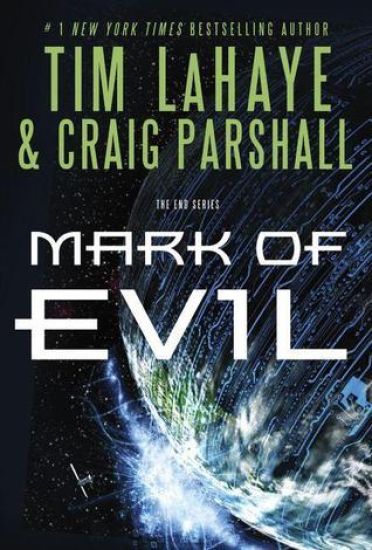
Mark of Evil

Mark of Evil

LaHaye Tim; Parshall Craig

Zondervan
2014
nidottu
Economies have collapsed, freedom has been suppressed, and peace is a distant memory. The world is falling apart.Joshua Jordan’s protégé Ethan March, along with Jimmy Louder and Rivka Reuban, have been left behind in a world that is rapidly coming under the complete influence of the Antichrist.Technology is growing by leaps and bounds with BID-Tag implants, robotic police units, and drone-bots flying overhead . . . all designed to control and dominate those who resist the Antichrist’s reign of evil. As Biblical prophecy is fulfilled each new day, Ethan and the others in the Remnant struggle to eat, to procure necessary goods, and to avoid the Global Alliance—in short, to survive.But when the forces of evil attempt to pervert the world’s most powerful information system to their own sinister ends, eliminating everyone who gets in their way, it’s up to Ethan and the Remnant to subvert their dark ambitions.From New York Times best-selling author Tim LaHaye, creator and co-author of the world-renowned Left Behind books, and Craig Parshall, Mark of Evil is the final thrilling chapter to The End series.
Mark 8:27-16:20, Volume 34B

Mark 8:27-16:20, Volume 34B

Craig A. Evans

Zondervan
2015
sidottu
The Word Biblical Commentary delivers the best in biblical scholarship, from the leading scholars of our day who share a commitment to Scripture as divine revelation. This series emphasizes a thorough analysis of textual, linguistic, structural, and theological evidence. The result is judicious and balanced insight into the meanings of the text in the framework of biblical theology. These widely acclaimed commentaries serve as exceptional resources for the professional theologian and instructor, the seminary or university student, the working minister, and everyone concerned with building theological understanding from a solid base of biblical scholarship.Overview of Commentary OrganizationIntroduction—covers issues pertaining to the whole book, including context, date, authorship, composition, interpretive issues, purpose, and theology.Each section of the commentary includes:Pericope Bibliography—a helpful resource containing the most important works that pertain to each particular pericope.Translation—the author’s own translation of the biblical text, reflecting the end result of exegesis and attending to Hebrew and Greek idiomatic usage of words, phrases, and tenses, yet in reasonably good English.Notes—the author’s notes to the translation that address any textual variants, grammatical forms, syntactical constructions, basic meanings of words, and problems of translation.Form/Structure/Setting—a discussion of redaction, genre, sources, and tradition as they concern the origin of the pericope, its canonical form, and its relation to the biblical and extra-biblical contexts in order to illuminate the structure and character of the pericope. Rhetorical or compositional features important to understanding the passage are also introduced here.Comment—verse-by-verse interpretation of the text and dialogue with other interpreters, engaging with current opinion and scholarly research.Explanation—brings together all the results of the discussion in previous sections to expose the meaning and intention of the text at several levels: (1) within the context of the book itself; (2) its meaning in the OT or NT; (3) its place in the entire canon; (4) theological relevance to broader OT or NT issues.General Bibliography—occurring at the end of each volume, this extensive bibliographycontains all sources used anywhere in the commentary.
Mark 1-8:26, Volume 34A

Mark 1-8:26, Volume 34A

Guelich Robert A.

Zondervan
2015
sidottu
The Word Biblical Commentary delivers the best in biblical scholarship, from the leading scholars of our day who share a commitment to Scripture as divine revelation. This series emphasizes a thorough analysis of textual, linguistic, structural, and theological evidence. The result is judicious and balanced insight into the meanings of the text in the framework of biblical theology. These widely acclaimed commentaries serve as exceptional resources for the professional theologian and instructor, the seminary or university student, the working minister, and everyone concerned with building theological understanding from a solid base of biblical scholarship.Overview of Commentary OrganizationIntroduction—covers issues pertaining to the whole book, including context, date, authorship, composition, interpretive issues, purpose, and theology.Each section of the commentary includes:Pericope Bibliography—a helpful resource containing the most important works that pertain to each particular pericope.Translation—the author’s own translation of the biblical text, reflecting the end result of exegesis and attending to Hebrew and Greek idiomatic usage of words, phrases, and tenses, yet in reasonably good English.Notes—the author’s notes to the translation that address any textual variants, grammatical forms, syntactical constructions, basic meanings of words, and problems of translation.Form/Structure/Setting—a discussion of redaction, genre, sources, and tradition as they concern the origin of the pericope, its canonical form, and its relation to the biblical and extra-biblical contexts in order to illuminate the structure and character of the pericope. Rhetorical or compositional features important to understanding the passage are also introduced here.Comment—verse-by-verse interpretation of the text and dialogue with other interpreters, engaging with current opinion and scholarly research.Explanation—brings together all the results of the discussion in previous sections to expose the meaning and intention of the text at several levels: (1) within the context of the book itself; (2) its meaning in the OT or NT; (3) its place in the entire canon; (4) theological relevance to broader OT or NT issues.General Bibliography—occurring at the end of each volume, this extensive bibliographycontains all sources used anywhere in the commentary.
Mark (2-Volume Set---34A and 34B)

Mark (2-Volume Set---34A and 34B)

Robert A. Guelich; Craig A. Evans

Zondervan
2017
sidottu
The Word Biblical Commentary delivers the best in biblical scholarship, from the leading scholars of our day who share a commitment to Scripture as divine revelation. This series emphasizes a thorough analysis of textual, linguistic, structural, and theological evidence. The result is judicious and balanced insight into the meanings of the text in the framework of biblical theology. These widely acclaimed commentaries serve as exceptional resources for the professional theologian and instructor, the seminary or university student, the working minister, and everyone concerned with building theological understanding from a solid base of biblical scholarship.Overview of Commentary OrganizationIntroduction—covers issues pertaining to the whole book, including context, date, authorship, composition, interpretive issues, purpose, and theology.Each section of the commentary includes:Pericope Bibliography—a helpful resource containing the most important works that pertain to each particular pericope.Translation—the author’s own translation of the biblical text, reflecting the end result of exegesis and attending to Hebrew and Greek idiomatic usage of words, phrases, and tenses, yet in reasonably good English.Notes—the author’s notes to the translation that address any textual variants, grammatical forms, syntactical constructions, basic meanings of words, and problems of translation.Form/Structure/Setting—a discussion of redaction, genre, sources, and tradition as they concern the origin of the pericope, its canonical form, and its relation to the biblical and extra-biblical contexts in order to illuminate the structure and character of the pericope. Rhetorical or compositional features important to understanding the passage are also introduced here.Comment—verse-by-verse interpretation of the text and dialogue with other interpreters, engaging with current opinion and scholarly research.Explanation—brings together all the results of the discussion in previous sections to expose the meaning and intention of the text at several levels: (1) within the context of the book itself; (2) its meaning in the OT or NT; (3) its place in the entire canon; (4) theological relevance to broader OT or NT issues.General Bibliography—occurring at the end of each volume, this extensive bibliographycontains all sources used anywhere in the commentary.
Mark Twain's America

Mark Twain's America

Bernard DeVoto

Praeger Publishers Inc
1978
sidottu
DeVoto calls his work an essay in the correction of ideas. After the official biography of Mark Twain had been written by Albert Paine, DeVoto believed there was still more to be said about the works of the great American writer and humorist. He dedicates himself here to a study of the works of Twain, not the man or his life, but to how and why these works arose from American life.
Mark Twain's German Critical Reception, 1875-1986
This superb bibliography unlocks a wealth of early commentary and more recent scholarship relatively inaccessible to English-speaking readers. The generous annotations convey the spirit and essential points of hundreds of books and articles on Twain, making this an important acquisition for every college and university reference collection. Thomas A. Tenney, Editor, Mark Twain JournalMark Twain, one of the most widely published American authors, has enjoyed immense popularity both in the United States and abroad. A fascinating aspect of this popularity is his wide acclaim in German-speaking countries, which stems not only from his literary accomplishments, but also his numerous visits to Europe and his extended stays in Vienna and Berlin.This book is a comprehensive and extensively annotated bibliography which chronologically surveys Mark Twain's German critical reception from 1875 through 1986. Within each year, items are listed alphabetically by author, and each item is assigned an entry number. English-language annotations accompany each bibliographic citation to assist the reader in ascertaining the flavor and scope of the cited material. Included are monographs, critical texts, reviews, reprints, newspaper articles, dissertations, excerpts from standard literary histories, and introductions and afterwords to editions of his works published in the Federal Republic of Germany, as well as the German Democratic Republic, Austria, and Switzerland. Entries are cross listed, and the volume includes a comprehensive 52-page index. This bibliography provides unique insight into Mark Twain from an often overlooked perspective; it will be of interest to students, scholars, and critics of this great American author, humorist and social critic.
Mark Twain

Mark Twain

Marlene B. Vallin

Greenwood Press
1992
sidottu
How did Mark Twain develop his remarkable oral style of writing which was so carefully crafted? And what can we learn about nineteenth-century America from the public speeches of this humorist and teacher who charmed his country and exported his notions of Americanism around the world? This is the very first book-length critical analysis to deal exclusively with Twain's oratory. Another reference volume in the Great American Orators Series, it is designed for students, teachers, and professionals in the fields of speech communication and American studies.The volume, bringing Mark Twain again to the center stage, opens with an assessment of Twain as a great American orator and then appraises his rhetoric, lectures, occasional speeches, and summarizes his impact on his listeners. Professor Vallin shows how he used humor, varying styles of satire to attack Victorian hegemony and to exalt the common man, and how he emerged as the Representative American. He used vernacular expressions to bridge different sections of the country and spoke hundreds of times to thousands of listeners on a wide variety of topics, giving both simple talks and well-planned addresses. Sixteen selected speeches exemplify his eloquent and varied styles as a communicator. The volume also provides a chronology, a bibliographical essay that is a definitive one on Mark Twain as a public speaker, and a general index.
Mark Twain

Mark Twain

Connie Ann Kirk

Greenwood Press
2004
sidottu
Samuel Clemens lived 75 years, 50 under the pseudonym Mark Twain. His youth could be characterized as sometimes mischievous, his older years as generally eccentric and his writing as always provocative. Twain left a literary canon of nearly 50 books, hundreds of short stories and essays, and a veritable treasury of quotable epigrams. While his words and his works have stood up to the test of time, knowing the man behind the persona, and understanding what inspired and influenced the writer, is crucial to fully appreciating the contributions Twain made to American literature. By skillfully weaving together strands of history with his personal story, this authoritative biography helps readers come to more fully understand the man and his enduring legacy. Starting with a chapter on Clemens' boyhood, readers are treated to a very personal view of Twain's early life. Twain's adult life is chronicled with five expertly developed chapters that explore his early professional years from printer to pilot, his travels westward and abroad, his gilded years with his beloved wife Livy, and his final years of widowhood and decline. This engaging biography also delves into the enduring impact of Twain's creative voice and his unique blend of humor with social commentary that not only entertained but also challenged thinking and changed the literary landscape forever. This biography draws from the best of established Twain resources and scholarship, and adds fresh new perspectives from personal letters, original manuscripts, and extended study visits to important places including Twain's study and Quarry Farm. This work is written in a lively style that Twain himself would appreciate and students will enjoy. Researchers hoping to dig deeper into the Twain legacy will benefit from the expertly compiled information and documentation of resources offered here. A chronology, a bibliography and five additional fact-filled appendices, including quotes from Twain, books by Twain, and a rendering of his family tree will help readers get a solid handle on the details as well as the big picture of Mark Twain's life and legacy.
Mark Twain

Mark Twain

Peter Messent

Red Globe Press
1997
nidottu
This book provides an overview of Mark Twain's work and a close critical analysis of the forms and themes of his major texts. The author uses recent cultural and literary theory to re-examine Twain's travel writing and fiction, writing in a jargon-free and accessible manner. He focuses on Twain's humour and his attitudes to such subjects as boyhood, nationality, race relations, technology, and capitalist expansion, and shows how his work reflects anxieties both about changes in the social and industrial order in post Civil-War America and the status of the individual within it.
The Adventures of Tom Sawyer by Mark Twain is an 1876 novel. full ilustrated
The Adventures of Tom Sawyer by Mark Twain is an 1876 novel about a young boy growing up along the Mississippi River. It is set in the 1840s in the fictional town of St. Petersburg, inspired by Hannibal, Missouri, where Twain lived as a boy. In the novel Tom Sawyer has several adventures, often with his friend, Huck. One such adventure, Tom's whitewashing of a fence, has been adapted into paintings and referenced in other pieces of popular culture. Originally a commercial failure the book ended up being the best selling of any of Twain's works during his lifetime
The Prince and the Pauper is a novel by American author Mark Twain. ILLUSTRATED
The Prince and the Pauper is a novel by American author Mark Twain. It was first published in 1881 in Canada, before its 1882 publication in the United States. The novel represents Twain's first attempt at historical fiction. Set in 1537, it tells the story of two young boys who are identical in appearance: Tom Canty, a pauper who lives with his abusive father in Offal Court off Pudding Lane in London, and Prince Edward, son of King Henry VIII. Tom Canty, youngest son of a poor family living in Offal Court located in London, has always aspired to a better life, encouraged by the local priest, who has taught him to read and write. Loitering around the palace gates one day, he meets Edward Tudor, the Prince of Wales. Coming too close in his intense excitement, Tom is nearly caught and beaten by the Royal Guards.
Mark X

Mark X

Yasuhiro Takeuchi

Routledge
2019
nidottu
In the summer of 1876, Mark Twain started to write Adventures of Huckleberry Finn as a detective novel surrounding the murder of Huck’s father, Pap Finn. The case is unresolved in the novel as it exists today, but Twain had already planted the clue to the identity of the killer. It is not the various objects ostentatiously left around Pap’s naked body; they are not the foreground of the scene, but actually the background, against which a peculiar absence emerges distinctively—Pap’s boots, with a "cross" in one of the heels, are gone with his murderer.The key to the mystery of Twain’s writings, as this book contends from a broader perspective, is also such an absence. Twain’s persistent reticence about the death of his father, especially the autopsy performed on his naked body, is a crucial clue to understanding his works. It reveals not only the reason why he aborted his vision of Huckleberry Finn as a detective novel, but also why, despite numerous undertakings, he failed to become a master of detective fiction.
Mark of Guilt [Large Print 16pt]

Mark of Guilt [Large Print 16pt]

Diane Hester

Readhowyouwant
2021
pokkari
A compelling read with an explosive ending. This book kept me up long into the night.' Australian author Sarah Barrie There's a murderer on campus. And Lindsay knows where to find the victims' bodies. But who is going to believe that she had nothing to do with the crimes? All Lindsay Cavenaugh wants is to graduate university and prove to her family that she is normal. It's been almost ten years since she's had a vision, and she's sure she's grown out of her 'gift'. These days all she has to worry about is passing her exams and keeping her distance from her sleazy lecturer. But when a girl disappears from campus, Lindsay's visions return with a vengeance. Not only does she see where the body of the missing student has been dumped, she also mysteriously acquires the bruises encircling the strangled girl's throat. The last thing Lindsay wants is to get involved with the police again, but how can she not report what she knows? Detective Garren Macklyn has little patience for the so-called 'supernatural'. Those con artists are the reason his mother is lying in a hospital bed, fighting for her life. So, when Lindsay admits to knowing things only the killer could know, Mac has found his prime suspect. Even if she's not the murderer, Lindsay Cavenaugh is involved somehow, and Mac is going to get her to admit it. But the more time Mac spends with Lindsay, the less sure he is. Is he letting his personal feelings cloud his judgement? Or is there really something more going on here? As the body count rises, Mac will need to decide if he can trust Lindsay. Her life may just depend on it.
Mark's Gospel

Mark's Gospel

John Painter

Routledge
1997
sidottu
Mark's 'biography' of Jesus is the earliest of the four gospels, and influenced them all. The distinctive feature of this biography is the quality of 'good news', which presupposes a world dominated by the forces of evil. John Painter shows how the rhetorical and dramatic shaping of the book emphasises the conflict of good and evil at many levels - between Jesus and the Jewish authorities, Jesus and the Roman authorities, and the conflict of values within the disciples themselves. These matters of content are integral to this original approach to Mark's theodicy, while the stylistic issue raises the question of Mark's intended readership. John Painter's succinct yet thorough treatment of Mark's gospel opens up not only these rhetorical issues, but the social context of the gospel, which Painter argues to be that of the Pauline mission to the nations.