Kirjojen hintavertailu. Mukana 12 390 323 kirjaa ja 12 kauppaa.

Kirjahaku

Etsi kirjoja tekijän nimen, kirjan nimen tai ISBN:n perusteella.

1000 tulosta hakusanalla Mark Thomas Edwards

Royal Court: International

Royal Court: International

E. Aston; Mark O'Thomas

Palgrave Macmillan
2015
nidottu
The first ever full-length study of the Royal Court Theatre's International Department, covering the theatre's unique programming of international plays and seasons, its London-based residences for writers from overseas, and the legacies of workshops conducted in more than 30 countries.
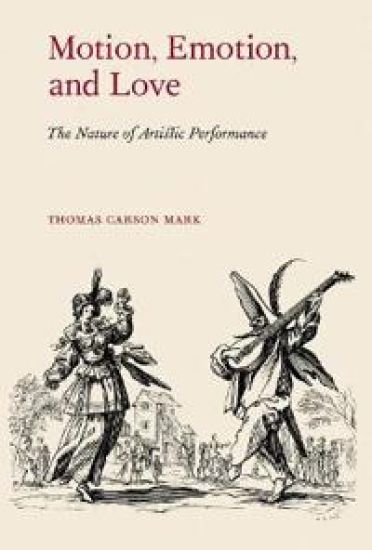
Motion, Emotion, and Love

Motion, Emotion, and Love

Thomas Carson Mark

GIA Publications
2012
nidottu
Dynamically transforming the elements of any performing artist s craft, this practical guide is a must-have for musicians, dancers, and actors. Thehandbook shows how artistic performance is embodied in the unification of three critical elements motion, emotion, and love demonstrating how it offers experiences and opportunities distinct from the nonperforming arts. Step-by-step guidelines are provided for building intentional and inspirational practice time, thereby enhancing the relationships between the source, the performer, and the audience. Illustrating how intentional movement invokes emotions from both the performer and the audience and how the concept of love gives a performance humanity and life, this eye-opening exploration creates pathways for achieving true artistry."
Novel Beginnings: The Books of: Elmore Leonard, Mark Twain, W.R. Burnett, Thomas Pynchon, William Faulkner, J.D. Salinger, George Orwell... more
The first page sells the book. The last page sells your next book. --- Frank Morrison (Mickey) Spillane. A few years ago I wrote a small book about opening lines to great novels. It is still available on Amazon Kindle books. One review pointed out that my first book (One-Hundred Opening Lines To Great Novels) was fun to read "but seemed somewhat incomplete." I can say that the first book was not everything I wanted it to be. So this is the result I wanted to expand on the basic idea I had for the first book and make this book more appealing with more information and exciting material. What do you do after looking at the front cover, the back cover, or a random page of a book? I like to read the opening chapter, and I'm guessing that is what most people do. I will admit, but I don't have any empirical evidence to back this up any more than I can imagine that some people read the last chapter of a book to find out how it ends. I briefly considered writing a book based on how it ends, for obvious reasons, I abandoned the idea. The author of any book must capture your attention with the opening chapter and make you want to discover what happens next. When I considered writing another book about the opening lines to books I wanted to add more about the plot, authors and more books by a particular author and interesting quotes either from the author themselves or one of the characters in their written work. But you know what they say about quotes? People who like quotations love meaningless generalizations. You'll read about one of the first authors to write about a modern detective. Moreover, that's not Dashelle Hammett. A large section of the book is devoted to mystery, thriller, crime, and detective fiction. You will also read about science fiction, fantasy, and classic and beloved stories and read about authors Carroll John Daly, Cornell Woolrich, David Goodis, Erle Stanley Gardner, Mark Twain, George V. Higgins. It is possible that you have never heard of these authors, but they are still very readable today. Reading about these authors you will find some beautiful works from writers you may not be acquainted with and lesser-known works from authors you know well. You'll read about J.D. Salinger, William Faulkner, Robert B. Parker, John Le Carre, George Orwell, Thomas Pynchon, Vladimir Nabokov, James Joyce, More. I have a fondness for crime writers so... to give you an idea of the contents of the book...Here is a short piece from author Jonathan Latimer from his book Solomon's Vineyard: "I like big men," she said. Her voice was raspy like she had a cold. She came up to me and grabbed my arm. Her fingers hurt the muscles. I could smell her perfume. She came close to me. I thought I knew what she wanted. I tried to kiss her. She jerked away."No." I'm sorry."She slapped me. She was strong, my cheek stung. She moved in, swinging both arms. Now she had her fists closed. She hit my arms and my chest. I tried to hold her."Hit me " she said. It was goddam queer. I held her arms, but she got loose. How's that for incorrect social interaction in today's world? This novel was written in 1941 and caused such a sensation in the U.S. with its depiction of murder, violence, perverse sexuality and twisted religion that it was not published in America until 1988, more than forty years after its first release in Britain. Now you can read this book, Novel Beginnings, straight through, or pick it up at any point you want. Enjoy it and discover a book you are not familiar with by a favorite author and read the plot description ( I promise that I have not revealed any spoilers) or find an author you have not encountered before and will be inspired to learn their work.
The Gospels of Jesus Unplugged Matthew, Mark, Luke, John, Thomas: The New Wine with Less Old Wine
The Gospels of Jesus Unplugged presents a clearer understanding of the Spiritual Way of Love and Non-violence that Jesus taught for us all to follow, to awaken and become Spiritual children of Light of our Loving Spiritual Creator in the Heavenly Spiritual World just as He was. The Old Testament Jewish overlays that have distorted who Jesus really was, and who our Loving Spiritual Creator really is have all been removed to reveal a more truthful and accurate account of what Jesus was actually Teaching, who our Loving Spiritual Creator really is and how to become an awakened Spiritual child while still in our body of flesh. Superfluous, redundant accounts and all false distorted additional accounts about the life of Jesus have been removed. All references to an Apocalypse where Jesus is supposed to be returning on the clouds to bring disaster upon the evil ones of this world have been rejected outright as pure slander. These were all placed in to distort and pervert who Jesus really was as an awakened Spiritual child of the One True Loving Spiritual Creator of us all to make Him out to be the only son of Yahweh the dualistic God of the Jews. One body called Yahweh with a brutal, murdering, thieving, genocidal Godhead of War and another Godhead of Love and Peace who taught to love your neighbour as yourself. Two opposing Godheads both cunningly called by the same name but they are completely different Gods. One is evil and one is good. Jesus only aligned Himself with the Yahweh of Love and Peace and condemned the Yahweh Godhead of War when He warned the Jews they were children of satan doing the murdering deeds of their satanic War God. The terminology used in these Gospels is arrived at through the original Greek interlinear, other Gospel versions and a simple understanding that Jesus was Love and Non-violence which is the main guidance anyone needs to see the distortions placed in the Gospels about Jesus and our Loving Creator amongst the Truthful sayings and events. I hope these translations are more easily understood with the correct intention and Spiritual meaning that Jesus had when He spoke them. I use the term Loving Spiritual Creator instead of the Jewish patriarchal term, 'Father.' I often refer to our Loving Creator as 'She' since it is our earthly mothers who give birth to our earthly bodies just as our Spiritual Creator gives birth to our Spiritual bodies. But our Loving Creator is beyond gender anyway. These Gospels make it very clear that Jesus taught we all have two different bodies with us right now. One of temporary flesh that dies and does not rise again. And another body that is Spiritual that leaves our body of flesh at death and is 'taken to be near to' our Loving Spiritual Creator to reap as we have sown. This is the body of Spirit that Jesus consistently taught is the most important one as it is Eternal and it needs to be alive and well empowered only by the Loving Spiritual Life-force of our Loving Spiritual Creator for it to have True life. And without it being alive and well it will be difficult to enter the Heavenly Spiritual World after death. Jesus like Buddha, also taught the Spiritual Law of, 'Reaping as we sow, ' or Karma. Jesus and our Loving Creator can never harm anyone as they are at One with Love. But we can harm ourselves as Jesus explains and so He provides us with Spiritual Teachings that will guide us home to Heaven safely through this dangerous material world if we only listen, understand them, awaken from our slumber and are transformed by them to become Living Spiritual children of Light of our Loving Spiritual Creator in the Heavenly Spiritual World.
The Thomas Mann Commemoration: Held Under the Auspices of Bryn Mawr, Haverford and Swarthmore Colleges
The Thomas Mann Commemoration is a book that documents an event held under the auspices of Bryn Mawr, Haverford, and Swarthmore Colleges in honor of the famous German writer and Nobel laureate, Thomas Mann. The event, which took place on November 14, 1955, was attended by a number of distinguished scholars and literary figures who gathered to pay tribute to Mann's life and work. The book contains speeches, essays, and poetry written by these individuals, as well as photographs and other memorabilia from the event. The editor of the book, Mark Van Doren, was a renowned literary critic and poet in his own right, and he provides an introduction and commentary that contextualizes the contributions of the various speakers and writers. The Thomas Mann Commemoration is an important historical document that offers insight into the intellectual and cultural milieu of mid-twentieth century America, as well as a tribute to one of the most celebrated writers of the modern era.In Goodhart Hall, Bryn Mawr College, October 5, 1956.This scarce antiquarian book is a facsimile reprint of the old original and may contain some imperfections such as library marks and notations. Because we believe this work is culturally important, we have made it available as part of our commitment for protecting, preserving, and promoting the world's literature in affordable, high quality, modern editions, that are true to their original work.
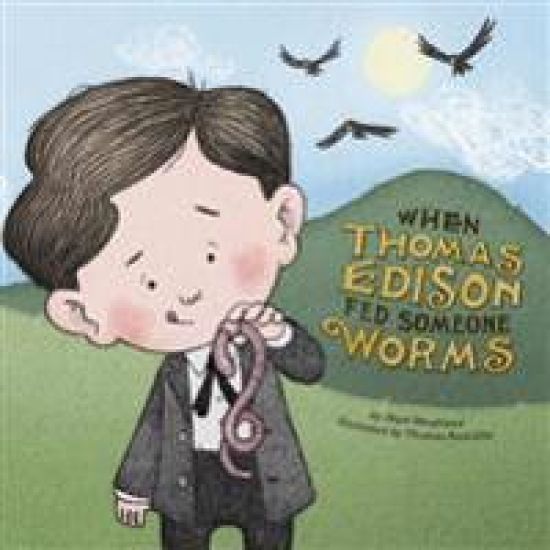
When Thomas Edison Fed Someone Worms

When Thomas Edison Fed Someone Worms

Mark Weakland

Picture Window Books
2016
nidottu
Thomas Edison became a great American inventor and businessman. But do you know what he was like as a child? From exploring shipyards and pastures to feeding a girl worms, Thomas was a curious and creative child. This playful story of his childhood will help young readers connect with a historic figure and will inspire them to want to achieve greatness.
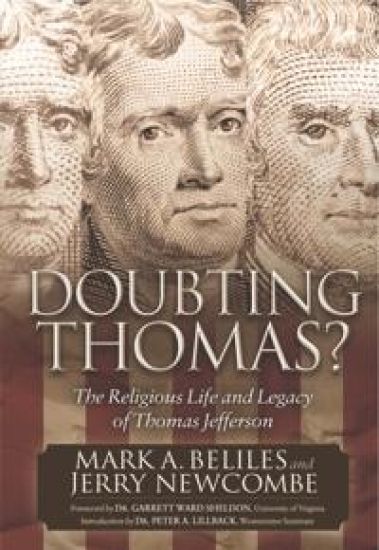
Doubting Thomas

Doubting Thomas

Mark A. Beliles; Jerry Newcombe

Morgan James Faith
2014
pokkari
Thomas Jefferson and the founding fathers intended a strict separation of church and state, right? He would have been very upset to find out about a child praying in a public school or a government building used for religious purposes, correct? Actually, the history on this has been very distorted. While Jefferson may seem to be the Patron Saint of the ACLU, his words and actions showed that he would totally disagree with the idea of driving God out of the public square. Doubting Thomas documents that. . . * Jefferson said that our rights come from God. God-given rights are non-negotiables. * At the time that he wrote the Declaration of Independence and the Virginia Statute for Religious Freedom---major contributions to human and religious rights—Jefferson served diligently as a vestryman (like an elder and a deacon rolled into one) for the Episcopal Church. * In 1777, he wrote up the charter for the Calvinistical Reformed Church in his town with an evangelical preacher, the Rev. Charles Clay--with whom he had a lifelong friendship. Jefferson was the biggest single contributor to this fledgling congregation. * Jefferson had nothing but the highest praise for Jesus’ teaching, which he studied religiously (even in the original Greek), in order to pattern his life after that which he called “the most sublime and benevolent code of morals which has ever been offered to man.” * As president, he attended church on a regular basis at the US Capitol building, even sometimes recommending preachers to fill that pulpit. * He had many positive relationships with orthodox clergymen and active lay Christians. * He actively supported Christian causes, financially, in ways that would put the average Christian to shame. * He set out to create a non-denominational college that accommodated Christian groups of different stripes. And on it goes. Historical revisionism has distorted the religious views of Thomas Jefferson, making him far more skeptical than he was. But there is no doubt that by the end of his life, he seemed to privately embrace Unitarian views of the Christian faith, while outwardly supporting and attending his local Trinitarian church. Thus, a legacy of Jefferson’s has been taken out of context and used to squelch religious freedom in America. Ironically, religious freedom was one of Jefferson’s core beliefs and contributions. But this is being turned on its head. Chiseled in stone at the Jefferson Memorial are his famous words: “The God who gave us life gave us liberty. And can the liberties of a nation be thought secure when we have removed their only firm basis, a conviction in the minds of the people that these liberties are of the Gift of God? That they are not to be violated but with His wrath?” Regardless of Jefferson’s private religious views, he stood solidly against the state making theological decisions for its people. Therefore, he would stand solidly against the anti-Christian crusade being carried out in his name today. It’s time to set the record straight.
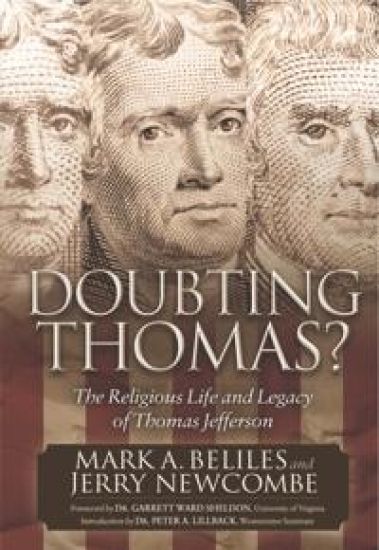
Doubting Thomas

Doubting Thomas

Mark A. Beliles; Jerry Newcombe

Morgan James Faith
2014
sidottu
Thomas Jefferson and the founding fathers intended a strict separation of church and state, right? He would have been very upset to find out about a child praying in a public school or a government building used for religious purposes, correct? Actually, the history on this has been very distorted. While Jefferson may seem to be the Patron Saint of the ACLU, his words and actions showed that he would totally disagree with the idea of driving God out of the public square. Doubting Thomas documents that. . . * Jefferson said that our rights come from God. God-given rights are non-negotiables. * At the time that he wrote the Declaration of Independence and the Virginia Statute for Religious Freedom---major contributions to human and religious rights—Jefferson served diligently as a vestryman (like an elder and a deacon rolled into one) for the Episcopal Church. * In 1777, he wrote up the charter for the Calvinistical Reformed Church in his town with an evangelical preacher, the Rev. Charles Clay--with whom he had a lifelong friendship. Jefferson was the biggest single contributor to this fledgling congregation. * Jefferson had nothing but the highest praise for Jesus’ teaching, which he studied religiously (even in the original Greek), in order to pattern his life after that which he called “the most sublime and benevolent code of morals which has ever been offered to man.” * As president, he attended church on a regular basis at the US Capitol building, even sometimes recommending preachers to fill that pulpit. * He had many positive relationships with orthodox clergymen and active lay Christians. * He actively supported Christian causes, financially, in ways that would put the average Christian to shame. * He set out to create a non-denominational college that accommodated Christian groups of different stripes. And on it goes. Historical revisionism has distorted the religious views of Thomas Jefferson, making him far more skeptical than he was. But there is no doubt that by the end of his life, he seemed to privately embrace Unitarian views of the Christian faith, while outwardly supporting and attending his local Trinitarian church. Thus, a legacy of Jefferson’s has been taken out of context and used to squelch religious freedom in America. Ironically, religious freedom was one of Jefferson’s core beliefs and contributions. But this is being turned on its head. Chiseled in stone at the Jefferson Memorial are his famous words: “The God who gave us life gave us liberty. And can the liberties of a nation be thought secure when we have removed their only firm basis, a conviction in the minds of the people that these liberties are of the Gift of God? That they are not to be violated but with His wrath?” Regardless of Jefferson’s private religious views, he stood solidly against the state making theological decisions for its people. Therefore, he would stand solidly against the anti-Christian crusade being carried out in his name today. It’s time to set the record straight.
St Thomas Aquinas (1225–1274)

St Thomas Aquinas (1225–1274)

Mark Blaug

Edward Elgar Publishing Ltd
1991
sidottu
Thomas Aquinas is generally acknowledged to be the greatest theologian of the Middle Ages and his masterpiece, 'Summa Theologica', provides a complete and authoritative statement of medieval economic thought that has remained the official Catholic view right up to the present time.St Thomas had a decisive influence on economic thought in at least three broad areas: the theory of private property, the theory of the just price and the doctrine of usury. St Thomas's great contribution to economic thought, as to theology, moral philosophy, and politics, lies in his emphasis on ratiocination on the Greek ideal of accepting nothing unless good reasons can be given for it.
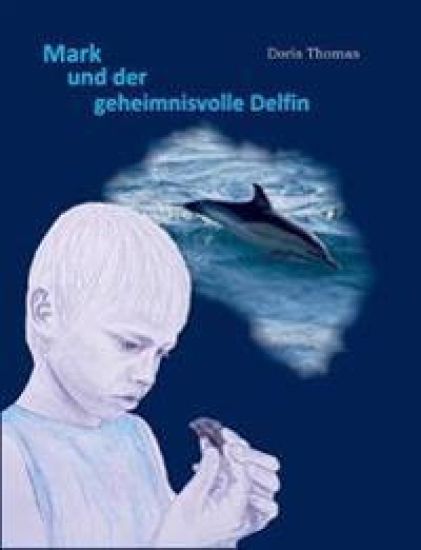
Mark und der geheimnisvolle Delfin

Mark und der geheimnisvolle Delfin

Doris Thomas

Books on Demand
2017
pokkari
Mark ist ein ganz normaler Junge. Er ist nicht besonders flei ig und m chte zu den Coolen der Klasse geh ren. Doch was ist eigentlich cool? H ufig h ngt er mit seinen Freunden in den D nen herum. Zur ck bleiben T ten, Dosen und Flaschen. Als Mark von seiner Mutter zum Strand zur ckgeschickt wird, um seinen M ll einzusammeln, findet er einen ungew hnlichen Stein. Er erinnert Mark an einen Delfin. Auf geheimnisvolle Weise ver ndert der Stein sein Aussehen. Wie kann das sein? Marks Interesse ist geweckt. Nach und nach ndert sich sein Verhalten. Pl tzlich geschieht das Unglaubliche: Der Delfin aus Stein ... erwacht zum Leben Fantasievolle Geschichte ber die positive Entwicklung eines Jungen. Mit vielen s/w Abbildungen illustriert. Ab 8 Jahre.
Mark's Calculations For Machine Design

Mark's Calculations For Machine Design

Thomas Brown

McGraw-Hill Professional
2005
sidottu
Designed to provide concise and easy-to-use formula and calculations, Mark's Calculations for Machine Design is the bridge between principle and executionFeaturing both U.S. and SI measurements, this step-by-step resource will enable you to: Calculate forces in space; Resolve forces into components; Determine moments, couples, and equivalent systems of force for a rigid body; and Analyse equilibrium into two and three dimensions for a rigid body as well as many other important calculations without the use of a conversion chart.Mark's Calculations For Machine Design Analyses problems in a simple and logical manner.
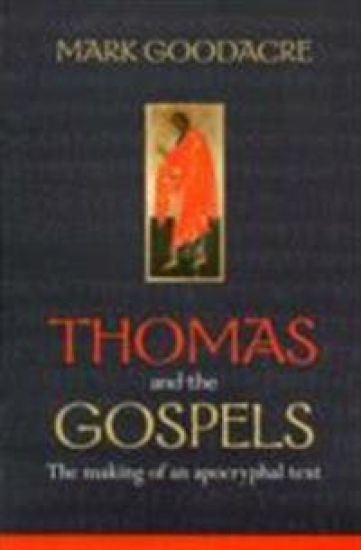
Thomas and the Gospels

Thomas and the Gospels

Mark Goodacre

SPCK Publishing
2012
nidottu
The Gospel of Thomas is the most controversial of the non-canonical gospels and the most important source outside the Gospels for our understanding of the historical Jesus and Christianity's origins. Mark Goodacre makes a detailed and compelling case that the author of The Gospel of Thomas is, after all, familiar with the Synoptic Gospels. He shows that the arguments for independence are inadequate and that the degree of agreement between Thomas and the Synoptics is far too great to be mediated by oral tradition. He suggests that Thomas features tell-tale signs of Matthew's and Luke's redactions and that the Gospel should be dated to the early to middle second century, when its author was looking for a means of lending the voice of his enigmatic Jesus an authoritative, Synopic-sounding legitimacy.
Thomas Hardy

Thomas Hardy

Mark Ford

The Belknap Press
2016
sidottu
Because Thomas Hardy is so closely associated with the rural Wessex of his novels, stories, and poems, it is easy to forget that he was, in his own words, half a Londoner. Focusing on the formative five years in his early twenties when Hardy lived in the city, but also on his subsequent movement back and forth between Dorset and the capital, Mark Ford shows that the Dorset-London axis is critical to an understanding of his identity as a man and his achievement as a writer.Thomas Hardy: Half a Londoner presents a detailed account of Hardy’s London experiences, from his arrival as a shy, impressionable youth, to his embrace of radical views, to his lionization by upper-class hostesses eager to fête the creator of Tess. Drawing on Hardy’s poems, letters, fiction, and autobiography, it offers a subtle, moving exploration of the author’s complex relationship with the metropolis and those he met or observed there: publishers, fellow authors, street-walkers, benighted lovers, and the aristocratic women who adored his writing but spurned his romantic advances.The young Hardy’s oscillations between the routines and concerns of Dorset’s Higher Bockhampton and the excitements and dangers of London were crucial to his profound sense of being torn between mutually dependent but often mutually uncomprehending worlds. This fundamental self-division, Ford argues, can be traced not only in the poetry and fiction explicitly set in London but in novels as regionally circumscribed as Far from the Madding Crowd and Tess of the d’Urbervilles.