Kirjojen hintavertailu. Mukana 11 342 296 kirjaa ja 12 kauppaa.

Kirjahaku

Etsi kirjoja tekijän nimen, kirjan nimen tai ISBN:n perusteella.

1000 tulosta hakusanalla Matthew Leverich
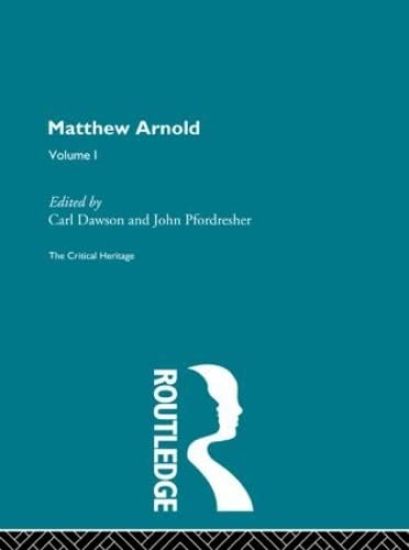
Matthew Arnold
The Critical Heritage gathers together a large body of critical sources on major figures in literature. Each volume presents contemporary responses to a writer's work, enabling students and researchers to read for themselves, for example, comments on early performances of Shakespeare's plays, or reactions to the first publication of Jane Austen's novels. The carefully selected sources range from landmark essays in the history of criticism to journalism and contemporary opinion, and little published documentary material such as letters and diaries. Significant pieces of criticism from later periods are also included, in order to demonstrate the fluctuations in an author's reputation. Each volume contains an introduction to the writer's published works, a selected bibliography, and an index of works, authors and subjects. The Collected Critical Heritage set will be available as a set of 68 volumes and the series will also be available in mini sets selected by period (in slipcase boxes) and as individual volumes.
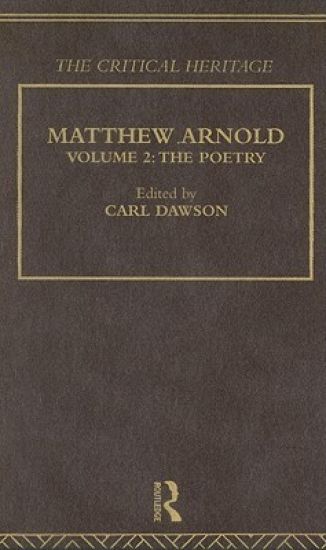
Matthew Arnold
The Critical Heritage gathers together a large body of critical sources on major figures in literature. Each volume presents contemporary responses to a writer's work, enabling students and researchers to read for themselves, for example, comments on early performances of Shakespeare's plays, or reactions to the first publication of Jane Austen's novels. The carefully selected sources range from landmark essays in the history of criticism to journalism and contemporary opinion, and little published documentary material such as letters and diaries. Significant pieces of criticism from later periods are also included, in order to demonstrate the fluctuations in an author's reputation. Each volume contains an introduction to the writer's published works, a selected bibliography, and an index of works, authors and subjects. The Collected Critical Heritage set will be available as a set of 68 volumes and the series will also be available in mini sets selected by period (in slipcase boxes) and as individual volumes.
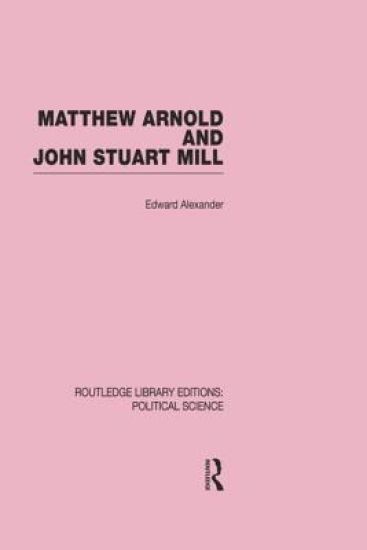
Matthew Arnold and John Stuart Mill (Routledge Library Editions: Political Science Volume 15)
This study defines the relationship between humanism and liberalism by comparing the two Victorian figures who were most concerned with the preservation of humanistic values in a free and democratic society: Matthew Arnold and John Stuart Mill. The book sets apart Arnold and Mill from their contemporaries and points out their similarities to one another in discussions of their theories of history, poetry, their celebration of the contemplative life and their willingness to welcome democracy. At the same time it examines the differences between the two men, which he uses to create a dialogue between humanism and liberalism on the question of how a high cultural ideal can be realized in democratic society.
Matthew Arnold and John Stuart Mill (Routledge Library Editions: Political Science Volume 15)
This study defines the relationship between humanism and liberalism by comparing the two Victorian figures who were most concerned with the preservation of humanistic values in a free and democratic society: Matthew Arnold and John Stuart Mill. The book sets apart Arnold and Mill from their contemporaries and points out their similarities to one another in discussions of their theories of history, poetry, their celebration of the contemplative life and their willingness to welcome democracy. At the same time it examines the differences between the two men, which he uses to create a dialogue between humanism and liberalism on the question of how a high cultural ideal can be realized in democratic society.
Matthew Arnold
The Critical Heritage gathers together a large body of critical sources on major figures in literature. Each volume presents contemporary responses to a writer's work, enabling students and researchers to read for themselves, for example, comments on early performances of Shakespeare's plays, or reactions to the first publication of Jane Austen's novels. The carefully selected sources range from landmark essays in the history of criticism to journalism and contemporary opinion, and little published documentary material such as letters and diaries. Significant pieces of criticism from later periods are also included, in order to demonstrate the fluctuations in an author's reputation. Each volume contains an introduction to the writer's published works, a selected bibliography, and an index of works, authors and subjects. The Collected Critical Heritage set will be available as a set of 68 volumes and the series will also be available in mini sets selected by period (in slipcase boxes) and as individual volumes.
Matthew Arnold
The Critical Heritage gathers together a large body of critical sources on major figures in literature. Each volume presents contemporary responses to a writer's work, enabling students and researchers to read for themselves, for example, comments on early performances of Shakespeare's plays, or reactions to the first publication of Jane Austen's novels. The carefully selected sources range from landmark essays in the history of criticism to journalism and contemporary opinion, and little published documentary material such as letters and diaries. Significant pieces of criticism from later periods are also included, in order to demonstrate the fluctuations in an author's reputation. Each volume contains an introduction to the writer's published works, a selected bibliography, and an index of works, authors and subjects. The Collected Critical Heritage set will be available as a set of 68 volumes and the series will also be available in mini sets selected by period (in slipcase boxes) and as individual volumes.
Matthew's Story

Matthew's Story

Tim LaHaye; Jerry B. Jenkins

Penguin USA
2011
pokkari
The fourth installment in the Jesus Chronicles, from the bestselling author of the Left Behind series. This story in the Jesus Chronicles depicts the life of the most unlikely of apostles-a sinner turned saint-and his time with the Lord. With Matthew, readers walk alongside Jesus as He gives the Sermon on the Mount, performs the miracles of healing the sick and raising the dead, contemplates His fate at the Last Supper and in the Garden of Gethsemane, is crucified, and most important, resurrected. Thrilling and uplifting, Matthew's Story shows how the true Messiah changed the life of one man, and forever altered the course of history.
Matthew Arnold and the Classical Tradition

Matthew Arnold and the Classical Tradition

Anderson Warren D.

THE UNIVERSITY OF MICHIGAN PRESS
1989
nidottu
To be born into the middle or upper classes of Matthew Arnold's England was in a sense to be born into the classical tradition. The precise contour and uses of the tradition, in Arnold's thought and writing, are the subject of this unique study by Warren D. Anderson. In Matthew Arnold and the Classical Tradition, Anderson shows how the young poet first experimented with his classical heritage, how he moved toward deep involvement and then withdrew to a more objective position. The author examines Arnold's school and university background, his poetry and later prose, his relationship to Stoicism and Epicureanism. The resulting study is absolutely central to an appreciation of Arnold and to an understanding of the classical foundations of Western literature. It shows clearly and accurately the ways in which the nineteenth century interpreted the fifth century B.C.
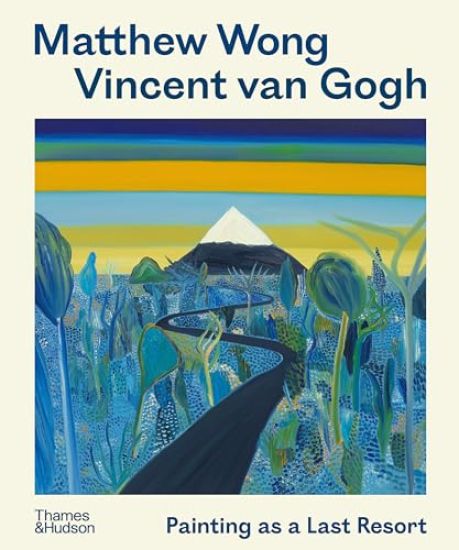
Matthew Wong - Vincent van Gogh

Matthew Wong - Vincent van Gogh

Joost van der Hoeven

THAMES HUDSON LTD
2024
nidottu
A beautifully illustrated exploration of the artistic and personal connections between Matthew Wong (1984–2019) and Vincent van Gogh. Shortly before his early death, the Chinese-Canadian artist Matthew Wong (1984–2019) emerged as a phenomenon. He started drawing and painting in 2011, at the age of 27, and within the space of just a few years had developed a highly personal style, using intense colours to paint imaginative landscapes. Wong’s expressively lyrical works were inspired by both traditional Chinese painting and Western art. He was especially influenced by Vincent van Gogh (1853–1890), not only in terms of his painting style and choice of motifs, but also in some aspects of his life. Both artists were self-taught, acquiring their drawing and painting skills without tuition, and both faced mental health issues. Wong saw his own life reflected in that of Van Gogh, and once said: ‘I see myself in him. The impossibility of belonging in this world.’ Published to accompany the exhibition at the Van Gogh Museum, Amsterdam, this book explores the artistic and personal connection between the two artists, bringing around 45 paintings and drawings by Wong into dialogue with a group of Van Gogh masterpieces. Kenny Schachter, who knew Matthew Wong, contributes a personal introduction, which is followed by essays exploring the artists’ biographical and artistic kinship.
Matthew Arnold and American Culture

Matthew Arnold and American Culture

John Henry Raleigh

University of California Press
2022
pokkari
This title is part of UC Press's Voices Revived program, which commemorates University of California Press’s mission to seek out and cultivate the brightest minds and give them voice, reach, and impact. Drawing on a backlist dating to 1893, Voices Revived makes high-quality, peer-reviewed scholarship accessible once again using print-on-demand technology. This title was originally published in 1957.
Matthew Arnold and American Culture

Matthew Arnold and American Culture

John Henry Raleigh

University of California Press
2022
sidottu
This title is part of UC Press's Voices Revived program, which commemorates University of California Press’s mission to seek out and cultivate the brightest minds and give them voice, reach, and impact. Drawing on a backlist dating to 1893, Voices Revived makes high-quality, peer-reviewed scholarship accessible once again using print-on-demand technology. This title was originally published in 1957.
Matthew's Emmanuel

Matthew's Emmanuel

David D. Kupp

Cambridge University Press
2005
pokkari
This book was first published in 1996. Matthew uniquely highlights Jesus as 'Emmanuel', but almost wholly overlooked are the deeper implications of this 'presence' motif for Matthean Christology, as well as its centripetal force on his readers. With regard to the rhetorical, historical and theological dimensions of the text, Dr Kupp takes a multi-disciplinary approach. The three verses commonly cited are only the starting point for the weaving of the Emmanuel Messiah into the story-telling, redaction and Christology of the Gospel. Kupp employs the lenses of both narrative and historical criticism to produce the first monograph in English on the subject of divine presence in Matthew. After giving primacy to a whole-story reading, Kupp finds its roots in the familiar social and literary contexts of Sinai, Jerusalem and the Jewish scriptures. Matthew's Gospel is a story that compels, a text with a history and a Christological treatise.
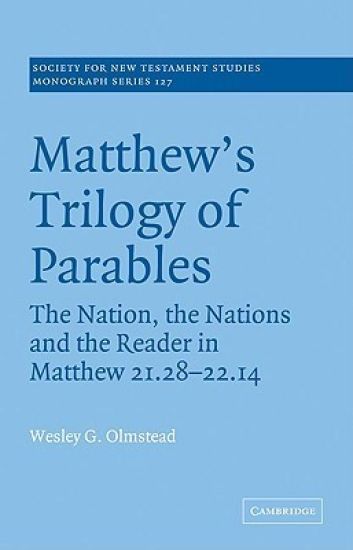
Matthew's Trilogy of Parables

Matthew's Trilogy of Parables

Wesley G. Olmstead

Cambridge University Press
2007
pokkari
Wesley Olmstead examines the parables of the Two Sons, the Tenants and the Wedding Feast against the backdrop of the wider Matthean narrative. He explores Matthew's characterization of the Jewish leaders, the people and the nations, and assesses the respective roles of Israel and the nations in the plot of Matthew's Gospel. Against the current of contemporary Matthean scholarship, Olmstead argues both that the judgement this trilogy announces falls upon Israel (and not only her leaders) and that these parables point to the future inclusion of the nations in the nation that God had promised to raise up from Abraham. Bringing both literary-critical and redaction-critical tools to bear on the texts at hand, Olmstead not only elucidates the intended meanings of this parabolic trilogy but also attempts to determine the responses they elicited from their first readers. Transcending Matthean scholarship, this book has implications for all Gospel studies.
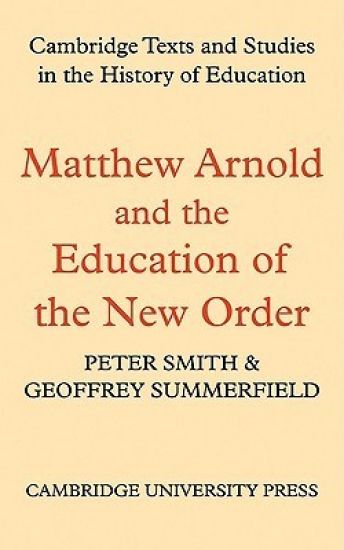
Matthew Arnold and the Education of the New Order
A selection from Arnold's writing on education, other than Culture and Anarchy. All the pieces stem from his work as Inspector of Schools: they illustrate his concern both with the principles that must be established as a basis for the education of an industrial democracy and his practical concern with the day-to-day running of schools. 'Democracy' was first published as the introduction to The Popular Education of France. It faces the fundamental political problems and outlines the general objectives of a state educational system. 'A French Eton' was the result of the same examination of French education to see what the British could learn from it; here he considers private education for the middle-classes. 'The twice-revised code' criticises the national Revised Code of 1862: a system founded on gross utilitarianism. Extracts from Arnold's reports as an inspector show the man of principle at work in particular circumstances and relating what he sees to what he would wish to see. The speech on his retirement comments on his lifetime of active involvement in education.
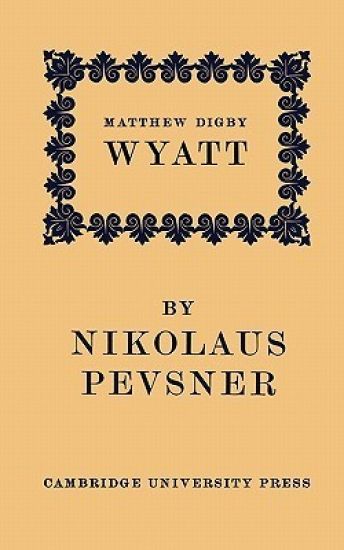
Matthew Digby Wyatt: The First Cambridge Slade Professor of Fine Art
For more than one reason Professor Pevsner, eleventh Slade Professor of Fine Art in the University of Cambridge, takes as the topic of his Inaugural Lecture Matthew Digby Wyatt, the Victorian architect and the first Slade Professor. He begins by inspecting some of Wyatt's major works - Addenbrooke's Hospital at Cambridge and the Paddington Station among them. Presently he allows himself to be diverted from his light architectural candour about Wyatt's buildings to an account of Wyatt's more general interests in design, and so to investigate the Victorian arena, with Pugin, Ruskin, and Morris, the conservative idealists, preaching one gospel, and Wyatt, Cole, and the Prince Consort preaching something different. The battle being fought was, as the Professor's 1950 text shows, deeply important; and its effects remain.
Matthew Paris

Matthew Paris

Richard Vaughan

Cambridge University Press
1979
pokkari
Professor Vaughan's book on the life and works of Matthew Paris is a full-scale study of one of the most important of the medieval chroniclers of European as well as British history. First published in 1958, it is re-issued in recognition of its continuing importance as an essential reference for all students of medieval and ecclesiastical history. A supplementary bibliography has been added to take account of updated scholarship.
Matthew's Emmanuel

Matthew's Emmanuel

David D. Kupp

Cambridge University Press
1996
sidottu
This book was first published in 1996. Matthew uniquely highlights Jesus as 'Emmanuel', but almost wholly overlooked are the deeper implications of this 'presence' motif for Matthean Christology, as well as its centripetal force on his readers. With regard to the rhetorical, historical and theological dimensions of the text, Dr Kupp takes a multi-disciplinary approach. The three verses commonly cited are only the starting point for the weaving of the Emmanuel Messiah into the story-telling, redaction and Christology of the Gospel. Kupp employs the lenses of both narrative and historical criticism to produce the first monograph in English on the subject of divine presence in Matthew. After giving primacy to a whole-story reading, Kupp finds its roots in the familiar social and literary contexts of Sinai, Jerusalem and the Jewish scriptures. Matthew's Gospel is a story that compels, a text with a history and a Christological treatise.
Matthew and Paul

Matthew and Paul

Roger Mohrlang

Cambridge University Press
2004
pokkari
The purpose of this study is to investigate and compare the basic structures of Matthew's and Paul's ethics, rather than to deal in detail with their teaching on specific moral issues. Dr Mohrlang discusses their perspectives under the five headings of ‘law', ‘reward and punishment', ‘relationship to Christ and the role of grace', ‘love', and ‘inner forces', and gives special attention to the question of ethical motivation. There is no absolute contrast, however, since elements both of law and of grace are found in both writers, and for both it is their understanding of Christ that is decisive. The comparison is highly illuminating, and serves to throw into clear relief the more striking characteristics of each writer's ethical system. It should prove of considerable value to students both of New Testament ethics and of Matthean and Pauline theology and to those interested in the larger question of unity and diversity in the New Testament as a whole.