Je ne me souviens de rien. J'ai tout oubli ou presque. Mon existence s'est arr t e brutalement et la mort ne me veut pas. Je ne peux pas revenir. Je ne veux pas mourir. Pas pour l'instant. Pas avant que je ne comprenne ce que je suis. Ce que j'ai fait. Ce que mes proches ont complot , dit ou pens . Pas avant d'avoir saisi le sens de ma vie. Je voudrais d couvrir ce qu'il s'est pass , savoir comment j'en suis arriv l . Avant que l'on vienne me d brancher. J'erre dans une exp rience parall le qui m' chappe. Je suis Thomas. Thomas Garnier, et la seule question qui me hante est: Vais-je pouvoir encaisser la v rit ?
The aim of this very short book is to demonstrate that in 1914 Germany blundered into an unplanned war. In the summer of 1914, Germany did not want a world war. In fact, in the summer of 1914, few could have predicted a general war characterised by industrial slaughter. It would be a falsehood to say that any individual or state wanted the chaos and destruction that we know recognise, with the hindsight of history, as the Great War. The Concert of Europe, a consensus among European powers that called for diplomatic consultation to preserve the status quo, had prevented a general war during previous crises. In 1914 it failed. The Great Powers, by their inaction and blindness, escalated a crisis until it turned into a conflict. Germany played a pivotal role in this escalation. This is an established fact that I do not seek to challenge. Yet, in no way did German decision-makers premeditate a coherent, objective driven war.
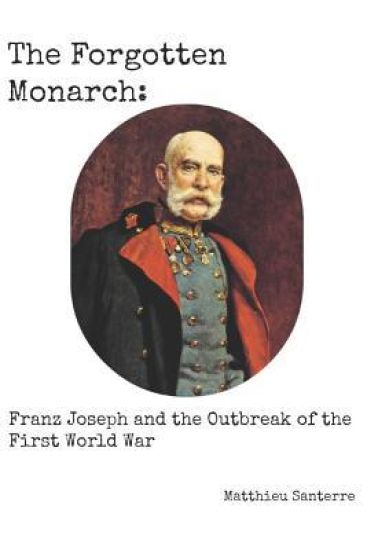
This very short book explores how Emperor Franz Joseph I was the key decision-maker in Austria-Hungary during the July Crisis that led to the First World War. As the key decision-maker, the arbiter between war and peace, his decision to sanction war on 23 July 1914 proved crucial. The monarch must be studied to understand how and why the Austro-Hungarian Dual Monarchy chose war in 1914. World War I was not inevitable. We should not read history backwards. The assassinations of the Austro-Hungarian heir to the throne Archduke Franz Ferdinand, and his wife Sophie Chotek, at Sarajevo on 28 June 1914 were a crossroad, not a way station, on the road to Armageddon. The catastrophe that fell upon Europe in the summer of 1914 did not follow a well-worn path. The European apocalypse was not preordained; rather it came because decision-makers in the capitals of the old continent failed. One of the first capitals to fail was the Austro-Hungarian: Vienna.Austria-Hungary chose to use Sarajevo. This was not a policy of revenge or an impulsive act. Cold calculated reason led the Austro-Hungarian Emperor to bring his realms to the brink of war. When the crucial moment finally came, Franz Joseph, the one man who could stop the war machine, the one man who could disperse the gathering storm, simply failed. Aware of the consequences, with a stroke of a pen, the monarch signed the declaration of war that would soon lead Europe, and the world, to unfathomable tragedy.
Lorsque Joe Kleinberg, l gende de l'Internet, est assassin sur une le paradisiaque o des milliardaires en fin de vie viennent assouvir leurs derniers fantasmes, les services secrets occidentaux paniquent. Qui en voulait au vieux Joe? Qui connaissait le secret qu'il s'appr tait r v ler au monde ? Qui menace d'an antir leur arme la plus efficace? Son Larkin, sp cialiste en cybercriminalit , appel en urgence sur l' le pour enqu ter sur le meurtre, doit y affronter l'horreur d cha n e par la myst rieuse M at. Peu peu, Il d couvre que la v ritable cible, c'est lui. Cette premi re aventure de Son Larkin nous entra ne ses c t s des catacombes parisiennes Great Whale Cay, la perle des Bahamas, dans un cauchemar o survivants, victimes et bourreaux se confondent. De retour Paris, aux portes de l' enfer, confront ses propres fant mes, trouvera-t-il les cl s de sa survie ?
ONE OF BOOK RIOT'S "20 MUST-READ HORROR BOOKS YOU'VE NEVER HEARD OF"Simon and Marie can’t seem to have a baby. And so they flee the city for an idyllic village, where things will certainly be better. But the town is gloomy, even hostile -- things haven’t been the same since the factory closed down and a broadcast antenna was erected. Now there are no birds singing, and people have started disappearing.
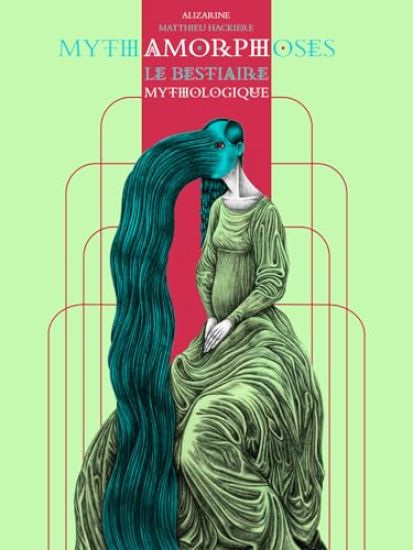
The "Mythamorphoses" within this book are drawn from a broad range of mythological fables, founding stories studded with concepts, symbols and paradoxes that have helped humanity make sense of the world. Matthieu Hackiere has richly illustrated these stories populated by the gods, goddesses and fantastic creatures of of Greek mythology while his co-author Alizarine has created modern interpretations of the classic texts to accompany. This is Hackiere's second book with Gingko Press, following his well-received Infernal Bestiary (2019).
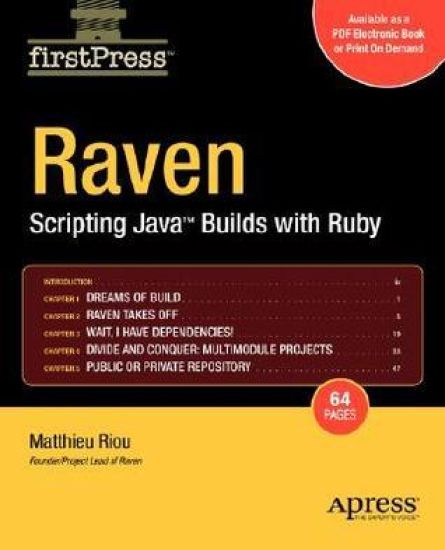
Raven is a Ruby-based build system that leverages Ruby tools (namely Rake and Gems) to help you effectively and easily manage your Java projects, providing a way to handle dependencies and specific tasks for Java. Raven: Scripting Java Builds with Ruby covers the most productive and flexible Java build tool around with the following approach: Uses practical examples and concise explanations to show you how to effectively use Raven Summarizes best practices and delves into coverage of the more complex scenarios you will inevitably encounter when using Raven Empowers you to set up a complete build environment in no time
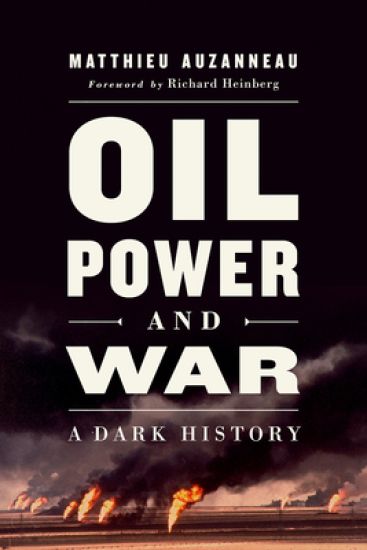
Catholic Herald Book Awards 2019 Finalist, Current Affairs "Auzanneau has created a towering telling of a dark and dangerous addiction.”—Nature The story of oil is one of hubris, fortune, betrayal, and destruction. It is the story of a resource that has been undeniably central to the creation of our modern culture, and ever-present during the darkest exploits of empire the world over. For the past 150 years, oil has become the most essential ingredient for economic, military, and political power. And it has brought us to our present moment in which political leaders and the fossil-fuel industry consider extraordinary, and extraordinarily dangerous, policy on a world stage marked by shifting power bases. Upending the conventional wisdom by crafting a “people’s history,” award-winning journalist Matthieu Auzanneau deftly traces how oil became a national and then global addiction, outlines the enormous consequences of that addiction, sheds new light on major historical and contemporary figures, and raises new questions about stories we thought we knew well: What really sparked the oil crises in the 1970s, the shift away from the gold standard at Bretton Woods, or even the financial crash of 2008? How has oil shaped the events that have defined our times: two world wars, the Cold War, the Great Depression, ongoing wars in the Middle East, the advent of neoliberalism, and the Great Recession, among them? With brutal clarity, Oil, Power, and War exposes the heavy hand oil has had in all of our lives—and illustrates how much heavier that hand could get during the increasingly desperate race to control the last of the world’s easily and cheaply extractable reserves.
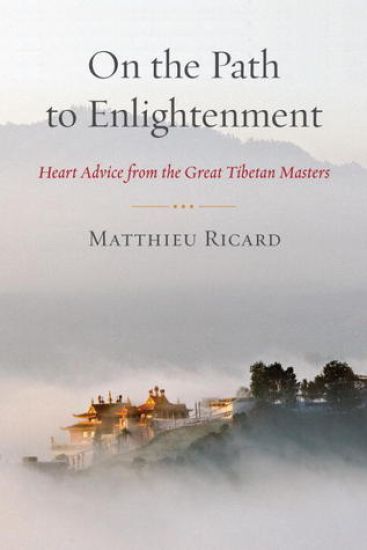
Dilgo Khyentse Rinpoche inspired Matthieu Ricard to create this anthology by telling him that "when we come to appreciate the depth of the view of the eight great traditions of Tibetan Buddhism] and also see that they all lead to the same goal without contradicting each other, we think, 'Only ignorance can lead us to adopt a sectarian view.'" Ricard has selected and translated some of the most profound and inspiring teachings from across these traditions. The selected teachings are taken from the sources of the traditions, including the Buddha himself, Nagarjuna, Guru Rinpoche, Atisha, Shantideva, and Asanga; from great masters of the past, including Thogme Zangpo, the Fifth Dalai Lama, Milarepa, Longchenpa, and Sakya Pandita; and from contemporary masters, including the Fourteenth Dalai Lama and Mingyur Rinpoche. They address such topics as the nature of the mind; the foundations of taking refuge, generating altruistic compassion, acquiring merit, and following a teacher; view, meditation, and action; and how to remove obstacles and make progress on the path.
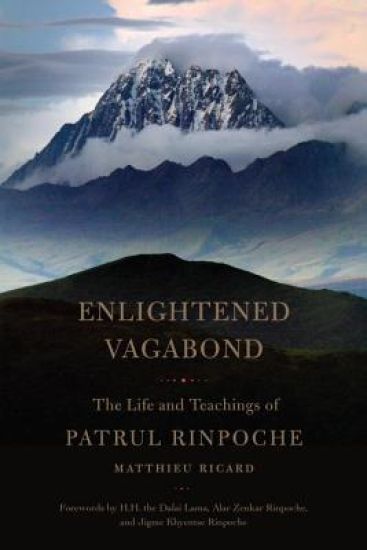
Colorful stories about and profound teachings of Patrul Rinpoche, one of the most impactful teachers and thinkers in the Tibetan tradition from the nineteenth century. The life and teachings of the wandering yogi Patrul Rinpoche--a highly revered Buddhist master and scholar of nineteenth-century Tibet--come alive in true stories gathered and translated by the French Buddhist monk Matthieu Ricard over more than thirty years, based on the oral accounts of great contemporary teachers as well as written sources. Patrul's life story reveals the nature of a highly realized being as he transmits the Dharma in everything he does, teaching both simple nomads and great lamas in ways that are often unconventional and even humorous, but always with uncompromising authenticity.
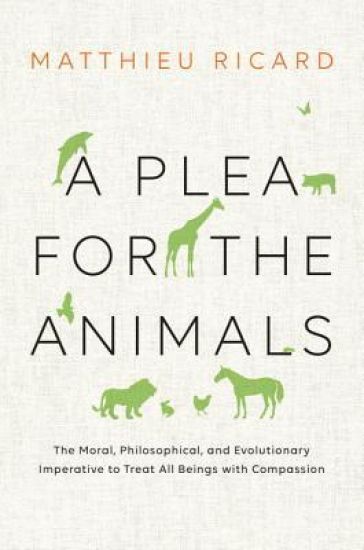
A powerful and wide-ranging indictment of the treatment of animals by humans--and an eloquent plea for animal rights. Every cow just wants to be happy. Every chicken just wants to be free. Every bear, dog, or mouse experiences sorrow and feels pain as intensely as any of us humans do. In a compelling appeal to reason and human kindness, Matthieu Ricard here takes the arguments from his best-sellers Altruism and Happiness to their logical conclusion: that compassion toward all beings, including our fellow animals, is a moral obligation and the direction toward which any enlightened society must aspire. He chronicles the appalling sufferings of the animals we eat, wear, and use for adornment or "entertainment," and submits every traditional justification for their exploitation to scientific evidence and moral scrutiny. What arises is an unambiguous and powerful ethical imperative for treating all of the animals with whom we share this planet with respect and compassion.
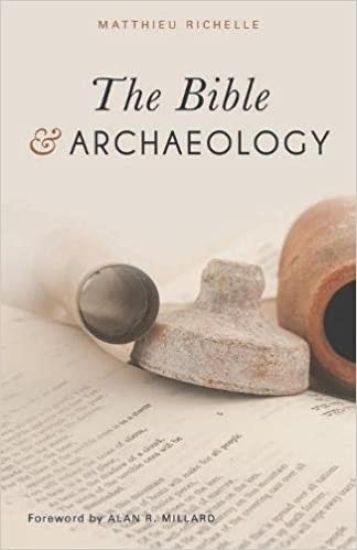
This book is a brief, popular (but informed and up-to-date) introduction to the relationship between the Bible and archaeology. Material culture (i.e., artifacts) and the biblical text illuminate each other in various ways, but many of us find it difficult to reach a nuanced understanding of how this process works and how archaeological discoveries should be interpreted. This book provides an irenic and balanced perspective on these issues, showing how texts and artifacts are in a fascinating "dialogue" with one another that sheds light on the meaning and importance of both. What emerges is a rich and complex picture that enlivens our understanding of the Bible's message, increases our appreciation for the historical and cultural contexts in which it was written, and helps us be realistic about the limits of our knowledge.
Many readers find exegeting a passage from the Old Testament to be a mysterious process. How should one begin? What methods should one use? Written in a pragmatic style, Interpreting Israel's Scriptures guides the reader by offering concrete methods for exegesis that are illustrated by numerous examples and accompanied by well-chosen references to secondary sources. The book concludes by offering practical advice for moving from exegesis to constructing a sermon.This English translation of the 2013 original French version of Richelle's book has been expanded and revised and has been reorganized to have a tripartite structure: the world behind the text, the world of the text, and the world "in front of" the text. The book is designed for use in exegesis courses or for personal study, and it is designed to be used both by students who know Hebrew and by those who do not. The book explores a variety of themes relevant for exegesis, including literary genre, literary context, geographical context, historical and cultural context, structure, narrative analysis, intertextuality, canonical context, and reception history. For those who know Hebrew, the book also includes sections on translation, textual criticism, and redactional analysis. Finally, this English edition has three new chapters: one on rhetorical study, one on reader-oriented approaches, and one on feminist and gender studies.
An essential study of parliamentary politics in postwar Iraq and Syria, before the consolidation of authoritarian rule under the Ba’th PartyWhen Parliaments Ruled the Middle East explores three main interrelated issues to clarify what happened between 1946 and 1963 in Iraq and Syria: how and why a parliamentary system prevailed in both countries in the aftermath of the Second World War; what social effects this system triggered, and, in turn, how these changes affected the system; and finally, why the elites in both countries were unable to overcome the unrest that brought an end to both a liberal era and to a certain kind of political game.Drawing on a vast array of sources and rich archival research in French, English, and Arabic, Matthieu Rey highlights the processes of the parliamentary system in the modern era, which are very common to post-independence countries and to any representative regime. He tackles the intersection of multifaceted political phenomena that were present in that moment in Iraq and Syria, including regular elections, the implementation of emergency law, the freedom of the press, the open expression of opinions, the formation of new political parties, frequent military coups, and the joint exercise of power by members of the old classes and reformist newcomers.Treating this period as neither an epilogue of the liberal order nor a prelude to authoritarianism, and stressing the contingent, improvisatory aspects of political history, Rey fundamentally questions the transitional nature of the period and in doing so proposes new ways and tools of examining it.
In Search of Wisdom is a book born of the friendship of three gifted teachers, exploring the universal human journey and our quest for meaning and understanding. This translation of the French bestseller brings readers an intimate, insightful, and wide-ranging conversation between Buddhist monk and author Matthieu Ricard, philosopher Alexandre Jollien, and psychiatrist Christophe André. Join these three luminaries as they share their views on how we uncover our deepest aspirations in life, the nature of the ego, living with the full range of human emotion, the art of listening, the temple of the body, the origin of suffering, the joy of altruism, true freedom, and much more. "We don't pretend to be experts on the subject matter or models in accomplishing the work or overcoming the obstacles involved in it," they write. "We are only travelers in search of wisdom, aware that the path is long and arduous, and that we have so much still to discover, to clarify, and to assimilate through practice . . . Our dearest wish is that when you cast your eyes on these pages, you will discover subjects for reflection to inspire you and brighten the light of your life."? In Search of Wisdom Highlights • Discovering our deepest aspirations • The ego: friend or impostor? • Learning to live with the full spectrum of our emotions • The art of listening • The body: burden or idol? • Suffering and its origins • The joy of altruism • The school of simplicity • Guilt and forgiveness • True freedom • Daily practice
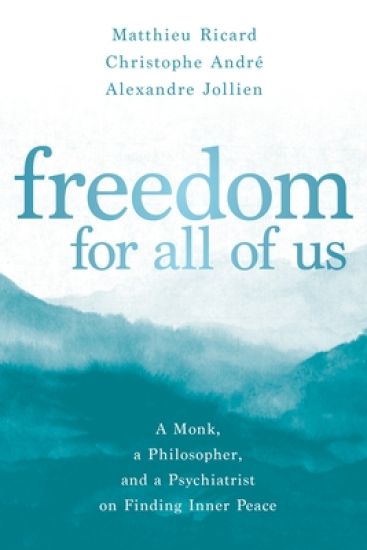
Three luminary teachers unfold a compelling series of dialogues on inner freedom--what it is and how to cultivate it in ourselves and others. "We are, nearly all of us," writes Matthieu Ricard, "the playthings of our whims, our conditioning, our impulses, our inner conflicts, our wandering thoughts, and our afflictive emotions. This servitude of ours is at the root of much that torments us. How do we free ourselves from the prison of these mental mechanisms, in the face of which we often feel helpless, even resigned?" With their acclaimed book In Search of Wisdom, these three gifted friends--a monk, a philosopher, and a psychiatrist--shed light on our universal quest for meaning, purpose, and understanding. Now, in this new in-depth offering, they invite us to tend to the garden of our true nature: freedom. Turn by turn, each shares his own unique perspective on the various obstacles to inner freedom, the "ecology" of freedom, the ways to cultivate it, and the harvest that comes out of it. What emerges is a panoramic vision and road map for us to overcome the barriers that hinder our liberation. "It is our hope," they write, "that this book will clarify the means for freeing ourselves from the causes of suffering." Filled with unexpected insights and specific strategies, Freedom for All of Us presents an inspiring guide for breaking free of the unconscious walls that confine us.