Kirjojen hintavertailu. Mukana 11 342 296 kirjaa ja 12 kauppaa.

Kirjahaku

Etsi kirjoja tekijän nimen, kirjan nimen tai ISBN:n perusteella.

1000 tulosta hakusanalla Max Rothstein

Max Booth Future Sleuth #6

Max Booth Future Sleuth #6

Cameron Macintosh

Readhowyouwant
2021
pokkari
There's a new sleuth in town - he's fun, funny, and very 2424 It's 2424. Super Sleuth Max Booth is uncovering the secrets of 20th century gadgets with his faithful but slightly neurotic robodog, Oscar. There are sinister characters and challenges along the way. Join the adventure in this fabulous series full of mystery, surprises and suspense. Ideal for reluctant readers. IF YOU HAVE A MAP, YOU MUST KNOW WHERE YOU'RE GOING ] RIGHT? TODAY, MAX ISN'T SO SURE When Max and his brainy beagle-bot, Oscar, find a 400-year-old navigation unit, they're shocked to discover that it still seems to work. They trace its owner's last journey and find themselves on the road to very big trouble Far from home, Max and Oscar cross paths with a bunch of bungling burglars, trying to zip away with a precious piece of old-tech art. Max and Oscar will need to map out a rapid plan to catch the thieves and navigate their way out of danger .
Max-Plus Linear Stochastic Systems and Perturbation Analysis

Max-Plus Linear Stochastic Systems and Perturbation Analysis

Bernd F. Heidergott

Springer-Verlag New York Inc.
2006
sidottu
During the last decade, the area of stochastic max-plus linear systems has witnessed a rapid development, which created a growing interest in this area. This book provides a thorough treatment of the theory of stochastic max-plus linear systems. Max-plus algebra is an algebraic approach to discrete event systems (DES), like queuing networks that are prone to synchronization. Perturbation analysis studies the sensitivity of the performance of DES with respect to changes in a particular system parameter. The first part of the book addresses modeling issues and stability theory for stochastic max-plus systems. The second part of the book treats perturbation analysis of max-plus systems: a calculus for differentiation of max-plus systems is developed. This calculus leads to numerical evaluations of performance indices of max-plus linear stochastic systems, such as the Lyapunov exponent or waiting times.
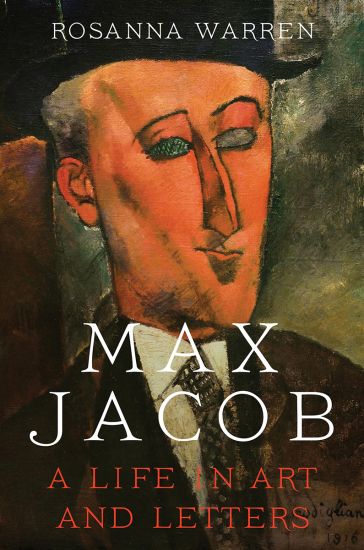
Max Jacob: A Life in Art and Letters

Max Jacob: A Life in Art and Letters

Rosanna Warren

W. W. Norton Company
2020
sidottu
Though less of a household name than his contemporaries in early twentieth century Paris, Jewish homosexual poet Max Jacob was Pablo Picasso's initiator into French culture, Guillaume Apollinaire's guide out of the haze of symbolism, and Jean Cocteau's loyal friend. As Picasso reinvented painting, Jacob helped to reinvent poetry with compressed, hard-edged prose poems and synapse-skipping verse lyrics, the product of a complex amalgamation of Jewish, Breton, Parisian, and Roman Catholic influences.In Max Jacob, the poet's life plays out against the vivid backdrop of bohemian Paris from the turn of the twentieth century through the divisions of World War II. Acclaimed poet Rosanna Warren transports us to Picasso's ramshackle studio in Montmartre, where Cubism was born; introduces the artists gathered at a seedy bar on the left bank, where Max would often hold court; and offers a front-row seat to the artistic squabbles that shaped the Modernist movement.Jacob's complex understanding of faith, art, and sexuality animates this sweeping work. In 1909, he saw a vision of Christ in his shabby room in Montmartre, and in 1915 he converted formally from Judaism to Catholicism--with Picasso as his godfather. In his later years, Jacob split his time between Paris and the monastery of Beno t-sur-Loire. In February 1944, he was arrested by the Gestapo and sent to Drancy, where he would die a few days later.More than thirty years in the making, this landmark biography offers a compelling, tragic portrait of Jacob as a man and as an artist alongside a rich study of his groundbreaking poetry--in Warren's own stunning translations. Max Jacob is a nuanced, deeply researched, and essential contribution to Modernist scholarship.
Max And The Tag Along Moon

Max And The Tag Along Moon

Floyd Cooper

Philomel Books,U.S.
2013
sidottu
"Has the moon ever followed you home at night?" Max loves his grandpa. When they must say good-bye after a visit, Grandpa reminds Max that the moon above them at Grandpa's house is the same moon that will follow him all the way home. And on that swervy-curvy car ride back home Max smiles as the moon tags along, thinking of Grandpa. But when the sky darkens and the moon disappears behind clouds, Max worries that it did not follow him home after all. Yet when the clouds part and light streams through his window, he realizes that Grandpa was right--the moon was with him all along.Floyd Cooper received the Coretta Scott King Award for "The Blacker the Berry," two Coretta Scott King Honors for "Honey in Broomwheat Tea" and "I Have Heard of a Land," and an NAACP image award. His books have also been named to numerous best books list and been given many Parents Choice Awards. In "Max and the Tag-Along Moon, "his lush paintings perfectly capture the wonder of the moon, the love between grandfather and grandson, and that feeling of magic every child experiences when the moon follows him home.
Max Explains Everything: Puppy Expert

Max Explains Everything: Puppy Expert

McAnulty Stacy

G.P.Putnam's Sons Books for Young Readers'
2020
sidottu
Max knows a lot about puppies. After all, he’s wanted one his whole life! So he’s pretty much an expert. Grown-ups will warn you: Puppies are a lot of work. And they’re right! Your puppy will need the perfect bed (which she’ll never sleep in), the perfect toys (though she prefers playing with shoes and socks), and the perfect treats (she likes those, but she’ll also have whatever you’re eating). Dogs aren’t good listeners like kids are, and they have a lot to learn. So you might have to take her to doggy school. (Her favorite part will probably be recess.) Yup, a puppy is a big responsiblity - but also a lot of fun, a lot of cute, a lot of cuddle, and a lot of love. Full of humour, energy, and warmth, Max Explains Everything: Puppy Expert is the perfect read aloud for animal lovers everywhere.
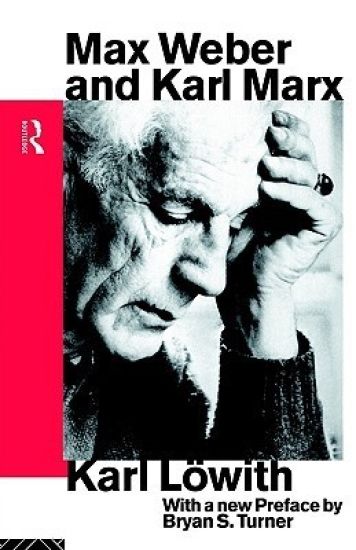
Max Weber and Karl Marx

Max Weber and Karl Marx

Karl Lowith

Routledge
1993
nidottu
First Published in 2004. Lowith's study of Max Weber and Karl Marx is a key text in modem interpretations of the theme of alienation in Marxist theory and rationalisation in Weber's sociology. It remains the best short student introduction to the differences and comparisons between these essential thinkers. This new edition includes a Preface by Professor Bryan S. Turner which demonstrates the relevance of the book for contemporary sociology.
Max Weber: From History to Modernity

Max Weber: From History to Modernity

Profesor Bryan S Turner

Routledge
1993
nidottu
This wide-ranging and assured book, written by one of the leading Weber scholars in the English-speaking world, shows us the many sides of Max Weber. The book provides an authoritative guide to the current burning issues in social theory, religion, rationalization, the body, modernization and capitalism. It will be essential reading for anyone interested in Weber's claim that the aim of sociology must be to explain what is distinctive about the times in which we live.
Max Weber

Max Weber

Stephen P. Turner

Routledge
1994
nidottu
This book is the first account of the way in which Weber appropriated and modified sources in the legal tradition, in which he was trained, to construct his sociology. It leads directly to a new understanding of Weber's intent and his relations to the tradition of social and political theory. the book takes the reader into the heart of Weber's conceptualizations of action and social science, without ever giving the impression that these are rarefied and marginal issues. This is an important book for understanding the significance of one of the key sociologist's of the twentieth century.
Max Weber and Michel Foucault

Max Weber and Michel Foucault

Arpad Szakolczai

Routledge
1998
sidottu
Max Weber and Michael Foucault are among the most controversial and fascinating thinkers of our century. This book is the first to jointly analyse them in detail, and to make effective links between their lives and work; it coincides with a substantial resurgence of interest in their writings.The author's exciting interpretative approach reveals a new dimension in reading the work of Foucault and Weber; it will be invaluable to students and those researching in sociology and philosophy.
Max Weber

Max Weber

Frank Parkin

Routledge
2002
sidottu
This study of Weber's sociology, written by an eminent authority, is a clear and illuminating discussion of the most important elements of Weber's thinking. The book concentrates on four main elements of Weber's work: his approach to sociological method, ethical neutrality and historical explanation; his influential work on religion and capitalism; his theory of authority and political power; and his contribution to the analysis of class, status and party.
Max Weber

Max Weber

Frank Parkin

Routledge
2002
nidottu
Max Weber: The Lawyer as Social thinker aims to relate the categories of Weber's social thinking to the intellectual context of legal thinking and theory in which he was educated. Its interpretive aim is to show how knowledge of these relations illuminates our understanding of Weber's own intentions. By comparing Weber's social theory of the teleological kind favoured by his contemporaries, which sought to identify social purposes and their effects and realization in history, but rather to radically undermine the project of teleological social theory by replacing categories of description that are amenable to or dependent upon teleological interpretations with categories that are specifically constructed to strip away teleology. The book identifies some of the key sources of Weber's thought in the legal tradition, notably the jurisprudential theorist Rudolph von Ihering, who was a classic teleological thinker, influenced by Bentham as well as by neo-Kantianism. Weber's famous definition of social action should be adequate on the level of meaning and adequate on the level cause is shown to be a variant of Ihering's purposive definition of social action. The same is done for the concept of interest, which Ihering connects to common social purposes: Weber disconnects it. The book is the only account of the sources of Weber's sociology of law. The book leads to a new interpretation of Weber. It should be of interest to scholars in social theory, jurisprudence and the history of ideas.
Max Weber and His Contempories

Max Weber and His Contempories

Wolfgang J. Mommsen; Jurgen Osterhammel

Routledge
2006
sidottu
Max Weber and His Contemporaries provides an unrivalled tour d'horizon of European intellectual life in the late nineteenth and early twentieth centuries and an assessment of the pivotal position within it occupied by Max Weber. Weber's many interests in and contributions to, such diverse fields as epistemology, political sociology, the sociology of religion and economic history are compared with and connected to those of his friends, pupils and antagonists and also of those contemporaries with whom he had neither a personal relationship nor any kind of scholoarly exchange. Several contributors also explore Weber's attitudes towards the most important political positions of his time (socialism, conservatism and anarchism) and his own involvement in German politics. This volume contributes not only to a better understanding of one of the most eminent modern thinkers and social scientists, but also provides an intellectual biography of a remarkable generation.This book was first published in 1987.
Max Weber and the Dispute over Reason and Value

Max Weber and the Dispute over Reason and Value

Stephen P. Turner; Regis A. Factor

Routledge
2006
sidottu
The problem of the nature of values and the relation between values and rationality is one of the defining issues of twentieth-century thought and Max Weber was one of the defining figures in the debate. In this book, Turner and Factor consider the development of the dispute over Max Weber's contribution to this discourse, by showing how Weber's views have been used, revised and adapted in new contexts.The story of the dispute is itself fascinating, for it cuts across the major political and intellectual currents of the twentieth century, from positivism, pragmatism and value-free social science, through the philosophy of Jaspers and Heidegger, to Critical Theory and the revival of Natural Right and Natural Law. As Weber's ideas were imported to Britain and America, they found new formulations and new adherents and critics and became absorbed into different traditions and new issues.This book was first published in 1984.
Max Weber on Capitalism, Bureaucracy and Religion
For this important selection from Weber, sections of text from Weber's major works (Gesammelte, Aufsatze Zur Religionssoziologie, including The Protestant Ethic and the Spirit of Capitalism; General Economic History; and The Agrarian Sociology of Ancient Civilisations) have been carefully edited and substantially translated to form a coherent and integrated volume.Professor Andreski's aim has been to use Weber's own works to explain crucial turns in the evolution of societies and cultures, while eliminating the difficulties of language and frequent mistranslation which have previously made Weber so difficult and baffling for students new to his work.An essay by Andreski introduces the selections, which are centred on Weber's principal interest, the relationship between capitalism, religion and bureaucracy. He seeks to correct those misinterpretations of Weber's work which have stressed his classification, rather than his attempts to theorise and explain social phenomena on the basis of a comparitive analysis of universal historical trends.This book was first published in 1983.
Max Weber, Rationality and Modernity
This book brings together leading figures in history, sociology, political science, feminism and critical theory to interpret, evaluate, criticize and update Weber's legacy. In a collection of specially commissioned pieces and translated articles the Weberian scholarship recognizes Max Weber as the figure central to contemporary debates on the need for societal rationality, the limits of reason and the place of culture and conduct in the supposedly post-religious age.In Part 1, Wolfgang Mommsen, Wilhelm Hennis, Guenther Roth and Wolfgang Schluchter provide a full and varied account of the theme of rationalization in the world civilizations. In Part 2 Pierre Bourdieu and Barry Hindess critically examine Weber's social action model, and Johannes Weiss and Martin Albrow address the putative 'crisis' of Western rationality. In Part 3 Jeffrey Alexander, Ralph Schroeder, Bryan Turner, Roslyn Bologh and Sam Whimster scrutinize Weber's understanding of modernity with its characteristic plurality of 'gods and demons'; they focus on its implications for individuality and personality, the body and sexuality, feminism and aesthetic modernism. Part 4 turns to politics, law and the state in the contemporary world: Colin Gordon on liberalism, Luciano Cavalli on charismatic politics, Stephen Turner and Regis Factor on decisionism and power and Scott Lash on modernism, substantice rationality and law. This book was first published in 1987.
Max Weber's Insights and Errors

Max Weber's Insights and Errors

Stanislav Andreski

Routledge
2006
sidottu
Max Weber (1864-1920) is generally recognised as one of the founding fathers of modern sociology. His ideas continue to be discussed by sociologists and historians and much homage is paid to his contribution to knowledge. However, such is the awe which the breadth of his knowledge inspires that most general books about Weber contain summaries rather than criticism. This book is the first attempt to evaluate Weber's entire work in the light of historical knowledge available today and of contemporary analytic philosophy. Professor Andreski shows where Weber's true greatness lies, which of Weber's ideas are still valid, which need either correction or modification and which merit rejection.Andreski places Weber in his social and cultural context of the intellectual preeminence of German culture in the second half of the nineteenth century. He examines Weber's most famous theses on objectivity, methodological individualism, ethical neutrality; explanation versus understanding; ideal types; rationalisation; bureaucracy, charisma, power, law and religion; as well as the explanation of the rise of capitalism and uniqueness of Western civilization.Andreski concludes by considering what contemporary scholars should learn from Weber if they want to advance further. He argues that the most important lesson is that comparative study of history (including recent history) is the only method of giving empirical support to an examination of large-scale social processes or a general proposition about them.This book was first published in 1984.