

Kirjahaku
Etsi kirjoja tekijän nimen, kirjan nimen tai ISBN:n perusteella.
1000 tulosta hakusanalla Maya Anderson
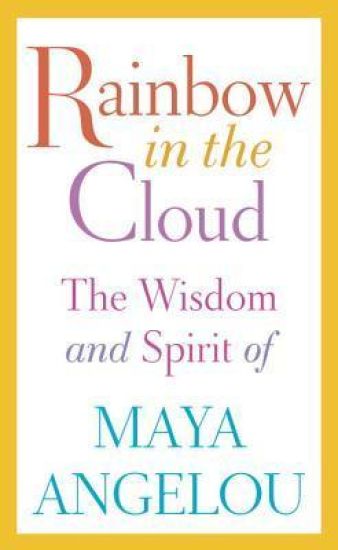
"Words mean more than what is set down on paper," Maya Angelou wrote in her groundbreaking memoir I Know Why the Caged Bird Sings. Indeed, Angelou's words have traveled the world and transformed lives--inspiring, strengthening, healing. Through a long and prolific career in letters, she became one of the most celebrated voices of our time. Now, in this collection of sage advice, humorous quips, and pointed observations culled from the author's great works, including The Heart of a Woman, On the Pulse of Morning, Gather Together in My Name, and Letter to My Daughter, Maya Angelou's spirit endures. Rainbow in the Cloud offers resonant and rewarding quotes on such topics as creativity and culture, family and community, equality and race, values and spirituality, parenting and relationships. Perhaps most special, Maya Angelou's only son, Guy Johnson, has contributed some of his mother's most powerful sayings, shared directly with him and the members of their family. A treasured keepsake as well as a beautiful tribute to a woman who touched so many, Rainbow in the Cloud reminds us that "If one has courage, nothing can dim the light which shines from within."
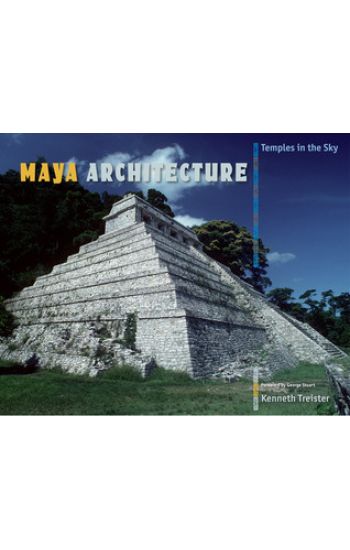
Great civilisations are built upon multiple layers of accumulated knowledge. By examining the remains of Maya cities, we can learn valuable principles of architectural design and how their dynamic society—in a hostile environment and in a relatively short time—was able to blossom and create such harmonious architectural masterpieces.The vivid images that accompany the text offer examples of art and architecture from many Maya cities spanning some 3,000 years, from the Preclassic through the Postclassic period and into modern times. Treister also examines Maya domestic styles and the richness of their textile motifs.By observing these ancient cities Treister seeks to unlock the secret of the Maya’s mysterious collapse. The energy, enterprise, and pride that enabled these people to create such majesty may hold the seeds of their destruction. In their buildings, Treister finds not only the mortar that held their civilisation together but the competitiveness that was the cause of its ruin as well.
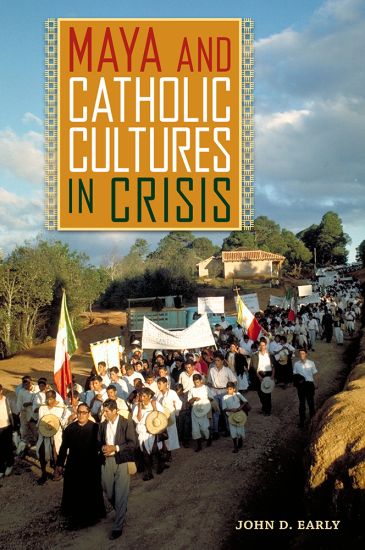
In his most recent book, The Maya and Catholicism: An Encounter of Worldviews, John Early examined the relationship between the Maya and the Catholic Church from the sixteenth century through the colonial and early national periods. In Maya and Catholic Cultures in Crisis, he returns to delve into the changing worldviews of these two groups in the second half of the twentieth century--a period of great turmoil for both.Drawing on his personal experiences as a graduate student, a Roman Catholic priest in the region and his extensive archival research, Early constructs detailed case histories of the Maya uprisings against the governments of Guatemala and Mexico, exploring Liberation Catholicism’s integral role in these rebellions as well as in the evolutions of Maya and Catholic theologies. His meticulous and insightful study is indispensable to understanding Maya politics, society, and religion in the late twentieth century.
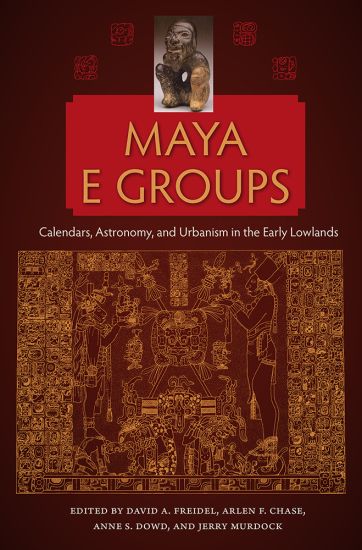
Maya E Groups
University Press of Florida
2017
sidottu
In ancient Maya cities, “E Groups” are sets of buildings aligned with the movements of the sun. This volume presents new archaeological data to reveal that E Groups were constructed earlier than previously thought—in fact, they are the earliest identifiable architectural plan at many Maya settlements. More than just astronomical observatories or calendars, E Groups were gathering places for emerging communities and centers of ritual: the very first civic-religious public architecture in the Maya lowlands. Investigating a wide variety of E Group sites in different contexts, this volume pieces together the development of social and political complexity in the ancient Maya civilization. A volume in the series Maya Studies, edited by Diane Z. Chase and Arlen F. Chase.
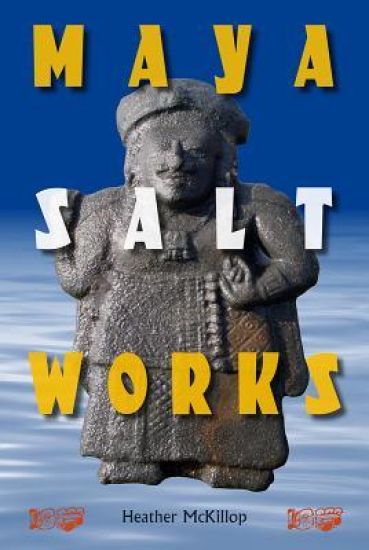
In Maya Salt Works, Heather McKillop details her archaeological team’s groundbreaking discovery of a unique and massive salt production complex submerged in a lagoon in southern Belize. Exploring the organization of production and trade at the Paynes Creek Salt Works, McKillop offers a fascinating new look at the role of salt in the ancient Maya economy. McKillop maps over 4,042 wooden posts and wedges, the first known wooden structures preserved underwater from the Classic period, describing new methods of underwater archaeology developed specifically for this shallow maritime setting. She explains the technology of salt production, examining fragments of briquetage?the pots that boiled brine over fires in the kitchens. McKillop theorizes that different households operated different salt kitchens and distributed their goods via canoe to sell at marketplaces at nearby inland cities. By evaluating the scale, concentration, intensity, and context of the Paynes Creek Salt Works, McKillop provides a model for interpreting existing salt works sites as well as future discoveries along the Yucatan Peninsula. A volume in the series Maya Studies, edited by Diane Z. Chase and Arlen F. Chase.
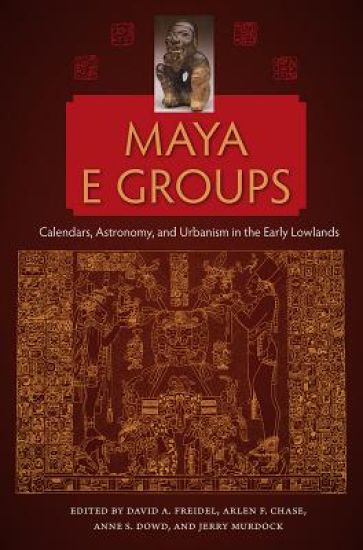
Maya E Groups
University Press of Florida
2020
pokkari
As complex societies emerged in the Maya lowlands during the first millen¬nium BCE, so did stable communities focused around public squares and the worship of a divine ruler tied to a Maize God cult. "E Groups," central to many of these settle¬ments, are architectural complexes: typically, a long platform supporting three struc¬tures and facing a western pyramid across a formal plaza. Aligned with the movements of the sun, E Groups have long been interpreted as giant calendrical devices crucial to the rise of Maya civilization. This volume presents new archaeological data to reveal that E Groups were constructed earlier than previously thought. In fact, they are the earliest identifiable architectural plan at many Maya settlements. More than just astronomical observatories or calendars, E Groups were a key ele¬ment of community organization, urbanism, and identity in the heart of the Maya lowlands. They served as gathering places for emerging communities and centers of ritual; they were the very first civic-religious public architecture in the Maya lowlands. Investigating a wide variety of E Group sites—including some of the most famous like the Mundo Perdido in Tikal and the hitherto little known complex at Chan, as well as others in Ceibal, El Palmar, Cival, Calakmul, Caracol, Xunantunich, Yaxnohcah, Yaxuná, and San Bartolo—this volume pieces together the development of social and political complexity in ancient Maya civilization.
Maya Kingship
University Press of Florida
2021
sidottu
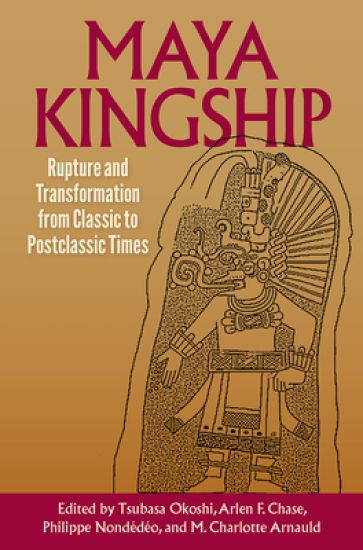
Examining changes to the institution of divine kingship from 750 to 950 CE in the Maya lowland cities, Maya Kingship presents a new way of studying the collapse of that civilization and the transformation of political systems between the Terminal Classic and Postclassic Periods.Leading experts in Maya studies offer insights into the breakdown of kingship regimes, as well as the gradual urban collapse and settlement relocations that followed. The volume illuminates historical factors and actions that led to the end of the institution across kingdoms and the mechanisms that enabled societies to eventually recover with new political structures. Contributors provide archaeological, iconographic, epigraphic, and ethnohistorical perspectives, exploring datasets in the spheres of warfare, social dynamics, economics, and architecture.Unfolding with precision the chains of processes and events that occurred during the ninth and tenth centuries in the southern lowlands, and slightly later in the north, this volume displays an original and ambitious historical approach central to understanding one of the most radical political shifts to occur in the pre-Columbian Americas.

Maya Christians and Their Churches in Sixteenth-Century Belize
University Press of Florida
2020
pokkari
Based on her analysis of archaeological evidence from the excavations of Maya churches at Tipu and Lamanai, Elizabeth Graham seeks to understand why the Maya sometimes actively embraced Catholicism during the period of European conquest and continued to worship in this way even after the end of Spanish occupation.The Maya in Belize appear to have continued to bury their dead in Christian churchyards long after the churches themselves had fallen into disuse. They also seem to have hidden pre-Hispanic objects of worship in Christian sacred spaces during times of persecution, and excavations reveal the style of the early churches to be unmistakably Franciscan. The evidence suggests that the Maya remained Christian after 1700, when Spaniards were no longer in control, which challenges the widespread assumption that because Christianity was imposed by force it was never properly assimilated by indigenous peoples.Combining historical and archaeological data with her experience of having been raised as a Roman Catholic, Graham proposes a way of assessing the concept of religious experience and processes of conversion that takes into account the material, visual, sensual, and even olfactory manifestations of the sacred.

Maya Ethnolinguistic Identity
University of Arizona Press
2010
sidottu
In this valuable book, ethnographer and anthropologist Brigittine French mobilizes new critical-theoretical perspectives in linguistic anthropology, applying them to the politically charged context of contemporary Guatemala. Beginning with an examination of the ""nationalist project"" that has been ongoing since the end of the colonial period, French interrogates the ""Guatemalan/indigenous binary."" In Guatemala, ""Ladino"" refers to the Spanish-speaking minority of the population, who are of mixed European, usually Spanish, and indigenous ancestry; ""Indian"" is understood to mean the majority of Guatemala's population, who speak one of the twenty-one languages in the Maya linguistic groups of the country, although levels of bilingualism are very high among most Maya communities. As French shows, the Guatemalan state has actively promoted a racialized, essentialized notion of ""Indians"" as an undifferentiated, inherently inferior group that has stood stubbornly in the way of national progress, unity, and development--which are, implicitly, the goals of ""true Guatemalans"" (that is, Ladinos). French shows, with useful examples, how constructions of language and collective identity are in fact strategies undertaken to serve the goals of institutions (including the government, the military, the educational system, and the church) and social actors (including linguists, scholars, and activists). But by incorporating in-depth fieldwork with groups that speak Kaqchikel and K'iche' along with analyses of Spanish-language discourses, Maya Ethnolinguistic Identity also shows how some individuals in urban, bilingual Indian communities have disrupted the essentializing projects of multiculturalism. And by focusing on ideologies of language, the author is able to explicitly link linguistic forms and functions with larger issues of consciousness, gender politics, social positions, and the forging of hegemonic power relations.
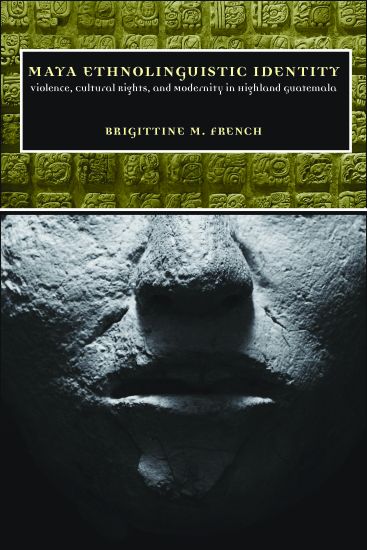
In this valuable book, ethnographer and anthropologist Brigittine French mobilizes new critical-theoretical perspectives in linguistic anthropology, applying them to the politically charged context of contemporary Guatemala. Beginning with an examination of the 'nationalist project' that has been ongoing since the end of the colonial period, French interrogates the 'Guatemalan/indigenous binary.' In Guatemala, 'Ladino' refers to the Spanish-speaking minority of the population, who are of mixed European, usually Spanish, and indigenous ancestry; 'Indian' is understood to mean the majority of Guatemala's population, who speak one of the twenty-one languages in the Maya linguistic groups of the country, although levels of bilingualism are very high among most Maya communities. As French shows, the Guatemalan state has actively promoted a racialized, essentialized notion of 'Indians' as an undifferentiated, inherently inferior group that has stood stubbornly in the way of national progress, unity, and development-which are, implicitly, the goals of 'true Guatemalans' (that is, Ladinos).French shows, with useful examples, how constructions of language and collective identity are in fact strategies undertaken to serve the goals of institutions (including the government, the military, the educational system, and the church) and social actors (including linguists, scholars, and activists). But by incorporating in-depth fieldwork with groups that speak Kaqchikel and K'iche' along with analyses of Spanish-language discourses, Maya Ethnolinguistic Identity also shows how some individuals in urban, bilingual Indian communities have disrupted the essentializing projects of multiculturalism. And by focusing on ideologies of language, the author is able to explicitly link linguistic forms and functions with larger issues of consciousness, gender politics, social positions, and the forging of hegemonic power relations.

This account of the practice of traditional Maya medicine examines the work of curers in Pisté, Mexico, a small town in the Yucatán Peninsula near the ruins of Chichén Itzá. The traditions of plant use and ethnomedicine applied by these healers have been transmitted from one generation to the next since the colonial period throughout the state of Yucatán and the adjoining states of Campeche and Quintana Roo.In addition to plants, traditional healers use western medicine and traditional rituals that include magical elements, for curing in Yucatán is at once deeply spiritual and empirically oriented, addressing problems of the body, spirit, and mind. Curers either learn from elders or are recruited through revelatory dreams. The men who learn their skills through dreams communicate with supernatural beings by means of divining stones and crystals. Some of the locals acknowledge their medical skills; some disparage them as rustics or vilify them as witches. The curer may act as a doctor, priest, and psychiatrist.This book traces the entire process of curing. The author collected plants with traditional healers and observed their techniques including prayer and massage as well as plant medicine, western medicine, and ritual practices. Plant medicine, she found, was the common denominator, and her book includes information on the plants she worked with and studied.
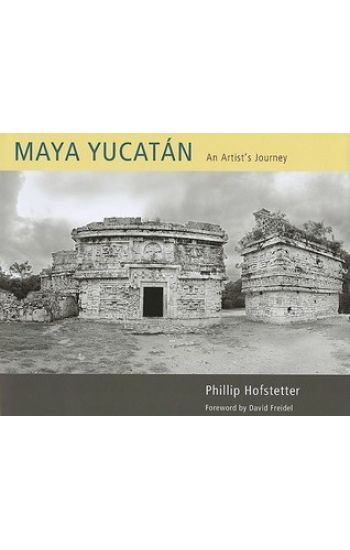
Maya Yucatan
University of New Mexico Press
2009
sidottu
Phillip Hofstetter first visited Yucatan in 1987 and was entranced, as much by the sheer physical beauty of the region as by the enduring character of the Maya people still inhabiting the region. For more than twenty years he has been documenting his travels in Yucatan and his professional collaboration with archaeological excavation projects there. His reflections on the Maya culture emphasize survival and adaptation, while images of ancient sites, the churches of the Franciscan mission period, and the ruined haciendas of the henequen period serve as physical reminders of the enduring ways in which the Maya have shaped the landscape of Yucatan over millennia.
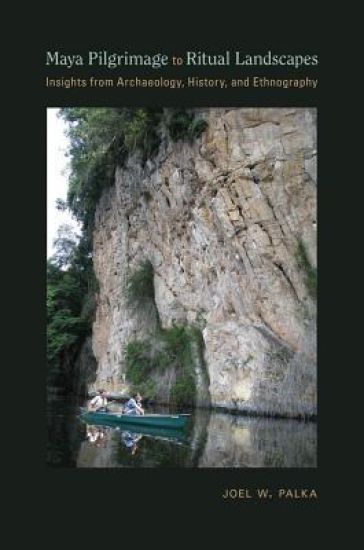
Pilgrimage to ritually significant places is a part of daily life in the Maya world. These journeys involve important social and practical concerns, such as the maintenance of food sources and world order. Frequent pilgrimages to ceremonial hills to pay offerings to spiritual forces for good harvests, for instance, are just as necessary for farming as planting fields. Why has Maya pilgrimage to ritual landscapes prevailed from the distant past and why are journeys to ritual landscapes important in Maya religion? How can archaeologists recognize Maya pilgrimage, and how does it compare to similar behaviour at ritual landscapes around the world? The author addresses these questions and others through cross-cultural comparisons, archaeological data, and ethnographic insights.
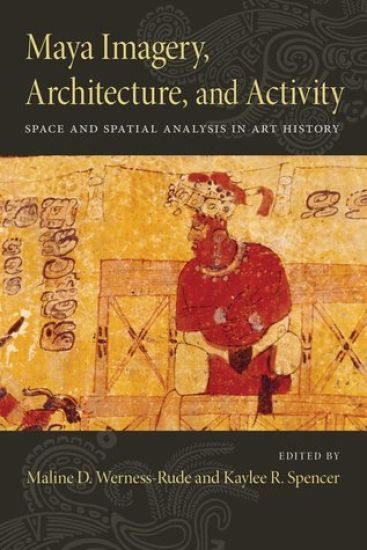
Maya Imagery, Architecture, and Activity
University of New Mexico Press
2015
sidottu
Maya Imagery, Architecture, and Activity privileges art historical perspectives in addressing the ways the ancient Maya organized, manipulated, created, interacted with, and conceived of the world around them. The Maya provide a particularly strong example of the ways in which the built and imaged environment are intentionally oriented relative to political, religious, economic, and other spatial constructs.In examining space, the contributors of this volume demonstrate the core interrelationships inherent in a wide variety of places and spaces, both concrete and abstract. They explore the links between spatial order and cosmic order and the possibility that such connections have sociopolitical consequences. This book will prove useful not just to Mayanists but to art historians in other fields and scholars from a variety of disciplines, including anthropology, archaeology, geography, and landscape architecture.
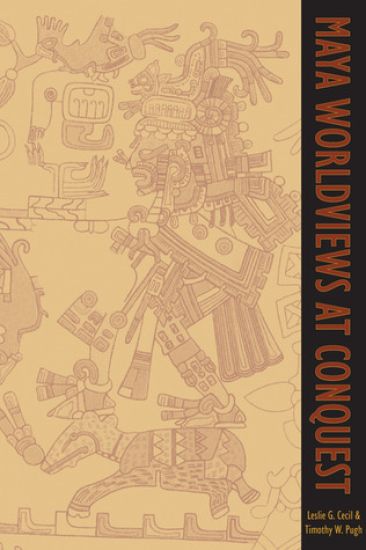
Maya Worldviews at Conquest
University Press of Colorado
2009
sidottu
Maya Worldviews at Conquest examines Maya culture and social life just prior to contact and the effect the subsequent Spanish conquest, as well as contact with other Mesoamerican cultures, had on the Maya worldview.Focusing on the Postclassic and Colonial periods, Maya Worldviews at Conquest provides a regional investigation of archaeological and epigraphic evidence of Maya ideology, landscape, historical consciousness, ritual practices, and religious symbolism before and during the Spanish conquest. Through careful investigation, the volume focuses on the impact of conversion, hybridization, resistance, and revitalization on the Mayans’ understanding of their world and their place in it. The volume also addresses the issue of anthropologists unconsciously projecting their modern worldviews on the culture under investigation. Thus, the book critically defines and strengthens the use of worldviews in the scholarly literature regardless of the culture studied, making it of value not only to Maya scholars but also to those interested in the anthropologist’s projection of worldview on other cultures in general.

Bilingual English/Spanish. Based on a Yiddish folk song, a young girl's cherished baby blanket becomes old and worn over time and she finds new ways to use it as she grows up.Little Maya has a special blanket that Grandma stitched with her own two hands. As Maya grows, her blanket becomes worn and frayed, so with Grandma's help, Maya makes it into a dress. Over time the dress is made into a skirt, a shawl, a scarf, a hair ribbon, and finally, a bookmark. Each item has special, magical, meaning for Maya; it animates her adventures, protects her, or helps her in some way. But when Maya loses her bookmark, she preserves her memories by creating a book about her adventures and love of these items. When Maya grows up, she shares her book--Maya's Blanket/La manta de Maya--with her own little daughter while snuggled under her own special blanket. Inspired by the traditional Yiddish folk song "Hob Ikh Mir a Mantl" ("I Had a Little Coat"), this delightful bilingual picture book puts a child-focused, Latino spin on the tale of an item that is made into smaller and smaller items. Maya's Blanket/La manta de Maya charmingly brings to life this celebration creativity, recycling, and enduring family love.

My name is Maya Bishop, and I commit homicide.Call it what you will, but I killed him. That's all. People who will attempt to rectify what I did are just too accepting to exist in such a society. I had the option to murder him or flee, but I decided to kill him.

Newly arrived from Kazakhstan, twelve-year-old Maya Alazova resents the way her mother babies her brother, but when she leaves her English Language Learner program for mainstream classes and has to deal with a boy, a bully, and conflict at home, she finds her brother can help with their new culture in ways their parents can't.
