

Kirjahaku
Etsi kirjoja tekijän nimen, kirjan nimen tai ISBN:n perusteella.
1000 tulosta hakusanalla Mitchell Colin W.


A collection of Joni Mitchell's finest songs, arranged for piano, voice and guitar.

After decades of waiting, the definitive Joni Mitchell guitar songbook is here Joni Mitchell Complete So Far contains 167 songs spanning her entire career, transcribed accurately and including the authentic tunings Joni explored throughout her artistic development. To make it easier to navigate the tunings---absolutely integral to any student of Joni Mitchell's guitar work---this book also includes a very clear and easy-to-use tuning index, and an in-depth article on Joni's evolution as a guitarist. Hardcover and featuring an impressive all-color photo section, the songbook culls the best work from the following albums: Song to a Seagull, Clouds, Ladies of the Canyon, Blue, For the Roses, Court and Spark, The Hissing of Summer Lawns, Hejira, Don Juan's Reckless Daughter, Mingus, Wild Things Run Fast, Dog Eat Dog, Chalk Mark in a Rain Storm, Night Ride Home, Turbulent Indigo, Hits, Taming the Tiger, and Shine. Titles: All I Want * Amelia * The Arrangement * (You're So Square) Baby I Don't Care * Bad Dreams * Banquet * Barangrill * Be Cool * The Beat of Black Wings * Big Yellow Taxi * Big Yellow Taxi (2007) * A Bird That Whistles (Corrina, Corrina) * Black Crow * Blonde in the Bleachers * Blue * Blue Boy * Blue Motel Room * The Boho Dance * Borderline * Both Sides, Now * Cactus Tree * California * Car on a Hill * Carey * A Case of You * Chelsea Morning * Cherokee Louise * Chinese Cafe/Unchained Melody * The Circle Game * Cold Blue Steel and Sweet Fire * Come In from the Cold * Conversation * Cool Water * Court and Spark * Coyote * The Crazy Cries of Love * Dancin' Clown * The Dawntreader * Dog Eat Dog * Don Juan's Reckless Daughter * Don't Interrupt the Sorrow * Down to You * Dreamland * Edith and the Kingpin * Electricity * Ethiopia * Face Lift * Fiction * The Fiddle and the Drum * For Free * For the Roses * Free Man in Paris *
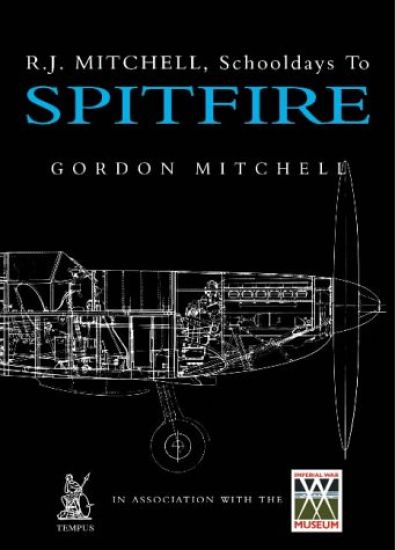
The definitive story of how the Spitfire was designed, built, and tested and how close it came to not happening at all. The biography of the life and career of the world famous aircraft designer who created the legendary Supermarine Spitfire written by his son, Gordon Mitchell.

The Spitfire began as a near disaster. The developments of this famous aircraft took it from uncompromising beginnings to become the legendary last memorial to a great man - an elegant and, with its pilots, a highly effective, weapon of war. The Spitfire would not have happened at all, however, without Mitchell's indomitable courage and determination in the face of severe physical and psychological adversity resulting from cancer. His contribution to the Battle of Britain, and thereafter to the achievement of final victory in 1945, was so great that our debt to him can never be repaid. This poignant story is written from a uniquely personal viewpoint by his son, Gordon Mitchell.

In the mid-1800s, a turbulent time when women were often thought to be unworthy of higher education, Maria Mitchell rose above the prejudices of her day to become America's first professional woman astronomer. This exciting biography tells the story of Maria Mitchell's life, her amazing achievements, and her faith that saw God's handiwork in the heavens.

The story of one of America's first professional astronomers and the changes that led to science being a male-dominated field There are a number of intellectual women from the 19th century whose crucial roles in the philosophical, social, and scientific debates that roiled the era have not been fully examined.Among them is the astronomer Maria Mitchell. Given the relative dearth of women scientists today, most of us assume that science has always been a masculine domain. But as Ren e Bergland reminds us, science and humanities were not seen as separate spheres in the nineteenth century; indeed, before the Civil War, women flourished in science and mathematics, disciplines that were considered less politically threatening and less profitable than the humanities. Mitchell apprenticed with her father, an amateur astronomer; taught herself the higher math of the day; and for years regularly swept the clear Nantucket night sky with the telescope in her rooftop observatory. In 1847, thanks to these diligent sweeps, Mitchell discovered a comet and was catapulted to international fame. Within a few years she was one of America's first professional astronomers; as computer of Venus--a sort of human calculator--for the U.S. Navy's Nautical Almanac, she calculated the planet's changing position. After an intellectual tour of Europe that included a winter in Rome with Sophia and Nathaniel Hawthorne, Mitchell was invited to join the founding faculty at Vassar College, where she spent her later years mentoring the next generation of women astronomers. Tragically, opportunities for her students dried up over the next few decades as the increasingly male scientific establishment began to close ranks. Mitchell protested this cultural shift in vain. In this compulsively readable biography, Ren e Bergland chronicles the ideological, academic, and economic changes that led to the original sexing of science--now so familiar that most of us have never known it any other way.

Mount Mitchell and the Black Mountains
The University of North Carolina Press
2003
nidottu
Each year, thousands of tourists visit Mount Mitchell, the most prominent feature of North Carolina's Black Mountain range and the highest peak in the eastern United States. From Native Americans and early explorers to land speculators and conservationists, people have long been drawn to this rugged region. Timothy Silver explores the long and complicated history of the Black Mountains, drawing on both the historical record and his experience as a backpacker and fly fisherman. He chronicles the geological and environmental forces that created this intriguing landscape, then traces its history of environmental change and human intervention from the days of Indian-European contact to today. Among the many tales Silver recounts is that of Elisha Mitchell, the renowned geologist and University of North Carolina professor for whom Mount Mitchell is named, who fell to his death there in 1857. But nature's stories - of forest fires, chestnut blight, competition among plants and animals, insect invasions, and, most recently, airborne toxins and acid rain - are also part of Silver's narrative, making it the first history of the Appalachians in which the natural world gets equal time with human history. It is only by understanding the dynamic between these two forces, Silver says, that we can begin to protect the Black Mountains for future generations.
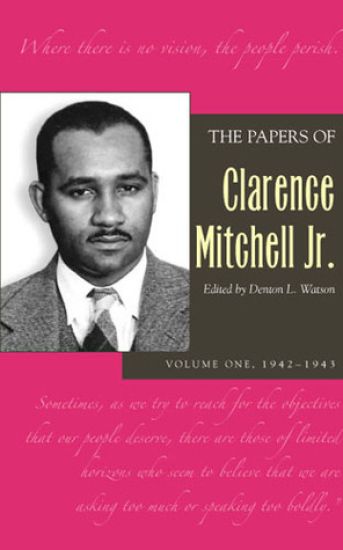
The Papers of Clarence Mitchell Jr., Volume I
Clarence Mitchell Jr.
Ohio University Press
2005
sidottu
Clarence Mitchell Jr. was the driving force in the movement for passage of civil rights laws in America. The foundation for Mitchell's struggle was laid during his tenure at the Fair Employment Practice Committee, where he led implementation of President Roosevelt's policy barring racial discrimination in employment in the national defense and war industry programs. Mitchell's FEPC reports and memoranda chart the beginning of the modern civil rights movement. The first two volumes of a projected five-volume documentary edition of The Papers of Clarence Mitchell Jr. illuminate the FEPC's work as a federal affirmative-action agency and the government's struggle to enforce the nation's antidiscrimination policy in industry, federal agencies, and labor unions. Subsequent volumes will trace Mitchell's successive enlistment of seven presidents in establishing and enforcing a permanent national nondiscrimination policy. Through his efforts, Congress passed the 1957, 1960, and 1964 Civil Rights Acts prohibiting discrimination in public accommodations, federal spending, and employment based on race, color, sex, and national origin; the 1965 Voting Rights Act; and the 1968 Fair Housing Act. Editor Denton L. Watson introduces and annotates Mitchell's writings, providing context and insight for students and scholars of civil rights history, government, law, and sociology.
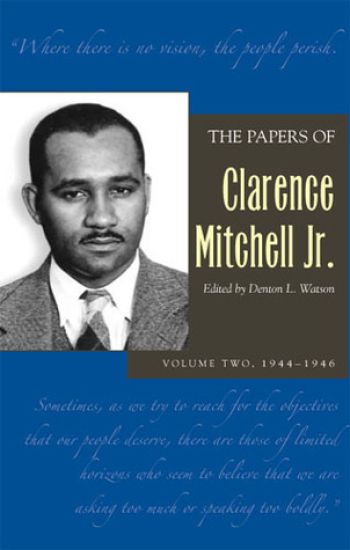
The Papers of Clarence Mitchell Jr., Volume II
Clarence Mitchell Jr.
Ohio University Press
2005
sidottu
Clarence Mitchell Jr. was the driving force in the movement for passage of civil rights laws in America. The foundation for Mitchell's struggle was laid during his tenure at the Fair Employment Practice Committee, where he led implementation of President Roosevelt's policy barring racial discrimination in employment in the national defense and war industry programs. Mitchell's FEPC reports and memoranda chart the beginning of the modern civil rights movement. The first two volumes of a projected five-volume documentary edition of The Papers of Clarence Mitchell Jr. illuminate the FEPC's work as a federal affirmative-action agency and the government's struggle to enforce the nation's antidiscrimination policy in industry, federal agencies, and labor unions. Subsequent volumes will trace Mitchell's successive enlistment of seven presidents in establishing and enforcing a permanent national nondiscrimination policy. Through his efforts, Congress passed the 1957, 1960, and 1964 Civil Rights Acts prohibiting discrimination in public accommodations, federal spending, and employment based on race, color, sex, and national origin; the 1965 Voting Rights Act; and the 1968 Fair Housing Act. Editor Denton L. Watson introduces and annotates Mitchell's writings, providing context and insight for students and scholars of civil rights history, government, law, and sociology.

The Papers of Clarence Mitchell Jr., Volume III
Clarence Mitchell Jr.
Ohio University Press
2010
sidottu
Born in Baltimore in 1911, Clarence Mitchell Jr. led the struggle for passage of the 1957 Civil Rights Act, the 1960 Civil Rights Act, the 1964 Civil Rights Act, the 1965 Voting Rights Act, and the 1968 Fair Housing Act. Volumes I (1942–1943) and II (1944–1946) of The Papers of Clarence Mitchell Jr., edited and annotated by Denton L. Watson, document the creation of the Fair Employment Practice Committee and its struggles to end discrimination in the war industries under the leadership of President Franklin D. Roosevelt Jr. Mitchell launched his career with the NAACP as a messianic advocate for the passage of civil rights laws by first creating programs for eliminating discriminatory employment practices in industry, labor unions, and the government. His subsequent focus included the NAACP's struggles to end segregation in the armed services and to eliminate Jim Crow in navy yards, schools on military posts, veterans hospitals, atomic energy installations, government restaurants, and many other federal establishments. Those struggles are carefully documented in the monthly and annual reports of the NAACP Labor Department and the NAACP Washington Bureau from 1946 to 1950 and from 1951 to 1954, which comprise companion volumes III and IV of The Papers of Clarence Mitchell Jr. The volumes are extensively supported by other documents in the appendix from the NAACP's archives. Volumes III and IV, furthermore, document the manner in which the NAACP utilized the newly created Leadership Conference on Civil Rights, a broad-based coalition of civil rights, civic, fraternal, labor, and religious organizations, in conjunction with the organization's branches, as its political fulcrum in implementing its developing legislative program in Congress. These volumes are an invaluable reference in tracing the NAACP's multifaceted struggle under Mitchell's leadership for passage of the civil rights laws.

The Papers of Clarence Mitchell Jr., Volume IV
Clarence Mitchell Jr.
Ohio University Press
2010
sidottu
Volume IV of The Papers of Clarence Mitchell Jr. covers 1951, the year America entered the Korean War, through 1954, when the NAACP won its Brown v. Board of Education case, in which the Supreme Court declared that segregation was discrimination and thus unconstitutional. The decision enabled Mitchell to implement the legislative program that President Truman's Committee on Civil Rights outlined in its landmark 1947 report, To Secure These Rights. The papers show how Mitchell persuaded President Truman to extend further the Fair Employment Practices Commission idea by issuing an executive order to enforce the nondiscrimination clause in government contracts with private industry; President Eisenhower further revised and strengthened this order. Mitchell expanded President Eisenhower's commitment to ending discrimination in federal funding by leading the struggle to get Congress to enact laws barring such practices in aid to education and all similar programs. Mitchell ultimately won the support of both presidents in ending segregation in many government-supported facilities and throughout the armed services. He expanded President Eisenhower's commitment to ending discrimination in federal funding by leading the struggle to get Congress to enact laws barring such practices in aid to education and all similar programs. Volumes III and IV are an invaluable reference in tracing the NAACP's multifaceted struggle under Mitchell's leadership for passage of the civil rights laws.
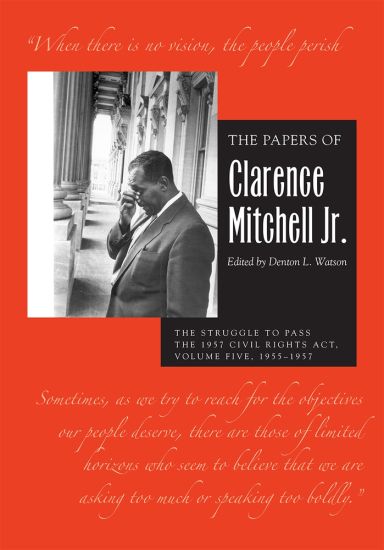
The Papers of Clarence Mitchell Jr., Volume V
Clarence Mitchell Jr.
Ohio University Press
2022
sidottu
Volume V of The Papers of Clarence Mitchell Jr. records the successful effort to pass the 1957 Civil Rights Act: the first federal civil rights legislation since 1875. Prior to the US Supreme Court's landmark 1954 decision in Brown v. Board of Education, the NAACP had faced an impenetrable wall of opposition from southerners in Congress. Basing their assertions on the court's 1896 "separate but equal" decision in Plessy v. Ferguson, legislators from the South maintained that their Jim Crow system was nondiscriminatory and thus constitutional. In their view, further civil rights laws were unnecessary. In ruling that legally mandated segregation of public schools was unconstitutional, the Brown decision demolished the southerners' argument. Mitchell then launched the decisive stage of the struggle to pass modern civil rights laws. The passage of the Civil Rights Act of 1957 was the first comprehensive lobbying campaign by an organization dedicated to that purpose since Reconstruction. Coming on the heels of the Brown decision, the 1957 law was a turning point in the struggle to accord Black citizens full equality under the Constitution. The act's passage, however, was nearly derailed in the Senate by southern opposition and Senator Strom Thurmond's record-setting filibuster, which lasted more than twenty-four hours. Congress later weakened several provisions of the act but—crucially—it broke a psychological barrier to the legislative enactment of such measures. The Papers of Clarence Mitchell Jr. is a detailed record of the NAACP leader's success in bringing the legislative branch together with the judicial and executive branches to provide civil rights protections during the twentieth century.
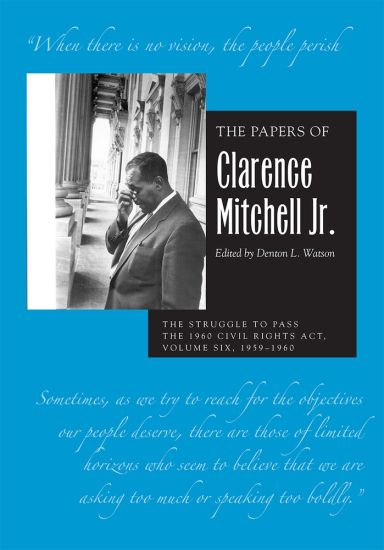
The Papers of Clarence Mitchell Jr., Volume VI
Clarence Mitchell Jr.
Ohio University Press
2022
sidottu
The Civil Rights Act of 1960 aimed to close loopholes in its 1957 predecessor that had allowed continued voter disenfranchisement for African Americans and for Mexicans in Texas. In early 1959, the newly seated Eighty-Sixth Congress had four major civil rights bills under consideration. Eventually consolidated into the 1960 Civil Rights Act, their purpose was to correct the weaknesses in the 1957 law. Mitchell's papers from 1959 to 1960 show the extent to which congressional resistance to the passage of meaningful civil rights laws contributed to the lunch counter sit-ins in Greensboro, North Carolina, and to subsequent demonstrations. The papers reveal how the repercussions of these events affected the NAACP's work in Washington and how, despite their dislike of demonstrations, NAACP officials used them to intensify the civil rights struggle. Among the act's seven titles were provisions authorizing federal inspection of local voter registration rolls and penalties for anyone attempting to interfere with voters on the basis of race or color. The law extended the powers of the US Commission on Civil Rights and broadened the legal definition of the verb to vote to encompass all elements of the process: registering, casting a ballot, and properly counting that ballot. Ultimately, Mitchell considered the 1960 act unsuccessful because Congress had failed to include key amendments that would have further strengthened the 1957 act. In the House, representatives used parliamentary tactics to stall employment protections, school desegregation, poll-tax elimination, and other meaningful civil rights reforms. The fight would continue. The Papers of Clarence Mitchell Jr. series is a detailed record of the NAACP leader's success in bringing the legislative branch together with the judicial and executive branches to provide civil rights protections during the twentieth century.

Joni Mitchell's Court and Spark
Sean Nelson
Continuum International Publishing Group Ltd.
2007
nidottu
"Court and Spark" is Joni Mitchell's most overt attempt at making a hit record, full of glossy production, catchy choruses, and even guest stars from every stratum of rock culture, high (Robbie Robertson) and low (Cheech and Chong). The record was a smash, reaching number two on the charts in March of 1974, spawning three hit singles; "Help Me, "Free Man in Paris" and "Raised on Robbery" and cementing Mitchell's position as a commercial as well as an artistic force.

A master of his genre, Scott Mitchell is celebrated for his warm approach to connecting the built and natural environment. Sought after for their minimalist, material-driven aesthetic, Mitchell's houses are studies in space, materiality, and light. Emphasizing an elegant spatial order, his projects respond to the natural appeal of their locations, be they bucolic retreats on Long Island or resplendent beach houses overlooking the Pacific Ocean. The first volume on his work, Scott Mitchell Houses is a sublime exploration of the architectural designer's impressive portfolio of projects. Dynamic compositions of light and shadow with a masterful use of concrete, Mitchell's monolithic forms draw on the surrounding environment via floor-to-ceiling windows that open onto vistas so cinematic that Tom Ford utilized one of Mitchell's homes in his neo-noir film Nocturnal Animals. Through previously unpublished photographs, readers are given an exclusive view into eight pivotal projects that span the globe from the Hamptons to Melbourne, featuring images by Ross Bleckner, Scott Frances, Trevor Mein, and Steve Shaw. Sure to appeal to fans of architecture and interiors, this book is an ode to a becalming modern luxury.


This work has been selected by scholars as being culturally important and is part of the knowledge base of civilization as we know it.This work is in the public domain in the United States of America, and possibly other nations. Within the United States, you may freely copy and distribute this work, as no entity (individual or corporate) has a copyright on the body of the work.Scholars believe, and we concur, that this work is important enough to be preserved, reproduced, and made generally available to the public. To ensure a quality reading experience, this work has been proofread and republished using a format that seamlessly blends the original graphical elements with text in an easy-to-read typeface.We appreciate your support of the preservation process, and thank you for being an important part of keeping this knowledge alive and relevant.

Weir Mitchell; His Life and Letters
Anna Robeson Brown 1873-1941 Burr
Hassell Street Press
2021
nidottu
This work has been selected by scholars as being culturally important and is part of the knowledge base of civilization as we know it.This work is in the public domain in the United States of America, and possibly other nations. Within the United States, you may freely copy and distribute this work, as no entity (individual or corporate) has a copyright on the body of the work.Scholars believe, and we concur, that this work is important enough to be preserved, reproduced, and made generally available to the public. To ensure a quality reading experience, this work has been proofread and republished using a format that seamlessly blends the original graphical elements with text in an easy-to-read typeface.We appreciate your support of the preservation process, and thank you for being an important part of keeping this knowledge alive and relevant.