Kirjojen hintavertailu. Mukana 12 390 323 kirjaa ja 12 kauppaa.

Kirjahaku

Etsi kirjoja tekijän nimen, kirjan nimen tai ISBN:n perusteella.

1000 tulosta hakusanalla Mitchell J Rycus

State papers and correspondence, illustrative of the social and political state of Europe, from the Revolution to the accession of the House of Hanover. Edited, with historical introduction, biographical memoirs, and notes; by J. M. K.
Title: State papers and correspondence, illustrative of the social and political state of Europe, from the Revolution to the accession of the House of Hanover. Edited, with historical introduction, biographical memoirs, and notes; by J. M. K.Publisher: British Library, Historical Print EditionsThe British Library is the national library of the United Kingdom. It is one of the world's largest research libraries holding over 150 million items in all known languages and formats: books, journals, newspapers, sound recordings, patents, maps, stamps, prints and much more. Its collections include around 14 million books, along with substantial additional collections of manuscripts and historical items dating back as far as 300 BC.The HISTORY OF EUROPE collection includes books from the British Library digitised by Microsoft. This collection includes works chronicling the development of Western civilisation to the modern age. Highlights include the development of language, political and educational systems, philosophy, science, and the arts. The selection documents periods of civil war, migration, shifts in power, Muslim expansion into Central Europe, complex feudal loyalties, the aristocracy of new nations, and European expansion into the New World. ++++The below data was compiled from various identification fields in the bibliographic record of this title. This data is provided as an additional tool in helping to insure edition identification: ++++ British Library Kemble, John Mitchell; 1857. 8 . 09077.h.46.
A Boy from Kentucky: Being a Little Journey to the Life of J. Leslie Davis

A Boy from Kentucky: Being a Little Journey to the Life of J. Leslie Davis

Warren B. Davis; Leigh Mitchell Hodges

Literary Licensing, LLC
2013
sidottu
""A Boy From Kentucky: Being A Little Journey To The Life Of J. Leslie Davis"" is a biographical book written by Warren B. Davis. The book takes the reader on a journey through the life of J. Leslie Davis, a boy who grew up in Kentucky and went on to become a successful businessman and philanthropist. The book begins by introducing the reader to Leslie's childhood in Kentucky, where he grew up on a farm and learned the value of hard work and determination. As the story unfolds, the reader learns about Leslie's journey to success, from his early years as a salesman to his rise to the top of the business world.Throughout the book, Warren B. Davis provides insight into Leslie's character, highlighting his dedication to his family, his faith, and his community. The author also explores Leslie's philanthropic endeavors, including his work with the Boy Scouts of America and other charitable organizations.Overall, ""A Boy From Kentucky"" is a heartwarming and inspiring story that celebrates the life of a remarkable man. It is a must-read for anyone who is interested in the history of Kentucky, the business world, or the power of determination and perseverance.This is a new release of the original 1938 edition.This scarce antiquarian book is a facsimile reprint of the old original and may contain some imperfections such as library marks and notations. Because we believe this work is culturally important, we have made it available as part of our commitment for protecting, preserving, and promoting the world's literature in affordable, high quality, modern editions, that are true to their original work.
Kentucky Slave Narratives & The Narrative of the Life of J. D. Green: A Runaway Slave From Kentucky, Containing an Account of His Three Escapes, in 18
This title consists of to complete works. The first materials presented in this original compilation are slave narrative and interviews of former slaves in Kentucky. The second title is a book dealing with the life of J.D. Green, A Runaway Slave From Kentucky, Containing an Account of His Three Escapes, in 1839, 1846, and 1848.
The history of masonry, from the building of the House of the Lord, and its progress throughout the civilized world, down to the present time the only history of ancient craft masonry ever published, except a sketch of forty-eight pages by Doctor Anderson in 1
This book has been considered by academicians and scholars of great significance and value to literature. This forms a part of the knowledge base for future generations. So that the book is never forgotten we have represented this book in a print format as the same form as it was originally first published. Hence any marks or annotations seen are left intentionally to preserve its true nature.
Why Delegate?

Why Delegate?

Neil J. Mitchell

Oxford University Press Inc
2021
nidottu
Why Delegate? moves beyond the standard economic accounts of delegation to offer a fresh take on a wide variety of issues and shows how essential the act of delegating is to our society. From mundane tasks like choosing a plumber to weightier ones like running a country, the world turns on delegation. We delegate particular tasks to people we believe have more expertise than we do. When it is successful, delegation improves efficiency, expands the range of responsible actors, and even increases happiness. When delegation fails, though, it brings conflict, corruption, and an absence of accountability. In Why Delegate?, Neil J. Mitchell investigates the incentives to delegate and the risks we take in doing so. He demonstrates how a new, modified understanding of the simple structure of the delegation relationship-the principal-agent relationship, as economists have described it-simplifies a myriad of important and seemingly disparate problems in private and public life. Using real-world case studies including child abuse in the Catholic Church, the Volkswagen pollution scandal, and FIFA corruption, Mitchell illustrates the broad functionality of delegation logic and the wide range of incentives at work in these relationships. Diverse examples reveal the opportunism of both the leaders and the led and show how accepted accounts of the principal-agent relationship are incomplete. By drawing on multidisciplinary research to address complex questions of motivation, control, responsibility, and accountability, the book builds a broader, more useful logic of delegation. Why Delegate? moves beyond the standard economic accounts of delegation to offer a fresh take on a wide variety of issues and shows how essential the act of delegating is to our society. Mitchell's comprehensive account of the contexts, causes, and effects of delegation develops a new way to understand both the theory and practice of this critical relationship.
Belongings

Belongings

Laura J. Mitchell

Columbia University Press
2008
sidottu
Laura J. Mitchell concentrates on the contested dynamics of land tenure in the Cedarberg region of the Western Cape, from the first settler land claim of 1725 to the entrenchment of colonial administration in the 1830s. Based on a decade of research, Mitchell focuses on the conflict between Dutch East India Company officials, settlers, indigenous Khoisan, and Indian-Ocean slaves, detailing the ways in which settlers themselves--rather than Company policy or an imperial army--drew the frontier into a colonial orbit and then gradually placed it under colonial control. Against a backdrop of often violent resistance, settlers claimed land one farm at a time. Family by family, household by household, the inhabitants of the Cedarberg region were bound to each other and to a colonial society based at Cape Town. The Khoisan resisted displacement, the appropriation of their livestock and hunting grounds, involuntary servitude, and subordination. Likewise, settlers resisted the Dutch East India Company's efforts at controlling territorial expansion, limiting their interaction with independent Khoisan groups, and regulating bonded labor. At the same time, the increasing presence of European material culture in frontier spaces proved that many settlers still affirmed their relationship to colonial power. Mitchell enriches her social history with insights from anthropology, archaeology, sociology, and environmental and women's studies, considering multiple sources of power and identity and recovering the role of women in creating settler society.
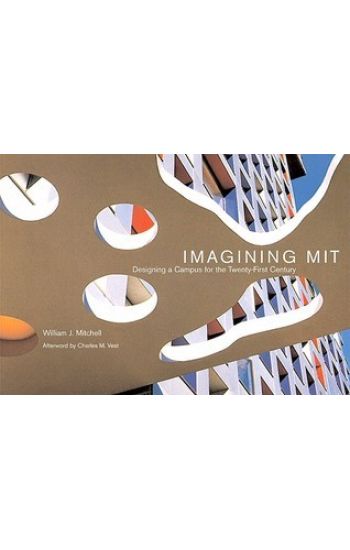
Imagining MIT

Imagining MIT

William J. Mitchell

MIT Press
2011
pokkari
The story of the decade long, billion-dollar building boom at MIT and how it produced major works of architecture by Charles Correa, Frank Gehry, Steven Holl, Fumihiko Maki, and Kevin Roche.In the 1990s, MIT began a billion-dollar building program that transformed its outdated, run-down campus into an architectural showplace. Funded by the high-tech boom of the 1990s and and driven by a pent-up demand for new space, MIT's ambitious rebuilding produced five major works of architecture: Kevin Roche's Zesiger Sports and Fitness Center, Steven Holl's Simmons Hall, Frank Gehry's Stata Center, Charles Correa's Brain and Cognitive Science Complex, and Fumihiko Maki's still-unrealized project for the Media Laboratory. In Imagining MIT, William Mitchell (who served as architectural adviser to MIT president Charles Vest) offers a critical, behind-the-scenes view of MIT's new buildings and the complex processes that produced them. The story is not simply one of commissions, projects, CAD, and hardhats; it is about all the forces that come into play-including money, politics, institutional dynamics, and ideology-when a major university campus is imagined, designed, and built. Lavishly illustrated with architectural photographs, drawings, plans, and models, with color images throughout, Imagining MIT shows both the opportunities and the obstacles facing architectural production and city building at the dawn of a new millennium.Mitchell challenges and subverts the standard form of architectural narrative-the mythic tale of heroic designers and enlightened patrons who overcome adversity to realize their visions. Instead, he offers a Rashomon-like construction of multiple voices and viewpoints. He sets the scene by recounting the history of MIT campus architecture, from its early synthesis of classicism and pragmatism to the daring mid-twentieth-century modernism of Alvar Aalto and Eero Saarinen. The descriptions and illustrations of the new projects show not only the evolution of each building, but the relationship of the techniques of architectural representation-themselves evolving, from sketching and modeling to three-dimensional computer modeling and rendering-to the conception and development of architectural ideas.
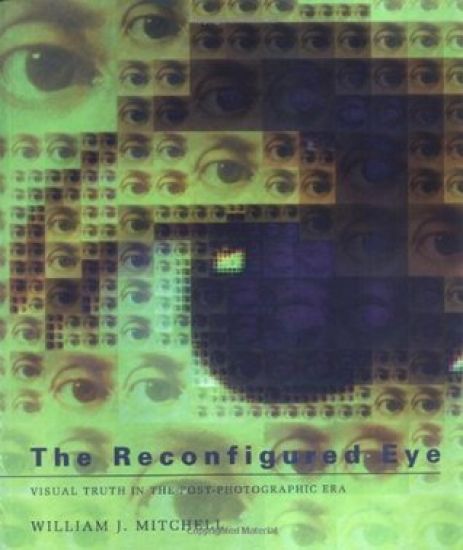
The Reconfigured Eye

The Reconfigured Eye

William J. Mitchell

MIT Press
1994
pokkari
Continuing William Mitchell's investigations of how we understand, reason about, and use images, The Reconfigured Eye provides the first systematic, critical analysis of the digital imaging revolution."An intelligent and readable approach to the digitization of images.... A useful overview of a critical subject."-New York Times Book ReviewEnhanced? Or faked? Today the very idea of photographic veracity is being radically challenged by the emerging technology of digital image manipulation and synthesis: photographs can now be altered at will in ways that are virtually undetectable, and photorealistic synthesized images are becoming increasingly difficult to distinguish from actual photographs. Continuing William Mitchell's investigations of how we understand, reason about, and use images, The Reconfigured Eye provides the first systematic, critical analysis of the digital imaging revolution. It describes the technology of the digital image in detail and looks closely at how it is changing the way we explore ideas, at its aesthetic potential, and at the ethical questions it raises.
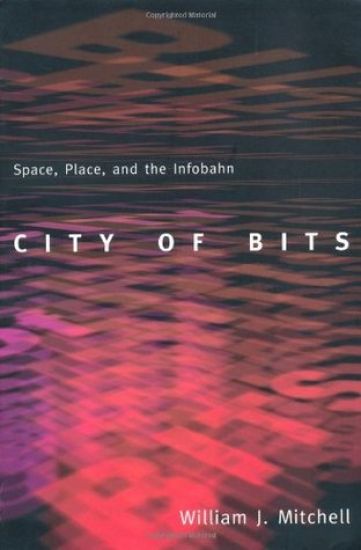
City of Bits

City of Bits

William J. Mitchell

MIT Press
1996
pokkari
Entertaining, concise, and relentlessly probing, City of Bits is a comprehensive introduction to a new type of city, an increasingly important system of virtual spaces interconnected by the information superhighway. William Mitchell makes extensive use of practical examples and illustrations in a technically well-grounded yet accessible examination of architecture and urbanism in the context of the digital telecommunications revolution, the ongoing miniaturization of electronics, the commodification of bits, and the growing domination of software over materialized form.
e-topia

e-topia

William J. Mitchell

MIT Press
2000
nidottu
The global digital network is not just a delivery system for email, Web pages, and digital television. It is a whole new urban infrastructure -- one that will change the forms of our cities as dramatically as railroads, highways, electric power supply, and telephone networks did in the past. In this lucid, invigorating book, William J. Mitchell examines this new infrastructure and its implications for our future daily lives.Picking up where his best-selling City of Bits left off, Mitchell argues that we must extend the definitions of architecture and urban design to encompass virtual places as well as physical ones, and interconnection by means of telecommunication links as well as by pedestrian circulation and mechanized transportation systems. He proposes strategies for the creation of cities that not only will be sustainable but will make economic, social, and cultural sense in an electronically interconnected and global world. The new settlement patterns of the twenty-first century will be characterized by live/work dwellings, 24-hour pedestrian-scale neighborhoods rich in social relationships, and vigorous local community life, complemented by far-flung configurations of electronic meeting places and decentralized production, marketing, and distribution systems. Neither digiphile nor digiphobe, Mitchell advocates the creation of e-topias -- cities that work smarter, not harder.
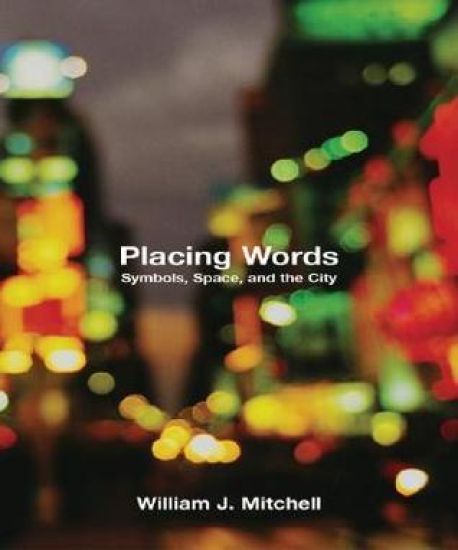
Placing Words

Placing Words

William J. Mitchell

MIT Press
2005
nidottu
The meaning of a message, says William Mitchell, depends on the context of its reception. "Shouting 'fire' in a crowded theater produces a dramatically different effect from barking the same word to a squad of soldiers with guns," he observes. In Placing Words, Mitchell looks at the ways in which urban spaces and places provide settings for communication and at how they conduct complex flows of information through the twenty-first century city.Cities participate in the production of meaning by providing places populated with objects for words to refer to. Inscriptions on these objects (labels, billboards, newspapers, graffiti) provide another layer of meaning. And today, the flow of digital information -- from one device to another in the urban scene -- creates a digital network that also exists in physical space. Placing Words examines this emerging system of spaces, flows, and practices in a series of short essays -- snapshots of the city in the twenty-first century.Mitchell questions the necessity of flashy downtown office towers in an age of corporate Web sites. He casts the shocked-and-awed Baghdad as a contemporary Guernica. He describes architectural makeovers throughout history, listing Le Corbusier's Fab Five Points of difference between new and old architecture, and he discusses the architecture of Manolo Blahniks. He pens an open letter to the Secretary of Defense recommending architectural features to include in torture chambers. He compares Baudelaire, the Parisian flaneur, to Spiderman, the Manhattan traceur. He describes the iPod-like galleries of the renovated MoMA and he recognizes the camera phone as the latest step in a process of image mobilization that began when artists stopped painting on walls and began making pictures on small pieces of wood, canvas, or paper. The endless flow of information, he makes clear, is not only more pervasive and efficient than ever, it is also generating new cultural complexities.
Fluid Power Maintenance Basics and Troubleshooting

Fluid Power Maintenance Basics and Troubleshooting

Richard J. Mitchell; John J. Pippenger

CRC Press
2019
nidottu
This unique single-source reference-the first book of its kind to address systematically the problems involved in the field-offers comprehensive coverage of hydraulic system troubleshooting and encourages change in the trial-and-error methods common in rectifying problems and restoring system downtime, furnishing a new paradigm for troubleshooting methodology.Covering typical circuitry found in industrial, agricultural, construction, transportations, utilities maintenance, and fire-fighting equipment as well as heavy presses, Fluid Power Maintenance Basics and Troubleshooting:Supplies the tools needed to investigate problems, including hydraulic component symbol identification Provides an understanding of the function of components in relation to the system Shows how to interpret the hydraulic system diagram Demonstrates how components within circuit diagrams interact to achieve machine performance Presents flow charts and operating descriptions for several types of machines Delineates the logical steps of problem analysis And much moreLavishly illustrated with nearly 400 drawings and photographs and written by two widely experienced authorities, Fluid Power Maintenance Basics and Troubleshooting is an indispensable day-to-day resource for mechanical, hydraulic, plant, control, maintenance, manufacturing, system and machine design, pneumatic, industrial, chemical, electrical and electronics, lubrication, plastics processing, automotive, and power system engineers; manufacturers of hydraulic and pneumatic machinery; systems maintenance personnel; machinery service and repair companies; and upper-level undergraduate, graduate, and continuing-education students in these disciplines.