Kirjojen hintavertailu. Mukana 11 699 587 kirjaa ja 12 kauppaa.

Kirjahaku

Etsi kirjoja tekijän nimen, kirjan nimen tai ISBN:n perusteella.

1000 tulosta hakusanalla Monet Thompson

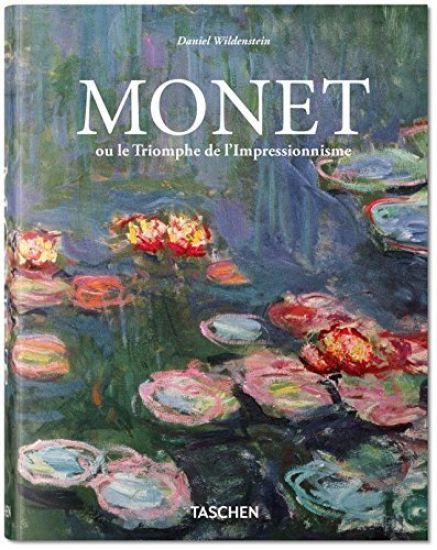
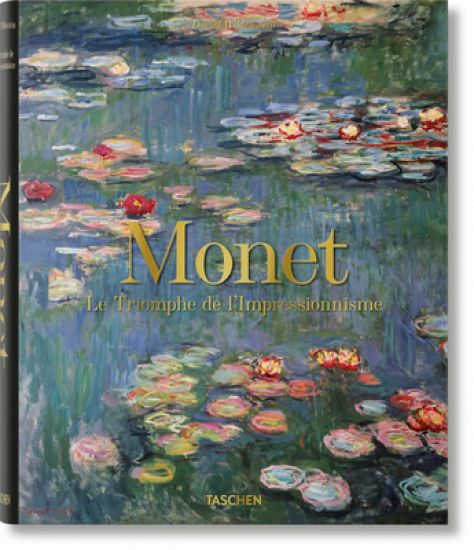
Monet. Le Triomphe de l'Impressionnisme

Monet. Le Triomphe de l'Impressionnisme

Daniel Wildenstein

TASCHEN GMBH
2014
sidottu
No other artist, apart from J. M. W. Turner, tried as hard as Claude Monet (1840–1926) to capture light itself on canvas. Of all the Impressionists, it was the man Cézanne called “only an eye, but my God what an eye!” who stayed true to the principle of absolute fidelity to the visual sensation, painting directly from the object. It could be said that Monet reinvented the possibilities of color. Whether it was through his early interest in Japanese prints, his time as a conscript in the dazzling light of Algeria, or his personal acquaintance with the major painters of the late 19th century, the work Monet produced throughout his long life would change forever the way we perceive both the natural world and its attendant phenomena. The high point of his explorations was the late series of water lilies, painted in his own garden at Giverny, which, in their approach toward almost total formlessness, are really the origin of abstract art. This biography does full justice to this most remarkable and profoundly influential artist, and offers numerous reproductions and archive photos alongside a detailed and insightful commentary.
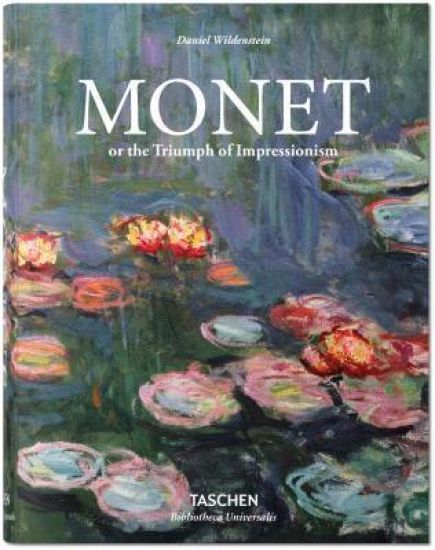
Monet. The Triumph of Impressionism

Monet. The Triumph of Impressionism

Daniel Wildenstein

Taschen GmbH
2014
sidottu
No other artist, apart from J. M. W. Turner, tried as hard as Claude Monet (1840–1926) to capture light itself on canvas. Of all the Impressionists, it was the man Cézanne called “only an eye, but my God what an eye!” who stayed true to the principle of absolute fidelity to the visual sensation, painting directly from the object. It could be said that Monet reinvented the possibilities of color. Whether it was through his early interest in Japanese prints, his time as a conscript in the dazzling light of Algeria, or his personal acquaintance with the major painters of the late 19th century, the work Monet produced throughout his long life would change forever the way we perceive both the natural world and its attendant phenomena. The high point of his explorations was the late series of water lilies, painted in his own garden at Giverny, which, in their approach toward almost total formlessness, are really the origin of abstract art. This biography does full justice to this most remarkable and profoundly influential artist, and offers numerous reproductions and archive photos alongside a detailed and insightful commentary.
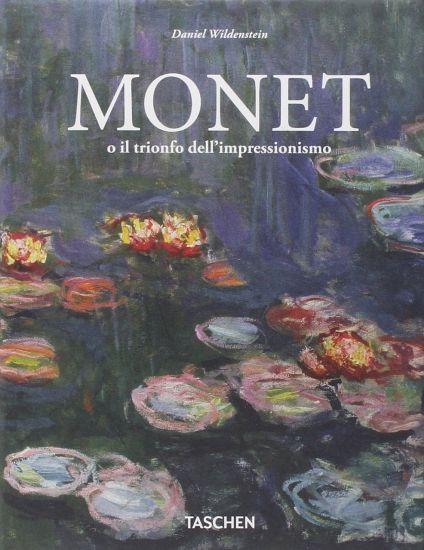
Monet. Il trionfo dell'impressionismo

Monet. Il trionfo dell'impressionismo

Daniel Wildenstein

TASCHEN GMBH
2014
sidottu
No other artist, apart from J. M. W. Turner, tried as hard as Claude Monet (1840–1926) to capture light itself on canvas. Of all the Impressionists, it was the man Cézanne called “only an eye, but my God what an eye!” who stayed true to the principle of absolute fidelity to the visual sensation, painting directly from the object. It could be said that Monet reinvented the possibilities of color. Whether it was through his early interest in Japanese prints, his time as a conscript in the dazzling light of Algeria, or his personal acquaintance with the major painters of the late 19th century, the work Monet produced throughout his long life would change forever the way we perceive both the natural world and its attendant phenomena. The high point of his explorations was the late series of water lilies, painted in his own garden at Giverny, which, in their approach toward almost total formlessness, are really the origin of abstract art. This biography does full justice to this most remarkable and profoundly influential artist, and offers numerous reproductions and archive photos alongside a detailed and insightful commentary.
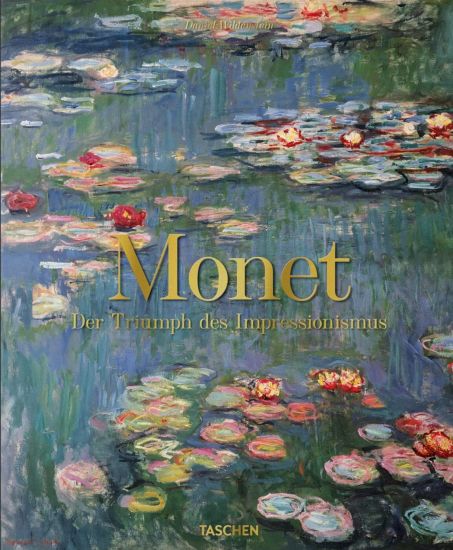
Monet. Der Triumph des Impressionismus

Monet. Der Triumph des Impressionismus

Daniel Wildenstein

TASCHEN GMBH
2022
sidottu
Claude Monetâ??s Impressionist technique still inspires to this day. Whether itâ??s his stunning Water Lilies series, or genre-defining Impression, Sunrise, discover what made Monet the master of French 19th-century art in this exuberant exploration of his life and work.
Monet. Le Triomphe de l'Impressionnisme

Monet. Le Triomphe de l'Impressionnisme

Daniel Wildenstein

TASCHEN GMBH
2022
sidottu
No other artist, apart from J. M. W. Turner, tried as hard as Claude Monet (1840–1926) to capture light itself on canvas. Of all the Impressionists, it was the man Cézanne called “only an eye, but my God what an eye!” who stayed true to the principle of absolute fidelity to the visual sensation, painting directly from the object. It could be said that Monet reinvented the possibilities of color. Whether it was through his early interest in Japanese prints, his time as a conscript in the dazzling light of Algeria, or his personal acquaintance with the major painters of the late 19th century, the work Monet produced throughout his long life would change forever the way we perceive both the natural world and its attendant phenomena. The high point of his explorations was the late series of water lilies, painted in his own garden at Giverny, which, in their approach towards almost total formlessness, are really the origin of abstract art. This biography does full justice to this most remarkable and profoundly influential artist, and offers numerous reproductions and archive photos alongside a detailed and insightful commentary.
Monet. The Triumph of Impressionism

Monet. The Triumph of Impressionism

Daniel Wildenstein

TASCHEN GMBH
2022
sidottu
No other artist, apart from J. M. W. Turner, tried as hard as Claude Monet (1840–1926) to capture light itself on canvas. Of all the Impressionists, it was the man Cézanne called “only an eye, but my God what an eye!” who stayed true to the principle of absolute fidelity to the visual sensation, painting directly from the object. It could be said that Monet reinvented the possibilities of color. Whether it was through his early interest in Japanese prints, his time as a conscript in the dazzling light of Algeria, or his personal acquaintance with the major painters of the late 19th century, the work Monet produced throughout his long life would change forever the way we perceive both the natural world and its attendant phenomena. The high point of his explorations was the late series of water lilies, painted in his own garden at Giverny, which, in their approach towards almost total formlessness, are really the origin of abstract art. This biography does full justice to this most remarkable and profoundly influential artist, and offers numerous reproductions and archive photos alongside a detailed and insightful commentary.
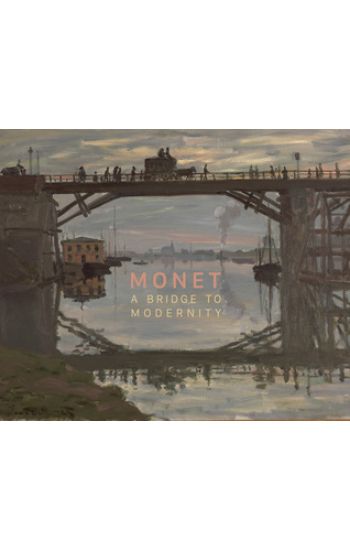
Monet – A Bridge to Modernity

Monet – A Bridge to Modernity

Anabelle Kienle Ponka

Five Continents Editions
2015
sidottu
For the first time, this book explores a new aspect of Monet's work: his fascination, during the 1870s, with bridges. French painter Claude Monet (1840-1926) is one of the most popular artists of all time. His paintings of water lilies, haystacks, cathedrals, and much more are all celebrated and beloved. For the first time, this book explores a new aspect of Monet's work: his fascination, during the 1870s, with bridges. After moving to Argenteuil, a small town on the outskirts of Paris, Monet was drawn to the local footbridge near his house on the banks of the Seine. His painting of it, The Wooden Bridge, 1872, is a composition of startling modernity. The book begins with this work and explores Monet's use of the bridge motif from 1872 to 1877 in the aftermath of the Franco-Prussian war and beyond. Beautifully illustrated and published to accompany a major exhibition, the book explores how Monet sought to establish himself as a leader of the avant-garde and how his paintings of bridges played a pivotal role in this context. Focusing on twelve major paintings by Monet, the catalogue further examines the Impressionists' response to their ever-changing environment and the late nineteenth-century transformation of Paris and its suburbs. The publication consists of three sections featuring three essays followed by an illustrated chronology: Monet's use of the bridge as a testing ground for his innovative ideas, the role of photography, illustrations, and contemporary influences; the expansion of Paris and the urban cityscape; the role of Impressionism in the context of the Franco-Prussian war. Text in English and French.
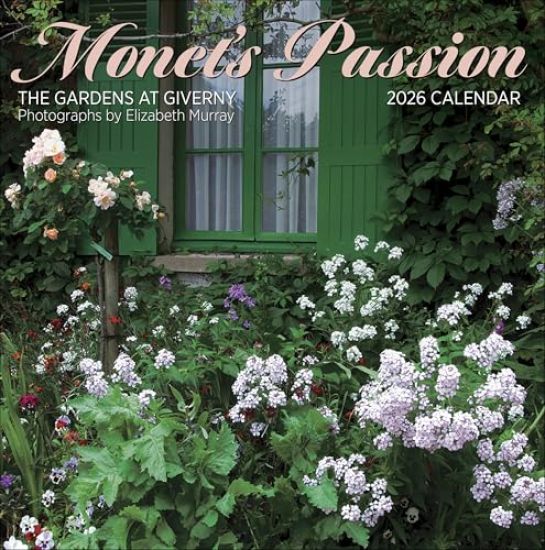
Monet's Passion: The Gardens at Giverny 2026 Wall Calendar
Seeking a tranquil place to indulge his twin passions of painting and gardening, master Impressionist Claude Monet moved to the small Normandy village of Giverny in 1883. Roughly 100 years later, photographer and horticultural designer Elizabeth Murray helped restore Monet's gardens to their blooming glory. Murray has returned regularly to photograph the grounds' ever-changing beauty. Her firsthand knowledge illuminates the vivid photographs and their accompanying descriptions. The scenes of dazzling blossoms, graceful greenery, and the famous lily pond may look familiar, since it was Monet's goal to recreate these scenes as faithfully as possible in his many paintings.
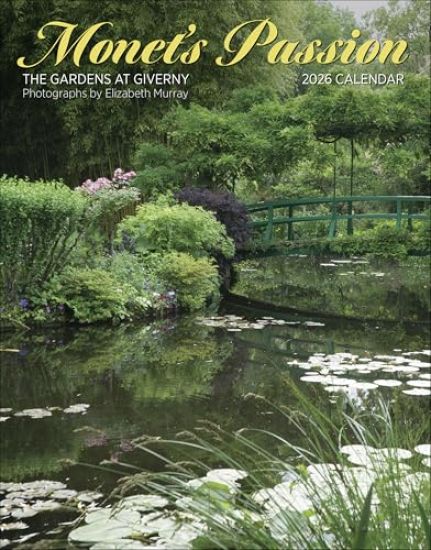
Monet's Passion: The Gardens at Giverny 2026 Mini Wall Calendar
At his Giverny home outside Paris, Claude Monet indulged in his two favorite pastimes: painting and gardening. His translation of dazzling blooms and graceful greeneries to his canvases made him the master of French Impressionism. Photographer and horticultural designer Elizabeth Murray was a part of the team that helped restore the gardens to their full glory in the 1980s. Her firsthand knowledge of the grounds illuminates the vivid photographs and their accompanying descriptions in this calendar.
Monet’s Chrysanthemums A4 Lined Cahier
French artist Claude Monet, one of the founders of the Impressionist movement, was particularly fascinated with capturing the transient beauty of nature. In a virtuoso display of flowers, this 1897 work portrays a vibrant bed of chrysanthemums from his prized garden in Giverny.