

Kirjahaku
Etsi kirjoja tekijän nimen, kirjan nimen tai ISBN:n perusteella.
1000 tulosta hakusanalla Mrs. R. H. Read

Brief Vocabulary In English And Assamese: With Rudimentary Exercises (1864)
Mrs. S. R. Ward
KESSINGER PUBLISHING, LLC
2008
nidottu
Feza Aazmi Jadeed Urdu Shairee Ke Tanazur Mein
Prof Muhammad/M Rafique/R Sagar/S Mrs
Createspace Independent Publishing Platform
2015
nidottu
![DISCRETE PROBABILITY AND PROBABILITY DISTRIBUTIONS - II [2 Credits] Statistics](/covers/9789389533637.jpg)
DISCRETE PROBABILITY AND PROBABILITY DISTRIBUTIONS - II [2 Credits] Statistics
V R (mrs ) Prayag; P G Dixit; P S Prof Kapre
Nirali Prakhashan
2019
pokkari
The main purpose of the book is to provide foundation as well as comprehensive background of 'Discrete Probability Theory' to beginners in simple and interesting manner. In order to make the contents of the book easier to comprehend, we have included a requisite number of illustrations, remarks, figures, diagrams etc. to elucidate statistical concepts. Application of Statistics in real life situations is emphasized through illustrative examples.

Internet of Things: A Beginners Approach
Mrs M. Dhavapriya; R. Nandhakumar
Lap Lambert Academic Publishing
2026
nidottu
PIONEER DAYS IN THE SAN BERNARDINO VALLE
MRS. E. P. R CRAFTS; Fannie P. Mcgehee; E. P. R. Crafts
UNKNOWN
2007
sidottu

Once upon a Time in Nebraska
Mrs. Alexander C. Troup; Thomas R. (ILT) Kimball
Kessinger Pub
2009
pokkari

Dickon Goes to the Fair and Other Plays: The Drama League Junior Play Series
Alice Wight Alden; Mrs John R. Commons; Sara R. Kingsbury
Literary Licensing, LLC
2012
nidottu

Excursions Dans Les Isles de Madère Et de Porto-Santo, 1823
Thomas Edward Bowdich; Mrs R Lee; Georges Cuvier; Alexander Humboldt
Hachette Livre - BNF
2021
pokkari


Electrical Engineering Materials And Energy Conversion
Prachi R Miss Godbole; Leena N Mrs Suranglikar
Nirali Prakashan
2014
pokkari

Peter Paul Rubens
Gustav Friedrich Waagen; Robert R. (TRN) Noel; Mrs. (EDT) Jameson
Kessinger Pub
2009
sidottu

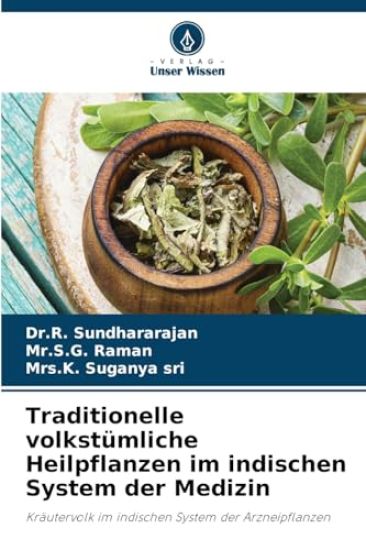
Traditionelle volkstümliche Heilpflanzen im indischen System der Medizin
Dr R Sundhararajan; Mr S G Raman; Mrs K Suganya Sri
Verlag Unser Wissen
2025
pokkari
Das indische Medizinsystem, insbesondere Ayurveda, hat eine reiche Tradition in der Verwendung von Heilpflanzen f r Heilung und Wohlbefinden. Traditionelle volkst mliche Heilmethoden st tzen sich oft auf die lokale Flora und integrieren Pflanzen in die t gliche Praxis, sowohl zu pr ventiven als auch zu therapeutischen Zwecken. Hier sind einige wichtige Pflanzen, die in der indischen Volksmedizin h ufig verwendet werden: Tulsi (Heiliges Basilikum): Tulsi wird als heilige Pflanze verehrt und ist f r seine entz ndungshemmenden und antioxidativen Eigenschaften bekannt. Sie wird h ufig in Tees und Abkochungen verwendet, um Atemwegsbeschwerden zu lindern, Stress abzubauen und die Immunit t zu st rken. Neem (Azadirachta indica): Neem ist f r seine reinigenden Eigenschaften bekannt und wird zur Behandlung von Hautkrankheiten, Infektionen und als nat rliches Insektenschutzmittel verwendet. Seine Bl tter, Rinde und sein l werden in verschiedenen Rezepturen zur Unterst tzung der Entgiftung und zur Verbesserung der allgemeinen Gesundheit eingesetzt. Amla (Phyllanthus emblica): Amla ist reich an Vitamin C und Antioxidantien. Amla-Saft oder -Pulver wird h ufig wegen seiner verj ngenden Eigenschaften konsumiert. Kurkuma (Curcuma longa): Weithin bekannt f r seine entz ndungshemmende und antimikrobielle Wirkung.
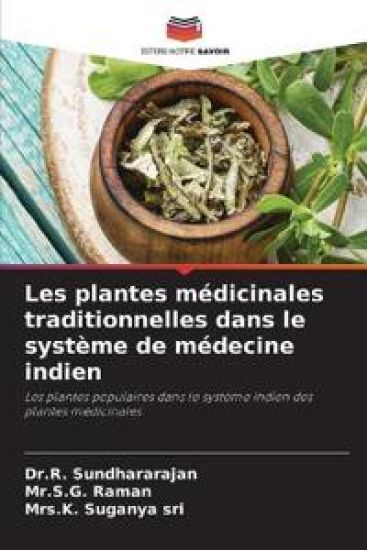
Les plantes médicinales traditionnelles dans le système de médecine indien
Dr R Sundhararajan; Mr S G Raman; Mrs K Suganya Sri
Editions Notre Savoir
2025
pokkari
Le syst me de m decine indien, en particulier l'Ayurveda, a une riche tradition d'utilisation des plantes m dicinales pour la gu rison et le bien- tre. Les traitements traditionnels s'appuient souvent sur la flore locale et int grent les plantes dans les pratiques quotidiennes des fins pr ventives et th rapeutiques. Voici quelques plantes cl s couramment utilis es dans la m decine populaire en Inde: Tulsi (basilic sacr ): V n r e comme une plante sacr e, la tulsi est connue pour ses propri t s anti-inflammatoires et antioxydantes. Il est souvent utilis dans les th s et les d coctions pour soulager les affections respiratoires, r duire le stress et renforcer l'immunit . Neem (Azadirachta indica): Connu pour ses propri t s purifiantes, le neem est utilis pour traiter les affections cutan es, les infections et comme r pulsif naturel contre les insectes. Ses feuilles, son corce et son huile sont couramment utilis es dans diverses formules pour favoriser la d sintoxication et am liorer la sant g n rale. Amla (Phyllanthus emblica): L'amla est riche en vitamine C et en antioxydants. Il est traditionnellement utilis pour renforcer l'immunit , am liorer la digestion et la sant de la peau. Le jus ou la poudre d'amla est souvent consomm pour ses propri t s rajeunissantes. Curcuma (Curcuma longa): Largement connu pour ses effets anti-inflammatoires et antimicrobiens, le curcuma est un aliment de base dans la cuisine.
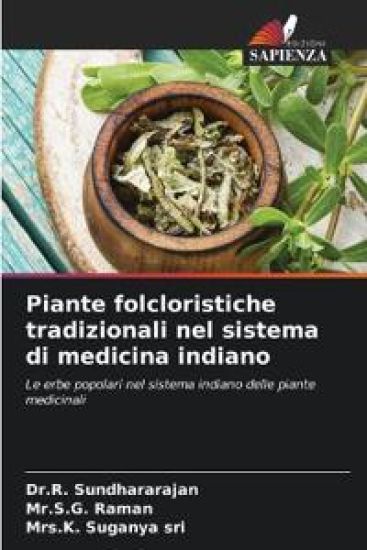
Piante folcloristiche tradizionali nel sistema di medicina indiano
Dr R Sundhararajan; Mr S G Raman; Mrs K Suganya Sri
Edizioni Sapienza
2025
pokkari
Il sistema di medicina indiano, in particolare l'Ayurveda, ha una ricca tradizione di utilizzo delle piante medicinali per la guarigione e il benessere. Le cure popolari tradizionali spesso attingono alla flora locale, integrando le piante nelle pratiche quotidiane a scopo preventivo e terapeutico. Ecco alcune piante chiave comunemente utilizzate nella medicina popolare in India: Tulsi (basilico santo): Venerata come pianta sacra, il tulsi noto per le sue propriet antinfiammatorie e antiossidanti. Viene spesso utilizzato in t e decotti per alleviare le affezioni respiratorie, ridurre lo stress e rafforzare l'immunit . Neem (Azadirachta indica): Conosciuto per le sue propriet depurative, il Neem usato per trattare le condizioni della pelle, le infezioni e come repellente naturale per gli insetti. Le sue foglie, la corteccia e l'olio sono comunemente utilizzati in varie formulazioni per favorire la disintossicazione e migliorare la salute generale. Amla (Phyllanthus emblica): L'amla ricca di vitamina C e antiossidanti. tradizionalmente utilizzata per rafforzare l'immunit , migliorare la digestione e la salute della pelle. Il succo o la polvere di amla vengono spesso consumati per le loro propriet ringiovanenti. Curcuma (Curcuma longa): Ampiamente nota per i suoi effetti antinfiammatori e antimicrobici, la curcuma un alimento fondamentale sia in cucina che in cucina.