Kirjojen hintavertailu. Mukana 11 342 296 kirjaa ja 12 kauppaa.

Kirjahaku

Etsi kirjoja tekijän nimen, kirjan nimen tai ISBN:n perusteella.

1000 tulosta hakusanalla Murray R. Janewski

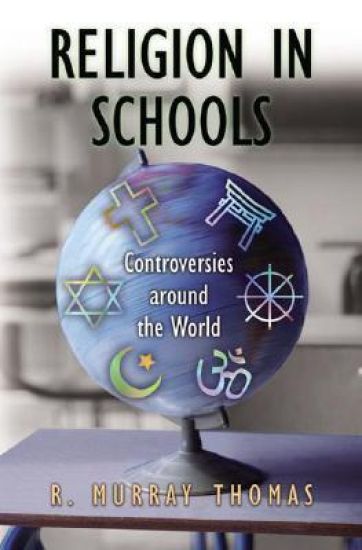
Religion in Schools

Religion in Schools

R. Murray Thomas

Praeger Publishers Inc
2006
sidottu
Many Americans may believe that religion in the schools is a controversial subject only in the United States. But around the world, the subject has gained widespread notoriety, media coverage, and attention from governing bodies, school administrations, and individuals. In France, conflict erupted when a young girl wore a headscarf to her public school; the government there got involved to reassert the rule that no outward display of religion will be tolerated. In India, a panel was appointed to remove Hindu religious beliefs from high-school textbooks. In Pakistan, the government passed a law to make the curriculum of Islamic religious schools more secular in its approach. Here in the United States, debates abound regarding the Pledge of Allegiance, the posting of the Ten Commandments, prayer in school, and other familiar arguments. But why do these controversies exist? What prompts them? Why do particular conflicts arise, and what attempts are made to deal with them? How have solutions fared? How are the controversies in one country similar to or different from those in another?In Religion in Schools, R. Murray Thomas uses case examples from twelve countries around the world, covering all regions of the world and all the major religions, to examine and answer these questions. He reveals the complexities of the conflicts, and shows what brought them about. For example, in France, the conflicts often arise out of that nation's desire to remain intensely secular. Using case examples and applying a uniform approach to analyzing each country's particular focus on religion and education, he is able to show what these conflicts have in common, how well solutions have worked, and what may lie ahead.
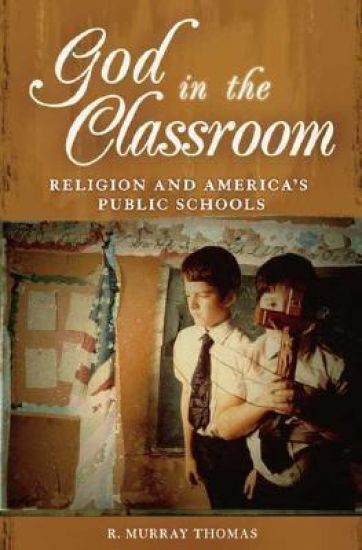
God in the Classroom

God in the Classroom

R. Murray Thomas

Praeger Publishers Inc
2007
sidottu
To help readers gain a better understanding of conflicts over the proper role of religion in American public schools, this book focuses on the seven major types of conflicts that have become particularly confrontational. Thomas does not take sides; rather, he lays out the arguments, their historical and cultural contexts, and the groups that debate them and their goals. Anyone wishing to gain a better understanding of the controversies surrounding religion in American schools will find here not just a review of the issues, but a deeper consideration of the causes, consequences, and future of the debates.Conflicts over the proper role of religion in schools-and particularly in public schools supported by tax monies-are frequently featured in news reports. For example, in the United States there currently are conflicts over the teaching of evolution, inserting the word God in the pledge of allegiance, conducting school holiday celebrations, posting the biblical Ten Commandments in schools, and praying at school functions. People who are interested in such controversies often-or, perhaps, usually-fail to understand the historical backgrounds to the conflicts and therefore do not recognize the very complex factors that affect why the controversies become so heated. To help readers gain a better understanding of such matters, this book focuses on the seven major types of conflicts that have become particularly confrontational during the first decade of the twenty-first century.The cases on which the chapters focus concern issues that currently are being hotly debated in America. Controversies are described in relation to their historical origins and the author shows how the history affects current understanding of the issues. Thomas does not take sides in the arguments; rather, he lays out the arguments, their historical and cultural contexts, and the groups that debate them and their goals. Anyone wishing to gain a better understanding of the controversies surrounding religion in American schools will be happy to find here not just a review of the issues, but a deeper consideration of the causes, consequences, and future of the debates and the role of religion in our public schools.
Violence in America's Schools

Violence in America's Schools

R. Murray Thomas

Praeger Publishers Inc
2006
sidottu
The problem of violence in schools has not gone away despite radical reductions in violent crimes throughout the country over the last decade. Students continue to harrass, haze, and harm each other in a variety of ways, disrupting classrooms and whole schools. In the wake of the Columbine massacre, many focused on the worst kind of school violence: deadly assaults with dangerous weapons. But other forms of violence are more persistent, common, and just as destructive in many ways: fighting, sexual abuse, carrying weapons to school, vandalism, and assorted other crimes that happen behind the closed doors of elementary, middle, and high schools across the country. The consequences range from violent victimization and death, to the disruption of learning and fear among student bodies and teaching staffs. Here, Thomas provides a foundation for understanding why the violence occurs, preventing it from happening, and treating both offenders and victims after it happens.Using scores of case descriptions to illustrate the types of school violence and their treatment in recent years, the author skillfully shows readers how the problem of violence and crime in schools is an insidious issue that cannot go untreated. He offers both tested and proposed methods for dealing with a host of violence issues and a guide to planning treatment of the problem and its associated consequences. He answers the questions: What are prominent types of violence in American schools? What conditions contribute to those types of violence? What methods can be applied in an effort to reduce school violence? Readers will come away from this book with a greater understanding of the scope of violence in America's schools, and the myriad ways of addressing it.
Classifying Reactions to Wrongdoing

Classifying Reactions to Wrongdoing

R. Murray Thomas

Praeger Publishers Inc
1995
sidottu
While conducting research into crimes, the treatment of crimes and the aim of these treatments, Thomas was frustrated by the lack of an available classification system that organized this material. This book was written to end that frustration. By looking at existing and potential misdeeds, sanctions and the stated goals of these sanctions, Thomas discovered a method to organize this information. Classifying Reactions to Wrongdoing provides three comprehensive taxonomies for categorizing (1) crimes, sins, breaches of custom, and other misdeeds, (2) sanctions and treatments which people recommend perpetrators of misdeeds should experience, and (3) the aims of such sanctions and treatments. This unique book would be of interest to psychologists, sociologists, criminologists, philosophers, and others interested in ethics, law, and moral development.
An Integrated Theory of Moral Development

An Integrated Theory of Moral Development

R. Murray Thomas

Praeger Publishers Inc
1997
sidottu
This book is the framework for a new theory of moral development that combines components from a variety of existing theories of human development with the author's original research. The detailed description of the theory is divided into five sections: (1) foundations of development, (2) long-term memory, (3) the influence of environments, (4) working memory, and (5) progressions and stages of development. Each chapter concludes with an exercise demonstrating the application of the new theory, and the final section of the book employs the theory as a lens through which the moral development of four historic figures can be viewed afresh.
Moral Development Theories -- Secular and Religious

Moral Development Theories -- Secular and Religious

R. Murray Thomas

Praeger Publishers Inc
1997
sidottu
Moral Development Theories—Secular and Religious introduces readers to 13 secular models and 13d religious theories in a wide-ranging comparative study of the roots of moral development. The secular models include attribution theory, cognitive-structural views, social-learning and social-cognition approaches, Freud's psychoanalysis (plus Erikson and Fromm), Marxist beliefs, a composite theory, Hoffman's conception of empathy, Anderson's information-integration view, Gilligan's gender distinction, Sutherland and Cressey's explanation of delinquency, and Lovinger on ego development. Religious theories represent the Judaic-Christian-Islamic line, Hinduism and derivatives (Buddhism, Jainism, Sikhism), Confucianism, Shinto, and four minor theories drawn from the belief systems of the Navajo, Zulus, Vodou adherents, and Okinawans.The description of each theory is designed to answer a common set of questions introduced in Chapter 1. The closing section of each chapter evaluates that chapter's theories in terms of a series of assessment standards described in Chapter 2. The book's final chapter inspects all of the theories from the viewpoint of five desires that people often hold in relation to their conceptions of moral development. The desires are: (a) for immanent justice; (b) to understand the causes of the consequences that result from people's behavior in moral situations; (c) to become immortal; (d) to enjoy a happy life, and (e) to understand the moral-development process in order to help others who need moral guidance.
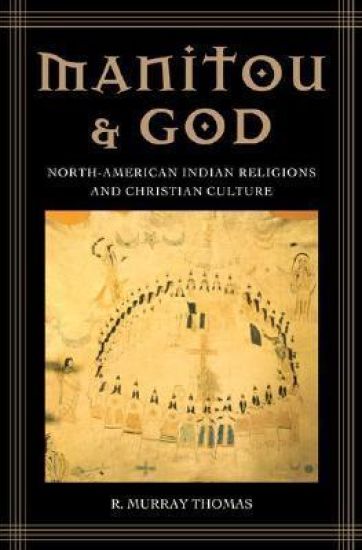
Manitou and God

Manitou and God

R. Murray Thomas

Praeger Publishers Inc
2007
sidottu
Manitou and God describes American Indian religions as they compare with principal features of Christian doctrine and practice. Thomas traces the development of sociopolitical and religious relations between American Indians and the European immigrants who, over the centuries, spread across the continent, captured Indian lands, and decimated Indian culture in general and religion in particular. He identifies the modern-day status of American Indians and their religions, including the progress Indians have made toward improving their political power, socioeconomic condition, and cultural/religious recovery and the difficulties they continue to face in their attempts to better their lot. Readers will gain a better sense of the give and take between these two cultures and the influence each has had on the other. In Algonquin Indian lore, Manitou is a supernatural power that permeates the world, a power that can assume the form of a deity referred to as The Great Manitou or The Great Spirit, creator of all things and giver of life. In that sense, Manitou can be considered the counterpart of the Christian God. From early times, the belief in Manitou extended from the Algonquins in Eastern Canada to other tribal nations—the Odawa, Ojibwa, Oglala, and even the Cheyenne in the Western plains. As European settlers made their way across the land, the confrontation between Christianity and Native American religions revealed itself in various ways. That confrontation continues to this day.
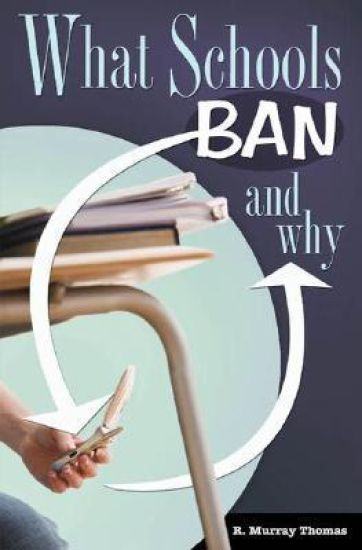
What Schools Ban and Why

What Schools Ban and Why

R. Murray Thomas

Praeger Publishers Inc
2008
sidottu
Schools in the United States have historically banned many different things. From clothing to weapons, from cell phones to books, schools have implemented various types of censorship and restrictions on their students for a variety of reasons and with a variety of results. This book's purpose is to describe the various things banned in schools, the reasons behind attempts to ban such things, the types of people who approve of censoring those things and the types who do not, the outcome of representative cases of censorship, and suggestions for school personnel about how to cope with bans. Each chapter addresses the same sequence of topics: a particular type of ban's domain and historical background; representative cases of the ban's application; ban supporters and their methods; ban critics and their methods; and ways of resolving conflicts over the ban. While some may argue that cell phones are necessary in today's school setting, others would suggest they are disruptive. While some may argue The Catcher in the Rye should be banned, others may say it is essential reading for American students. More recently, some schools have banned all of the Harry Potter books from their library shelves. Few would argue that a ban on weapons is a bad thing, but who determines what should be considered a weapon? In some schools, restrictions are placed on Web access, but who decides what to allow and what not to allow? Where do the lines get drawn? Here, Thomas reviews the many areas of censorship in our schools and helps readers draw their own conclusions.
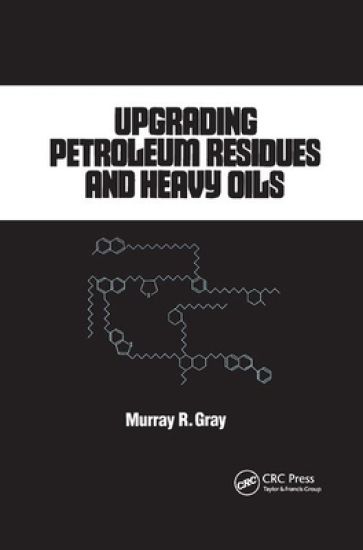
Upgrading Petroleum Residues and Heavy Oils
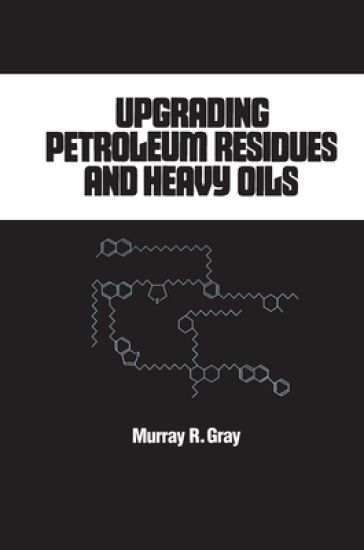
"This useful reference offers in-depth coverage of current techniques for converting heavy oils and residues into more valuable distillates.Examines the chemistry of heavy hydrocarbon feeds and their properties important to engineering design, including phase behavior, reaction kinetics, and thermodynamic and transport characteristics!"
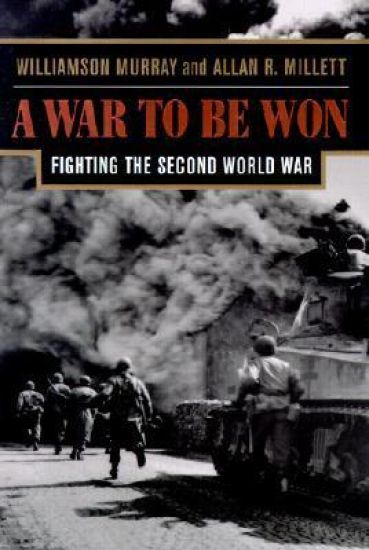
A War To Be Won

A War To Be Won

Williamson Murray; Allan R. Millett

Harvard University Press
2001
nidottu
In the course of the twentieth century, no war looms as profoundly transformative or as destructive as World War II. Its global scope and human toll reveal the true face of modern, industrialized warfare. Now, for the first time, we have a comprehensive, single-volume account of how and why this global conflict evolved as it did. A War To Be Won is a unique and powerful operational history of the Second World War that tells the full story of battle on land, on sea, and in the air.Williamson Murray and Allan R. Millett analyze the operations and tactics that defined the conduct of the war in both the European and Pacific Theaters. Moving between the war room and the battlefield, we see how strategies were crafted and revised, and how the multitudes of combat troops struggled to discharge their orders. The authors present incisive portraits of the military leaders, on both sides of the struggle, demonstrating the ambiguities they faced, the opportunities they took, and those they missed. Throughout, we see the relationship between the actual operations of the war and their political and moral implications.A War To Be Won is the culmination of decades of research by two of America’s premier military historians. It avoids a celebratory view of the war but preserves a profound respect for the problems the Allies faced and overcame as well as a realistic assessment of the Axis accomplishments and failures. It is the essential military history of World War II—from the Sino–Japanese War in 1937 to the surrender of Japan in 1945—for students, scholars, and general readers alike.
I Am Stone

I Am Stone

R. Murray Gilchrist

British Library Publishing
2021
nidottu
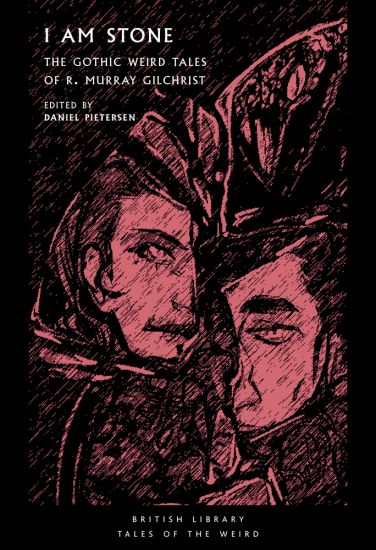
'The first thing my dazed eyes fell upon was the mirror of black glass... She held it so that I might gaze into its depths. And there, with a cry of amazement and fear, I saw the shadow of the Basilisk.' Through odysseys across dreamlike lands, Gothic love affairs haunted by the shadow of death and uncanny episodes from the Peak country, the portrait of a unique writer of the strange tale emerges. With his florid, illustrative style and powerful imagination, R. Murray Gilchrist's impact on the weird fiction genre is unmistakable - and yet his name fell into obscurity following his death. Exploring tales of annihilation and shattered identities, fatalistic romances, bewildering visions of the sublime and mythological evils preying on the innocent, this new anthology is a journey through an entrancing and influential oeuvre essential for any reader of the weird.
Recent Theories of Human Development

Recent Theories of Human Development

R. Murray Thomas

SAGE Publications Inc
2000
nidottu
Intended as supplemental reading in courses on theories of development, this book augments traditional core texts by providing students with more depth on about two dozen recent and emerging theories that have appeared over the course of the past 20 years. This period has seen a decline of the traditional "grand" theories that attempt to apply to all people all the time in favor of "micro theories" that focus more on individual differences, so a book like this actually points the way toward the future rather than dryly reviewing the past. In addition, the author inspects the changing ways in which the concept of "theory" itself has been interpreted during this period, and he concludes with a chapter suggesting future directions.
Counseling and Life-Span Development

Counseling and Life-Span Development

R. Murray Thomas

SAGE Publications Inc
1990
nidottu
Does a client's age affect the counselling process? What special challenges do older clients present for the counsellor? This book links life-span concepts directly to the daily concerns of counsellors. With the focus on major types of problems that bring clients to counselling, Thomas integrates current research with counselling techniques to enable counsellors to better understand the relationship between changes in personality traits and counselling elderly clients. He identifies key decisions that are typically made in the counselling process and determines what kinds of age-related information will positively influence the counselling process.
High-Stakes Testing

High-Stakes Testing

R. Murray Thomas

Routledge Member of the Taylor and Francis Group
2005
sidottu
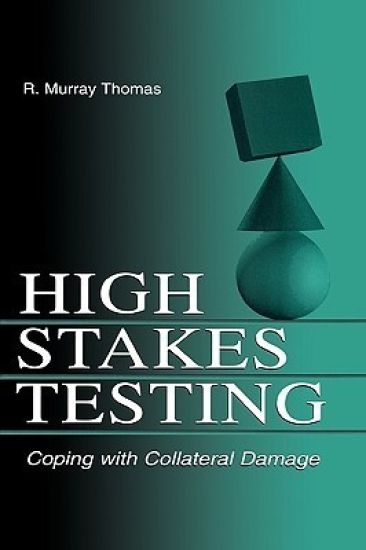
The federal government's No Child Left Behind Act has thrust high-stakes testing - its goals, methods, and consequences - into the educational limelight. The four-fold purpose of this book is to: describe the nature of high-stakes testing; identify types of collateral damage that have attended the testing programs; analyze methods different groups of people have chosen for coping with the damage and suggest lessons to be learned from the high-stakes-testing experience. The six groups of people whose coping strategies are inspected include: politicians and their staffs; educational administrators and their staffs; parents and the public; test makers and test administrators; teachers and students. Importantly, the author avoids aligning himself with the test-bashing rhetoric of those who oppose high-stakes testing, especially the No Child Left Behind Act.Key features of this outstanding new book include:illustrative cases. The book offers more than 350 cases of collateral damage from high-stakes testing--and people's coping strategies--as reported in newspapers over the 2002-2004 period.background perspectives. Part I examines the influence of high-stakes testing on: 1) what schools teach; 2) how student progress is evaluated; 3) how achievement standards are set; and 4) how test results are used.participant responses. Part II, which is the heart of the book, devotes a separate chapter to the coping strategies of each of the major participants in the high-stakes testing movement: politicians and their staffs, educational administrators and their staffs, parents and the public, test-makers and test-givers, teachers, and students.summary chapter. The last chapter (Lessons to Learn) offers suggestions for minimizing collateral damage by adopting alternative approaches not used in the creation of our current high-stakes testing programs, particularly the federal government's No Child Left Behind Act.This book is appropriate for any of the following audiences: students taking evaluation or administration courses in schools of education, inservice administrators and teachers, policy makers, and those members of the general public who are concerned about the fate of schooling in America.
High-Stakes Testing

High-Stakes Testing

R. Murray Thomas

Routledge Member of the Taylor and Francis Group
2005
nidottu
The federal government's No Child Left Behind Act has thrust high-stakes testing - its goals, methods, and consequences - into the educational limelight. The four-fold purpose of this book is to: describe the nature of high-stakes testing; identify types of collateral damage that have attended the testing programs; analyze methods different groups of people have chosen for coping with the damage and suggest lessons to be learned from the high-stakes-testing experience. The six groups of people whose coping strategies are inspected include: politicians and their staffs; educational administrators and their staffs; parents and the public; test makers and test administrators; teachers and students. Importantly, the author avoids aligning himself with the test-bashing rhetoric of those who oppose high-stakes testing, especially the No Child Left Behind Act.Key features of this outstanding new book include:illustrative cases. The book offers more than 350 cases of collateral damage from high-stakes testing--and people's coping strategies--as reported in newspapers over the 2002-2004 period.background perspectives. Part I examines the influence of high-stakes testing on: 1) what schools teach; 2) how student progress is evaluated; 3) how achievement standards are set; and 4) how test results are used.participant responses. Part II, which is the heart of the book, devotes a separate chapter to the coping strategies of each of the major participants in the high-stakes testing movement: politicians and their staffs, educational administrators and their staffs, parents and the public, test-makers and test-givers, teachers, and students.summary chapter. The last chapter (Lessons to Learn) offers suggestions for minimizing collateral damage by adopting alternative approaches not used in the creation of our current high-stakes testing programs, particularly the federal government's No Child Left Behind Act.This book is appropriate for any of the following audiences: students taking evaluation or administration courses in schools of education, inservice administrators and teachers, policy makers, and those members of the general public who are concerned about the fate of schooling in America.
Upgrading Petroleum Residues and Heavy Oils
"This useful reference offers in-depth coverage of current techniques for converting heavy oils and residues into more valuable distillates.Examines the chemistry of heavy hydrocarbon feeds and their properties important to engineering design, including phase behavior, reaction kinetics, and thermodynamic and transport characteristics!"
Soundscape

Soundscape

R. Murray Schafer

Inner Traditions Bear and Company
1993
nidottu
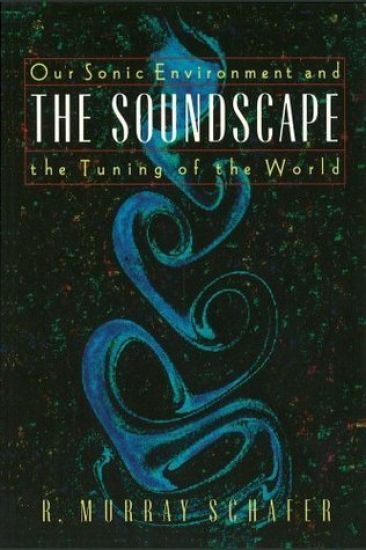
The soundscape--a term coined by the author--is our sonic environment, the ever-present array of noises with which we all live. Beginning with the primordial sounds of nature, we have experienced an ever-increasing complexity of our sonic surroundings. As civilization develops, new noises rise up around us: from the creaking wheel, the clang of the blacksmith's hammer, and the distant chugging of steam trains to the "sound imperialism" of airports, city streets, and factories. The author contends that we now suffer from an overabundance of acoustic information and a proportionate diminishing of our ability to hear the nuances and subtleties of sound. Our task, he maintains, is to listen, analyze, and make distinctions. As a society we have become more aware of the toxic wastes that can enter our bodies through the air we breathe and the water we drink. In fact, the pollution of our sonic environment is no less real. Schafer emphasizes the importance of discerning the sounds that enrich and feed us and using them to create healthier environments. To this end, he explains how to classify sounds, appreciating their beauty or ugliness, and provides exercises and "soundwalks" to help us become more discriminating and sensitive to the sounds around us. This book is a pioneering exploration of our acoustic environment, past and present, and an attempt to imagine what it might become in the future.
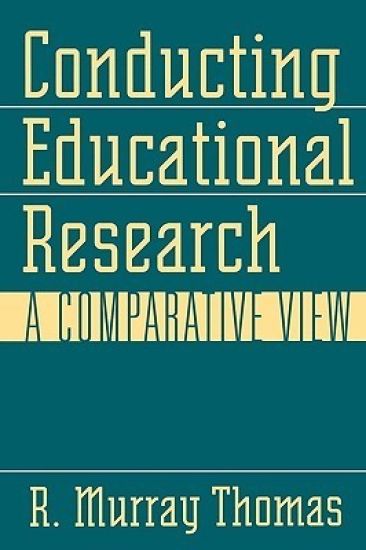
Conducting Educational Research

Conducting Educational Research

R. Murray Thomas

Praeger Publishers Inc
1998
sidottu
Emphasizing the comparative aspects of research, this introduction to educational research traces the process through five stages—choosing what to study, including specifying the research problem; collecting information; organizing and summarizing information; interpreting results; and reporting the outcomes. Each of the stages offers diverse options available to researchers for solving the problems of that stage, and a research project checklist at the end of each chapter guides readers in applying the chapter's contents to their own research studies.In much educational discourse, comparative education has referred solely to the study of educational similarities and differences between regions of the world or between two or more nations. This book uses the broader definition of the term to encompass a large body of research including studies focusing on comparisons between local educational systems, schools, classrooms, language groups, religious denominations, genders, social classes, and individual students. Students who are planning research projects as well as staff members of such organizations as ministries of education, school systems, bureaus of educational research, and educational aid agencies will find this volume indispensable.
Conducting Educational Research

Conducting Educational Research

R. Murray Thomas

Praeger Publishers Inc
1998
nidottu
Emphasizing the comparative aspects of research, this introduction to educational research traces the process through five stages—choosing what to study, including specifying the research problem; collecting information; organizing and summarizing information; interpreting results; and reporting the outcomes. Each of the stages offers diverse options available to researchers for solving the problems of that stage, and a research project checklist at the end of each chapter guides readers in applying the chapter's contents to their own research studies.In much educational discourse, comparative education has referred solely to the study of educational similarities and differences between regions of the world or between two or more nations. This book uses the broader definition of the term to encompass a large body of research including studies focusing on comparisons between local educational systems, schools, classrooms, language groups, religious denominations, genders, social classes, and individual students. Students who are planning research projects as well as staff members of such organizations as ministries of education, school systems, bureaus of educational research, and educational aid agencies will find this volume indispensable.