Kirjojen hintavertailu. Mukana 12 390 323 kirjaa ja 12 kauppaa.

Kirjahaku

Etsi kirjoja tekijän nimen, kirjan nimen tai ISBN:n perusteella.

1000 tulosta hakusanalla P. Smith

Exploring the Historic San Juan Triangle

Exploring the Historic San Juan Triangle

P. David Smith

Western Reflections Publishing Co.
2018
nidottu
Exploring the Historic San Juan Triangle is the revised, expanded, and updated version of Mountain Mysteries, tthe number one guide to the magnificent San Juan Mountains. New chapters on Telluride, Silverton, Ouray, and Lake City, as well as details on many existing and long-abandoned small communities, have been added. Whether it's hiking, jeeping, auto touring or just armchair reading, David Smith takes the reader on a grand tour of the resplendent San Juans. Filled with rare photographs, specially drawn maps, new trips, updated road tours, and scores of new information, Exploring the San Juan Triangle is truly The Number One Jeeping Guide of the San Juan Mountains
I Never Knew That About Ouray

I Never Knew That About Ouray

P. David Smith

Western Reflections Publishing Co.
2020
nidottu
I Never Knew That About Ouray is a quick, interesting read for the person who just wants to know a little bit about the history of Ouray, Colorado, and Ouray County, Colorado, and especially some of the most interesting events, exciting people, and local places. Also included are how the people got around in these rugged mountains, how prospectors looked for gold and what they did when they found it, stories of some of the local ghosts and much more.
Ouray: Chief of the Utes

Ouray: Chief of the Utes

P. David Smith

Western Reflections Publishing Co.
2021
nidottu
Many Western history enthusiasts believe that Ouray was the greatest of all Indian chiefs. Unlike his contemporaries, he is remembered for his negotiating and peacekeeping skills rather than for any historic deed on the battlefield. Most who knew Ouray considered him to be a very extraordinary Indian--a man of keen perceptions and a talented diplomat.But probably no other Indian chief was as enigmatic. Although most of his tribe were prepared to die for him, his own brother-in-law tried to kill him. He was chief of the Ute Nation, but he was neither a full-blooded Ute nor a chief elected by his own people--he was half Apache and was appointed chief by the U.S. government. In spite of high praises given him by various luminaries of his day, many insisted that Ouray was ordinary, at best. He was a tough and tenacious negotiator for his people, but he was also a friend of the whites and realized that if the Utes did not submit they would be destroyed.This book explores Ouray's life and his people but makes no judgments. It lets the reader decide what historic status to accord this famous chief.
The Ruin Dwellers

The Ruin Dwellers

Jake P. Smith

THE UNIVERSITY OF CHICAGO PRESS
2025
sidottu
Traces the shifting dynamics within leftist activism in 1970s and ’80s Europe and its experiments in art, life, and politics. The Ruin Dwellers takes readers into the urban spaces of youth revolts during the 1970s and ’80s in West Germany and elsewhere in western and central Europe. Whereas earlier generations of leftist activists were primarily oriented toward the utopian future, participants in the youth movements of the 1970s and ’80s developed a more complex set of temporal practices that sought to scramble the borders between the past, present, and future. Examining a rich corpus of radical texts and practices, historian Jake P. Smith shows that squatters and their leftist allies in this period engaged in social, cultural, and aesthetic experiments with modes of autonomous living. Smith brings to life the real and imagined landscapes conjured in squatted houses and street protests; in art, dress, music, graffiti, and film; and in philosophical, poetic, and political texts. In so doing, he offers an eye-opening look at anarchic world-making practices that found new ways of imagining an emancipated future through inhabiting the fractured past.
The Ruin Dwellers

The Ruin Dwellers

Jake P. Smith

THE UNIVERSITY OF CHICAGO PRESS
2025
nidottu
Traces the shifting dynamics within leftist activism in 1970s and ’80s Europe and its experiments in art, life, and politics. The Ruin Dwellers takes readers into the urban spaces of youth revolts during the 1970s and ’80s in West Germany and elsewhere in western and central Europe. Whereas earlier generations of leftist activists were primarily oriented toward the utopian future, participants in the youth movements of the 1970s and ’80s developed a more complex set of temporal practices that sought to scramble the borders between the past, present, and future. Examining a rich corpus of radical texts and practices, historian Jake P. Smith shows that squatters and their leftist allies in this period engaged in social, cultural, and aesthetic experiments with modes of autonomous living. Smith brings to life the real and imagined landscapes conjured in squatted houses and street protests; in art, dress, music, graffiti, and film; and in philosophical, poetic, and political texts. In so doing, he offers an eye-opening look at anarchic world-making practices that found new ways of imagining an emancipated future through inhabiting the fractured past.
Europe and National Economic Transformation

Europe and National Economic Transformation

Mitchell P. Smith

Palgrave Macmillan
2012
sidottu
How great is the capacity of the EU to orchestrate 'competitiveness'? Can common policy instruments produce consistent effects? Has substantial policy learning come from the successes and failures of the Lisbon agenda? This book identifies the nature and limits of the transformative capacities of the EU's push for economic gains.
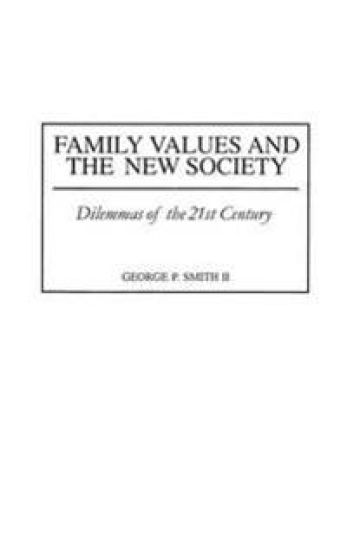
Family Values and the New Society

Family Values and the New Society

George P. Smith

Praeger Publishers Inc
1998
sidottu
Beset by socio-legal challenges, medical, and scientific advances in reproduction, feminist philosophies and complex questions regarding its contemporary relevance, the family—together with the core values that have sustained over the years—is being tested, re-evaluated, and redesigned. This book directs its focus to the current national debate on family values providing a strong and practical framework for decisionmaking in topical problem areas which integrate the social sciences, law, medicine, political science, economics, ethics, philosophy, and religion.This book analyzes both from a practical and scholastic perspective, nine areas of central focus or challenge to mainstream notions of the family. Feminist perspectives on reproductive rights and responsibilities, domestic partnerships and same-sex relationships, and new assisted reproductive technologies (such as organ harvesting and child abuse) are just some of the issues discussed as they relate to individuals and to the family and the values that have been the backbone of American life. The author suggests an ethical ordering that balances traditional strengths of American life with accomodation for new normative standards.
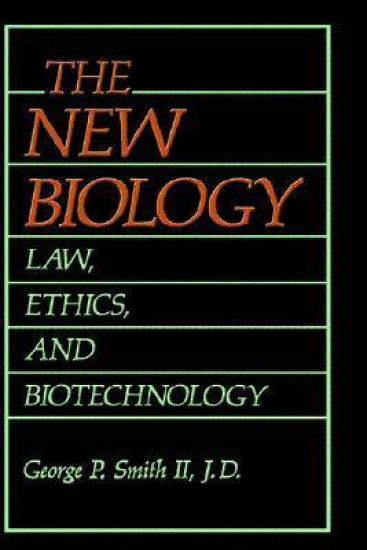
The New Biology

The New Biology

George P. Smith II

Kluwer Academic/Plenum Publishers
1989
sidottu
Improvement of man's genetic endowment by direct ac­ tions aimed at striving for the positive propagation of those with a superior genetic profile (an element of which is commonly recognized as a high intelligence quotient) or-conversely-delimitation of those with negative genetic inheritance has always remained a pri­ mary concern of the geneticist and the social engineer. Genetic integrity, eugenic advancement, and a strong genetic pool designed to eliminate illness and suffering have been the benchmarks of the "Genetic Movement" and the challenge of Orwell's Nineteen Eighty-Four. If the quality of life can in some way be either im­ proved or advanced by use of the law, then this policy must be developed and pursued. No longer does the Dostoyevskian quest to give life meaning through suf­ fering become an inescapable given. By and through the development and application of new scientific advances in the field of genetics (and especially genetic engi­ neering), the real potential exists to prevent, to a very vii Preface viii real extent, most human suffering before it ever mani­ fests itself in or through life. Freedom to undertake re­ search in the exciting and fertile frontiers of the "New Biology" and to master the Genetic Code must be nur­ tured and maintained. The search for the truth inevi­ tably prevents intellectual, social, and economic stag­ nation, as well as-ideally-frees all from anxiety and fright. Yet, there is a very real potential for this quest to confuse and confound.
Formal Demography

Formal Demography

David P. Smith

Kluwer Academic/Plenum Publishers
1992
sidottu
This book is intended as a relatively nontechnica1 introduction to eurrent demographie methods. It has been several years in preparation, beginning from occasional class handouts I wrote to elaborate on essential points of demographie methodology. Its growth from scattered notes to an integrated text was a natural process, if a gradual one. The eontent of the book addresses three objectives. first, I have tried to avoid demographie methods that are now dated. In some ehapters, that has meant eoncentrating on formulas most demographers recognize. In the ehap­ ters on life tables, it meant testing competing formulas on a variety of real and synthetie data se.ts, and dropping or relegating to footnotes those that were least accurate. Second, I have attempted to give readers a sense of the limits of different formulas and methods. I am a terse writer, however, and for the reader that means most sentences carry weight. Chapters should be read attentively, with careful regard to commentary as weIl as to formulas and examples. Finally, I have tried to make the principal methodologies of the book accessible, by offering explanations for formulas that are not obvious, by keeping examples to the forefront, and by placing relatively specialized topics in ehapter appendices.
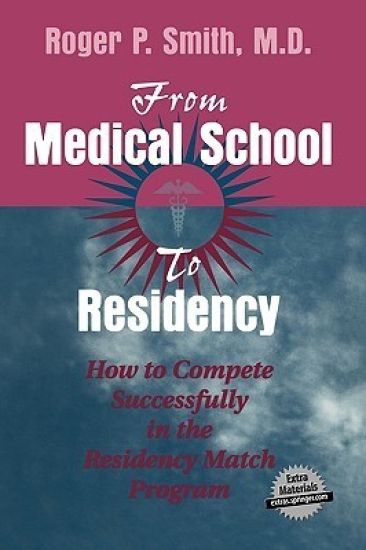
From Medical School to Residency

From Medical School to Residency

Roger P. Smith

Springer-Verlag New York Inc.
2000
nidottu
Looking for a guide to help you understand "The Match"? Look no further than this indispensable resource from a noted physician who has spent years advising students and selecting residents. This book gives the student all he/she needs to know to successfully match in a residency program in 2000 and beyond. It is the only guide that fully covers the electronic application and match process, complete with lots of screen shots. This manual will also address questions students should ask and strategies for successful matching.
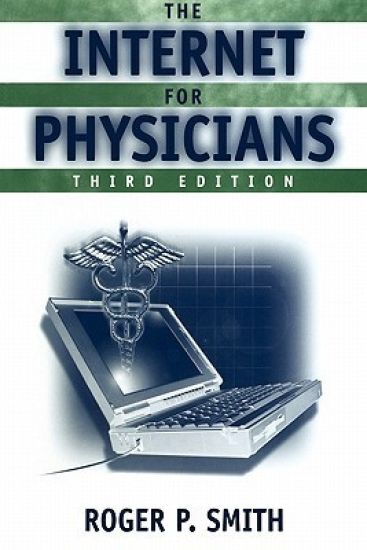
The Internet for Physicians

The Internet for Physicians

Roger P. Smith

Springer-Verlag New York Inc.
2001
nidottu
Like the Internet itself, interest in computing (both local and distant) has grown exponentially. The rapidly changing role of the Internet has resulted in three very different editions of The Internet for Physicians. The first edition attempted to introduce the concept of information transfer and communication and point the way toward a tool of the future. The second edition attempted to assuage trepidation in the use of this emerging tool and suggest the why and wherefore of being connected. The needs that drove those goals have almost completely disappeared. As a result, the bulk of this edition is more focused on the medical aspect of the Internet and its use, and less on the nuts and bolts of connecting and communication through the Web. It has been revamped, reorganized, and expanded to include 30% more content and 90 new illustrations.New to the third edition is an entire section dedicated to Medicine and the Web, with chapters discussing patient education and information, what your patients are seeing on the web, finding quality resources, including clinical-trial and evidence-based medicine sites, how to search and use Pun Med, telemedicine, continuing medical education, medical literature and informatics, applications of on-line journals and submissions, and much more.
Law and Bioethics

Law and Bioethics

George P. Smith II

Routledge
2013
nidottu
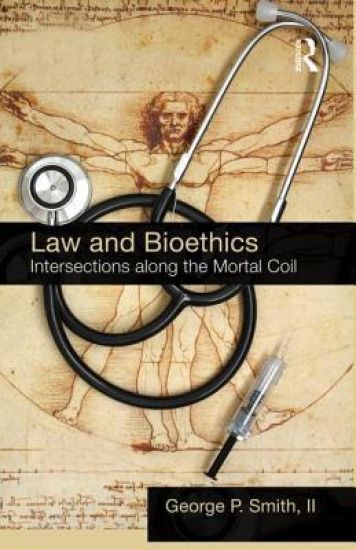
George P. Smith, II is a leading figure in the world of medical law and ethics. During his long career he has addressed some of the most important issues in bioethics and has contributed much original thought to debates in the field. This book celebrates his contribution to scholarship in this area and brings together his key writings in bioethics. The chapters include previously published material which has been substantially updated to reflect recent developments in medicine and law. The book covers topics such as: human rights and medical law; the allocation of resources and distributive justice; ethical relativism; science and religion; and public health emergencies. Taken as a whole, this book examines the extent to which law, medicine, economics, and bioethics interact as synergistic vectors of force in shaping and setting both personal and public responses to the complexities of biotechnology, or what has been referred to as "The New Biology." All too often, past considerations of this topic have neglected to recognise the synergistic influences of law as a catalyst for codifying contemporary values into normative standards. Professor Smith reaches the conclusion that if traditional bioethical principles are to be seen as pertinent constructs for policy making, they must be broadened through the law of public health and Human rights. Law and Bioethics: Intersections along the Mortal Coil casts law as the pivotal force in bringing stability to the ongoing debates on how to maintain bioethical relevance in decision making and in so doing, it offers an excellent overview of the current bioethical issues in medical law considered in light of recent and ongoing technological developments in medicine. This book will be of particular interest to academics and students of Law, Political Science, Philosophy and Economics.
Law and Bioethics

Law and Bioethics

George P. Smith II

Routledge
2012
sidottu
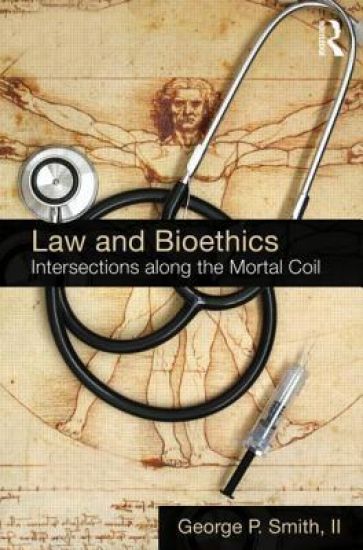
George P. Smith, II is a leading figure in the world of medical law and ethics. During his long career he has addressed some of the most important issues in bioethics and has contributed much original thought to debates in the field. This book celebrates his contribution to scholarship in this area and brings together his key writings in bioethics. The chapters include previously published material which has been substantially updated to reflect recent developments in medicine and law. The book covers topics such as: human rights and medical law; the allocation of resources and distributive justice; ethical relativism; science and religion; and public health emergencies. Taken as a whole, this book examines the extent to which law, medicine, economics, and bioethics interact as synergistic vectors of force in shaping and setting both personal and public responses to the complexities of biotechnology, or what has been referred to as "The New Biology." All too often, past considerations of this topic have neglected to recognise the synergistic influences of law as a catalyst for codifying contemporary values into normative standards. Professor Smith reaches the conclusion that if traditional bioethical principles are to be seen as pertinent constructs for policy making, they must be broadened through the law of public health and Human rights. Law and Bioethics: Intersections along the Mortal Coil casts law as the pivotal force in bringing stability to the ongoing debates on how to maintain bioethical relevance in decision making and in so doing, it offers an excellent overview of the current bioethical issues in medical law considered in light of recent and ongoing technological developments in medicine. This book will be of particular interest to academics and students of Law, Political Science, Philosophy and Economics.
Field Guide to Grasses of California

Field Guide to Grasses of California

James P. Smith

University of California Press
2014
pokkari
Grasses and grasslands are of increasing interest to conservationists, biologists, and gardeners. There are more than 300 species of native California grasses and they are found in almost every climate--from cool, wet forests to hot, dry deserts. Native grasses are also important in land restoration, as they improve soil quality, increase water infiltration, and recycle nutrients. Their deep roots can tap soil water, allowing them to stay green year-round and act as fire buffers around residences. Native grasses also provide vital habitat to many species of insects, birds, reptiles, and mammals. Despite all of this, grasslands remain one of the most underprotected of California's vegetation types, and native grasslands have undergone the greatest percentage loss of any habitat type in the state. Grasses are also among the most difficult plants to identify. Organized alphabetically, Field Guide to Grasses of California covers the more common native and naturalized grasses, and features over 180 color illustrations to help identify them.