

Kirjahaku
Etsi kirjoja tekijän nimen, kirjan nimen tai ISBN:n perusteella.
1000 tulosta hakusanalla Paolo Buschini
Fra Paolo Sarpi: The Greatest of the Venetians
Alexander Robertson
Literary Licensing, LLC
2014
nidottu
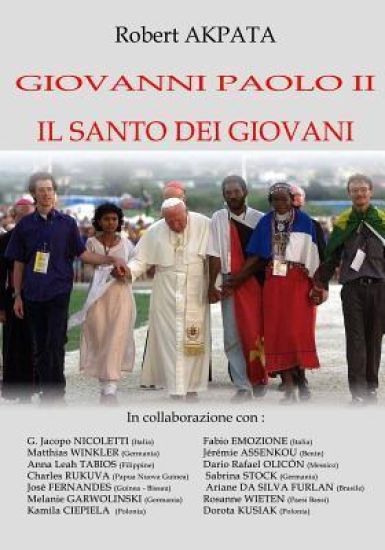
Giovanni Paolo II il Santo dei Giovani
Robert Akpata; G. Jacopo Nicoletti; Fabio Emozione
Createspace Independent Publishing Platform
2014
nidottu
Giovanni Paolo II Nessuno prima di lui ha mostrato cos tanta attenzione al fatto che i giovani sono e rappresentano il futuro del Mondo. Nessuno prima di lui ha capito che prima o poi dovremo lasciare il timone ai nostri figli. Nessuno prima di lui ha sottolineato con tanta efficacia il fatto che i giovani sono la sola vera speranza del Mondo. Nessuno prima di lui ha lavorato cos tenacemente per far comprendere a tutti le nostre grandi responsabilit per il domani. Nessuno ha mai esercitato una simile influenza e guida, al fine di renderci pronti di fronte alle tante sfide tutti noi dobbiamo affrontare per rendere migliore la nostra Terra. Nessuno come lui ha saputo trovare le giuste e pi eloquenti parole per comunicare il messaggio pi bello e genuino: la Verit . Per la sua canonizzazione, giovani da tutti i Continenti, tra cui molti non Cattolici (a testimonianza della valenza veramente universale di questo Papa, capace di sorpassare qualsiasi ostaocolo ideologico) si sono radunati, tutti uniti dalla ferma convinzione che - ancora oggi - Giovanni Paolo II continuna a parlarci, guidarci, assegnando ad ognuno di noi il compito di ascoltare il messaggio e prestare attenzione alla saggezza degli uomini anziani. Ecco quindi questa iniziativa, concepita in occasione della Giornata della Giovent , dove il messaggio di Giovanni Paolo viene diffuso in 8 lingue: Italiano, Portoghese, Inglese, Francese, Tedesco, Spagnolo, Polacco ed Olandese. Cari giovani amici, non esitate ad appagare la vostra sete da quella inesauribile fonte di saggezza e verit che proviene dal Nostro Giovanni Paolo II: avrete cos nelle vostre mani un aiuto e guida preziosi per scoprire ed apprezzare il significato pi profondo della vita.
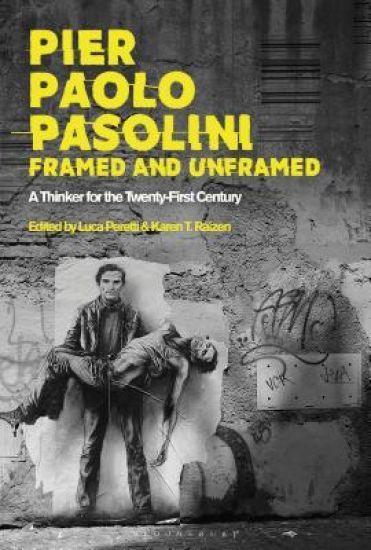
Pier Paolo Pasolini, Framed and Unframed
Bloomsbury Academic USA
2018
sidottu
This cross-disciplinary volume, Pier Paolo Pasolini, Framed and Unframed, explores and complicates our understanding of Pasolini today, probing notions of otherness in his works, his media image, and his legacy. Over 40 years after his death Pier Paolo Pasolini continues to challenge and interest us, both in academic circles and in popular discourses. Today his films stand as lampposts of Italian cinematic production, his cinematic theories resonate broadly through academic circles, and his philosophical, essayistic, and journalistic writings—albeit relatively sparsely translated into other languages—are still widely influential. Pasolini has also become an image, a mascot, a face on tote bags, a graffiti image on walls, an adjective (pasolinian). The collected essays push us to consider and reconsider Pasolini, a thinker for the twenty-first century.
Pier Paolo Pasolini, Framed and Unframed
Bloomsbury Academic USA
2020
nidottu
This cross-disciplinary volume, Pier Paolo Pasolini, Framed and Unframed, explores and complicates our understanding of Pasolini today, probing notions of otherness in his works, his media image, and his legacy. Over 40 years after his death Pier Paolo Pasolini continues to challenge and interest us, both in academic circles and in popular discourses. Today his films stand as lampposts of Italian cinematic production, his cinematic theories resonate broadly through academic circles, and his philosophical, essayistic, and journalistic writings—albeit relatively sparsely translated into other languages—are still widely influential. Pasolini has also become an image, a mascot, a face on tote bags, a graffiti image on walls, an adjective (pasolinian). The collected essays push us to consider and reconsider Pasolini, a thinker for the twenty-first century.

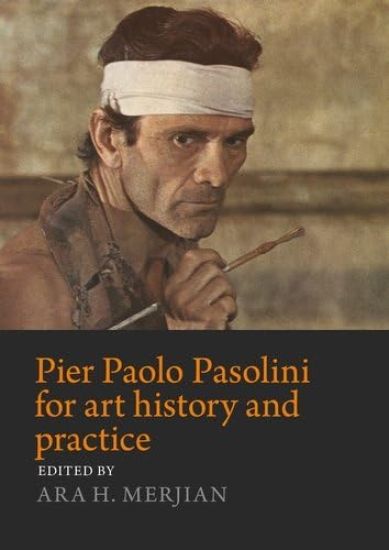
Pier Paolo Pasolini for Art History and Practice
MANCHESTER UNIVERSITY PRESS
2025
sidottu
Pier Paolo Pasolini (1922-1975) remains best known for his influential cinematic and literary works. These attest in turn to a crucial early formation: Pasolini’s intermittent practice as a painter, critic, and historian of art. Spanning the fifth-century BCE to the early twenty-first century, this volume’s chapters reflect the breadth of Pasolini’s aesthetic commitments and predilections, from Greek Attic vase painting to the to the spread of Caravaggism; from folkloric ethnography to the painting of Pablo Picasso and Andy Warhol. Alongside essays examining his influence on twentieth- and twenty-first century aesthetics, artists of different nationality, gender, and generation address Pasolini’s continued consequence for their own work. The very notion of a politically engaged artistic practice owes a debt to Pasolini’s oeuvre – one he called “extravagantly interdisciplinary,” and which finds incisive reflection in the media, methods, and subjects addressed in these pages.
Pier Paolo Pasolini for Art History and Practice
MANCHESTER UNIVERSITY PRESS
2025
nidottu
Pier Paolo Pasolini (1922-1975) remains best known for his influential cinematic and literary works. These attest in turn to a crucial early formation: Pasolini’s intermittent practice as a painter, critic, and historian of art. Spanning the fifth-century BCE to the early twenty-first century, this volume’s chapters reflect the breadth of Pasolini’s aesthetic commitments and predilections, from Greek Attic vase painting to the to the spread of Caravaggism; from folkloric ethnography to the painting of Pablo Picasso and Andy Warhol. Alongside essays examining his influence on twentieth- and twenty-first century aesthetics, artists of different nationality, gender, and generation address Pasolini’s continued consequence for their own work. The very notion of a politically engaged artistic practice owes a debt to Pasolini’s oeuvre – one he called “extravagantly interdisciplinary,” and which finds incisive reflection in the media, methods, and subjects addressed in these pages.
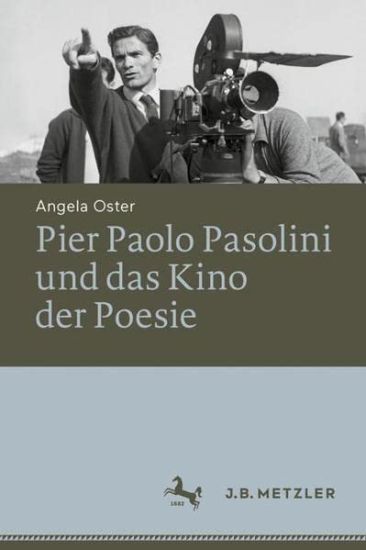
Pier Paolo Pasolini und das Kino der Poesie
Angela Oster
Springer-Verlag Berlin and Heidelberg GmbH Co. KG
2026
sidottu
Pier Paolo Pasolini gehört zu den streitbarsten und schillerndsten Figuren des 20. Jahrhunderts, dessen Texte und Filme – er war Dichter und gleichzeitig Regisseur – die Gemüter bis auf den heutigen Tag bewegen und durch ihren experimentellen Charakter herausfordern. Anlässlich seines 100. Geburtstages im Jahr 2022 wird Pasolinis „Kino der Poesie“ jenseits seiner Provokationen und Skandale neu perspektiviert. Pasolinis Insistieren auf Mythen und Märchen pocht auf eine Nachhaltigkeit jenseits von Konsum und Konformität. Das Pasolinische ‚Licht der Dichtung‘ inszeniert faszinierende Bilder, die der Autor zugleich in semiotischen Auseinandersetzungen u.a. gegen Umberto Ecos Kritik verteidigt.
Il libro, qui alla sua seconda edizione, l'immaginaria voce enciclopedica dedicata a Giovanni Paolo III, il Papa del futuro, che affronter la crisi della Chiesa. Le varie attivit del Pontefice sono passate in rassegna: le emergenze, la Curia, il Sacro Collegio, il magistero, la missione, le Chiese Orientali, i Vescovi, il clero, i religiosi, i laici, la liturgia, il diritto, i seminari, la politica, la carit , le comunicazioni sociali, la cultura, lo Stato del Vaticano, le finanze, la Corte papale e molto altro.Un divertissemente che permette all'Autore di esprimere in modo non didascalico idee, prospettive, opinioni e auspici sul Papato, sul Cattolicesimo e sul mondo.
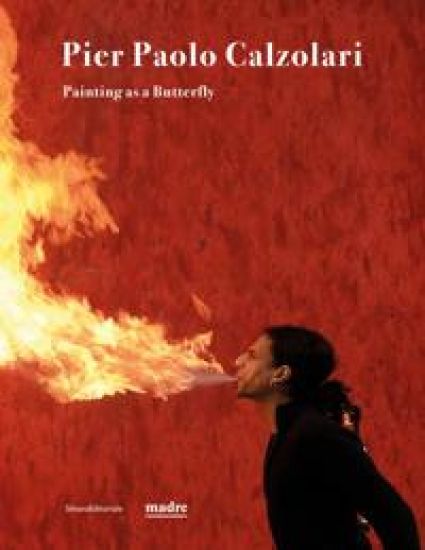
Pier Paolo Calzolari
Silvana
2020
sidottu
This catalogue offers a thorough and complete investigation of the pictorial work of Pier Paolo Calzolari (Bologna, 1943), one of the most important contemporary Italian artists, an exponent since the sixties of the research related to the Arte Povera movement. Paintings and drawings represent a lesser known and exhibited part of his artistic production, but an equally important one: the practice of painting - as the artist himself declares - is a 'listening tool', a state of 'suspension' capable of bringing to synthesis the multiple articulations of his research, both minimalist and sensual, conceptual and baroque. Through critical essays and an unprecedented conversation with the artist, the volume offers the opportunity to deepen the many ideas that arise from the analysis of Calzolari's art: from his studies on colour, on the effects of light and on the transformations of matter, the relationship between painting and sculpture, up to the investigation on the relationship between artwork, space and observer. Text in English and Italian.
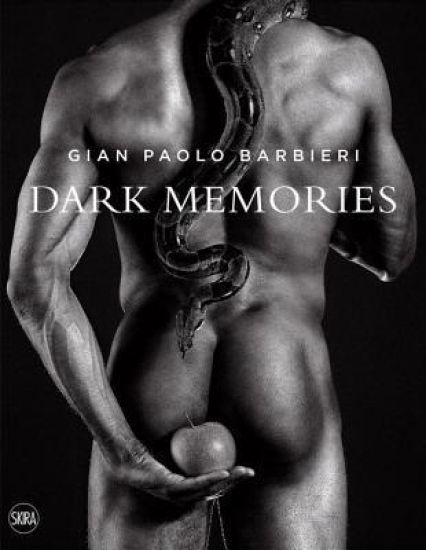
Gian Paolo Barbieri
Skira
2014
nidottu
Barbieri’s approach to nude photography has been a lengthy one – a slow and carefully planned one. He first explored the subject in his book trilogy Tropici. These experiments, however, did not quite satisfy him: his fear of vulgarity, his yearning to illustrate the world according to his own personal conception, whereby even the most violent scenes must be “ennobled”, and his search for a suitable technique were problems that absorbed his mind for years. The human body and sex are an exuberant expression of nature. Barbieri’s nudes appear natural, direct, life-like, rich, joyous, and marked by dazzling expressive purity and simplicity. His photographs bring together the prehistoric approach to the human body, the aesthetic pursuit of Classical Greek beauty, and the Renaissance rediscovery of freedom. All this is expressed through an outstanding “studio” technique. Thus his series of nudes, Dark Memories, represents a homage to this natural exuberance in all of its forms. Without any contrived prudishness, or fear of the banal, but with a child-like happiness and innocence, it plays upon the thin red line which has never clearly divided so-called pure art from polluted art, poetry from vulgarity, the sacred from the profane.

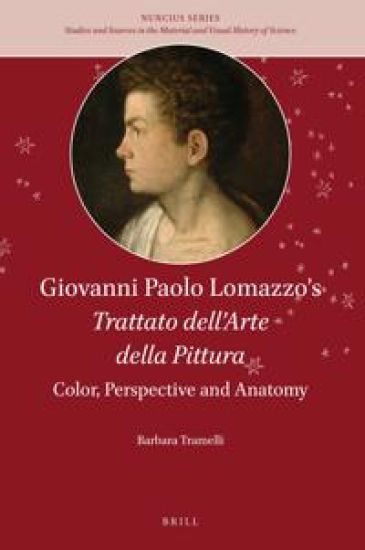
Giovanni Paolo Lomazzo’s Trattato dell’Arte della Pittura: Color, Perspective and Anatomy
Barbara Tramelli
BRILL
2016
sidottu
Barbara Tramelli’s Giovanni Paolo Lomazzo’s Trattato dell’Arte della Pittura: Color, Perspective and Anatomy investigates the context in which the writings of the painter Giovanni Lomazzo were produced, the types of theoretical and practical knowledge which they conveyed to artists and how painters in the second half of the sixteenth century shared this knowledge among themselves. In his books, Lomazzo drew on earlier and contemporary art literature, his own expertise as a painter, works of natural philosophy and his personal exchanges with contemporary artists, astrologers and ‘scientists’. Lomazzo and his work are placed in the context of the city where he operated and published, paying particular attention to the role of Milanese institutions as ‘spaces of interactions’ with colleagues and men of letters in which the material for his books was discussed and collected. Tramelli highlights three main areas of Lomazzo’s studies: color, perspective and anatomy, linking his theoretical discourse to what was known and discussed about these topics in Milan at the end of the sixteenth century.
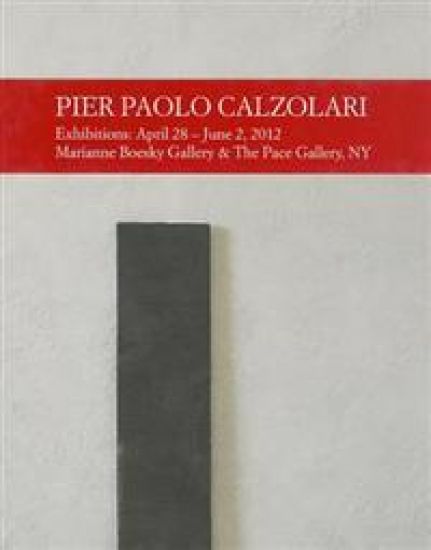
Pier Paolo Calzolari, born in 1943 in Bologna, is recognized as a leading figure of the Arte Povera movement and a seminal artist whose practice spans painting, sculpture, video, audio, text, performance, installation, architecture, light, and video. Through the use of both ordinary and unconventional materials, such as lead, salt, neon, ice, tobacco, moss, fire, and butter, Calzolari explores transformation of matter and ephemeral states—exploiting an underlying fragility in his materials. This book focuses on the artist’s work over the last 25 years and coincides with concurrent exhibitions (April 28–June 2, 2012) at Marianne Boesky Gallery and Pace Gallery, the artist’s first exhibitions in New York since 1988.