Drugs and alcohol. Self-injury. Eating disorders. Puberty. Suicide. Sexual purity. These are just a few of the challenges facing teens and young adults today. This concise, topical guide to the Bible is the perfect tool for parents and youth pastors wanting to provide scriptural guidance to youth regarding the issues they face in their formative years. Now updated, revised, and expanded with new topics.
A world-wide survey of the eating and drinking habits of early peoples, Don and Patricia Brothwell's Food in Antiquity covers a broad geographical range, from the early populations of Asia, Sub-Saharan Africa, and the Americas to the more familiar Egyptian, Mesopotamian, Greek, and Roman worlds. From meat, insects, vegetables, and fruits to cooking oils and beverages, each source of sustenance is described in terms of who consumed it, how it was prepared, and how it spread from its region of origin. The Brothwells' treatment is engaging and the information they provide fascinating. We learn, for example, that the vinegar carried by Roman foot soldiers on long marches was mixed with water to serve as a refreshing drink and that fungi provided a reliable source of diet for peoples from Europe, Australia, Japan, and China. The authors consider such questions as whether St. John ate carob or actual locusts in his desert hermitage and whether ancient farmers may have rid their crops of troublesome pests by capturing and eating them. They discuss cannibalism, food taboos, and the radical changes that took place with the introduction of the domestication of animals. The story they unfold is a compelling one that sheds much light on the intricate detective work, the problems and rewards, of biological research in archeology.
A unique collection of essays written by faculty and staff involved in the Cooperative Education Program at The American University, a traditional liberal arts institution. Faculty from eight different disciplines describe their view of this teaching methodology both within the context of their philosophy of education and in terms of their own academic discipline. Intended to assist post-secondary institutions at all levels interested in establishing or expanding their programs in non-technical fields.
The Future is now Torn from the headlines of next year's news, Keystroke Medium brings you ten stories, not from the distant past or centuries in the future, but close enough to change your life... very soon.This anthology will take you on a journey you won't soon forget.Included: Ozymandias by Yudhanjaya WijeratneThe Big Box Store by Patricia GilliamI Am Christopher by K. R. McClellanClean Sweep by C. C. EkekeC-481 by Kalene WilliamsSalvation of the Seas by Andrew GatesX-Roads by Walt RobillardSpark Joy by I.Q. MalcolmThe God in the Details by Rick PartlowRandall Duchamp and the Strip Club of Tomorrow by James S. Aaro
After 23-year-old Al McNeely graduated from Furman University in his hometown of Greenville, S.C., he had visions of continuing as a sports writer for The Greenville Piedmont. His dreams disappeared when the draft caught up with him in 1958. He had gone from being a fairly important senior in college to being an army private, from "Who's Who in American Colleges and Universities" to cleaning toilets. On his first full day in the army, he sat on the back steps of a mess hall at Fort Jackson, S.C., and said aloud, "How am I going to get through two years of this?" He thought it was possible that he wouldn't. The day had started at 2 a.m., giving him two hours of sleep. He had cleaned toilets followed by KP and on the worst KP job, washing pots and pans in scalding water all morning. He had cleaned a grease trap, maybe the worst single job in the army. He had been shoved and cursed. His first break had come in early afternoon and now he was sitting numb on the steps, looking out over the notorious Tank Hill at Fort Jackson in Columbia, S.C. He had thought it might be bad. But not this bad and from everything he'd heard, it was going to get worse. It was the lowest point of his life. Twenty-three months later, just before leaving Germany, he made this entry in his journal: "In all honesty, I have to admit to myself that I really haven't minded being in the army at all. In many ways, these two years have been rich, full and beneficial from any standpoint, probably the happiest years of my life." What happened? These are some of the memories of what happened.
Although the information age offers individuals from all walks of life the power to make their voices heard, we often end up with a cacophony of competing voices rather than a conversation. With so many people empowered to join the decision-making process, the number and diversity of stakeholders in governance situations poses a special challenge: how do you steer when so many hands are on the wheel? Catalytic Governance offers a proven approach to managing this challenge, built on the insight that effective leadership and governance depends less on traditional top-down approaches and more on creating shared meanings and frameworks. Drawing on their experiences managing transformational change in a complex, multi-stakeholder environment on issues ranging from finance to climate change, health, and the digital revolution, Patricia Meredith, Steven A. Rosell, and Ged R. Davis demonstrate how to use dialogue to engage stakeholders, explore alternative perspectives, develop shared mental maps and a vision of the future, and co-create strategies and initiatives to realize that future. While elements of this approach will be familiar, this is the first time they have been combined into a coherent model and tested together in practice. The book describes in detail how this was done in the process of transforming the Canadian payments system. The catalytic approach to governance is a powerful tool for leaders in the public and private sectors looking to lead and govern more effectively.
Although the information age offers individuals from all walks of life the power to make their voices heard, we often end up with a cacophony of competing voices rather than a conversation. With so many people empowered to join the decision-making process, the number and diversity of stakeholders in governance situations poses a special challenge: how do you steer when so many hands are on the wheel? Catalytic Governance offers a proven approach to managing this challenge, built on the insight that effective leadership and governance depends less on traditional top-down approaches and more on creating shared meanings and frameworks. Drawing on their experiences managing transformational change in a complex, multi-stakeholder environment on issues ranging from finance to climate change, health, and the digital revolution, Patricia Meredith, Steven A. Rosell, and Ged R. Davis demonstrate how to use dialogue to engage stakeholders, explore alternative perspectives, develop shared mental maps and a vision of the future, and co-create strategies and initiatives to realize that future. While elements of this approach will be familiar, this is the first time they have been combined into a coherent model and tested together in practice. The book describes in detail how this was done in the process of transforming the Canadian payments system. The catalytic approach to governance is a powerful tool for leaders in the public and private sectors looking to lead and govern more effectively.
That patients self-treat for such disorders as anxiety, depression, addictions, sleep disorders, attention deficit, is no surprise among psychiatrists. Hearing from patients, or parents of patients who use alternative therapies on themselves or their children, more scientifically-based facts are needed on non-pharmacologic, non-analysis approaches. The Guest Editors of this issue in Psychiatric Clinics have been using, researching, and analyzing alternative approaches since the 1990s and present a scientifically based presentation of select therapies, such as Nutrients, Herbals, Off-label Medication uses, Mind-Body approaches, Meditation, Hypnosis, Electrotherapy, Light treatments and more. Mechanisms of action, Outcomes, Evidence, and Complications are part of the outline for this material, with intent to provide the most current and the strongest science available.
Theories in Educational Psychology’s purpose is to introduce readers to the pioneering educational psychology theories that continue to shape our understanding of the classroom learning environment, present support for the theories from perspectives in the current research literature, and share how these theoretical traditions have translated into effective teaching methods. Each chapter will be infused with practical teaching examples, classroom vignettes, and instructional strategies so readers are continually confronted with how theory translates to practice. In addition to becoming familiar with the conceptual understanding of core theoretical knowledge, readers will also be presented with current thinking about each theory and an introduction to important related topics at the close of each chapter. The chapters will also conclude with activities designed to help readers reflect on their learning of each chapter’s content.
This case study book serves as a valuable tool for professors and instructors of educational psychology. It contains 17 cases that represent current areas of interest in Educational Psychology embedded within current challenges that teachers face in today’s middle and high school classrooms. The cases are organized into six major parts: Human Development, Individual Differences and Diversity, Learning Theories, Motivation, Classroom Management, Instructional Approaches, and Assessment and Evaluation. Each case describes a detailed teaching scenario written from either the student or the teachers’ perspective. To engage students in critical thinking, perspective-taking, analysis, problem solving and decision-making, the cases have been intentionally written without a conclusion. Because the cases are open-ended, it allows the professor or instructor more flexibility and autonomy in how they use the cases. Each case is followed by thought-provoking questions, highlighting the significant issues in the case, from which to analyze the case and apply various theoretical viewpoints. While the cases do not replace actual classroom experience, they present a way to immerse students in the classroom’s culture by providing them with real-life teaching examples.
This case study book serves as a valuable tool for professors and instructors of educational psychology. It contains 17 cases that represent current areas of interest in Educational Psychology embedded within current challenges that teachers face in today’s middle and high school classrooms. The cases are organized into six major parts: Human Development, Individual Differences and Diversity, Learning Theories, Motivation, Classroom Management, Instructional Approaches, and Assessment and Evaluation. Each case describes a detailed teaching scenario written from either the student or the teachers’ perspective. To engage students in critical thinking, perspective-taking, analysis, problem solving and decision-making, the cases have been intentionally written without a conclusion. Because the cases are open-ended, it allows the professor or instructor more flexibility and autonomy in how they use the cases. Each case is followed by thought-provoking questions, highlighting the significant issues in the case, from which to analyze the case and apply various theoretical viewpoints. While the cases do not replace actual classroom experience, they present a way to immerse students in the classroom’s culture by providing them with real-life teaching examples.
This case study book serves as a valuable tool for professors and instructors of educational psychology. It contains 18 cases that represent current areas of interest in Educational Psychology embedded within current challenges that teachers face in today’s elementary grade classrooms. The cases are organized into six major parts: Human Development, Individual Differences and Diversity, Learning Theories, Motivation, Classroom Management, Instructional Approaches, and Assessment and Evaluation. Each case describes a detailed teaching scenario written from either the student or the teachers’ perspective. To engage students in critical thinking, perspective-taking, analysis, problem solving and decision-making, the cases have been intentionally written without a conclusion. Because the cases are open-ended, it allows the professor or instructor more flexibility and autonomy in how they use the cases. Each case is followed by thought-provoking questions, highlighting the significant issues in the case, from which to analyze the case and apply various theoretical viewpoints. While the cases do not replace actual classroom experience, they present a way to immerse students in the classroom’s culture by providing them with real-life teaching examples.
This case study book serves as a valuable tool for professors and instructors of educational psychology. It contains 18 cases that represent current areas of interest in Educational Psychology embedded within current challenges that teachers face in today’s elementary grade classrooms. The cases are organized into six major parts: Human Development, Individual Differences and Diversity, Learning Theories, Motivation, Classroom Management, Instructional Approaches, and Assessment and Evaluation. Each case describes a detailed teaching scenario written from either the student or the teachers’ perspective. To engage students in critical thinking, perspective-taking, analysis, problem solving and decision-making, the cases have been intentionally written without a conclusion. Because the cases are open-ended, it allows the professor or instructor more flexibility and autonomy in how they use the cases. Each case is followed by thought-provoking questions, highlighting the significant issues in the case, from which to analyze the case and apply various theoretical viewpoints. While the cases do not replace actual classroom experience, they present a way to immerse students in the classroom’s culture by providing them with real-life teaching examples.
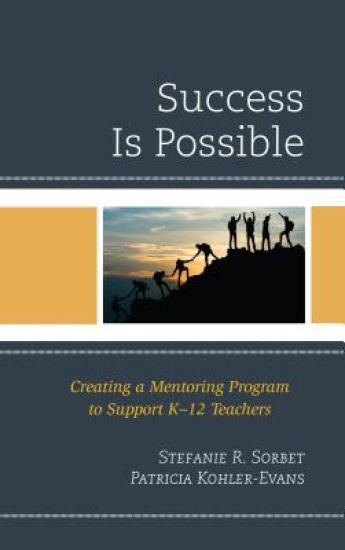
Teacher retention is of utmost importance at a time when so many young teachers choose not to remain in the profession. Teachers exiting the profession cite a lack of administrative support throughout their first years in the classroom. Implementing mentoring programs for beginning teachers will guarantee help and assistance during the difficult time of adjusting to a new career. Mentoring programs are critical when teachers are leaving the profession as quickly as they are leaving. Mentoring programs strengthen faculty relationships within their school community while increasing teachers’ motivation and drive to remain in the profession. If teachers are appreciated, supported, and intrinsically motivated, they will want to be in schools, and they will remain.
Teacher retention is of utmost importance at a time when so many young teachers choose not to remain in the profession. Teachers exiting the profession cite a lack of administrative support throughout their first years in the classroom. Implementing mentoring programs for beginning teachers will guarantee help and assistance during the difficult time of adjusting to a new career. Mentoring programs are critical when teachers are leaving the profession as quickly as they are leaving. Mentoring programs strengthen faculty relationships within their school community while increasing teachers’ motivation and drive to remain in the profession. If teachers are appreciated, supported, and intrinsically motivated, they will want to be in schools, and they will remain.