This book analyses the Korean film industry emergence and development in a global business and economic perspective. This is one of the first books to compare the film policies and industries of the world’s six largest film industries – featuring Korea as the central character – with the aim of defining the contours of what constitutes an effective film policy. It presents many cases showing that, contrary to what is often believed, an economically sound policy is a good instrument for achieving desired cultural goals. It uses a set of analytical tools – borrowed from the economic analysis of international trade policies – to provide a rich harvest of new, rigorous, and often unexpected results on the effectiveness of the existing film policies. The implications found in this book are relevant not only for Korea, but for all other countries that wish to foster or enhance the competitiveness of their film industries. This book will be of interest to a wide spectrum of scholars interested in cultural studies – media and cultural specialists, political scientists, sociologists, historians – in addition to business analysts and economists specialized in cultural economics. As this book focuses on film policies and how to improve them, it will also appeal to policymakers, business figures, public relations officials, and staff from international organizations working on the film industry.

People differ in their cognitive styles-their ways of getting and using information to solve problems and make decisions. Alfred G. Smith and his associates studied these differences in a selected group of over 800 students at a score of law schools throughout the United States. Two major cognitive styles were identified: that of the monopath, who follows a single route of established principles and procedures, and that of the polypath, who takes many routes, as circumstances suggest. A battery of both original and standard tests was administered to both law students and their professors to investigate differences in cognitive style and their relationships to self-image, anxiety, and academic achievement. This also revealed differences in prevailing styles at different schools. The results will be of special interest to readers concerned with legal education, to psychologists, and to behavioral scientists. The research format developed here will serve equally well for raising significant questions about the professions of medicine, education, social work, and others in which cognitive and communication styles play a central role in determining outcomes.
The Political Geography of Campaign Finance examines the distribution of political campaign contributions in the 2004, 2008, and 2012 preprimary election periods. Using aggregated individual level data, the authors determine if certain areas contribute more to presidential candidates in different stages of the campaign, and if these patterns are independent of wealth and partisanship. Unlike previous research, this book examines individual counties over multiple election cycles.
Did Omar Little die of lead poisoning? Would a decriminalization strategy like the one in Hamsterdam end the War on Drugs? What will it take to save neglected kids like Wallace and Dukie? "Tapping into 'The Wire'" uses the acclaimed television series as a road map for exploring connections between inner-city poverty and drug - related violence. Past Baltimore City health commissioner Peter Beilenson teams up with former Baltimore Sun reporter Patrick A. McGuire to deliver a compelling, highly readable examination of urban policy and public health issues affecting cities across the nation. Each chapter recounts scenes from episodes of the HBO series, placing the characters' challenges into the broader context of public policy. A candid interview with the show's co-creator David Simon reveals that one of the intentions of the series is to expose gross failures of public institutions, including criminal justice, education, labor, the news media, and city government. Even if readers haven't seen the series, the book's detailed summaries of scenes and characters brings them up to speed and engages them in both the story and the issues. With a firm grasp on the hard truths of real-world problems, "Tapping into 'The Wire'" helps undo misconceptions and encourage a dialogue of understanding.
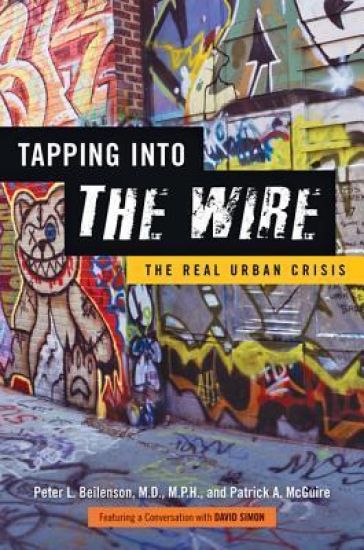
Did Omar Little die of lead poisoning? Would a decriminalization strategy like the one in Hamsterdam end the War on Drugs? What will it take to save neglected kids like Wallace and Dukie? Tapping into 'The Wire' uses the acclaimed television series as a road map for exploring connections between inner-city poverty and drug-related violence. Past Baltimore City health commissioner Peter Beilenson teams up with former Baltimore Sun reporter Patrick A. McGuire to deliver a compelling, highly readable examination of urban policy and public health issues affecting cities across the nation. Each chapter recounts scenes from episodes of the HBO series, placing the characters' challenges into the broader context of public policy. A candid interview with the show's co-creator David Simon reveals that one of the intentions of the series is to expose gross failures of public institutions, including criminal justice, education, labor, the news media, and city government. Even if readers haven't seen the series, the book's detailed summaries of scenes and characters brings them up to speed and engages them in both the story and the issues. With a firm grasp on the hard truths of real-world problems, Tapping into 'The Wire' helps undo misconceptions and encourage a dialogue of understanding.
In this important book, three of the leading authors in the field of international economic law discuss the law and economics of the three most frequently used contingent protection instruments: anti-dumping, countervailing measures, and safeguards. When discussing countervailing measures, the authors also discuss legal challenges against prohibited and/or actionable subsidies. The authors' choice is mandated by the fact that the effects of a subsidy cannot always be confined to the market of the WTO Member wishing to react against it. Assuming there are effects outside its market, an injured WTO Member can challenge the scheme as such before a WTO Panel. Taking the three agreements for granted as a starting point, the book provides comprehensive discussion of both the original contracts, and the case law that has substantially contributed to the understanding of these agreements.The agreements discussed by the authors provide generally worded disciplines on Members and leave a lot of discretion to the investigating authorities of such Members. A great number of the many questions that arise in the course of a domestic trade remedies investigation are not explicitly addressed in these agreements. In such a situation, the authors highlight the important role that the judge has to play. Much like domestic investigating authorities adopt a line which is either more liberal or more protectionist in the application of trade remedies, the WTO adjudicator on numerous occasions was faced with similar policy problems in applying the general rules to the facts of the case before them. The authors point out that the adjudicating bodies have insisted on the unfair character of dumping in order to substantiate their relatively deferential standard of review. In the anti-dumping / countervailing duties context, case law has generally emphasized the limited character of the obligations on investigating authorities. This implies that domestic investigating authorities, following the evolution of case law, are now facing a deferential standard of review when imposing anti-dumping and countervailing duties.The book offers a contrasting view of the Agreement on Safeguards, an instrument the use of which, according to the authors, could, in principle, be defensible: WTO Members will have extra incentives to make commitments within a flexible contract. Moreover, safeguards can, in their view, help ease the pressures from domestic lobbies by facilitating (sometimes necessary) adjustment costs. However, the case law is described by the authors as having adopted a rather inflexible stance, the end result of which is that no imposition of safeguards has survived the test of consistency with WTO law. They identify the apparent rationale for the case law as an over-insistence on what they label the highly uninformative fair/unfair trade distinction.The economic analysis employed by the authors would suggest that - in the light of the unsatisfactory nature of anti-dumping measures, contrasted with the positive incentives inherent in safeguards - ultimately one could envisage merging the three instruments of contingent protection into one new safeguards instrument. Equally, they argue, this economic approach, combined with legal doctrine, offers great insight into the current provisions, allowing them to be interpreted in a more coherent and meaningful manner.
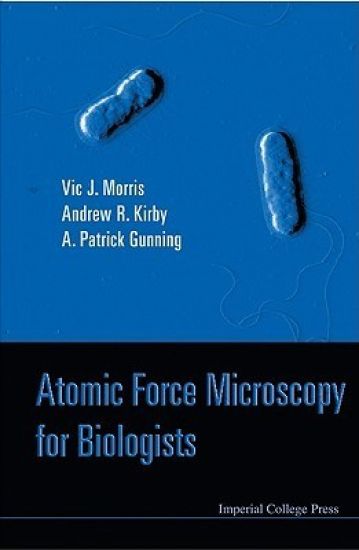
Atomic force microscopy (AFM) is part of a range of emerging microscopic methods for biologists which offer the magnification range of both the light and electron microscope, but allow imaging under the 'natural' conditions usually associated with the light microscope. To biologists, AFM offers the prospect of high resolution images of biological material, images of molecules and their interactions even under physiological conditions, and the study of molecular processes in living systems. This book provides a realistic appreciation of the advantages and limitations of the technique and the present and future potential for improving the understanding of biological systems.The second edition of this bestseller has been updated to describe the latest developments in this exciting field, including a brand new chapter on force spectroscopy. The dramatic developments of AFM over the past ten years from a simple imaging tool to the multi-faceted, nano-manipulating technique that it is today are conveyed in a lively and informative narrative, which provides essential reading for students and experienced researchers alike.
In this important book, three of the leading authors in the field of international economic law discuss the law and economics of the three most frequently used contingent protection instruments: anti-dumping, countervailing measures, and safeguards. When discussing countervailing measures, the authors also discuss legal challenges against prohibited and/or actionable subsidies. The authors' choice is mandated by the fact that the effects of a subsidy cannot always be confined to the market of the WTO Member wishing to react against it. Assuming there are effects outside its market, an injured WTO Member can challenge the scheme as such before a WTO Panel. Taking the three agreements for granted as a starting point, the book provides comprehensive discussion of both the original contracts, and the case law that has substantially contributed to the understanding of these agreements.The agreements discussed by the authors provide generally worded disciplines on Members and leave a lot of discretion to the investigating authorities of such Members. A great number of the many questions that arise in the course of a domestic trade remedies investigation are not explicitly addressed in these agreements. In such a situation, the authors highlight the important role that the judge has to play. Much like domestic investigating authorities adopt a line which is either more liberal or more protectionist in the application of trade remedies, the WTO adjudicator on numerous occasions was faced with similar policy problems in applying the general rules to the facts of the case before them. The authors point out that the adjudicating bodies have insisted on the unfair character of dumping in order to substantiate their relatively deferential standard of review. In the anti-dumping / countervailing duties context, case law has generally emphasized the limited character of the obligations on investigating authorities. This implies that domestic investigating authorities, following the evolution of case law, are now facing a deferential standard of review when imposing anti-dumping and countervailing duties.The book offers a contrasting view of the Agreement on Safeguards, an instrument the use of which, according to the authors, could, in principle, be defensible: WTO Members will have extra incentives to make commitments within a flexible contract. Moreover, safeguards can, in their view, help ease the pressures from domestic lobbies by facilitating (sometimes necessary) adjustment costs. However, the case law is described by the authors as having adopted a rather inflexible stance, the end result of which is that no imposition of safeguards has survived the test of consistency with WTO law. They identify the apparent rationale for the case law as an over-insistence on what they label the highly uninformative fair/unfair trade distinction.The economic analysis employed by the authors would suggest that - in the light of the unsatisfactory nature of anti-dumping measures, contrasted with the positive incentives inherent in safeguards - ultimately one could envisage merging the three instruments of contingent protection into one new safeguards instrument. Equally, they argue, this economic approach, combined with legal doctrine, offers great insight into the current provisions, allowing them to be interpreted in a more coherent and meaningful manner.
This is the first book to cover the Holocene geology and geomorphology of the 9,200 kilometers of the Brazilian coast. It is written for third and fourth year undergraduates, post-graduate students, scientists and man- ers. It characterizes the Brazilian coast in terms of the Holocene geology, geomorphology, oceanographic and climatic conditions, and the location, morphology and evolution of the barrier types. Separate chapters outline the types of barriers and coastal dynamics in each state, beginning in the south and proceeding to the north. Some emphasis is placed on the stretches of coast where the detailed morphology and stratigraphy of b- riers has been previously determined. To date, the Brazilian coastal barriers have been largely ignored by the international community, partly perhaps because much of the past research has tended to concentrate on barrier islands, of which there are very few in Brazil. In contrast, the Brazilian coastal barriers display a much wider range of types than is generally assumed. The biggest and most spectacular transgressive dunefield barriers in the world exist in Brazil, and dominate the southern and northeastern coasts. Many have never been described - fore. This volume provides a wealth of information on Holocene barrier types, evolution and dynamics. It provides managers, ecologists, biologists and botanists with much needed information on the geology, geomorph- ogy and dynamics of the genesis, types, functioning and ecosystems of the Holocene barriers extending along the entire Brazilian coast.