In this first major work on the muskox, Peter C. Lent presents a comprehensive account of how its fortunes have been intertwined with our own since the glaciations of the Pleistocene era.Drawing from paleontology, archaeology, anthropology, and Indian and Inuit lore, Lent examines muskoxen in prehistory. Changing concepts in biology, conservation and management, animal husbandry, and contemporary arctic economics complete the picture. In uniting these themes, Lent refutes the idea that the muskox is an ""ice age relict,"" arguing that it was never numerous, even during the glacial era. Once considered an endangered species, the muskox today has an expanding economic role in northern lands.
The stellar play and fascinating backstories of exiled Cuban sluggers and hurlers in Major League Baseball (MLB) has become one of the biggest headlines in America's national pastime. On-field exploits by colorful Dodgers outfielder Yasiel Puig, American League rookie-of-the-year José Abreu, home run derby champion Yoenis Céspedes, radar-gun busting Cincinnati fast-baller Aroldis Chapman, and a handful of others have been further enhanced by feel-good tales of desperate Cuban superstars risking their lives to escape Fidel Castro’s communist realm and chase a celebrated American Dream of financial and athletic success. But a truly ugly underbelly to this story has also slowly emerged, one that involves human smuggling operations financed by Miami crime syndicates, operated by Mexican drug cartels, and conveniently ignored by big league ball clubs endlessly searching for fresh waves of international talent. In Cuba’s Baseball Defectors: The Inside Story, Cuban baseball expert Peter C. Bjarkman reveals the complete truth behind the wave of Cuban big league talent coming to MLB. Given rare access to Cuba and its ballplayers, Bjarkman has spent over twenty years traveling to all corners of the island getting to know the top Cuban stars and witnessing their baseball struggles and triumphs. In this book, Bjarkman places recent events—including the apparent thaw in US-Cuba relations—in the context of Cuban baseball history and tradition before delving into the stories of the major Cuban stars who have left the island. He reveals the personal histories of these players, explains the events that led them to eventually choose defection from their homeland, and details their harrowing journeys to reach US shores and achieve baseball stardom. Players whose big league dreams failed are also discussed, as are Cuba’s recent efforts to stem the defection tide through working agreements with the Japanese and Mexican leagues. Unique in its balanced perspective of Cuban baseball and its star players, Cuba’s Baseball Defectors not only shares the author’s first-hand account of many previously misreported events, it also provides a view of the illegal smuggling of ballplayers from the perspective of Cuban baseball officials whose voices have often not been heard. With a conclusion outlining a likely scenario for future relations between Major League Baseball and the Cuban League, this book will fascinate baseball fans, those interested in the history of US-Cuba relations, and those wanting to learn more about the unsavory story of human trafficking in the name of baseball glory.
Although naval development before World War II focused on aircraft carriers, the British nevertheless had seventy battleships--larger and more powerful than ever before--under construction when war broke out in 1939. The war would hasten the battleship’s decline, but not before producing dramatic moments at sea around the globe: the hunt for the Bismarck, the sinking of the Scharnhorst, the defeat of the Graf Spee, and the earth-shattering bombardments on D-Day. Peter C. Smith recounts these and other stirring episodes of naval combat with verve and authority.
Both Winston Churchill and Adolf Hitler wanted the Aegean Sea in 1943. The British prime minister saw an opportunity to force neutral Turkey into the Allied camp and pin down German forces while the Nazi leader hoped to keep Turkey neutral and maintain Germany’s foothold in the Mediterranean and Greece. The conflict came to a head with naval and amphibious assaults involving German SS troops, British commandos, spies, partisans, and even Greek pirates. Waged primarily on the islands of Cos and Leros, the campaign culminated in a German victory.
• Details on planes like the German Stuka, the American Dauntless, the Japanese Aichi D3A1 "Val," the Soviet PE-2, and numerous others • Riveting accounts of aerial combat • Includes maps, diagrams, tables, and photos For many, it is a dive bomber that conjures the most dramatic, quintessential image of World War II: a screaming German Stuka hurtling toward the ground as part of the frightening blitzkrieg that opened the war. In this illustrated history of Allied and Axis dive bombers, Peter C. Smith traces these formidable aircraft from the earliest experiment, through the planes' first operation, to their emergence as devastatingly effective tools of aerial warfare in World War II.
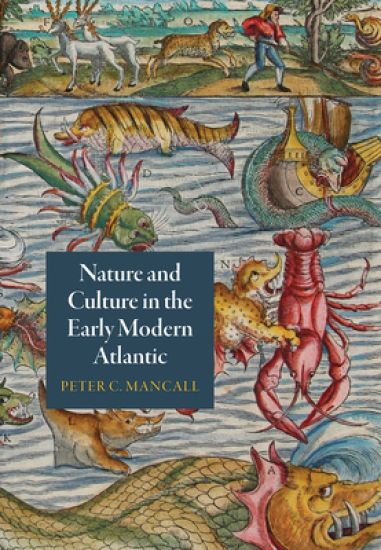
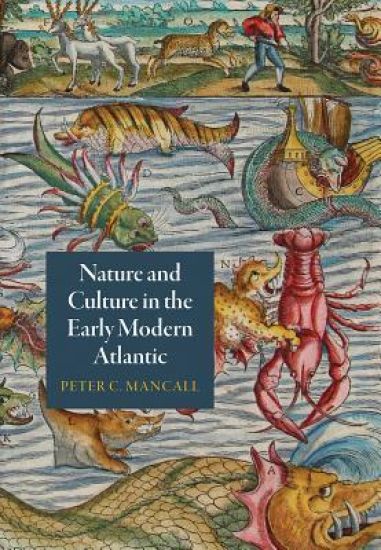
In the sixteenth-century Atlantic world, nature and culture swirled in people's minds to produce fantastic images. In the South of France, a cloister's painted wooden panels greeted parishioners with vivid depictions of unicorns, dragons, and centaurs, while Mayans in the Yucatan created openings to buildings that resembled a fierce animal's jaws, known to archaeologists as serpent-column portals. In Nature and Culture in the Early Modern Atlantic, historian Peter C. Mancall reveals how Europeans and Native Americans thought about a natural world undergoing rapid change in the century following the historic voyages of Christopher Columbus. Through innovative use of oral history and folklore maintained for centuries by Native Americans, as well as original use of spectacular manuscript atlases, paintings that depict on-the-spot European representations of nature, and texts that circulated imperfectly across the ocean, he reveals how the encounter between the old world and the new changed the fate of millions of individuals. This inspired work of Atlantic, European, and American history begins with medieval concepts of nature and ends in an age when the printed book became the primary avenue for the dissemination of scientific information. Throughout the sixteenth century, the borders between the natural world and the supernatural were more porous than modern readers might realize. Native Americans and Europeans alike thought about monsters, spirits, and insects in considerable depth. In Mancall's vivid narrative, the modern world emerged as a result of the myriad encounters between peoples who inhabited the Atlantic basin in this period. The centuries that followed can be comprehended only by exploring how culture in its many forms-stories, paintings, books-shaped human understanding of the natural world.
In the sixteenth-century Atlantic world, nature and culture swirled in people's minds to produce fantastic images. In the South of France, a cloister's painted wooden panels greeted parishioners with vivid depictions of unicorns, dragons, and centaurs, while Mayans in the Yucatan created openings to buildings that resembled a fierce animal's jaws, known to archaeologists as serpent-column portals. In Nature and Culture in the Early Modern Atlantic, historian Peter C. Mancall reveals how Europeans and Native Americans thought about a natural world undergoing rapid change in the century following the historic voyages of Christopher Columbus. Through innovative use of oral history and folklore maintained for centuries by Native Americans, as well as original use of spectacular manuscript atlases, paintings that depict on-the-spot European representations of nature, and texts that circulated imperfectly across the ocean, he reveals how the encounter between the old world and the new changed the fate of millions of individuals. This inspired work of Atlantic, European, and American history begins with medieval concepts of nature and ends in an age when the printed book became the primary avenue for the dissemination of scientific information. Throughout the sixteenth century, the borders between the natural world and the supernatural were more porous than modern readers might realize. Native Americans and Europeans alike thought about monsters, spirits, and insects in considerable depth. In Mancall's vivid narrative, the modern world emerged as a result of the myriad encounters between peoples who inhabited the Atlantic basin in this period. The centuries that followed can be comprehended only by exploring how culture in its many forms-stories, paintings, books-shaped human understanding of the natural world.
In the early twentieth century lead had many domestic uses: in solder for cans, as a gasoline additive to prevent “knocking” in engines, in water pipes, and, most prominently, in interior paint prized for its durability and ability to hold color. Far from being the toxic hazard we recognize today, lead was a valuable commodity. However, by the end of the century, lead had largely disappeared from our environment as physicians discovered the threat it posed to children’s health and mental development.Old Paint documents the history of lead-paint poisoning in the United States and the evolving responses of public health officials and the lead-paint industry to this hazard up to 1980, by which time lead had been banned from gasoline and paint. Peter C. English traces lead poisoning from a rare, but acute problem confined to a small group of children to the discovery by the end of the 1940s of the dangers of the crumbling lead-painted interiors of inner-city dwellings. He draws on a wide range of primary materials not only to illuminate our understanding of how this health hazard changed over time, but also to explore how diseases are constructed and evolve.
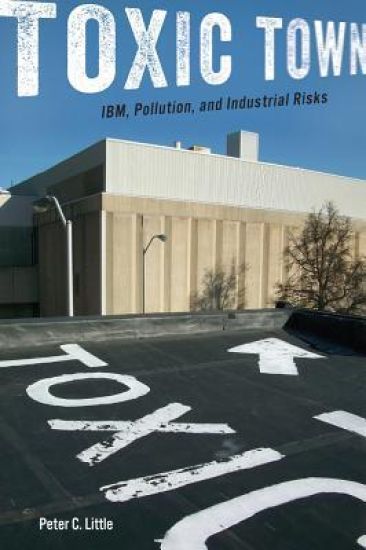
Shows the risks of high-tech pollution through a study of an IBM plant's effects on a New York town In 1924, IBM built its first plant in Endicott, New York. Now, Endicott is a contested toxic waste site. With its landscape thoroughly contaminated by carcinogens, Endicott is the subject of one of the nation's largest corporate-state mitigation efforts. Yet despite the efforts of IBM and the U.S. government, Endicott residents remain skeptical that the mitigation systems employed were designed with their best interests at heart. In Toxic Town, Peter C. Little tracks and critically diagnoses the experiences of Endicott residents as they learn to live with high-tech pollution, community transformation, scientific expertise, corporate-state power, and risk mitigation technologies. By weaving together the insights of anthropology, political ecology, disaster studies, and science and technology studies, the book explores questions of theoretical and practical import for understanding the politics of risk and the ironies of technological disaster response in a time when IBM's stated mission is to build a "Smarter Planet." Little critically reflects on IBM's new corporate tagline, arguing for a political ecology of corporate social and environmental responsibility and accountability that places the social and environmental politics of risk mitigation front and center. Ultimately, Little argues that we will need much more than hollow corporate taglines, claims of corporate responsibility, and attempts to mitigate high-tech disasters to truly build a smarter planet.
Shows the risks of high-tech pollution through a study of an IBM plant's effects on a New York town In 1924, IBM built its first plant in Endicott, New York. Now, Endicott is a contested toxic waste site. With its landscape thoroughly contaminated by carcinogens, Endicott is the subject of one of the nation's largest corporate-state mitigation efforts. Yet despite the efforts of IBM and the U.S. government, Endicott residents remain skeptical that the mitigation systems employed were designed with their best interests at heart. In Toxic Town, Peter C. Little tracks and critically diagnoses the experiences of Endicott residents as they learn to live with high-tech pollution, community transformation, scientific expertise, corporate-state power, and risk mitigation technologies. By weaving together the insights of anthropology, political ecology, disaster studies, and science and technology studies, the book explores questions of theoretical and practical import for understanding the politics of risk and the ironies of technological disaster response in a time when IBM's stated mission is to build a "Smarter Planet." Little critically reflects on IBM's new corporate tagline, arguing for a political ecology of corporate social and environmental responsibility and accountability that places the social and environmental politics of risk mitigation front and center. Ultimately, Little argues that we will need much more than hollow corporate taglines, claims of corporate responsibility, and attempts to mitigate high-tech disasters to truly build a smarter planet.
Bringing together case studies from Europe, Africa and North and South America, this book makes a fresh assessment of the role of the individual and the state in land development. It discusses a range of issues related to land reform, land development and land management, providing a unique reflection of the current state of research. Particular emphasis is laid on the implementation of sustainable processes of land development as an integrated principle of land management. The book examines the rights of the land users and addresses a number of issues relating to sustainability and land development, ranging from emerging land markets and environmental issues, through to natural resource development. The case studies provide practical examples of the application of land reform and land development to land management.
This collection of essays translates visual language into on-screen politics. While the series ""The West Wing"" may be criticized as ""idealistic"", its clever techniques of camera work, lighting, editing, and mise en scene reflect America's best image of itself, and entertains a loyal audience that wants to believe in the nobility of the American Dream. It introduces readers to the sensibilities to appreciate the show's nuances and the necessary knowledge to avoid any misreadings.
Questions the literal burying of the nuclear threat and how it relates to expectations for our futureA rising ocean. A falling building. A toxic river. Species extinguished. A nuclear landscape. In a world so configured, the state of contemporary ecological thought and practice is woefully-and perilously-inadequate. Focusing on the government’s nuclear waste burial program in Carlsbad, New Mexico, Signs of Danger begins the urgent work of finding a new way of thinking about ecological threat in our time.The Waste Isolation Pilot Plant in Carlsbad began receiving shipments in 1999. With a proposed closing date of 2030, this repository for nuclear waste must be secured with a sign, the purpose of which will be to keep people away for three hundred generations. In the official documents uncovered by Peter van Wyck, we encounter a government bureaucracy approaching the issue of nuclear waste as a technical problem only to find itself confronting a host of intractable philosophical issues concerning language, culture, and history. Signs of Danger plumbs these depths as it shows us how the problem raised in the desert of New Mexico is actually the problem of a culture grappling with ecological threats and with questions of the limits of meaning and representation in the deep future.The reflections at the center of this book-on memory, trauma, disaster, representation, and the virtual-are aimed at defining the uniquely modern status of environmental and nuclear threats. They offer invaluable insights into the interface of where culture ends and nature begins, and how such a juncture is closely linked with questions of risk, concepts of history, and the cultural experience of time.Winner of the 2005 Gertrude J. Robinson Book Prize of the Canadian Communication Association
Dmitrii Pisarev (1840-1868) was the leader of a cohort of Russian radicals known as the Nihilists and was Russia's most visible literary critic for most of the 1860s. During this pivotal decade in the history of Russian culture Dostoevsky, Tolstoy, and Turgenev published much of their most important fiction, and Russian radicalism itself evolved from a handful of isolated circles into a full-fledged revolutionary movement. The Nihilist Imagination, the first English-language book devoted to this influential nineteenth-century intellectual, explores the convergence between historic developments in literature and politics as well as the ways young contemporary readers approached novels such as Turgenev's Fathers and Sons when they were first published, the evolution of Russian radicalism during one of its critical phases, and the perceptions of government officials and members of educated society of this emerging radical threat. Rather than a biography, this book is a series of essays on the theme of Russian literary and political Nihilism, structured around the analysis of Pisarev's writings, their intellectual sources, and their influence.
The Connecticut shoreline is made up of varying landscapes--the sandy coastline at Madison, the rocky shore at Branford, the replenished beach at Greenwich, and the erosion at Old Saybrook. A Moveable Shore offers a general user’s guide to the Connecticut shore. In a town-by-town journey down the 254-mile coastline, Peter C. Patton and James M. Kent explore in detail the history of specific sites, the climatic and geological forces that shape the shore, and regulations regarding land-use development. In addition, they provide a guide to coastal field trips.Beginning with the hurricane of 1938, the biggest natural disaster to strike Connecticut since its settlement by Europeans, the authors demonstrate the continuing pattern of development of coastal land prone to flooding and high winds. Although the Connecticut coast faces Long Island and Block Island sounds, it is subject to the same natural hazards, land-use risks, and regulations as opean ocean shorelines. Global climatic events--glaciation, global warming, and rising sea levels--influence the shape and composition of the Connecticut shoreline, as do small-scale forces such as wind, waves, and tides. Patton and Kent seek to instill a respect for the force of natural events and provide a guide for lessening the dangers of construction and development. A practical question-and-answer chapter explains what homeowners need to know to meet land-use regulations along the coast. In a state where the entire population lives within 100 miles of the coast, this important book will serve as a citizens’ guide to living with the Connecticut shore and will be of interest to coastal residents, developers, geologists, policymakers, and vacationers.
Popular Sovereignty and the Crisis of German Constitutional Law is a historical analysis of competing doctrines of constitutional law during the Weimar Republic. It chronicles the creation of a new constitutional jurisprudence both adequate to the needs of a modern welfare state and based on the principle of popular sovereignty. Peter C. Caldwell explores the legal nature of democracy as debated by Weimar’s political theorists and constitutional lawyers. Laying the groundwork for questions about constitutional law in today’s Federal Republic, this book draws clear and insightful distinctions between strands of positivist and anti-positivist legal thought, and examines their implications for legal and political theory.Caldwell makes accessible the rich literature in German constitutional thought of the Weimar period, most of which has been unavailable in English until now. On the liberal left, Hugo Preuss and Hans Kelsen defended a concept of democracy that made the constitution sovereign and, in a way, created the "Volk" through constitutional procedure. On the right, Carl Schmitt argued for a substantial notion of the "Volk" that could overrule constitutional procedure in a state of emergency. Rudolf Smend and Heinrich Triepel located in the constitution a set of inviolable values of the political community, while Hermann Heller saw in it a guarantee of substantial social equality. Drawing on the work of these major players from the 1920s, Caldwell reveals the various facets of the impassioned constitutional struggles that permeated German legal and political culture during the Weimar Republic.
Popular Sovereignty and the Crisis of German Constitutional Law is a historical analysis of competing doctrines of constitutional law during the Weimar Republic. It chronicles the creation of a new constitutional jurisprudence both adequate to the needs of a modern welfare state and based on the principle of popular sovereignty. Peter C. Caldwell explores the legal nature of democracy as debated by Weimar’s political theorists and constitutional lawyers. Laying the groundwork for questions about constitutional law in today’s Federal Republic, this book draws clear and insightful distinctions between strands of positivist and anti-positivist legal thought, and examines their implications for legal and political theory.Caldwell makes accessible the rich literature in German constitutional thought of the Weimar period, most of which has been unavailable in English until now. On the liberal left, Hugo Preuss and Hans Kelsen defended a concept of democracy that made the constitution sovereign and, in a way, created the "Volk" through constitutional procedure. On the right, Carl Schmitt argued for a substantial notion of the "Volk" that could overrule constitutional procedure in a state of emergency. Rudolf Smend and Heinrich Triepel located in the constitution a set of inviolable values of the political community, while Hermann Heller saw in it a guarantee of substantial social equality. Drawing on the work of these major players from the 1920s, Caldwell reveals the various facets of the impassioned constitutional struggles that permeated German legal and political culture during the Weimar Republic.
Christians usually focus on what Jesus has done (his life, death and resurrection) and what he will do (his second coming and eternal reign). While there has been something of a revival of interest in his ascension, studies of Jesus in his exalted state are relatively rare. However, the Christ that Christians trust in, relate to and love is not only the one who lived, died, rose and will come again: he is also currently seated at God's right hand. Christian faith as well as theological reflection must take into consideration this significant aspect of Christ's person and work.In this New Studies in Biblical Theology volume, Peter Orr attends to this somewhat neglected topic in biblical theology. He explores the New Testament witness to Jesus as he is now, the exalted Christ, through the lenses of his identity, his location and his activity.Addressing key issues in biblical theology, the works comprising New Studies in Biblical Theology are creative attempts to help Christians better understand their Bibles. The NSBT series is edited by D. A. Carson, aiming to simultaneously instruct and to edify, to interact with current scholarship and to point the way ahead.
In Our Only Star and Compass: Locke and the Struggle for Political Rationality, Peter C. Myers reexamines the role of Locke in liberal political philosophy. Myers considers Locke's philosophy in relation both to contemporary liberalism and to the great works of classical and modern political philosophy. With an emphasis on the human capacity for rational self-government, Myers clarifies Locke's insights into the status of reason in political life, arguing that Locke presents reason as a way of life that offers humans fulfillment, and moral and political moderation.