
Kirjahaku
Etsi kirjoja tekijän nimen, kirjan nimen tai ISBN:n perusteella.
1000 tulosta hakusanalla Peter Walker


Lost Tramways of England: Bolton, SLT, Wigan and St Helens
Peter Waller
Graffeg Limited
2022
sidottu
At the peak of Britain's first-generation tramways, it was possible to travel by tram all the way from Pier Head at Liverpool to the Pennines in Rochdale by tram. Amongst the chain of tramways that formed these links were the services that operated in Bolton, St Helens, Wigan and the company lines controlled by South Lancashire Tramways. Each of these systems had a fascinating history but all were to suffer greatly as a result of lack of maintenance during and after World War I and from bus competition, with the result that only one - Bolton - survived into the post-World War II era. Locations featured include: Farnworth, Dunscar, Tonge, Horwich, Halliwell, Montserrat, Bury, Huyton, Prescot, Worsley and Leigh. The Lost Tramways series documents the tram networks which were at the heart of many of Britain's growing towns and cities from the mid-19th century to the mid-20th century. An informative, accessible and portable resource for the tram enthusiast as well as the general reader, and a superb souvenir or gift for visitors past and present.





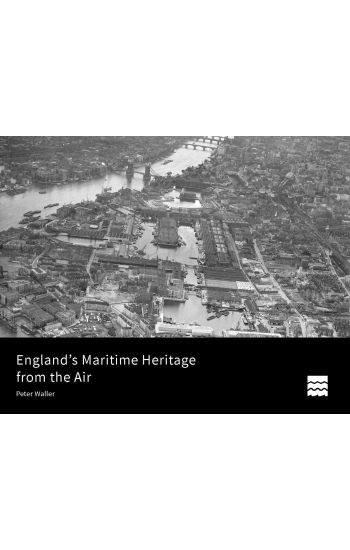
England has a long and involved relationship with the sea. It has provided a final line of defence against invasion, the route over which the country’s global trade has travelled, the source of a bountiful harvest of fish and seafood that has sustained the population, the essential links in the empire that saw Britain emerge as the world’s first ‘Great Power’, and, more recently, it has fostered the leisure industry. For many, the sea was to provide their final view of their homeland as emigration took them to far-flung corners of the world, while for others, perhaps fleeing religious or political persecution, the sea offered them a route to safety. For almost a century the photographers from the Aerofilms company recorded Britain from the air. Alongside the photographs taken of the great castles and abbeys of the country, the views also recorded industrial and commercial activity – including the docks and ports that were an essential part in maintaining Britain’s place in the world. In this book, Peter Waller has delved through the collection of Aerofilms photographs held by Historic England to explore the country’s maritime heritage. Selecting 150 images, the author looks at how the docks and ports have evolved since the years immediately after World War I, how traditional patterns of trade have changed, how the Royal Navy has shrunk and how the leisure industry has come to dominate.
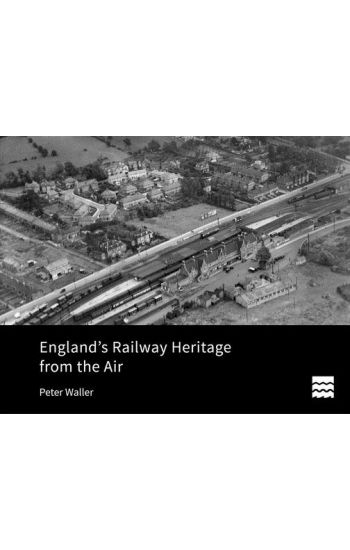
For almost a century, from its inception in the years immediately after World War I, the Aerofilms company recorded the changing face of England from the air. At the start of the era, the railway was still the predominant form of transport, with a network of main, secondary and branch lines that stretched to virtually every corner of the realm. As the 20th century progressed, however, this dominance declined as the private motorcar and the lorry increasingly became the preferred mode of transport. The early railway builders — such as the London & Birmingham — had invested much in creating impressive stations for this new and revolutionary form of transport and, during the 19th century, many of the country’s leading architects undertook commissions on behalf of the burgeoning railway industry. After World War II, however, many of these buildings were were swept away. The Aerofilms collection provides a unique vantage point to explore the country’s railway heritage. It is only from the air that it is possible to appreciate fully how much the railway came to dominate the landscape; even in relatively small country towns, the railway station with its platforms and goods yard was significant. Add to this the construction of tunnels and viaducts, and the railway can be said to have shaped much of the landscape of modern England. Drawing upon some 150 images from the collection, Peter Waller explores various aspects of England’s unique railway heritage: from the major stations in cities like Birmingham to the humble goods yard and signal box.

Cardiff, once one of the world's busiest ports, has a long and fascinating heritage. Here, transportation expert Peter Waller explores its long-closed tramway, and probes the significance of these vanished modes of transport and the world where they were in regular use. Rigorously researched and photo-documented throughout, this series makes for essential reading for all enthusiasts of British heritage.

Transportation expert Paul Waller explores Wales' long-closed tramways, probing the significance of these vanished modes of transport and the world where they were in regular use. Rigorously researched and photo-documented throughout, this series makes for essential reading for all enthusiasts of British heritage.

