Kirjojen hintavertailu. Mukana 11 244 527 kirjaa ja 12 kauppaa.

Kirjahaku

Etsi kirjoja tekijän nimen, kirjan nimen tai ISBN:n perusteella.

1000 tulosta hakusanalla Philip Stuart

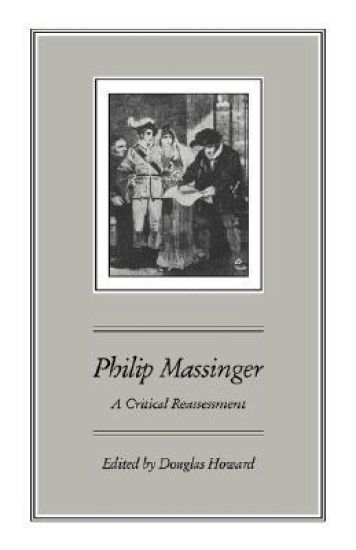
Philip Massinger

Philip Massinger

Cambridge University Press
2008
pokkari
With the exception of the scholarly editions of his plays and a handful of essays on the better-known works, Philip Massinger's dramatic output has received little critical attention in the twentieth century. This collection of critical essays attempts a full reappraisal of the critical position. The essays come from the leading Massinger scholars and are introduced by a brief biography which places the playwright in the context of early Stuart theatre. Important general aspects of Massinger's dramaturgy - his strikingly individual language; attitude to male and female bonding; political views and collaborative work - are discussed, in addition to separate essays on the tragicomedy The Maid of Honour, his best-known tragedy The Roman Actor, and the two comedies A New Way to Pay Old Debts and The City Madam. Four hundred years after his birth this book will show that the hitherto underrated Massinger was the chief dramatist for England's major theatrical company from the death of Fletcher until the closing of the theatres in 1642, and a theatrical poet of major importance.
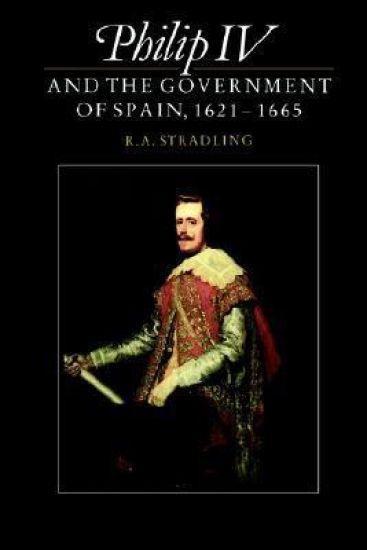
Philip IV and the Government of Spain, 1621–1665

Philip IV and the Government of Spain, 1621–1665

R. A. Stradling

Cambridge University Press
2002
pokkari
This book concentrates on the political history of the reign of Philip IV, and the role of the king within it. Philip is kept near the forefront, and issues and events are often seen - if sometimes critically - from his viewpoint. It is, therefore, a work of revision and rehabilitation, representing an attempt (against all other extant accounts) to establish Philip IV as a positive figure, with an autonomous character and political identity. A secondary, supportive, intention is to demonstrate that after the fall of Olivares, the king ruled and governed without a favourite (valido). This is the central theme in the most detailed treatment of the second half of the reign available in any language. Reference is made throughout to Philip’s own words and actions. At the same time, the Olivares period itself is approached from a new perspective, some issues being examined with the use of new material. Although not intended as a conventional biography, the book retains several characteristics of the form, in that it is a ‘career-study’, part thematic, part chronological. Philip IV is examined also in relation to the political writing of the age, and to his court and capital in Madrid.