Kirjojen hintavertailu. Mukana 12 390 323 kirjaa ja 12 kauppaa.

Kirjahaku

Etsi kirjoja tekijän nimen, kirjan nimen tai ISBN:n perusteella.

1000 tulosta hakusanalla Phillip Good

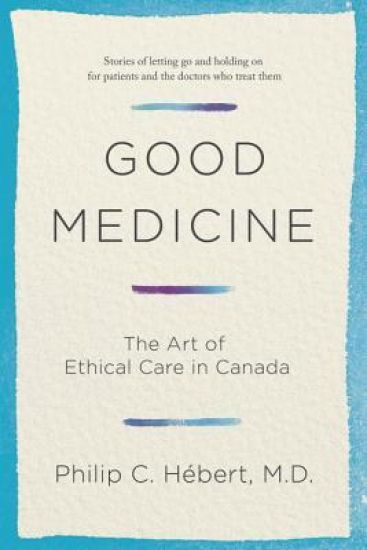
Good Medicine

Good Medicine

Philip Hebert

Doubleday Canada
2016
sidottu
Award-winning physician Philip C. H bert creates a brave and intimate portrait of the complex ethical imperatives at the heart of good medicine: doctors do not have all the answers; patients must be heard; and their needs, desires, fears, and experiences must be reflected in how practitioners look after them. Medical science continues to advance to previously unimagined heights in its diagnostic and treatment capabilities. With these advances, however, come unexpected ethical dilemmas for practitioners, patients, and families. In Good Medicine, Dr. H bert approaches these questions of pressing and fundamental importance from the dual point of view of acclaimed physician and long-time patient. With remarkable balance and sensitivity, he explores a range of politically, constitutionally, and ethically contentious matters, including assisted suicide, treatment refusal and suspension, and the overall allocation of medical resources. H bert pairs his artful analysis with the real-life, often deeply moving stories of those who have lived these challenges. H bert offers piercing and compassionate insight into the relationship between patients and medical professionals, and guides readers towards the open and empathetic communication needed to ensure good medicine for everyone.
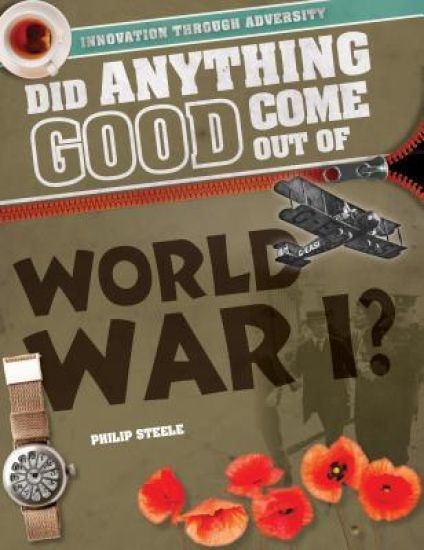
Did Anything Good Come Out of World War I?

Did Anything Good Come Out of World War I?

Philip Steele

Rosen Young Adult
2015
sidottu
The immediate legacy of World War I, the first truly global conflict, was devastation, loss, and tragedy. However, a century later, we still benefit from many of the indirect results of the war, including life-saving medical advances and popular consumer items like tea bags and wristwatches. This thought-provoking volume tackles its title question by examining the causes and effects of World War I. Readers learn how the "Great War" precipitated social, cultural, political, and medical strides even as it claimed lives and livelihoods. The narrative's balanced perspective encourages readers to think deeply about the positive and negative effects of war.
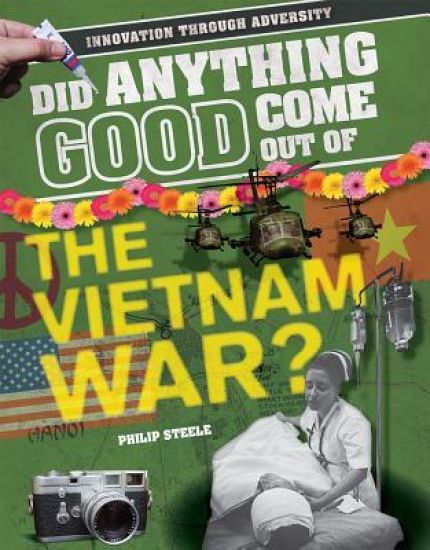
Did Anything Good Come Out of the Vietnam War?

Did Anything Good Come Out of the Vietnam War?

Philip Steele

Rosen Young Adult
2015
sidottu
This compelling book makes readers think about the Vietnam War in a different way. It asks tough questions, such as if there was any benefit to a war that not only killed millions but also divided America, split generations, and created a rift between America and the rest of the world. With dynamic spreads featuring pictures and easy-to-follow text, this book will inspire readers not only to study history but also to ask the all-important critical questions about the past so that we don't make the same mistakes.
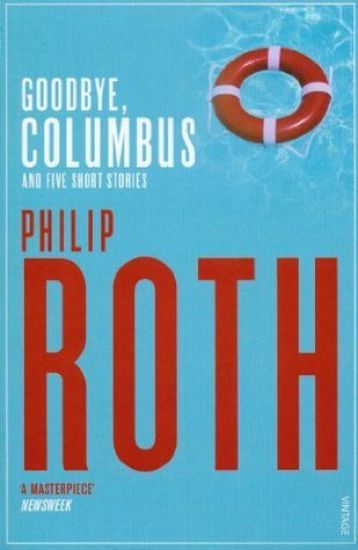
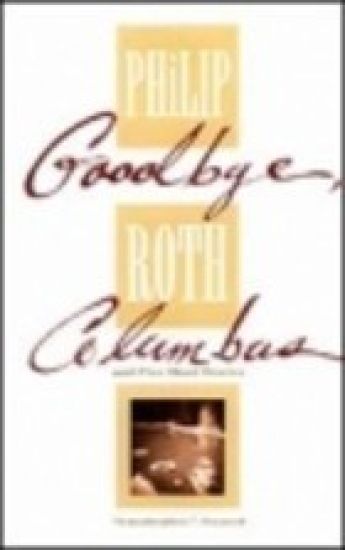
Goodbye, Columbus

Goodbye, Columbus

Philip Roth

Vintage
2006
pokkari
Tells the story of Neil Klugman and pretty, spirited Brenda Patimkin, he of poor Newark, she of suburban Short Hills, who meet one summer and fall into an affair that is as much about social class and suspicion as it is about love. This novella is accompanied by five short stories - sometimes iconoclastic, sometimes elegiac.
Goodbye, Columbus: And Five Short Stories
NATIONAL BOOK AWARD WINNER - From the Pulitzer Prize-winnning writer of explosive wit, merciless insight, and a fierce compassion comes "a masterpiece" (Newsweek) that illuminates the subterranean conflicts between parents and children and friends and neighbors in the American Jewish diaspora. Roth's award-winning first book instantly established its author's reputation. Goodbye, Columbus is the story of Neil Klugman and pretty, spirited Brenda Patimkin, he of poor Newark, she of suburban Short Hills, who meet one summer break and dive into an affair that is as much about social class and suspicion as it is about love. The novella is accompanied by five short stories that range in tone from the iconoclastic to the astonishingly tender.
Goodbye Sky Harbor

Goodbye Sky Harbor

Philip Brian Mathis

Createspace Independent Publishing Platform
2018
pokkari
The first novel in a three part series, Goodbye Sky Harbor follows Creed O'Connor as he sets out on his first day of junior year in high school. In addition to the normal teenage requisites; Creed finds out that he has been gifted with some extraordinary abilities after a chance encounter with some neighborhood bullies. Before he can make sensible reasoning behind his miraculous talents, or fully explore his budding relationship with his best friend Genesis, the United States is attacked and thrusted into war with China. As the chaos enfolds one question lingers; will Creed become the super hero everyone is expecting him to become and help in the war efforts, or will he simply endure like everyone else? Once the Army finds out about Creed, will he have a choice?
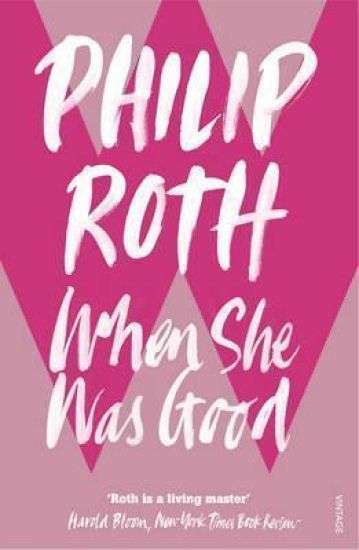
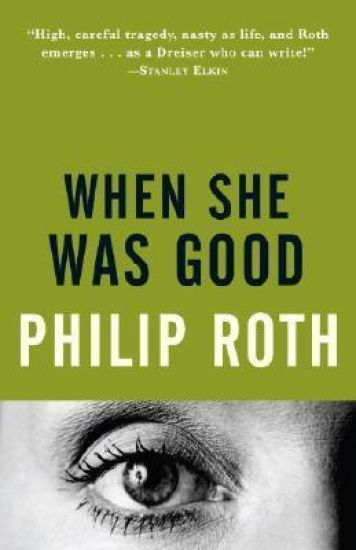
When She Was Good

When She Was Good

Philip Roth

Vintage
2007
pokkari
When she was still a child, Lucy Nelson had her irresponsible, alcoholic father thrown in jail. Since then, Lucy has become a furious adolescent - raging against middle-class life and provincial American piety - intent on reforming the men around her: especially her incompetent mama's boy of a husband, Roy.
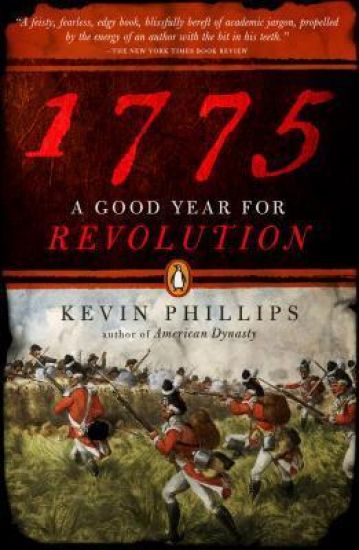
1775: A Good Year for Revolution

1775: A Good Year for Revolution

Kevin Phillips

PENGUIN BOOKS
2013
nidottu
A groundbreaking account of the American Revolution--from the bestselling author of American Dynasty In this major new work, iconoclastic historian and political chronicler Kevin Phillips upends the conventional reading of the American Revolution by debunking the myth that 1776 was the struggle's watershed year. Focusing on the great battles and events of 1775, Phillips surveys the political climate, economic structures, and military preparations of the crucial year that was the harbinger of revolution, tackling the eighteenth century with the same skill and perception he has shown in analyzing contemporary politics and economics. The result is a dramatic account brimming with original insights about the country we eventually became.
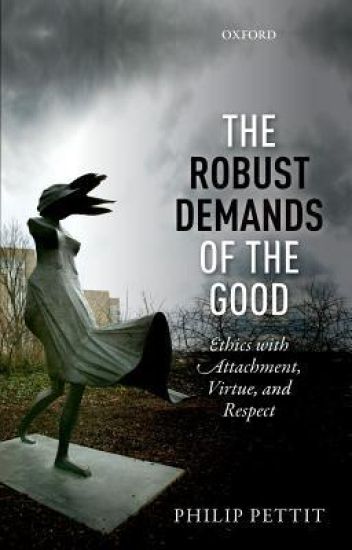
The Robust Demands of the Good

The Robust Demands of the Good

Philip Pettit

Oxford University Press
2015
sidottu
Some goods that we generate for others, as when we give them attention or help or encouragement, require us to provide that benefit under the actual circumstances where we interact. Other goods that we generate require not just that we actually provide that sort of benefit but that we are also poised to provide it, even should actual circumstances change in various ways. These goods demand robust and not merely actual beneficence. Thus to give you friendship I must be robustly, not just accidentally, attentive to your needs; to give you a virtue like honesty I must be robustly disposed to tell you the truth; and to give you respect I must be robustly committed to showing restraint in my dealings with you. In this original contribution to normative ethics, Philip Pettit charts the range of robustly demanding goods, building on his earlier work on the robust demands of freedom. He explores the rationale behind our concern for being able to rely on others to treat us well, not just for being lucky enough to enjoy good treatment. And then he traces the implications for ethics of giving a central place to robustly demanding goods. The lessons he draws teach us that there is a tighter connection between being good and doing good than is generally recognized; that it is harder to count as doing good than it is to count as doing evil; and that there is a serious issue, ignored in many ethical theories, about the basis on which we should deliberate in day-to-day decisions about what it is right to do. The book amounts to a radical rethinking of ethics in which many standard positions shift or fall. The association between being good and doing good casts doubt on the orthodox dichotomy between evaluating agents and evaluating actions. The calibration between doing good and doing evil explains the Knobe effect, so called, as well as explaining the superficial appeal of doctrines like that of double effect. And the investigation of how to be guided in deliberating about the right reduces the gap between the recommendations of approaches like Kantianism, contractualism, and virtue theory and their common, consequentialist foe.
The Robust Demands of the Good

The Robust Demands of the Good

Philip Pettit

Oxford University Press
2017
nidottu
Philip Pettit offers a new insight into moral psychology. He shows that attachments such as love, and certain virtues such as honesty, require not only their characteristic positive behaviours in the actual world (i.e. as things are), but preservation of those characteristic behaviours across a range of counterfactual scenarios in which things are different from how they actually are. The counterfactual 'robustness', in this sense, of these behaviours is thus part of our very conception of these attachments and these virtues. Pettit shows that attachment, virtues, and respect all conform to a similar conceptual geography. He explores the implications of this idea for key moral issues, such as the doctrine of double effect and the distinction between doing and allowing. He articulates and argues against an assumption, which he calls 'moral behaviourism,' which permeates contemporary ethics.
Vanishing Grace: Bringing Good News to a Deeply Divided World
In a time of division and discord, Christians have come to be seen not as bearers of good news and love but of judgement and intolerance. How did we get here? And what can we do about it?With a reporter's eye and a compassionate heart, Philip Yancey--bestselling author of What's So Amazing About Grace?--suggests practical ways in which we can live as salt and light within a society that is radically changing. What can we learn from those who shun church but consider themselves spiritual?How do people like artists, pilgrims, and activists model for us a more compelling path to faith than our usual concept of evangelism?Can the good news, once spoiled, ever sound good again? In Vanishing Grace, Yancey tackles challenging and timely questions and offers a discerning look at what contributes to the rising hostility toward Christians--acknowledging the ways that Christians themselves have contributed to this hostility and exploring how we can respond with both grace and truth.In the wake of recent events and cultural shifts, people both inside and outside the church are thirsty for grace. Vanishing Grace calls us to see their thirst, and ours, in a hopeful new light as we listen, love, and offer a grace that is truly good news.
The Collapse of the Common Good: How America's Lawsuit Culture Undermines Our Freedom
In pursuit of fairness at any cost, we have created a society paralyzed by legal fear: Doctors are paranoid and principals powerless. Little league coaches, scared of liability, stop volunteering. Schools and hospitals start to crumble. The common good fades, replaced by a cacophony of people claiming their "individual rights." By turns funny and infuriating, this startling book dissects the dogmas of fairness that allow self-interested individuals to bully the rest of society. Philip K. Howard explains how, trying to honor individual rights, we removed the authority needed to maintain a free society. Teachers don't even have authority to maintain order in the classroom. With no one in charge, the safe course is to avoid any possible risk. Seesaws and diving boards are removed. Ridiculous warning labels litter the American landscape: "Caution: Contents Are Hot." Striving to protect "individual rights," we ended up losing much of our freedom. When almost any decision that someone disagrees with is a possible lawsuit, no one knows where he stands. A huge monument to the unknown plaintiff looms high above America, casting a dark shadow across our daily choices. Today, in the land of free speech, you'd have to be a fool to say what you really think. This provocative book not only attacks the sacred cows of political correctness, but takes a breathtakingly bold stand on how to reinvigorate our common good. Only by restoring personal authority can schools begin to work again. Only by judges and legislatures taking back the authority to decide who can sue for what can doctors feel comfortable using their best judgment and American be liberated to say and do what they know is right. Lucid, honest, and hard hitting, The Collapse of the Common Good shows how Americans can bring back freedom and common sense to a society disabled by lawyers and legal fear.
When She Was Good

When She Was Good

Philip Roth

Vintage Books
1995
pokkari
In this funny and chilling novel, the setting is a small town in the 1940s Midwest, and the subject is the heart of a wounded and ferociously moralistic young woman, one of those implacable American moralists whose "goodness" is a terrible disease. When she was still a child, Lucy Nelson had her alcoholic failure of a father thrown in jail. Ever since then she has been trying to reform the men around her, even if that ultimately means destroying herself in the process. With his unerring portraits of Lucy and her hapless, childlike husband, Roy, Roth has created an uncompromising work of fictional realism, a vision of provincial American piety, yearning, and discontent that is at once pitiless and compassionate.
The Lucifer Effect: Understanding How Good People Turn Evil
The definitive firsthand account of the groundbreaking research of Philip Zimbardo--the basis for the award-winning film The Stanford Prison Experiment Renowned social psychologist and creator of the Stanford Prison Experiment Philip Zimbardo explores the mechanisms that make good people do bad things, how moral people can be seduced into acting immorally, and what this says about the line separating good from evil. The Lucifer Effect explains how--and the myriad reasons why--we are all susceptible to the lure of "the dark side." Drawing on examples from history as well as his own trailblazing research, Zimbardo details how situational forces and group dynamics can work in concert to make monsters out of decent men and women. Here, for the first time and in detail, Zimbardo tells the full story of the Stanford Prison Experiment, the landmark study in which a group of college-student volunteers was randomly divided into "guards" and "inmates" and then placed in a mock prison environment. Within a week the study was abandoned, as ordinary college students were transformed into either brutal, sadistic guards or emotionally broken prisoners. By illuminating the psychological causes behind such disturbing metamorphoses, Zimbardo enables us to better understand a variety of harrowing phenomena, from corporate malfeasance to organized genocide to how once upstanding American soldiers came to abuse and torture Iraqi detainees in Abu Ghraib. He replaces the long-held notion of the "bad apple" with that of the "bad barrel"--the idea that the social setting and the system contaminate the individual, rather than the other way around. This is a book that dares to hold a mirror up to mankind, showing us that we might not be who we think we are. While forcing us to reexamine what we are capable of doing when caught up in the crucible of behavioral dynamics, though, Zimbardo also offers hope. We are capable of resisting evil, he argues, and can even teach ourselves to act heroically. Like Hannah Arendt's Eichmann in Jerusalem and Steven Pinker's The Blank Slate, The Lucifer Effect is a shocking, engrossing study that will change the way we view human behavior. Praise for The Lucifer Effect "The Lucifer Effect will change forever the way you think about why we behave the way we do--and, in particular, about the human potential for evil. This is a disturbing book, but one that has never been more necessary."--Malcolm Gladwell "An important book . . . All politicians and social commentators . . . should read this."--The Times (London) "Powerful . . . an extraordinarily valuable addition to the literature of the psychology of violence or 'evil.'"--The American Prospect "Penetrating . . . Combining a dense but readable and often engrossing exposition of social psychology research with an impassioned moral seriousness, Zimbardo challenges readers to look beyond glib denunciations of evil-doers and ponder our collective responsibility for the world's ills."--Publishers Weekly "A sprawling discussion . . . Zimbardo couples a thorough narrative of the Stanford Prison Experiment with an analysis of the social dynamics of the Abu Ghraib prison in Iraq."--Booklist "Zimbardo bottled evil in a laboratory. The lessons he learned show us our dark nature but also fill us with hope if we heed their counsel. The Lucifer Effect reads like a novel."--Anthony Pratkanis, Ph.D., professor emeritus of psychology, University of California
How to Be Good: The Struggle Between Law & Ethics
A collection of essays - pointed, provocative, ironic, sometimes funny - on the relationship between law and ethics. Is trust in your fellow human being more important than relying on legal rules? Why are lawyers depressed? Are money and ambition all that matter? Does an evil person deserve vigorous legal representation? Should young lawyers take ethical advice from old lawyers? How should lawyers be regulated? What do we do about the pitiful state of access to justice? How can a lawyer be a good person?