Kirjojen hintavertailu. Mukana 12 461 598 kirjaa ja 12 kauppaa.

Kirjahaku

Etsi kirjoja tekijän nimen, kirjan nimen tai ISBN:n perusteella.

1000 tulosta hakusanalla Plutarchus

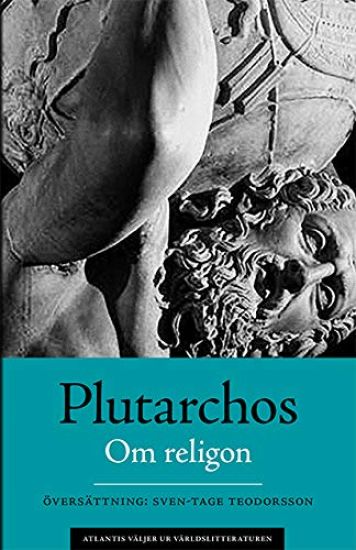
Om religion. Moralia IV

Om religion. Moralia IV

Plutarchos

Bokförlaget Atlantis
2017
sidottu
Plutarchos (ca 46120 e.Kr.) är en av de mest kända av de antika grekiska författarna. Han var också en av de mest lästa och uppskattade under senantiken och hela medeltiden. Plutarchos var övertygad om gudarnas existens och deras nära relationer till människorna och i den fjärde delen av hans skriftserie Moralia handlar det om religion.
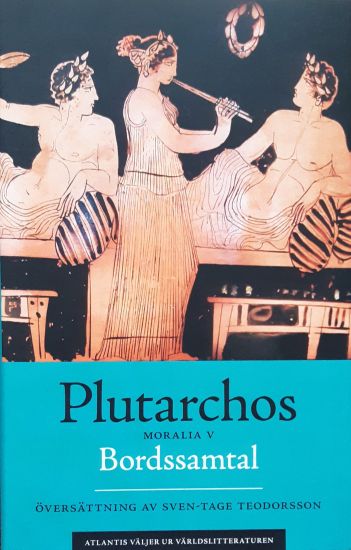
Bordssamtal : Moralia V

Bordssamtal : Moralia V

Plutarchos

Bokförlaget Atlantis
2019
sidottu
"Denna sista del, Bordssamtal som innefattar Vin och diskussion och De sju vises symposion, har gett mig högtidsstunder och många skratt. (…) Tacksam över det stora arbete som Teodorsson har gjort för att vi ska få tillgång till denna säregna dokumentation av klassisk moralfilosofi och diskuss-ionsteknik." - Dagens Nyheter Den grekiske historikern och filosofen Plutarchos är framför allt känd som levnadstecknare, och hans biografi er inspirerade bl.a. Shakespeare till flera dramer. Men större delen av Plutarchos produktion utgörs av skriftsamlingen Moralia, som omfattar ett sjuttiotal skrifter i olika genrer: avhandlingar, essäer, dialoger, brev. Plutarchos behärskade praktiskt taget hela sin samtids vetande inom etik och moral, politik, historia, filosofi, religion och naturvetenskap, och denna breda kunskap var en stor inspirationskälla för Michel de Montaigne, Francis Bacon, Jean Jacques Rousseau, Ralph Valdo Emerson och många fler.Denna femte volym omfattar två titlar, Vin och diskussion och De sju vises symposion. Tidigare volymer på svenska är Kärlek och vänskap, Levnadsråd, Pedagogik och politik och Om religion. Urval, inledning och översättning: Sven-Tage Teodorsson. "Man skrattar ofta högt, särskilt när resonemangen snubblar iväg åt alla tänkbara håll - för att med viss plötslighet landa i en slutsats som lika ofta är förbryllande som klargörande. Lika rolig är den antagligen ofrivilliga metanivån: man ligger till bords och samtalar om hur man bör ligga till bords och samtala." - Svenska Dagbladet "Plutarchos Bordssamtal är värda att läsas för de klokheter som förmedlas. Vi påminns om hur sam-tal verkligen kan vara en konst: dynamiska ordväxlingar som överförs med en artighet som ändå tillåter att det ständigt är högt i tak." - Smålänningen
Två förebildliga liv : Phokion och Cato den yngre
Plutarchos (46120 e.Kr.) föddes och verkade i staden Chaironeia i Grekland, som vid denna tid hörde till det romerska imperiet. Han studerade i Athen, gjorde omfattande resor och inledde ett skriftställarskap som gav honom stort anseende i Rom, där han hedrades med romerskt medborgarskap och vann inflytelserika vänner. Han innehade ett prästämbete vid Apollontemplet i Delfi och ledde en skola i hemstaden. Mest betydelsefulla i hans mycket omfattande författarskap är hans jämförande levnadsteckningar, där han ställer framstående greker mot berömda romare. Här presenteras två av dem. Phokíon var en athensk statsman och härförare, känd för sin duglighet och sin rättrådighet. Cato den yngre var en romersk statsman, även han berömd för sin rättrådighet och sitt mod. Han ledde oppositionen mot Caesar, förlorade och tvangs ta sitt liv. Stig Strömholm har översatt de två biografierna från grekiska och skrivit inledning och kommentarer till texterna.
Catilina

Catilina

Sallustius; Cicero; Asconius; Diodorus Siculus; Plutarchos; Appianus; Dio Cassius; Alexander Andrée

Bokförlaget Augusti
2022
sidottu
Catilinas sammansvärjning 63 f. vt. blev en händelse som inte bara banade väg för Ciceros karriär utan också på ett brutalt sätt förebådade både Caesar och den romerska republikens fall. De dramatiska händelserna föranledde Sallustius själv anhängare av Julius Caesar att skriva en bok på ämnet och de fick Cicero att tillägna ett antal berömda tal till den process han själv drev gentemot Catilina. Som alltid i Rom fick makt­spelet ett blodigt slut. Catlina och den armé han samlat för att störta republiken höggs ner till sista man vid Pistoria av republikens styrkor i januari 62 f. vt. I efterspelet gjorde Catlinias samtida, personer som Pompejus och Julius Caesar, allt för att fjärma sig från ­Catilina. Men det fanns anklagelser också gentemot Caesars beröringspunkter med kuppmakaren. I boken Catilina ges efterlängtade nyöversättningar av samtliga antika källor, både från latin och grekiska, till de händelser som utspelade sig kring Lucius Sergius Catilina. Översättning, förord och noter är författade av Alexander Andrée, universitetslektor i latin vid Lunds universitet.
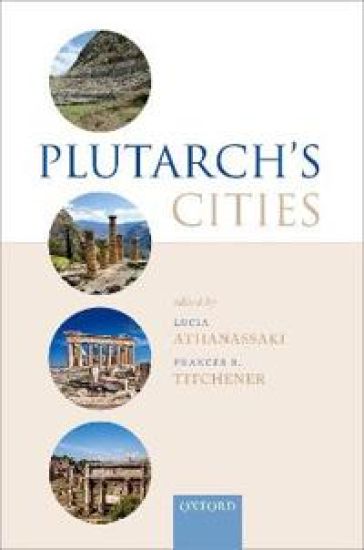
Plutarch's Cities

Plutarch's Cities

Oxford University Press
2022
sidottu
Plutarch's Cities is the first comprehensive attempt to assess the significance of the polis in Plutarch's works from several perspectives, namely the polis as a physical entity, a lived experience, and a source of inspiration, the polis as a historical and sociopolitical unit, the polis as a theoretical construct and paradigm to think with. The book's multifocal and multi-perspectival examination of Plutarch's cities - past and present, real and ideal-yields some remarkable corrections of his conventional image. Plutarch was neither an antiquarian nor a philosopher of the desk. He was not oblivious to his surroundings but had a keen interest in painting, sculpture, monuments, and inscriptions, about which he acquired impressive knowledge in order to help him understand and reconstruct the past. Cult and ritual proved equally fertile for Plutarch's visual imagination. Whereas historiography was the backbone of his reconstruction of the past and evaluation of the present, material culture, cult, and ritual were also sources of inspiration to enliven past and present alike. Plato's descriptions of Athenian houses and the Attic landscape were also a source of inspiration, but Plutarch clearly did his own research, based on autopsy and on oral and written sources. Plutarch, Plato's disciple and Apollo's priest, was on balance a pragmatist. He did not resist the temptation to contemplate the ideal city, but he wrote much more about real cities, as he experienced or imagined them.
Plutarch: Alexander

Plutarch: Alexander

Christopher Pelling

Oxford University Press
2025
sidottu
Alexander the Great changed the world that he knew--but how he did it, and how much of his story is truth and how much is invented, is hard to tell. One of our most important sources for his achievements and personality is Plutarch's Life of Alexander, and this is the first detailed commentary in English for over fifty years, along with a thorough introduction and translation. It is a sister volume to the author's 2011 edition (also in the Clarendon Ancient History Series) of Plutarch's Caesar, the Life paired with Alexander in Plutarch's series of Parallel Lives. The life of Alexander the Great was clouded in legend from his own lifetime, not least because Alexander himself curated his image with such care. Disentangling the truth is not an easy task, especially because our surviving narratives, including Plutarch's, all date from centuries later under the Roman empire. Plutarch's Life of Alexander is especially important for Alexander's early years, but for his later achievements too it often supplements or corrects our other accounts; it is also a considerable literary achievement, as Plutarch produces a memorable picture of a brilliant soldier, full of spirit and ambition, gradually coarsened by his own successes and his suspicions of his friends until his final months at Babylon in a court full of superstition, terror, and dread. Plutarch had to navigate his way through an unusually vast stock of material to produce this portrait. This commentary discusses those literary techniques in detail as well as providing a thorough investigation of the historical issues that Plutarch's narrative raises.
Plutarch's Advice to the Bride and Groom and A Consolation to His Wife
This book is a collection of essays with commentary and evaluative bibliography on Plutarch. Advice to the Bride and Groom and Consolation to His Wife along with the Greek texts and English translations. It is designed to help readers understand and appreciate two important documents for the study of gender and the family in the Graeco-Roman world and in later Western history. To populate the dearth of prior scholarly discussion of Plutarch's works on the family, Pomeroy has assembled a team of experts in Plutarch, the Hellenistic World, religion, cultural studies, and the family and gender, who use various historical and theoretical approaches in discussing the wide range of issues and questions raised by these texts. For example, what does one mean by "Roman" or "Greek" marriage in a Hellenistic context when Greeks and Romans were mutually influential? To begin to answer this question, it is imperative to take notice of Greek traditions, the Roman Imperial context, and the changing views of the family in Greek philosophy and early Christianity. Furthermore, for an understanding of the Consolation to His Wife it is necessary to understand Roman demography and to examine contemporary Latin consolatory literature. Though Plutarch addressed both these essays to individual Greeks whom he knew personally, he had a much wider audience in mind. The commentary, essays, and bibliography are written so as to be accessible to those who are reading the English translation.
Plutarch Caesar

Plutarch Caesar

Christopher Pelling

Oxford University Press
2011
sidottu
Plutarch's Life of Caesar deals with the best known Roman of them all, Julius Caesar, and his vivid narrative covers most of the major events of the last generation of the Republic, as well as painting an insightful picture of this man who sacrificed everything for power. Pelling's volume gives a new translation of the Life together with a full introduction and running commentary on the events it describes. Culminating in the crossing of the Rubicon, Caesar's victory in the Civil War, and finally his assassination on the Ides of March, 44 BC, it goes on to trace the first stages of the new phase of civil war which followed and, in its turn, led to the establishment of the principate. The volume also discusses both the historical and the literary aspects of the Life, relating it both to the broader history of the Republic and to Plutarch's other works, especially the Life of Alexander with which it forms a pair of Parallel Lives. A separate section of the Introduction also discusses Shakespeare's adaptation of Plutarch in Julius Caesar, and points out ways in which the subtle remoulding of Plutarch's material can illuminate the techniques and interests of both authors.
Plutarch's Lives

Plutarch's Lives

Tim Duff

Oxford University Press
2000
sidottu
The Parallel Lives of Plutarch (c. AD 45-120), a vast retrospective series of biographies of Greek and Roman statesmen, have always been one of the most widely read of the works which survive from classical antiquity. They were written when Roman imperial power was reaching its height, and are sophisticated examples of a renaissance classicism, both linguistic, literary, philosophical and historical, which formed a Greek reaction to Roman domination. The Parallel Lives thus offer us a unique insight into the reception of Classical Greece and Republican Rome in the Greek world of the second century AD. They also explore and challenge issues of psychology, education, morality, and cultural identity. In this new study discussions of Plutarch's literary techniques and moral conceptions are combined with case studies of a number of paired Lives (Pyrrhos - Marius, Phokion - Cato Minor, Lysander - Sulla, and Coriolanus - Alkibiades). As the author demonstrates, the parallel structure of the Lives is not only vital to their interpretation but also reflects a Greek attempt to appropriate and make sense of the pasts of both Greece and Rome.
A Commentary on Plutarch's Life of Agesilaos
Shipley presents the first modern commentary on Plutarch's Life of Agesilaos (c.444-360 BC) together with the full Greek text and a bibliography. Plutarch's biographies have long been valued for their literary, philosophic, and historiographic content, and the Life of Agesilaos, king of Sparta for forty years after the Peloponnesian war, has special interest as an introduction to Greek history, society, and culture in the fourth century, a critical period that has received little attention in comparison with the fifth century in Athens. Internal problems in Sparta followed the accession of Agesilaos: failures of hierarchical cohesion, unrest among social and subject groups, and division between aggressive and moderate foreign policies. Plato and Aristotle, Ephoros, Xenophon, Diodoros, and Nepos contributed variously to the knowledge and understanding of the period, and Plutarch created from their evidence -- and other sources -- an independent, penetrating, and balanced account of the character of those in power, and of Sparta, at their best and in decline.
Plutarch and his Roman Readers

Plutarch and his Roman Readers

Philip A. Stadter

Oxford University Press
2014
sidottu
Plutarch's focus on the great leaders of the classical world, his anecdotal style, and his self-presentation as a good-natured friend and wise counsellor have appealed over the centuries to a wide audience, persons as diverse as Beethoven and Benjamin Franklin, Shakespeare and Harry Truman. This collection of essays on Plutarch's Parallel Lives examines the moral issues Plutarch recognized behind political leadership, and relates his writings to the audience of leading generals and administrators of the Roman empire which he aimed to influence, and to the larger social and political context of the reigns of the Flavian emperors and their successors, Nerva and Trajan, during which he wrote. The essays explore Plutarch's considered views on how his contemporaries could - and we ourselves can - learn from the successes and failures of the great men of the past.
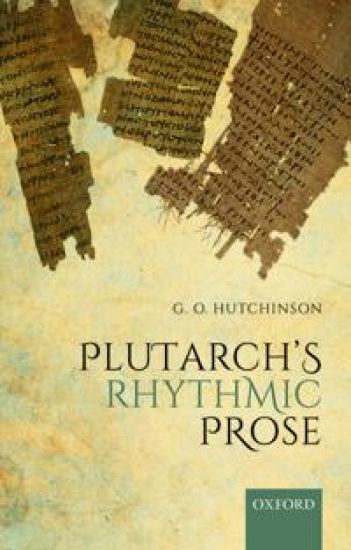
Plutarch's Rhythmic Prose

Plutarch's Rhythmic Prose

G. O. Hutchinson

Oxford University Press
2018
sidottu
Greek literature is divided, like many literatures, into poetry and prose, but in Greek the difference between them is not that all prose is devoid of firm rhythmic patterning. In the earlier Roman Empire, from 31 BC to about AD 300, much Greek (and Latin) prose was actually written to follow one organized rhythmic system. How much Greek prose adopted this patterning has hitherto been quite unclear; the present volume for the first time establishes an answer on an adequate basis: substantial data drawn from numerous authors. It constitutes the first extensive study of prose-rhythm in later Greek literature. The book focuses particularly on one of the greatest Imperial works: Plutarch's Lives. It rests on a scansion of the whole work, almost 100,000 phrases. Rhythm is seen to make a vital contribution to the literary analysis of Plutarch's writing, and prose-rhythm is revealed as a means of expression, which draws attention to words and word-groups. Some passages in the Lives pack rhythms together more closely than others; much of the discussion concentrates on such rhythmically dense passages, examining them in detail in commentary form. These passages do not occur randomly, but attract attention to themselves. They are marked out as climactic in the narrative, or as in other ways of highlighted significance: joyful summations, responses to catastrophe, husbands and wives, fathers and sons compared. These remarkable passages make apparent the greatness of Plutarch as a prose-writer - a side of him fairly little considered amid the huge resurgence of work on Plutarch as an author and as a major historical source. Some passages from three Greek novelists, both rhythmic and unrhythmic, are closely analysed too. The book demonstrates how rhythm can be integrated with other aspects of criticism, and how it has the ability to open up new vistas on three prolific centuries of literary history.
Plutarch's On the Malice of Herodotus and the Writing of History in the Greco-Roman World
The essay, On the Malice of Herodotus, which has come down to us in the corpus of Plutarch, has often been considered a problematic work because of its hostile tone, the object of its attack, and the quality of its argumentation. This book seeks to set the work in the larger context of the standards and traditions of Greek and Roman historiography and classical criticism more generally as they developed in antiquity. Individual chapters explore Plutarch's place in the critical reputation of Herodotus in antiquity, the nature and importance of historiographical style, the 'signs and tokens' used by Plutarch to convict Herodotus of malice, the particular kind of polemic on display in the essay, its relationship to Plutarch's Parallel Lives, Plutarch's own attempts to re-write the famous incidents narrated by Herodotus, and the importance ancient critics placed on determining the disposition of the historian. The book shows that throughout the essay, Plutarch, although often revealing a distinctive approach towards his subject, is none the less working in a recognizable tradition using methods and approaches that many of his predecessors had employed and which are essential to understand in order to arrive at a more comprehensive evaluation of how the Greeks and Romans wrote history.
Plutarch's Lives

Plutarch's Lives

Tim Duff

Oxford University Press
2002
nidottu
The Parallel Lives of Plutarch (c. AD 45-120), a vast retrospective series of biographies of Greek and Roman statesmen, have always been one of the most widely read of the works which survive from classical antiquity. They were written when Roman imperial power was reaching its height, and are sophisticated examples of a renaissance classicism - linguistic, literary, philosophical and historical - which formed a Greek reaction to Roman domination. The Parallel Lives thus offer us a unique insight into the reception of Classical Greece and Republican Rome in the Greek world of the second century AD. They also explore and challenge issues of psychology, education, morality, and cultural identity. In this new study discussions of Plutarch's literary techniques and moral conceptions are combined with case studies of a number of paired Lives (Pyrrhos - Marius, Phokion - Cato Minor, Lysander - Sulla, and Coriolanus - Alkibiades). As the author demonstrates, the parallel structure of the Lives is not only vital to their interpretation but also reflects a Greek attempt to appropriate and make sense of the pasts of both Greece and Rome.
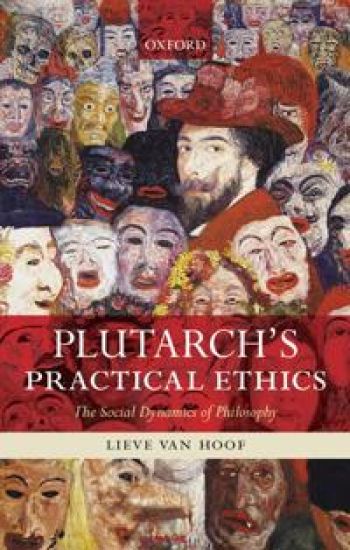
Plutarch's Practical Ethics

Plutarch's Practical Ethics

Lieve Van Hoof

Oxford University Press
2010
sidottu
The Second Sophistic (c.AD 60-250) was a time of intense competition for honour and status. Like today, this often caused mental as well as physical stress for the elite of the Roman Empire. This book, which transcends the boundaries between literature, social history, and philosophy, studies Plutarch's practical ethics, a group of twenty-odd texts within the Moralia designed to help powerful Greeks and Romans manage their ambitions and society's expectations successfully. Lieve Van Hoof combines a systematic analysis of the general principles underlying Plutarch's practical ethics, including the author's target readership, therapeutical practices, and self-presentation, with five innovative case studies. A picture emerges of philosophy under the Roman Empire not as a set of abstract, theoretical doctrines, but as a kind of symbolic capital engendering power and prestige for author and reader alike.
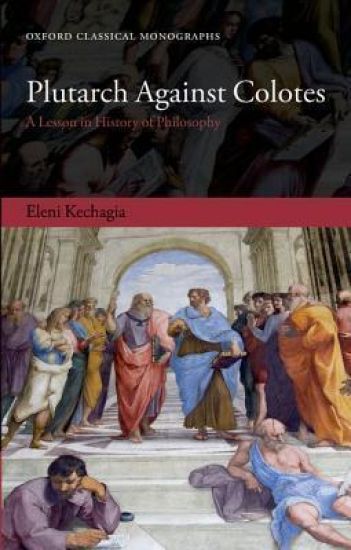
Plutarch Against Colotes

Plutarch Against Colotes

Eleni Kechagia

Oxford University Press
2011
sidottu
Plutarch of Chaeroneia's philosophical work remained largely in the shadow of his celebrated Lives, partly because it was often dubbed 'popular philosophy', and partly because it was thought to be lacking in originality. The tides are, fortunately, changing and current scholarship is showing a growing appreciation of Plutarch's philosophical work. This book contributes to the 'rehabilitation' of Plutarch as a philosopher by focusing on an important aspect of his philosophical self: his work as a teacher, interpreter, and, eventually, historian of philosophy. Eleni Kechagia offers a critical analysis of Plutarch's anti-Epicurean treatise Against Colotes - a unique text that is both rich in philosophical material and has been widely used as a source for ancient Greek philosophy, but which has yet to be studied in its own right. Combining a historical approach with structural analysis and close reading of selected sections of the text, this book demonstrates that Plutarch engaged with the philosophy of his past in a creative way. By refuting Colotes' Epicurean arguments against the main Greek philosophers up to the Hellenistic era, Plutarch gives an insightful critical assessment of the philosophy of his past and teaches his readers how to go about living and reading philosophy. The volume concludes that Plutarch emerges as a respected critic whose 'reviews' of the past philosophical theories are an essential companion when trying to piece together the puzzle of ancient Greek philosophy.
Plutarch Caesar

Plutarch Caesar

Christopher Pelling

Oxford University Press
2011
nidottu
Plutarch's Life of Caesar deals with the best known Roman of them all, Julius Caesar, and his vivid narrative covers most of the major events of the last generation of the Republic, as well as painting an insightful picture of this man who sacrificed everything for power. Pelling's volume gives a new translation of the Life together with a full introduction and running commentary on the events it describes. Culminating in the crossing of the Rubicon, Caesar's victory in the Civil War, and finally his assassination on the Ides of March, 44 BC, it goes on to trace the first stages of the new phase of civil war which followed and, in its turn, led to the establishment of the principate. The volume also discusses both the historical and the literary aspects of the Life, relating it both to the broader history of the Republic and to Plutarch's other works, especially the Life of Alexander with which it forms a pair of Parallel Lives. A separate section of the Introduction also discusses Shakespeare's adaptation of Plutarch in Julius Caesar, and points out ways in which the subtle remoulding of Plutarch's material can illuminate the techniques and interests of both authors.
Plutarch: Demosthenes and Cicero

Plutarch: Demosthenes and Cicero

Andrew Lintott

Oxford University Press
2013
sidottu
Plutarch's Lives have been popular reading from antiquity to the present day, combining engaging biographical detail with a strong underlying moral purpose. The Lives of Demosthenes and Cicero are an unusual pair in that they are about unmilitary men who, while superb technically as orators, were both in the end political failures, crushed by the military power which dominated their world. In these two Lives, Plutarch is not so much interested in Demosthenes' and Cicero's rhetorical technique as in their ability to persuade an audience to vote for the right course of action, even if that action was prima facie unpopular. In Plutarch's own time, when the empire of the Caesars had been established for over a century, liberty was of necessity limited, but still an issue, for both Greeks and Romans. His home, Chaeroneia, was a provincial town in Greece, but he travelled regularly to Italy where he met Romans from the elite that ruled the empire. He wrote both for his fellow imperial subjects who still sought to enjoy what freedom they could obtain from the ruling power, and for the Romans who exercised that power but were always subject to the ultimate authority of the emperor. Along with the translations and commentaries, Lintott provides a detailed introduction which discusses the background and context of these two Lives, essential information about the author and the periods in which these two orators lived, and the philosophy which underlies Plutarch's presentation of the two personalities.
Plutarch: Demosthenes and Cicero

Plutarch: Demosthenes and Cicero

Andrew Lintott

Oxford University Press
2013
nidottu
Plutarch's Lives have been popular reading from antiquity to the present day, combining engaging biographical detail with a strong underlying moral purpose. The Lives of Demosthenes and Cicero are an unusual pair in that they are about unmilitary men who, while superb technically as orators, were both in the end political failures, crushed by the military power which dominated their world. In these two Lives, Plutarch is not so much interested in Demosthenes' and Cicero's rhetorical technique as in their ability to persuade an audience to vote for the right course of action, even if that action was prima facie unpopular. In Plutarch's own time, when the empire of the Caesars had been established for over a century, liberty was of necessity limited, but still an issue, for both Greeks and Romans. His home, Chaeroneia, was a provincial town in Greece, but he travelled regularly to Italy where he met Romans from the elite that ruled the empire. He wrote both for his fellow imperial subjects who still sought to enjoy what freedom they could obtain from the ruling power, and for the Romans who exercised that power but were always subject to the ultimate authority of the emperor. Along with the translations and commentaries, Lintott provides a detailed introduction which discusses the background and context of these two Lives, essential information about the author and the periods in which these two orators lived, and the philosophy which underlies Plutarch's presentation of the two personalities.
Plutarch

Plutarch

Robert Lamberton

Yale University Press
2002
pokkari
Written around the year 100, Plutarch’s Lives have shaped perceptions of the accomplishments of the ancient Greeks and Romans for nearly two thousand years. This engaging and stimulating book introduces both general readers and students to Plutarch’s own life and work.Robert Lamberton sketches the cultural context in which Plutarch worked—Greece under Roman rule—and discusses his family relationships, background, education, and political career. There are two sides to Plutarch: the most widely read source on Greek and Roman history and the educator whose philosophical and pedagogical concerns are preserved in the vast collection of essays and dialogues known as the Moralia. Lamberton analyzes these neglected writings, arguing that we must look here for Plutarch’s deepest commitment as a writer and for the heart of his accomplishment. Lamberton also explores the connection between biography and historiography and shows how Plutarch’s parallel biographies served the continuing process of cultural accommodation between Greeks and Romans in the Roman Empire. He concludes by discussing Plutarch’s influence and reputation through the ages.