Kirjojen hintavertailu. Mukana 12 595 353 kirjaa ja 12 kauppaa.

Kirjahaku

Etsi kirjoja tekijän nimen, kirjan nimen tai ISBN:n perusteella.

1000 tulosta hakusanalla R.J.B. Morris

Dünndarm B

Dünndarm B

W. Bommer; Wolfgang F. Caspary; M. Classen; R. Dölp; R. Ecknauer; J. Erckenbrecht; G. E. Feurle; D. Filler; A. Gangl; K. E. Grund; K. Gyr; F. Hagenmüller; V. Helmstädter; H. W. von Heyden; K. Hübner; B. Husemann; F. Kümmerle; V. Lenner; K. Loeschke; H. Lorenz-Meyer; H. Malchow; E. M. H. Mathus-Vliegen; H. Menge; H. Mergerian; B. Miller; U. Rasenack; B. Reichlin; E. O. Riecken; W. Rösch; H. Ruppin; A. Schaudig; H. W. Schreiber; K. H. Soergel; G. N. J. Tytgat; M. Wienbeck; K. Winckler; R. Winkler

Springer-Verlag Berlin and Heidelberg GmbH Co. K
2011
nidottu
In der letzten Auflage des Handbuchs der inneren Medizin aus dem Jahre 1953 wurden im Rahmen der Abhandlung der Verdauungskrankheiten dem Diinn- und Dickdarm von NORBERT HENNING und W. BAUMANN insgesamt 270 Seiten gewidmet. Nach 30 Jahren haben un sere Kenntnisse iiber Funktion, Pathophysiologie, Atiologie, Pathogenese, Diagnostik und Therapie von Er- krankungen des Diinndarmes so erheblich zugenommen, daB den Erkrankungen des Diinndarmes ein eigener Doppelband gewidmet werden muBte. Der Diinndarm hat eine zentrale Stellung nicht nur in der Assimilation von Nahrungsstoffen, sondern spielt auch eine wichtige Rolle als Immunorgan, ist inzwischen zu einem der groBten hormonproduzierenden Organe geworden, Sekretionsmechanismen sind von eminenter Bedeutung bei Diarrhoen, der Diinndarm spielt eine wichtige Rolle im Lipidstoffwechsel. Die Gliederung und Zusammenstellung des Bandes basiert auf zwei Prinzi- pien, die vom Herausgeber als wesentlich erachtet werden: 1. Die Qualitat der praktischen Medizin ist abhangig vom Verstandnis medi- zinisch-wissenschaftlicher Grundlagen, denn Fortschritte in der klinischen Medi- zin basieren fast immer auf wissenschaftlicher Grundlage. 2. Krankheiten oder Storungen physiologischer Zustande sollten kritisch betrachtet werden, bevor iiber sie einer professionellen Leser- oder Zuho- rerschaft berichtet wird. Langerwiesene Konzepte der Pathogenese und Therapie miissen immer wie- der neu und kritisch auf ihre Giiltigkeit gepriift werden. Besonderer Wert wurde deshalb vom Herausgeber auf die profunde Erarbei- tung pathophysiologischer Grundlagen gelegt, die Voraussetzung sind fiir eine rationale Diagnostik und Therapie.
Rheumatologie B

Rheumatologie B

H. Hofmann; F. Husmann; H. Kather; G. Klein; G. Kölle; H.-F. Kumor; G. Lanzer; E.-M. Lemmel; R. Marx; H. Mathies; W. Miehle; H. P. Missmahl; W. Mohr; P. Otte; F. Rainer; M. Schattenkirchner; F. Schilling; Anneliese Schneider; P. Schneider; W. Schramm; W. Siegmeth; B. Simon; Elisabeth Stoeber; S. Stotz; F. J. Wagenhäuser; D. Wessinghage; G. L. Bach; G. Bartl; H. Behrend; Trude Behrend; U. Botzenhardt; D. Brackertz; Ute Donhauser-Gruber; J.-M. Engel; Rosemarie Filchner; A. Gruber; E. Gundel; H. Held

Springer-Verlag Berlin and Heidelberg GmbH Co. K
2011
nidottu
Tumoren der Atmungsorgane und des Mediastinums B

Tumoren der Atmungsorgane und des Mediastinums B

P. Alberto; U. Dold; P. Drings; H. Dürschmied; F. Eich; H.-J. Eichhorn; A. Gabler; D. Huhn; R. Joss; N. Konietzko; B. Kossmann; J. Kraft-Kinz; D. Krumhaar; S. Liebig; R. Loddenkemper; N. M. Merkle; K.-M. Müller; H. W. Pees; W. Pertzborn; R. Schuh; Friedrich Trendelenburg; K. H. Tscheliessnigg; I. Vogt-Moykopf; I. Volkmer; J. Wilde; D. Zeidler

Springer-Verlag Berlin and Heidelberg GmbH Co. K
2012
nidottu
Unter Mitwirkung zahlreicher Fachwissenschaftler
Atlas of Oral Pathology

Atlas of Oral Pathology

R.B. Lucas; J.W. Eveson

Springer
2012
nidottu
This Atlas of Oral PathologV is intended primarily as a ances where appropriate and reproduce relevant radio­ graphs. Every pathologist who deals with bone specimens bench companion for the general diagnostic pathologist. especially the trainee. It has not been designed to cover will know the value of radiographs, and some indeed are the subject fully and in detail, nor does it enter into the reluctantto make a diagnosis in their absence. In addition, radiographs may give a good idea of the extent aFld other more theoretical aspects. Since the book is essentially an atlas the text has been features of a lesion that may be represented in the first kept to a minimum, but in it we have tried to adopt'a instance only by a small biopsy specimen. practical approach, with special regard to differential diag­ While many of the illustrations have been made from nosis. We have made some remarks about the clinical sections freshly cut and stained for the purpose, others features of the various conditions dealt with, since this have been prepared from stained sections already in our may help the pathologist to appreciate what is in the refer­ files and since, in addition, the material comes principally ring clinician's mind in an area with which the pathologist from two departments, as well as from outside sources, may not be particularly familiar.
Kiln-Drying of Lumber

Kiln-Drying of Lumber

R.B. Keey; T.A.G. Langrish; J.C.F. Walker

Springer-Verlag Berlin and Heidelberg GmbH Co. K
2011
nidottu
At present, no single book adequately covers a basic understanding of wood book satisfies the need for such a work. It describes drying in practice. This the fundamental basis of kiln-drying technology, to enable forest companies to imFrove their drying operations as high-quality timbers become scarcer and of yesteryear can no longer be tolerated. Adaptive the wasteful practices is no longer good enough. Innovations change based on past experience of the material being dried and the processes require a sound understanding of drying. Newer techniques, such as the use of ultrahigh temperature sea­ soning and superheated steam under vacuum, require an even greater depth of physical understanding for these methods to be used effectively and economically. book provides a description of modern ideas about wood structure, This moisture movement and stress development, from which models of the drying process are developed to give the kiln operator important information about the course of drying under specified conditions, and thus a means is compared with practice wherever for rational process improvement. Theory possible.
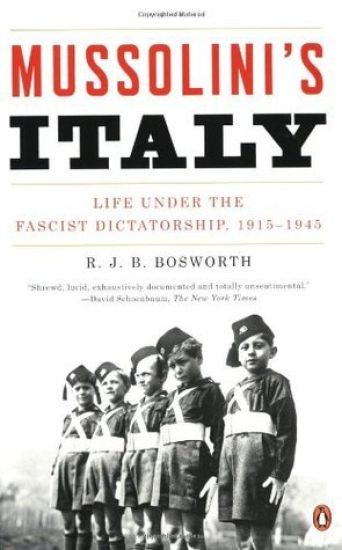
Mussolini's Italy: Life Under the Fascist Dictatorship, 1915-1945
An evaluation of Italy's notorious Fascist period under dictator Benito Mussolini considers its violence and demands for obedience, noting how it served as a model for other twentieth-century dictatorships while arguing that the nation's largely undeveloped country and tribal family structures helped Italians to devise creative survival and resistance methods. Reprint. 25,000 first printing.
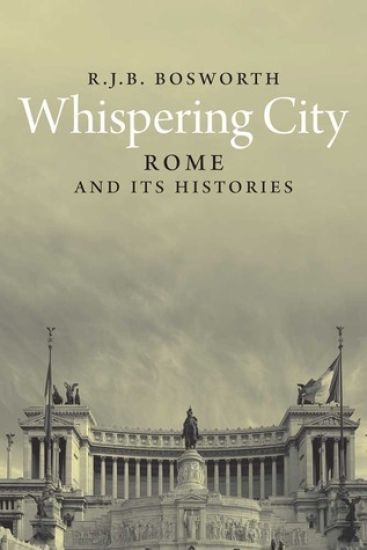
Whispering City

Whispering City

R. J. B. Bosworth

Yale University Press
2011
sidottu
An accomplished Italianist looks beyond Rome's storied facades to offer insight into the many histories of one of the world's best-loved cities In Civilization and Its Discontents, Sigmund Freud claimed that Rome must be comprehended as "not a human dwelling place but a mental entity," in which the palaces of the Caesars still stand alongside modern apartment buildings in layers of brick, mortar, and memory. "The observer would need merely to shift the focus of his eyes, perhaps, or change his position, in order to call up a view of either the one or the other."In this one-of-a-kind book, historian Richard Bosworth accepts Freud's challenge, drawing upon his expertise in Italian pasts to explore the many layers of history found within the Eternal City. Often beginning his analysis with sites and monuments that can still be found in contemporary Rome, Bosworth expands his scope to review how political groups of different eras—the Catholic Church, makers of the Italian nation, Fascists, and "ordinary" Romans (be they citizens, immigrants, or tourists)—read meaning into the city around them. Weaving in the city's quintessential figures (Garibaldi, Pius XII, Mussolini, and Berlusconi) and architectural icons (the Vatican, St. Peter's Basilica, the Victor Emmanuel Monument, and EUR) with those forgotten or unknown, Bosworth explores the many histories that whisper their rival and competing messages and seek to impose their truth upon the passing crowds. But as this delightful study will reveal, Rome, that magisterial palimpsest, has never accepted a single reading of its historic meaning.
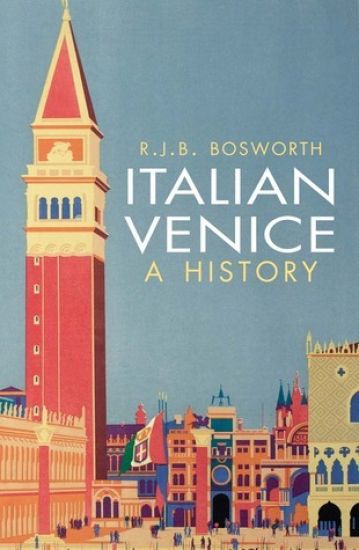
Italian Venice

Italian Venice

R. J. B. Bosworth

Yale University Press
2015
pokkari
In this elegant book Richard Bosworth explores Venice—not the glorious Venice of the Venetian Republic, but from the fall of the Republic in 1797 and the Risorgimento up through the present day. Bosworth looks at the glamour and squalor of the belle époque and the dark underbelly of modernization, the two world wars, and the far-reaching oppressions of the fascist regime, through to the “Disneylandification” of Venice and the tourist boom, the worldwide attention of the biennale and film festival, and current threats of subsidence and flooding posed by global warming. He draws out major themes—the increasingly anachronistic but deeply embedded Catholic Church, the two faces of modernization, consumerism versus culture. Bosworth interrogates not just Venice’s history but its meanings, and how the city’s past has been co-opted to suit present and sometimes ulterior aims. Venice, he shows, is a city where its histories as well as its waters ripple on the surface.
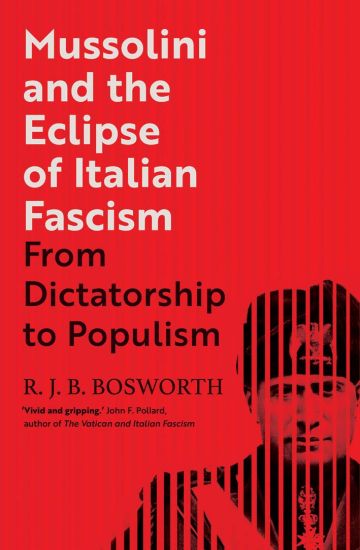
Mussolini and the Eclipse of Italian Fascism

Mussolini and the Eclipse of Italian Fascism

R. J. B. Bosworth

Yale University Press
2021
sidottu
An incisive account of how Mussolini pioneered populism in reaction to Hitler’s rise—and thereby reinforced his role as a model for later authoritarian leaders"A passionately engaged history of a Mussolini and an Italy caught up in the monstrous gravitational waves engendered by the coming of Third Reich."—Giuseppe Finaldi, author of Mussolini and Italian Fascism On the tenth anniversary of his rise to power in 1932, Benito Mussolini (1883–1945) seemed to many the “good dictator.” He was the first totalitarian and the first fascist in modern Europe. But a year later Hitler’s entrance onto the political stage signaled a German takeover of the fascist ideology. In this definitive account, eminent historian R.J.B. Bosworth charts Mussolini’s leadership in reaction to Hitler. Bosworth shows how Italy’s decline in ideological pre-eminence, as well as in military and diplomatic power, led Mussolini to pursue a more populist approach: angry and bellicose words at home, violent aggression abroad, and a more extreme emphasis on charisma. In his embittered efforts to bolster an increasingly hollow and ruthless regime, it was Mussolini, rather than Hitler, who offered the model for all subsequent authoritarians.
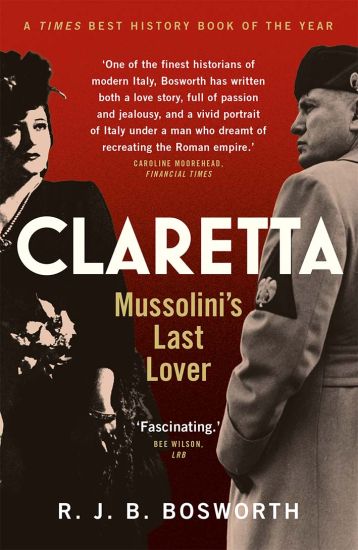
Claretta

Claretta

R. J. B. Bosworth

Yale University Press
2021
pokkari
A master historian illuminates the tumultuous relationship of Mussolini and his young lover Claretta Petacci"One of the finest historians of modern Italy, Bosworth has written both a love story, full of passion and jealousy, and a vivid portrait of Italy under a man who dreamt of recreating the Roman empire.”—Caroline Moorehead, Financial Times Few deaths are as gruesome and infamous as those of Benito Mussolini, Italy’s fascist dictator, and Claretta (or Clara) Petacci, his much-younger lover. Shot dead by Italian partisans after attempting to flee the country in 1945, the couple’s bodies were then hanged upside down in Milan’s main square in ignominious public display. This provocative book is the first to mine Clara’s extensive diaries, family correspondence, and other sources that have only recently become available to discover how the last in Mussolini’s long line of lovers became his intimate and how she came to her violent fate at his side. R. J. B. Bosworth explores the social climbing of Claretta’s family, her naïve and self-interested commitment to fascism, her diary’s graphically detailed accounts of sexual life with Mussolini, and much more. Brimful of new and arresting information, the book sheds intimate light not only on an ordinary-extraordinary woman living at the heart of Italy’s totalitarian fascist state but also on Mussolini himself.
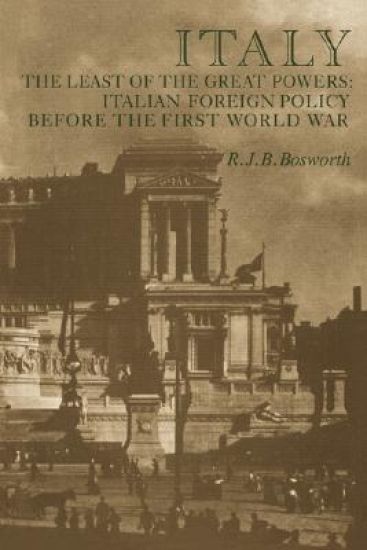
Italy the Least of the Great Powers

Italy the Least of the Great Powers

R. J. B. Bosworth

Cambridge University Press
2005
pokkari
In the heart of Rome beside the Capitol, confronting the Piazza Venezia, stands the Victor Emmanuel monument. In Rome, which until 1945 was so often accorded the adjectives 'eternal' or 'imperial', the monumentissimo (as sardonic socialists labelled it) is the most public, most theatrical and most excessive architectural celebration of post-Risorgimento Italian patriotism, nationalism and perhaps imperialism. This book asks why the Victor Emmanuel monument, planned after 1878 and opened in 1911, was a structure raised by Liberal and not Fascist Italy. Through a detailed study of diplomacy, of policy-making, of policy-makers, and of the distribution of real power in pre-First World War Italy, it demonstrates how important foreign policy, and a foreign policy of greatness, was to Liberal Italy. Weakened by economic backwardness, regional diversity, and the gulf between the legal-political world and 'real' society, Liberal Italy was nonetheless ambitious to be a Great Power. This monograph contributes to a number of major historiographical debates. It produces evidence which casts doubts on the thesis that fascism was a parenthesis in Italian history.
Inside/Outside

Inside/Outside

R. B. J. Walker

Cambridge University Press
1992
pokkari
In this book Rob Walker offers an original analysis of the relationship between twentieth-century theories of international relations, and the political theory of civil society since the early modern period. He views theories of international relations both as an ideological expression of the modern state, and as a clear indication of the difficulties of thinking about a world politics characterized by profound spatiotemporal accelerations. International relations theories should be seen, the author argues, more as aspects of contemporary world politics than as explanations of contemporary world politics. These theories are examined in the light of recent debates about modernity and post-modernity, sovereignty and political identity, and the limits of modern social and political theory. This book is a major contribution to the field of critical international relations, and will be of interest to social and political theorists and political scientists, as well as students and scholars of international relations.
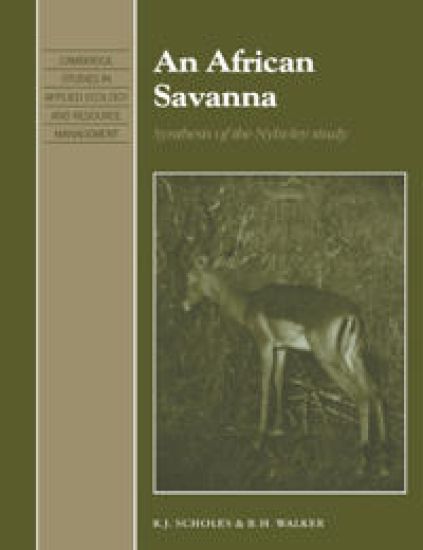
An African Savanna

An African Savanna

R. J. Scholes; B. H. Walker

Cambridge University Press
2004
pokkari
Savannas cover approximately half of the African land surface and one fifth of the land surface of the world. They are one of the most important, but least understood terrestrial ecosystems. They are the basis of the African livestock industry and the wildlife they support is of key importance in bringing in tourists. The Nylsvley area in South Africa is one of the most intensively studied savanna regions in the world and as such it is a key source of data and theory relating to this important tropical biome. The South African Savanna Biome Programme was set up to develop the understanding necessary to predict changes in the ecosystem stability induced by both natural and man-made stresses. This book provides a synthesis of the programme’s sixteen years of research at Nylsvley and aims to develop a unified vision of the ecology of the dry savanna.
Inland Waters of Southern Africa: An Ecological Perspective

Inland Waters of Southern Africa: An Ecological Perspective

B.R. Allanson; R.C. Hart; J.H. O'Keeffe; R.D. Robarts

Springer
1990
sidottu
Limnology - the study of inland waters - had its genesis in Europe about the turn of the century. The studies of Fore1 on Lake Geneva were of seminal value at this time. It prospered under the early guidance of Thienemann, Naumann and Wesenberg-Lund in Europe and, soon transplanted, of Birge and Juday in North America (to name just a few early spirits). Now, liminology is a respectable scientific discipline taught at many universities, and limnologists are recognized as important contributors to our understanding of how this fragile spaceship functions. All this acknowledged, it must also be acknowledged that limnology is not yet a globally comprehensive science. To be sure, much is known about globally applicable processes, and the structural elements of aquatic ecosystems worldwide, but limnological emphases, interests and concerns remain essentially European and North American in balance. Much is known about lakes and rivers in less than one fifth of the world's land area (northern temperature regions); rather little is known about inland waters elsewhere.
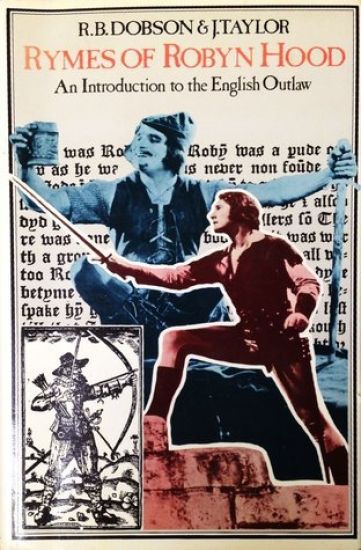
Rymes of Robyn Hood

Rymes of Robyn Hood

R. B. Dobson; J. Taylor

UNIVERSITY OF PITTSBURGH PRESS
1976
sidottu
‘Many men speak of Robin Hood that shot never in his bow’. Despite the extraordinary popularity of the Robin Hood legend into recent times, the sources upon which that legend ultimately rests have never before been presented in a uniform manner to the modern reader. This book provides a comprehensive selection of the most important texts in the evolution of the green wood saga and should serve as the ideal handbook to Robin Hood studies. Newly edited versions of the earliest and most influential ballads naturally form the basis of the collection; but the authors also include examples of the way in which the myth of England's greatest outlaw was developed by poets like Keats and Alfred Noyes. A separate section is devoted to Robin Hood's varied appearances on the English stage from the fifteenth century on­wards, while a selection of other songs is included to give an impression of the features which Robin Hood shares with other outlaw heroes. Each text is preceded by a short introduction which discusses the relia­bility of the source; and a long general introduction surveys the present state of inquiry into the legend. Among the many themes discussed are the tech­nical problems surrounding the nature of the early ballads, their authorship and audience; the evidence for an historical original outlaw at the genesis of the legend; the reasons for Ro bin Hood's continuing appeal in late medi­eval and Tudor society; and the ways in which the evolution of the legend reflects the ever-changing social pat­terns of English history. This is the first study of the Robin Hood legend to survey not only its medieval origins but its evolution and literary development over the centuries.