Kirjojen hintavertailu. Mukana 12 390 323 kirjaa ja 12 kauppaa.

Kirjahaku

Etsi kirjoja tekijän nimen, kirjan nimen tai ISBN:n perusteella.

355 tulosta hakusanalla Rafi Dean

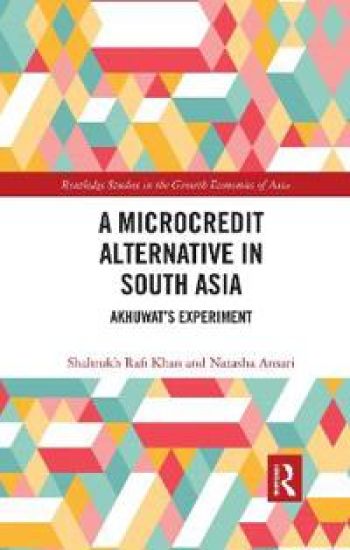
A Microcredit Alternative in South Asia

A Microcredit Alternative in South Asia

Shahrukh Rafi Khan; Natasha Ansari

Routledge
2020
nidottu
Microcredit took the development world by storm as a tool for poverty alleviation in the 1980s. After being hailed as a panacea, a few decades on it started being forcefully criticised based on its practice. This book explores Akhuwat (literally brotherhood), a rapidly growing Pakistani NGO formed in 2001, which addresses the shortcomings of conventional microfinance. Its vision is of a society built on empathy and social solidarity and its mission is that of creating self-sufficiency among the entrepreneurial poor. This book examines whether Akhuwat fulfils its promises of not pushing loans or encouraging clients to get on a debt treadmill and helping them to avoid high debt burdens by charging no interest and easing repayment terms. Conventional microcredit organizations are criticised for losing sight of the original mission of poverty alleviation by engaging in empire building and Akhuwat’s goal is to avoid this by embracing an alternative strategy of scaling up. Finally, this book also analyses Akhuwat’s approach as being gender sensitive and embracing all religions, castes and ethnicities. Based on fieldwork designed to assess if Akhuwat is the microcredit alternative it claims to be, this book will be of interest to scholars of poverty and development studies in general and microcredit in particular.
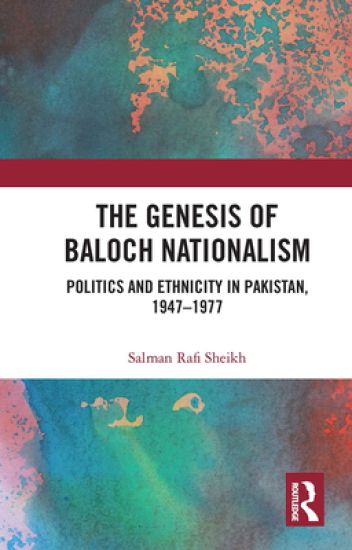
The Genesis of Baloch Nationalism

The Genesis of Baloch Nationalism

Salman Rafi Sheikh

Routledge India
2020
nidottu
This book explores the ideological, political and military interventions of the state of Pakistan in Balochistan and traces the genesis of today’s secessionist movement. It delves into the historical question of Balochistan’s integration into Pakistan in 1947 and brings out the true political and militant character of the movement during the first three decades (1947–77) of Pakistan’s existence as a nation-state. It shows how the Baloch, as well as other minority groups, were denied the right to identify themselves as a sub-national/ethnic group in the new nation-state, compounded by a systematic exclusion from decision-making circles and structures of political and economic power. The volume also traces political resistance from within Balochistan and its subsequent suppression by military operations, leading to a widespread militant insurgency in the present day.Drawing on hitherto unexplored sources, this book will be indispensable to scholars and researchers of South Asian history, politics, international relations and area studies.
A History of Development Economics Thought
This book explores the history of economic development thought, with an emphasis on alternative approaches in macro development economics. Given that the pioneers of development economics in the 1940s and 1950s drew inspiration from classical political economists, this book opens with a review of key classical scholars who wrote about the progress of the wealth of nations. In reviewing the thinking of the pioneers and those that followed, both their theories of development and underdevelopment are discussed. Overall, the book charts the evolution of development economic thought from the early developmentalists and structuralists, through to the neo-Marxist approach and radical development theory, the neo-liberal counter revolution, and the debate between new developmentalists and neo-liberal scholars. It ends with an assessment of the state of the field today. This book will be of interest to all scholars and students interested in the evolution of development economics.
A History of Development Economics Thought
This book explores the history of economic development thought, with an emphasis on alternative approaches in macro development economics. Given that the pioneers of development economics in the 1940s and 1950s drew inspiration from classical political economists, this book opens with a review of key classical scholars who wrote about the progress of the wealth of nations. In reviewing the thinking of the pioneers and those that followed, both their theories of development and underdevelopment are discussed. Overall, the book charts the evolution of development economic thought from the early developmentalists and structuralists, through to the neo-Marxist approach and radical development theory, the neo-liberal counter revolution, and the debate between new developmentalists and neo-liberal scholars. It ends with an assessment of the state of the field today. This book will be of interest to all scholars and students interested in the evolution of development economics.
Development Economics

Development Economics

Shahrukh Rafi Khan

Routledge
2019
sidottu
Following the 2007–2009 financial and economic crises, there has been an unprecedented demand among economics students for an alternative approach, which offers a historical, institutional and multidisciplinary treatment of the discipline. Economic development lends itself ideally to meet this demand, yet most undergraduate textbooks do not reflect this.This book will fill this gap, presenting all the core material needed to teach development economics in a one semester course, while also addressing the need for a new economics and offering flexibility to instructors. Rather than taking the typical approach of organizing by topic, the book uses theories and debates to guide its structure. This will allow students to see different perspectives on key development questions, and therefore to understand more fully the contested nature of many key areas of development economics.The book can be used as a standalone textbook on development economics, or to accompany a more traditional text.
Development Economics

Development Economics

Shahrukh Rafi Khan

Routledge
2019
nidottu
Following the 2007–2009 financial and economic crises, there has been an unprecedented demand among economics students for an alternative approach, which offers a historical, institutional and multidisciplinary treatment of the discipline. Economic development lends itself ideally to meet this demand, yet most undergraduate textbooks do not reflect this.This book will fill this gap, presenting all the core material needed to teach development economics in a one semester course, while also addressing the need for a new economics and offering flexibility to instructors. Rather than taking the typical approach of organizing by topic, the book uses theories and debates to guide its structure. This will allow students to see different perspectives on key development questions, and therefore to understand more fully the contested nature of many key areas of development economics.The book can be used as a standalone textbook on development economics, or to accompany a more traditional text.
Laser Ignition of Energetic Materials

Laser Ignition of Energetic Materials

S Rafi Ahmad; Michael Cartwright

John Wiley Sons Inc
2014
sidottu
The book gives an introduction to energetic materials and lasers, properties of such materials and the current methods for initiating energetic materials. The following chapters and sections highlight the properties of lasers, and safety aspects of their application. It covers the properties of in-service energetic materials, and also materials with prospects of being used as insensitive ammunitions in future weapon or missiles systems or as detonators in civilian (mining) applications. Because of the diversity of the topics some sections will naturally separate into different levels of expertise and knowledge.
A Microcredit Alternative in South Asia

A Microcredit Alternative in South Asia

Shahrukh Rafi Khan; Natasha Ansari

CRC Press Inc
2018
sidottu
Microcredit took the development world by storm as a tool for poverty alleviation in the 1980s. After being hailed as a panacea, a few decades on it started being forcefully criticised based on its practice. This book explores Akhuwat (literally brotherhood), a rapidly growing Pakistani NGO formed in 2001, which addresses the shortcomings of conventional microfinance. Its vision is of a society built on empathy and social solidarity and its mission is that of creating self-sufficiency among the entrepreneurial poor. This book examines whether Akhuwat fulfils its promises of not pushing loans or encouraging clients to get on a debt treadmill and helping them to avoid high debt burdens by charging no interest and easing repayment terms. Conventional microcredit organizations are criticised for losing sight of the original mission of poverty alleviation by engaging in empire building and Akhuwat’s goal is to avoid this by embracing an alternative strategy of scaling up. Finally, this book also analyses Akhuwat’s approach as being gender sensitive and embracing all religions, castes and ethnicities. Based on fieldwork designed to assess if Akhuwat is the microcredit alternative it claims to be, this book will be of interest to scholars of poverty and development studies in general and microcredit in particular.
Economic Successes in South Asia

Economic Successes in South Asia

Shahrukh Rafi Khan

TAYLOR FRANCIS LTD
2022
sidottu
This book analyses economic successes in South Asia and the reasons why they emerge by offering an in-depth analysis of a few case studies against the backdrop of overall policy context and economic performance of these countries. Offering a brief comparative review of South Asia in a global context, the book shows that the region remains an economically and socially lagging region. The author argues that within South Asia, most countries demonstrate examples of economic or social success. This book explores such successes that provide lessons for other South Asian countries and beyond. Case studies include the textile industry and microcredit in Bangladesh, information technology in India, forestry management in Nepal, surgical and sports goods in Pakistan, and human development in Sri Lanka. At the macro level, the book discusses India’s catch-up growth first given the country’s global importance and because of the prominence of the debate on its catch-up growth to development economics. A novel addition to the literature with its focus on successful initiatives with broad policy implications, this book will be of interest to researchers in the field of development economics, development studies and South Asian Studies, in particular South Asian policy.