

Kirjahaku
Etsi kirjoja tekijän nimen, kirjan nimen tai ISBN:n perusteella.
1000 tulosta hakusanalla Richard C. Dales
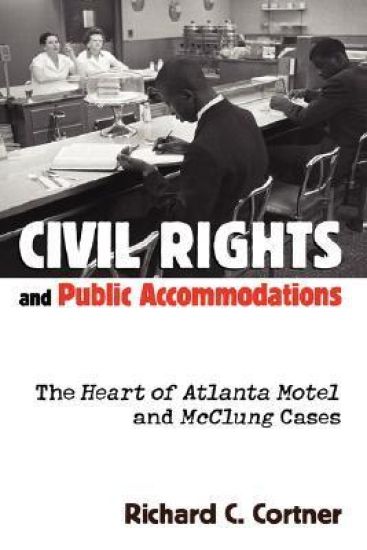
The struggle for civil rights in America was fought at the lunch counter as well as in the streets. It ultimately found victory in the halls of government - but, as Richard Cortner reveals, only through a creative use of congressional power and critical judicial decisions. Title II of the 1964 Civil Rights Act prohibited discrimination in public accommodations, and shortly after its passage blacks were refused service at the Heart of Atlanta Motel and at Ollie's Barbecue in Birmingham, Alabama, as a test of the new law by business owners who claimed the right to choose their own customers. These challenges made their way to the Supreme Court, becoming landmark cases frequently cited in law. Until now, however, they have never benefited from book-length analysis. Cortner provides an inside account of the litigation in both decisions to tell how they spelled the end to segregation in the South. The fact that blacks could not travel in the South without assured access to food and lodging led Congress to enforce civil rights on the basis of its authority to regulate interstate commerce. The Supreme Court unanimously sustained Title II's constitutionality under the commerce clause in both test cases, joining the executive and legislative branches in defining the power of the federal government to desegregate society, even by circuitous means. Drawing on justice department files, Supreme Court justices' papers, and records of defense attorneys, Cortner provides the background for the cases, including previous legal battles over sitins. He describes the roles of key players in the litigation - particularly Solicitor General Archibald Cox and members of the Warren Court. In addition, he uses presidential files, oral histories, and other primary sources to give readers a clear picture of the forces at work in the creation, implementation, and validation of the Civil Rights Act. Cortner's thorough account illuminates the nature of constitutional litigation and the judicial process, as well as the role of the Constitution and law, in two decisions that marked the crowning achievement of the civil rights movement and changed the face of America forever.
The booming 1990s saw a new demographic pattern emerging in the United States—the shift of immigrants toward smaller towns and metropolitan areas in ethnically homogenous (or traditionally bicultural) areas. These places offer growing, specialized economies in need of unskilled or semi-skilled (and occasionally skilled) labor; they also offer, for some immigrants, a favorable physical and social climate. Immigrants Outside Megalopolis documents this trend with case studies including Hmong in Wisconsin, Iranians in Iowa, Mexicans in Kansas and Colorado, Vietnamese in coastal Louisiana, Mexicans in North Carolina and south Texas, Cubans in Arizona, Bosnians in upstate New York, Asian Indians in north Texas, and Ukranians and Russians in the Willamette Valley of Oregon. Truly, this process is resulting in a cultural transformation of the U.S. heartland. The implantation of new features on the cultural landscape (businesses, homes, churches, schools, possessions, and the peoples themselves) is giving many Americans a world geography lesson—at a time when increased world understanding is something the country cannot do without. This geography lesson comes at a cost, however: the difficult process of social adjustment, playing out on a daily basis between immigrant and host populations, which remains largely unresolved. This process is an important focus of Jones's book.
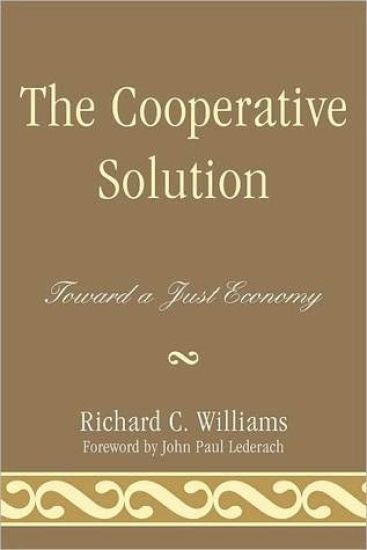
Richard Williams surveys the history of the cooperative movement from its origins in the 18th century and deals with the theory of cooperation, as contrasted with the 'Standard Economic Model', based on competition. The book contains the results of field studies of a number of successful cooperatives both in the developed and developing world. It includes insights from personal interviews of cooperative members and concludes by considering the successes and challenges of the cooperative movement as an alternative to the global neo-colonialism and imperialism that now characterizes free-market capitalist approaches to globalization. The book considers democratic and local control of essential economic activities such as the production, distribution, and retailing of goods and services. It suggests that cooperative approaches to these economic activities are already reducing poverty and resulting in equitable distributions of wealth and income without plundering the resources of developing countries.

Pastoral Care Under the Cross: God in the Midst of Suffering
Richard C. Eyer
Concordia Publishing House
2014
nidottu
Pastoral Care Under the Cross points to the cross as the paradigm for pastoral care when counseling suffering people. This book offers insight that is useful not only for pastors but also Christian counselors, chaplains, nurses, doctors, and social workers who interact with the elderly, dying, mourning, mentally ill, or depressed. The expanded edition features: A variety of common pastoral situations Christian responses to medical/ethical questions Resources for pastoral care of those suffering from difficulties of body or mind
In short, concise chapters, author Richard Eyer guides readers through the process of making ethical decisions from a Law/Gospel perspective. Eyer's easy-to-read style helps readers focus on the issues that confront people in this modern, high-tech age, including reproductive technology and end-of-life issues. In the course of the discussion, Eyer presents biblical and Gospel insights into living as God's holy people, redeemed in Christ.

The Cooperative Solution
Richard C. Williams; John Paul Lederach
University Press of America
2010
nidottu
All over the world, poverty is gradually giving way to cooperative economic activity. At the same time, there are signs that standard competitive "free" markets are failing. Empirical evidence shows that cooperation works better than competition and that cooperatives succeed more often than standard corporations. Assumptions underlying the competitive system are that competition results in equity for all and that poverty can be eliminated through the market. These assumptions simply are not true. On the contrary, the rich get richer; the poor, poorer. Cooperatives, where each member holds one share and one vote, are more democratic than hierarchical corporations. Poverty is actually eliminated through a combination of microfinance and cooperation. Examples include Muhammed Yunus' Grameen Bank, Indonesia's People's Bank, and the cooperative adventure of Mondragon in Spain. These examples provide a vision of true globalization from below, a vision of a just and sustainable world. The "how-to" is right here.
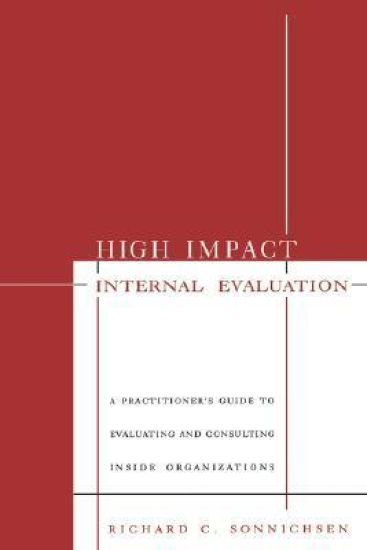
"The book gives a solid overview of the theory and practice of internal evaluation by one of its leading practitioners. For readers new to internal evaluation, the book clearly explains the major pros and cons of internal evaluation, how evaluation fits within the organizational context, and guidance about the development and management of the internal evaluation function." --Arnold Love, private consultant and author of Internal Evaluation "This book was written by an evaluator who has given deep thought to what it means to work as an internal evaluator. The author combines his long experience and deep knowledge of the literature in a manner that gives people the insight needed to ply the evaluation trade effectively as in-house staff in large bureaucratic organizations." --Jonathan A. Morell, Industrial Technology Institute This book shows students and professional evaluators how to effectively use the tools of internal evaluation to determine a business or program's effectiveness, efficiency, economy, and performance. Beginning with a description of the organizational context within which internal evaluation is practiced, the book covers such topics as: - Pre conditions for high impact evaluation - The value and nature of acquisition of information in organizations and how it is affected by culture, individuals and the decision-making process - The phenomenon of change in organizations from how it affects behavior as well as ways to overcome resistance to change - The staffing and structure of internal evaluation offices - The consulting role that evaluators play in organizations - The keys to successful internal evaluation practice - How to have high impact evaluations that are utilized - The art of reporting results in a manner that will influence and improve the organization.
Governing American communities becomes ever more challenging in the contemporary political and economic environment. People in communities seek to exercise local control of public programs as they confront powerful special interests and public demands for a smaller, more responsive public sector. Furthermore, they contend with an entrenched traditional view of public professionals as experts who control public agencies and provide services. Drawing on fundamental ideas about the relationship of citizens to the public sphere, Richard C. Box presents a model of "citizen governance." Recognizing the challenges in the community governance setting, he advocates rethinking the structure of local government and the roles of citizens, elected officials, and public professionals in the 21st century. His model shifts a large part of the responsibility for local public policy from the professional and the elected official to the citizen. Citizens take part directly in creating and implementing policy, elected officials coordinate the policy process, and public professionals facilitate citizen discourse, offering the knowledge of public practice needed for successful "citizen governance."
Governing American communities becomes ever more challenging in the contemporary political and economic environment. People in communities seek to exercise local control of public programs as they confront powerful special interests and public demands for a smaller, more responsive public sector. Furthermore, they contend with an entrenched traditional view of public professionals as experts who control public agencies and provide services. Drawing on fundamental ideas about the relationship of citizens to the public sphere, Richard C. Box presents a model of "citizen governance." Recognizing the challenges in the community governance setting, he advocates rethinking the structure of local government and the roles of citizens, elected officials, and public professionals in the 21st century. His model shifts a large part of the responsibility for local public policy from the professional and the elected official to the citizen. Citizens take part directly in creating and implementing policy, elected officials coordinate the policy process, and public professionals facilitate citizen discourse, offering the knowledge of public practice needed for successful "citizen governance."
`This body of knowlege should be of interest to human resource management specialists. ...[and] to those who are interested in developing their knowledge and understanding of corporate learning and what a learning organisations is. Indeed, [it]... will appeal ...to academics as it offers a useful introduction ....and offers some pointers for devising human resource management strategies' - Peter Trim, University of London, British Academy of Management News `Drs Richard C Huseman and Jon P Goodman set forth a strategic model for conceptualizing and leveraging knowledge that is invaluable for executives who want to capture, share, and leverage the power of knowledge assets.' - Thomas Sattelberger, Corpora Based on a landmark study of over 200 of the largest companies in the United States, this book examines how the intellectual assets of a corporation can be leveraged to create `knowledge organization'. The book includes an overview of corporate evolution from the classic formally structured organization to an adaptive, knowledge-based model. It details the forces of change which contemporary corporations must respond to, and describes techniques used to restructure organizations. Readers are presented with real-world examples that offer insight into the best organizational practice and blueprints for implementation.
Written by the former chairman and managing director of the American Institute in Taiwan, this book sheds new light on key topics in the history of U.S.-Taiwan relations. It fills an important gap in our understanding of how the U.S. government addressed Taiwan and the Taiwan Strait issue from the early 1940s to the present. One theme that runs through these essays is the series of obstacles erected that denied the people of Taiwan a say in shaping their own destiny: Franklin Roosevelt chose to return Taiwan to mainland China for geopolitical reasons; there was little pressure on the Kuomintang to reform its authoritarian rule until Congress got involved in the early 1980s; Chiang Kai-shek spurned American efforts in the 1960s to keep Taiwan in international organizations; and behind the ROC's back, the Nixon, Carter, and Reagan administrations negotiated agreements with the PRC that undermined Taiwan's position. In addition to discussing how the United States reacted to key human rights cases from the 1940s to the 1980s, the author also discusses the Bush and Clinton administrations' efforts to preserve U.S. interests while accommodating new forces in the region. All these episodes have an enduring relevance for the people of Taiwan, and in his conclusion the author discusses where the relationship stands today. The book includes related documents that helped shape the U.S.-Taiwan relationship.
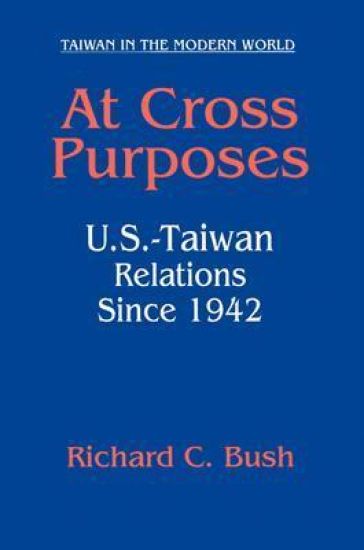
Written by the former chairman and managing director of the American Institute in Taiwan, this book sheds new light on key topics in the history of U.S.-Taiwan relations. It fills an important gap in our understanding of how the U.S. government addressed Taiwan and the Taiwan Strait issue from the early 1940s to the present. One theme that runs through these essays is the series of obstacles erected that denied the people of Taiwan a say in shaping their own destiny: Franklin Roosevelt chose to return Taiwan to mainland China for geopolitical reasons; there was little pressure on the Kuomintang to reform its authoritarian rule until Congress got involved in the early 1980s; Chiang Kai-shek spurned American efforts in the 1960s to keep Taiwan in international organizations; and behind the ROC's back, the Nixon, Carter, and Reagan administrations negotiated agreements with the PRC that undermined Taiwan's position. In addition to discussing how the United States reacted to key human rights cases from the 1940s to the 1980s, the author also discusses the Bush and Clinton administrations' efforts to preserve U.S. interests while accommodating new forces in the region. All these episodes have an enduring relevance for the people of Taiwan, and in his conclusion the author discusses where the relationship stands today. The book includes related documents that helped shape the U.S.-Taiwan relationship.
The essential premise of critical social theory is that contemporary society is neither democratic nor free, but that modern global capitalism creates a citizenry satiated with consumer goods, unaware of alternative ways of living. In the public sector, critical theory suggests that governing systems are influenced, if not controlled, by the wealthy and powerful, leaving public professionals to decide whether to serve those interests or the interests of a broader public. This book provides a framework for the application of critical social theory in public administration. Its goal is to encourage awareness among public administration scholars and practitioners of social conditions that tend to shape and constrain scholarship, practice, teaching, and social change. At a time when concern for public interest and a civil society have largely been displaced by the goals of economic efficiency and the "New Public Management," Critical Social Theory in Public Administration presents a viable alternative that incorporates the latest views of postmodern thinking with the central elements of critical social theory.
The essential premise of critical social theory is that contemporary society is neither democratic nor free, but that modern global capitalism creates a citizenry satiated with consumer goods, unaware of alternative ways of living. In the public sector, critical theory suggests that governing systems are influenced, if not controlled, by the wealthy and powerful, leaving public professionals to decide whether to serve those interests or the interests of a broader public. This book provides a framework for the application of critical social theory in public administration. Its goal is to encourage awareness among public administration scholars and practitioners of social conditions that tend to shape and constrain scholarship, practice, teaching, and social change. At a time when concern for public interest and a civil society have largely been displaced by the goals of economic efficiency and the "New Public Management," Critical Social Theory in Public Administration presents a viable alternative that incorporates the latest views of postmodern thinking with the central elements of critical social theory.
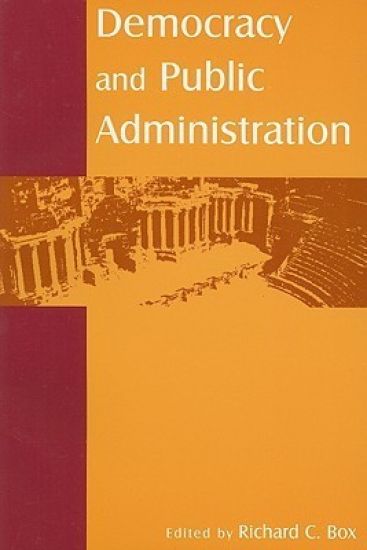
The true measure of the successful practice of public service is its ability to remain faithful to the tenets of democratic society. This introductory text links the practice of public administration to the core concepts of American democracy. It covers the nuts and bolts of public administration in the context of "delivering democracy" in public service - providing what the public really wants as opposed to what self-serving bureaucracies may call for. Chapters in "Democracy and Public Administration" discuss the functional topics covered in other texts, but from the perspective of this democratic ideal. Each chapter is written by an expert in the area, and summarizes previous research in the area, presents the author's research and thought, and offers ways in which practitioners can apply the concepts discussed to their daily work.
The true measure of the successful practice of public service is its ability to remain faithful to the tenets of democratic society. This introductory text links the practice of public administration to the core concepts of American democracy. It covers the nuts and bolts of public administration in the context of "delivering democracy" in public service - providing what the public really wants as opposed to what self-serving bureaucracies may call for. Chapters in "Democracy and Public Administration" discuss the functional topics covered in other texts, but from the perspective of this democratic ideal. Each chapter is written by an expert in the area, and summarizes previous research in the area, presents the author's research and thought, and offers ways in which practitioners can apply the concepts discussed to their daily work.