Kirjojen hintavertailu. Mukana 11 342 296 kirjaa ja 12 kauppaa.

Kirjahaku

Etsi kirjoja tekijän nimen, kirjan nimen tai ISBN:n perusteella.

1000 tulosta hakusanalla Richard J. Perry

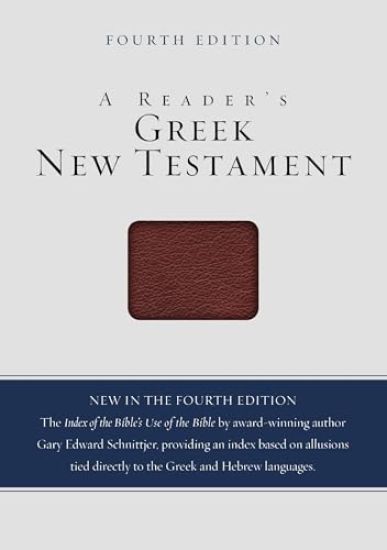
A Reader's Greek New Testament

A Reader's Greek New Testament

Richard J. Goodrich; Albert L. Lukaszewski

ZONDERVAN
2026
erikoissidos
A Reader's Greek New Testament: Fourth Edition is a classic and essential tool for students of biblical Greek. The Reader presents the Greek text underlying the New Internation Version alongside the English translation. Words that appear in the New Testament fewer than thirty times are given definitions in footnotes for ease of reading, allowing students to focus on reading, comprehension, parsing, and grammatical issues. Footnotes comparing the Greek text with the critical text of USB5/NA28 are included throughout. A mini lexicon of all words occurring more than thirty times and full-color maps are included in the backmatter. The Italian Duo-Tone binding, ribbon marker, and easy-to-read Greek font make this Reader an attractive Bible for reading and study. The new feature of this updated edition of A Reader's Greek New Testament is an "Index of the Bible's Use of the Bible" by award-winning author Gary Edward Schnittjer. The index is based on Schnittjer's careful work of Scripture's use of Scripture and lists all allusions tied directly to the Greek and Hebrew languages. Sigla inform the reader of the type of relationship between texts. This important addition sets A Reader's Greek New Testament apart from other Greek resources, promoting careful and fruitful study of the Greek New Testament and its use of the Old Testament.
The New Mormon Challenge

The New Mormon Challenge

Richard J. Mouw

Zondervan
2002
nidottu
Current facts about Mormonism:Over 11 million members.Over 60,000 full-time missionaries—more than any other single missionary-sending organization in the world.More than 310,000 converts annually.As many as eighty percent of converts come from Protestant backgrounds. (In Mormon circles, the saying is, “We baptize a Baptist church every week.”)Within fifteen years, the numbers of missionaries and converts will roughly double.Within eighty years, with adherents exceeding 267 million, Mormonism could become the first world-religion to arise since Islam.You may know the statistics. What you probably don’t know are the advances the Church of Jesus Christ of Latter-day Saints (LDS) is making in apologetics and academic respectability. With superb training, Mormon scholars outclass many of their opponents. Arguments against Mormon claims are increasingly refuted as outdated, misinformed, or poorly argued. The New Mormon Challenge is a response to the burgeoning challenge of scholarly Mormon apologetics.Written by a team of respected Christian scholars, it is free of caricature, sensationalism, and diatribe. The respectful tone and responsible, rigorous, yet readable scholarship set this book in a class of its own. It offers freshly researched and well-documented rebuttals of Mormon truth claims. Most of the chapter topics have never been addressed, and the criticisms and arguments are almost entirely new.But The New Mormon Challenge does not merely challenge Mormon beliefs; it offers the LDS Church and her members ways to move forward. The New Mormon Challenge will help you understand the intellectual appeal of Mormonism, and it will reveal many of the fundamental weaknesses of the Mormon worldview. Whether you are sharing the gospel with Mormons or are investigating Mormonism for yourself, this book will help you accurately understand Mormonism and see the superiority of the historic Christian faith.Outstanding scholarship and sound methodology make this an ideal textbook. The biblical, historical, scientific, philosophical, and theological discussions are fascinating and will appeal to Christians and Mormons alike. Exemplifying Christian scholarship at its best, The New Mormon Challenge pioneers a new genre of literature on Mormonism. The Editors Francis J. Beckwith, Carl Mosser, and Paul Owen are respected authorities on the Church of Jesus Christ of Latter-day Saints and the authors of various books and significant articles on Mormonism.With contributors including such respected scholars as Craig L. Blomberg, William Lane Craig, J. P. Moreland, and others, The New Mormon Challenge is, as Richard Mouw states in his foreword, “an important event for both Protestant evangelicals and Mormons” that models “to the evangelical community what it is like to engage in respectful and meaningful exploration of a viewpoint with which we disagree on key points.”
The Smell of Sawdust

The Smell of Sawdust

Richard J. Mouw

Zondervan
2000
nidottu
Many evangelicals paint fundamentalism with the same broad, negative brush. But we owe more to our pietist-revivalist roots than we realize.Richard Mouw’s awareness of fundamentalism’s problems hasn’t robbed his appreciation for its strengths. The Smell of Sawdust sheds thoughtful and revealing light on the colorful parentage of contemporary evangelicalism. If you detect fondness, even a hint of nostalgia, you’re right. From its history, to its ethos, to its mores and methods, Mouw takes you on a fascinating journey through the pros and cons of the "sawdust trail." Whatever your outlook on the revivalist tradition, whether favorable or not so favorable, these candid, thought-provoking insights will inspire your respect for fundamentalism’s strong points, help you learn from its weaknesses, and above all, enrich your life as a Christian. Like the author, you’ll find yourself singing the old gospel hymns with new understanding and depth.Filled with anecdotes from the amusing to the poignant, this book takes you back to the sawdust-covered earth of the early tent meetings . . . earlier, to the spiritual hunger that sparked the pietist movement . . . and later, into today, where we strive to effectively communicate the nonnegotiables of our faith to a needy world.The Smell of Sawdust is gentle and deeply personal. It is also wise--neither judgmental nor naive, but healing, furnishing redemptive insights into the character of our fundamentalist heritage. This book will broaden the perspective of thinking Christians who want to engage both their hearts and their intellects to reach the soul of our culture with the gospel.
Calvinism in the Las Vegas Airport

Calvinism in the Las Vegas Airport

Richard J. Mouw

Zondervan
2004
nidottu
What do the Canons of Dordt mean to people in the Las Vegas airport—and does anyone there even care? In the movie Hardcore, a pious Calvinist elder tries unsuccessfully to explain the TULIP theology of his Dutch Reformed faith to a prostitute in the Las Vegas airport. This incongruous conversation demonstrates how Calvinism is often perceived today: irrelevant, harsh, even disrespectful.Beginning with this movie scene, Calvinism in the Las Vegas Airport addresses the weaknesses of Calvinism and points to its strengths. How does Calvinism shed light on today? Instead of reciting the Canons of Dordt, what’s a more compassionate way to relate to nonbelievers? What might it look like to live out the doctrines of TULIP with gentleness and respect? This conversational book provides answers and shatters some stereotypes. Calvinism in the Las Vegas Airport encourages you to live every aspect of life—business, family, education, politics, activities, and more—before the face of a generous, sovereign God. Calvinists and non-Calvinists alike will find this an enjoyable read. You will discover that Reformed theology can speak relevantly and compellingly today, both to you and to people in the Las Vegas airport. Does Calvinism Have Anything to Do with the 21st Century?What do you think about Calvinism? Do you view it positively or negatively? Or has its day passed?Let’s face it, many non-Calvinists hold a less-than-positive view, sometimes due to caricatures. This friendly, conversational book helps clear up some misconceptions and distorted views. If you’re not a Calvinist, here is an engaging inside look. And if you are a Calvinist, Richard Mouw shows how to live gently and respectfully with others—Christians and non-Christians—who hold different perspectives.Calvinism in the Las Vegas Airport focuses not on what Calvinists believe but on how they live. From a movie scene to the author’s personal experiences in Las Vegas, you are invited to travel with Mouw and see the Reformed faith in a new light. Yes, it still does travel well!
A Summer Greek Reader

A Summer Greek Reader

Richard J. Goodrich; David Diewert

Zondervan
2001
nidottu
A Summer Greek Reader is the first practical text specifically designed to help students of introductory Greek strengthen their grasp of the essentials over the summer.By spending just twenty minutes a day, students not only maintain what they've learned in their first-year class, but will also build their working vocabulary and gain practice with extended Greek New Testament passages. This volume is perfect for students who want to begin reading complete passages of the Greek New Testament while avoiding the complexities encountered in intermediate and advanced studies.A Summer Greek Reader encourages readers to memorize new words while applying the essentials of Greek to translating larger blocks of the New Testament text.Passages are selected for their straightforward syntax.Unfamiliar words are cross-referenced or defined in footnotes eliminating the need for lexical work.English translations are provided for each passage so students can check their work. Self-contained and easy to use, A Summer Greek Reader is a rewarding means of strengthening the knowledge first-year Greek students have worked so hard to acquire. By eliminating the need to rebuild old foundations and by minimizing the mad dash for a bigger vocabulary during the first weeks of second-year Greek, this book will quickly prove its worth to students and educators alike.
A Reader's Greek New Testament

A Reader's Greek New Testament

Richard J. Goodrich; Albert L. Lukaszewski

ZONDERVAN
2015
erikoissidos
A Reader’s Greek New Testament: Third Edition saves time and effort in studying the Greek New Testament. If a Greek word appears in the New Testament fewer than 30 times, then a definition is provided. This serves as an aid when you encounter less common vocabulary, allowing you to focus on reading, comprehension, parsing, and grammatical issues. You no longer have to interrupt your reading, searching through a lexicon! Featuring a handsome Italian Duo-Tone™ binding, A Reader’s Greek New Testament: Third Edition is a practical, attractive, and surprisingly affordable resource.Features of this third edition include: footnoted definitions of all words occurring 30 times or less; mini-lexicon of all words occurring more than 30 times; Greek text underlying the New International Version; footnotes comparing the Greek text with the critical text of UBS5/NA28; 4 pages of full-color maps; marker ribbon; and easy-to-read Greek fonts.
Reading Biblical Greek

Reading Biblical Greek

Richard J. Gibson; Constantine R. Campbell

Zondervan
2017
sidottu
Reading Biblical Greek introduces first-year Greek students to the essential information needed to optimize their grasp of the fundamentals of the Greek language—no more and no less—enabling them to read and translate the Greek of the New Testament as soon as possible.The learning approach in Reading Biblical Greek revolves around three core elements: grammar, vocabulary, and reading & translation.Grammar. The grammar consists of micro-lessons, which break up information in small, digestible chunks. Each micro-lesson addresses a single point. This arrangement makes for easy comprehension and review. It also allows the teacher to pace the material based on its difficulty and ability of their students. New learning is incremental and recursive—each new piece builds on and reinforces prior learning. Lessons are structured in three columns: 1) Introducing new topic; 2) Material to be memorized; and 3) Examples and exercises.Vocabulary. As an essential complement to grammar, vocabulary is introduced at strategic points and is arranged first by what the student has been learning in grammar, and then by frequency. The vocabulary lists are collated at the back of the book for easy access. The first 13 vocabulary lists are keyed to Mark 1-4 to help students to integrate their vocabulary learning with a “real” Greek text.Reading & Translation. The goal of this grammar is to enable students to read and translate the Greek of the New Testament. Thus, the content is structured and tied to a specific Greek text to enable reading as soon as possible. The student will have read and translated the whole of Mark 1–4 by the end of the course. The accompanying Reading Biblical Greek Workbook is a vital part of the approach. It breaks up the text of Mark 1–4 into manageable portions and provides vocabulary and grammatical assistance as required. While Reading Biblical Greek only introduces students to information that is essential to grasp of the fundamentals of the Greek language, it is informed by the latest and best of Greek and linguistic scholarship, enabling students to move seamlessly to further study.
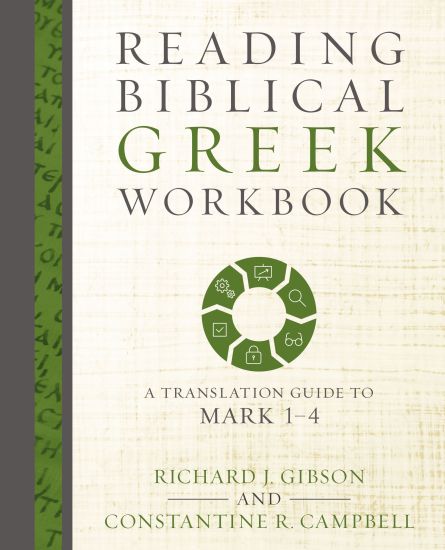
Reading Biblical Greek Workbook

Reading Biblical Greek Workbook

Richard J. Gibson; Constantine R. Campbell

Zondervan
2017
nidottu
The Reading Biblical Greek Workbook is a companion resource to Reading Biblical Greek: A Grammar for Students. The workbook breaks up the Greek text of Mark 1-4 into manageable portions and provides the vocabulary and grammatical assistance required for beginning students. The Reading Biblical Greek Workbook is an integral part of the learning experience for students, it helps them to read and translate the Greek of the New Testament, and ultimately equips them to read the Greek New Testament itself. The student will have read and translated the whole of Mark 1-4 by the time they complete the workbook
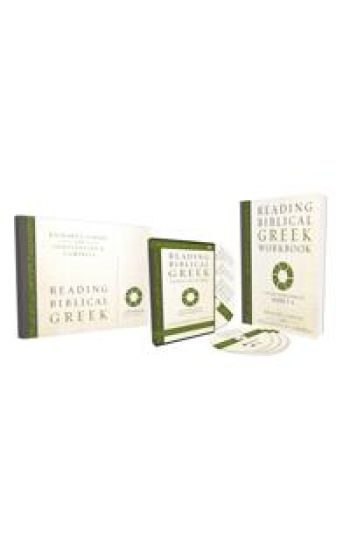
Reading Biblical Greek Pack

Reading Biblical Greek Pack

Richard J. Gibson; Constantine R. Campbell

Zondervan
2017
muu
The Reading Biblical Greek Pack contains everything you need to grasp of the fundamentals of the Greek language so you can read and translate the Greek of the New Testament. The learning approach revolves around three core elements: grammar, vocabulary, and reading & translation. The Reading Biblical Greek Pack includes: Reading Biblical Greek, a Greek textbook introducing first-year Greek students to the essential information—no more and no less—optimizing their grasp of the fundamentals of the Greek languageReading Biblical Greek Workbook, a companion resource to the main grammar that breaks up the Greek text of Mark 1–4 into manageable portions and provides the vocabulary and grammatical assistance required for beginning studentsReading Biblical Greek Video Lectures, consisting of 82 micro-lessons of up to 10 minutes each, presenting the information in small, digestible chunks The Reading Biblical Greek Pack provides all the essential information needed to learn the basics of the Greek language and helps individuals on their own or in a classroom setting begin reading and translating the New Testament.
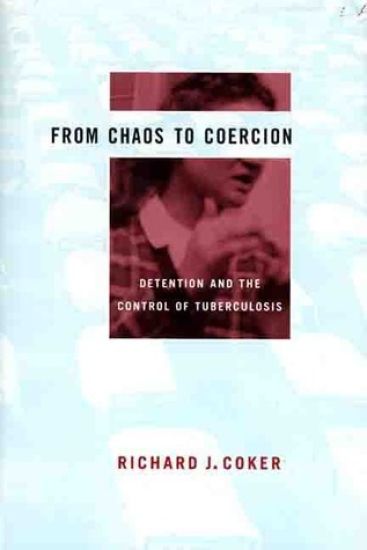
From Chaos to Coercion

From Chaos to Coercion

Richard J Coker

St Martin's Press
2000
sidottu
In the 1980s and early 1990s, New York City experienced an unprecedented outbreak of tuberculosis. Inadequate healthcare services, an increase in social alienation of the poor, and the emergence of drug-resistant strains led city health officials to respond with draconian policies to ensure compliance, including the use of detention of non-infectious individuals--sometimes for up to two years--that violated individual civil liberties. The New York TB epidemic has since been controlled, but this public health triumph has come at great cost. This gripping narrative of medicine and morality raises ethical issues that are of increasing importance in the world of modern medicine. Richard J. Coker warns the international community against assuming a fortress mentality, advocating a more just balance between health, liberty, and the burdens society should be prepared to accept in the pursuit of both.
Clarence Darrow

Clarence Darrow

Richard J. Jensen

Greenwood Press
1992
sidottu
He reviled the rich for their cupidity and they found his rhetoric repulsive. Plebians believed him their champion and patricians knew he was their bete noire, remarks Halford Ryan in his eloquent foreword to this definitive survey of Clarence Darrow's development as orator and unique American myth. As a writer, lecturer, debater, and trial lawyer Darrow spoke for the have-nots and cultivated an image of mythic proportions as the underdog's advocate. Many of the more than 2,000 trials in which he was active reflected the major social and philosophical issues of the last quarter of the nineteenth and first third of the twentieth centuries in America. Read today, Darrow's speeches still ring true both as political statements and as models of persuasive pleading and pathos--reason enough to study the work of this uncommon advocate who stood perpetually opposed to the great and powerful of the earth. Richard J. Jensen has written a clearsighted volume that documents how Darrow created and then enlarged his personal myth through speeches, writings, and actions. Each chapter focuses on particular segments of that creation. Half of the book consists of authoritative texts of several of Darrow's most influential and rhetorically brilliant speeches, and a speech chronology simplifies the work of researchers.The study opens with a brief biography, an overview of Darrow's rhetoric, along with the forces that affected it, and some initial comments on the elements that make up the myth. The next chapter, Schoolmaster of the Courtroom, chronicles the origins of Darrow's image as a defender of the downtrodden and his early trials in defense of labor unions and their leaders. What is considered to be one of the most famous speeches in American legal history, that given by Darrow at the conclusion of the 1924 Leopold and Loeb trial, is the focus of Chapter Three. Chapter Four centers on the Scopes Trial, perhaps the most famous trial in recent American history, during which the dramatic confrontation with William Jennings Bryan occurred. The penultimate chapter explains the arguments Darrow used to defend the poor, radicals, Blacks, and other less fortunate members of society. Finally, Darrow's rhetoric as a writer and as an active speaker and debater on the lecture circuit is examined. Part II contains the authoritative texts of seven speeches including those given during the Leopold and Loeb Trial and the Scopes Trial, among others. The Chronology of Speeches, Bibliography, and Index close the volume. The speeches along with Jensen's intelligent, readable analysis and criticism will be an important resource for those teaching and studying Legal Rhetoric and the History of Public Address.
The Orphan Stone

The Orphan Stone

Richard J. Berleth

Praeger Publishers Inc
1990
sidottu
Americans have long viewed the Middle Ages with an emphasis on Chaucer and the French and Latin traditions. As a result, the later developments of European literature and history often take us by surprise. From our perspective, the Reformation, the birth of capitalism, and the new humanism appear as if from nowhere. The part missing is the history and literature of the German Middle Ages. While German and French publications in this field are common, the world of the German Middle Ages has not been addressed in English for many years. Filling the gap for non-German speakers, The Orphan Stone blends history and literature in a strong narrative line to portray the critical years of the medieval Reich through the eyes of the poets of the holy Roman Empire--the Minnesinger.Modelled after the French Troubadours, the Minnesinger created brilliant lyrics and narratives that are the foundation of much of German literature and thought. Familiarity with their work and the historical context in which they operated is essential to fully understanding the culture of Freud, Wagner, Mann, Rilke, and writers as diverse as Musil and Kundera. Even the Nazis borrowed symbolism and pageantry from the Minnesinger in their distortions of history. In The Orphan Stone, the Minnesinger come alive as individuals and shake us with their sophistication about men and women in love, and with their ethical sense and human understanding. Two in particular, Walther von der Vogelweide and Gottfried von Strassburg, are acknowledged, along with Goethe, as the finest poetic talents in the German language. The Minnesinger created Tristan, Parzival, the Nibelungs, Kriemhild, and Poor Henry. They also endowed a jewel in the imperial crown, the Orphan Stone of history, with symbolic powers to elevate and ennoble all people on whom it shined. Along with this fable, The Orphan Stone contains many of our most cherished stories and universal myths which were dreamed by the Minnesinger of the medieval Reich.
Managing Institutional Archives

Managing Institutional Archives

Richard J. Cox

Libraries Unlimited Inc
1992
sidottu
This volume is intended to aid both those organizations considering the establishment of an institutional archives and those practicing archivists needing materials to assist them in evaluating their programs and planning for their development. The author's theme is that archival programs found in corporate, educational, cultural, and religious institutions are necessary both to the organizations themselves and their efficient functioning and to society's concern for preserving its documentary heritage.Managing Institutional Archives covers all aspects of managing an archival program. There are chapters on appraisal and acquisition; preservation and security; arrangement, description, and reference; internal and external support, fund-raising and grantsmanship; and cooperation. The impact of new information technology on organizations and the implications for their archives are discussed. A detailed examination of three case studies of archives is provided. The final chapter is a description of sources for additional assistance in managing institutional archives. Managing Institutional Archives will be useful to archival specialists, administrators, educators, and others needing guidance about the elements of managing archives. Its contents is based on a wide-reading of archival theory and practice and nearly two decades of archival experience by the author.
Historical Dictionary of American Education

Historical Dictionary of American Education

Richard J. Altenbaugh

Greenwood Press
1999
sidottu
The history of American education is a vital and productive field of study. This reference book provides factual information about eminent people and important topics related to the development of American public, private, and parochial schools, covering elementary and secondary levels. In addition to major state and regional leaders and reformers, it includes biographies of significant national educators, philosophers, psychologists, and writers. Subjects embrace important ideas, events, institutions, agencies, and pedagogical trends that profoundly shaped American policies and perceptions regarding education. The more than 350 entries are arranged alphabetically and written by expert contributors. Each entry closes with a brief bibliography, and the volume ends with a list of works for further reading.Entries were drawn from a review of leading history of education textbooks and the History of Education Quarterly. These topics were further refined by comments from leading authorities and the contributors. Most of the contributors are established scholars in the history of education, curriculum and instruction, school law, educational administration, and American history; a few also work as public and private school teachers and thus bring their practical experience to their entries. The period covered begins in the colonial period and continues through the 1990s.
Closing an Era

Closing an Era

Richard J. Cox

Praeger Publishers Inc
2000
sidottu
The importance of records in modern society is explored by re-examining some of the historical antecedents for critical functions in the modern records professions. The motivation for writing this book comes from a conviction of the importance of records and records professionals in organizations and society, as well as the need to possess a stronger sense of the events, trends, people, debates, and controversies producing the modern records professions. Archivists and records managers have tended to discount the importance of their historical antecedents, ignoring the fact that many of the current debates and issues before the profession are not new but embedded in the historical evolution of the records professions. Re-examining some of the historical origins helps records professionals to re-examine their mission to manage records for the benefit of organizations and of all of society. Such re-evaluation also helps to remind records professionals and others that the concerns generated by new electronic recordkeeping technologies are not new at all but built deep within the fabric of traditional records creation and administration.
Vandals in the Stacks?

Vandals in the Stacks?

Richard J. Cox

Praeger Publishers Inc
2002
sidottu
Libraries and archives have violated their public trust, argues Nicholson Baker in his controversial book ^IDouble Fold^R, by destroying traditional books, newspapers, and other paper-based collections. Baker's powerful and persuasive book is wrong and misleading, and Cox critiques it point by point, questioning his research, his assumptions, and his arguments about why and how newspapers, books, and other collections are selected and maintained.^IDouble Fold^R, which reads like a history of libraries and archives, is not a history at all, but a journalistic account that is often based on fanciful and far-flung assertions and weak data. The present book provides an opportunity to understand how libraries and archives view their societal mandate, the nature of their preservation and documentary functions, and the complex choices and decisions that librarians and archivists face. Libraries and archives are not simple warehouses for the storage of objects to be occasionally called upon by a scholar, but they play vital roles in determining and shaping a society's knowledge and documentation.
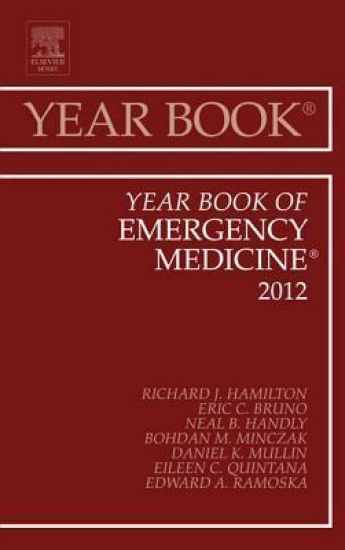
Year Book of Emergency Medicine 2012
The Year Book of Emergency Medicine brings you abstracts of the articles that reported the year's breakthrough developments in emergency medicine, carefully selected from more than 500 journals worldwide. Expert commentaries evaluate the clinical importance of each article and discuss its application to your practice. There's no faster or easier way to stay informed! Topics covered in the 2012 edition include Trauma, Resuscitation, Cardiovascular Emergencies, Gastrointestinal Emergencies, Infections and Immunologic Disorders, Neurology, and Pediatric Emergency Medicine. Focused, fast, and insightful information for the busy Emergency Room Physician!