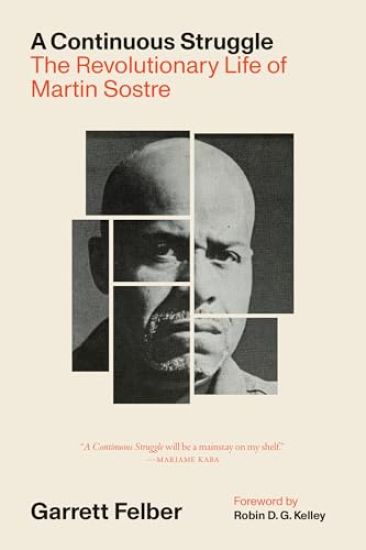
The first biography of the revolutionary political prisoner who laid the foundation for contemporary abolitionist struggles and Black anarchism.A Continuous Struggle is a political biography of one of the most important--if since forgotten--revolutionary figures of the twentieth century in the United States. Martin Sostre (1923-2015) was a Black Puerto Rican from East Harlem who became a politicized prisoner and jailhouse lawyer, winning cases in the early 1960s that helped secure the constitutional rights of incarcerated people. He opened one of the country's first radical Black bookstores and was scapegoated and framed by police and the FBI following the Buffalo rebellion of 1967. He was sentenced by an all-white jury to thirty-one to forty-one years.Throughout his nine-year imprisonment, Sostre transformed himself and the revolutionary movements he was a part of, eventually identifying as a revolutionary anarchist and laying the foundation for contemporary Black anarchism. During that time, he engaged in principled resistance to strip frisks for which he was beaten eleven times, raising awareness about the routinized sexual assault of imprisoned people. The decade-long Free Martin Sostre movement was one of the greatest and most improbable defense campaign victories of the Black Power era, alongside those to liberate Angela Davis and Huey Newton. Although Sostre receded from public view after his release in 1976, he lived another four decades of committed struggle as a tenant organizer and youth mentor in New York and New Jersey. Throughout his long life, Martin Sostre was a jailhouse lawyer, revolutionary bookseller, yogi, mentor and teacher, anti-rape organizer, housing justice activist, and original political thinker. The variety of strategies he used and terrains on which he struggled emphasize the necessity and possibility of multi-faceted and continuous struggle against all forms of oppression in pursuit of an egalitarian society founded on the principles of "maximum human freedom, spirituality, and love."
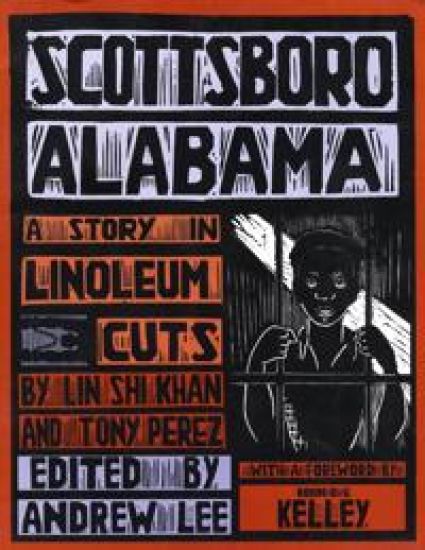
A unique graphic history of one of the most controversial legal decisions of all time—with 118 powerful linoleum prints In 1931, nine black youths were falsely accused of raping two white women on a freight train traveling through northern Alabama. They were arrested and tried in four days, convicted of rape, and eight of them were sentenced to death. The ensuing legal battle spanned six years and involved two landmark decisions by the Supreme Court. One of the most well known and controversial legal decisions of our time, the Scottsboro case ignited the collective emotions of the country, which was still struggling to come to terms with fundamental issues of racial equality. Scottsboro, Alabama, which consists of 118 exceptionally powerful linoleum prints, provides a unique graphic history of one of the most infamous, racially-charged episodes in the annals of the American judicial system, and of the racial and class struggle of the time. Originally printed in Seattle in 1935, this hitherto unknown document, of which no other known copies exist, is presented here for the first time. It includes a foreword by Robin D.G. Kelley and an introduction by Andrew H. Lee. Mr. Lee discovered the book as part of a gift to the Tamiment Library by the family of Joe North, an important figure in the Communist Party-USA, and an editor at the seminal left-wing journal, the New Masses. A true historical find and an excellent tool for teaching the case itself and the period which it so indelibly marked, this book allows us to see the Scottsboro case through a unique and highly provocative lens.
From poisoned water and police violence in our cities, to gun massacres and hate-mongering on the presidential campaign trail, evidence that America is at war with itself is everywhere around us. The question is not whether or not it's happening, but how to understand the forces at work in order to prevent conditions from getting worse. Henry A. Giroux offers a powerful, far-reaching critique of the economic interests, cultural dimensions, and political dynamics involved in the nation's shift toward increasingly abusive forms of power. His analysis helps us to frame critical questions about what can and should be done to turn things around while we can. Reflecting on a wide range of social issues, Giroux contrasts Donald Trump's America with Sandra Bland's to understand who really benefits from politically fueled intolerance for immigrants, communities of color, Muslims, low-income families, and those who challenge state and corporate power. A passionate advocate for civil rights and the importance of the imagination, Giroux argues that only through widespread social investment in democracy and education can the common good hope to prevail over the increasingly concentrated influence of extreme right-wing politicians and self-serving economic interests. Praise for America at War with Itself: "This is the book Americans need to read now. No one is better than Henry Giroux at analyzing the truly dangerous threats to our society. He punctures our delusions and offers us a compelling and enlightened vision of a better way. America at War with Itself is the best book of the year."--Bob Herbert, Distinguished Senior Fellow at Demos and former Op-Ed columnist for the New York Times "In this current era of corporate media misdirection and misinformation, America at War with Itself is a must read for all Americans, especially young people. Henry Giroux is one of the few great political voices of today, with powerful insight into the truth. Dr. Giroux is defiantly explaining, against the grain, what's REALLY going on right now, and doing so quite undeniably. Simply put, the ideas he brings forth are a beacon that need to be seen and heard and understood in order for the world to progress."--Julian Casablancas "In America at War with Itself, Henry Giroux again proves himself one of North America's most clear-sighted radical philosophers of education, culture and politics: radical because he discards the chaff of liberal critique and cuts to the root of the ills that are withering democracy. Giroux also connects the dots of reckless greed, corporate impunity, poverty, mass incarceration, racism and the co-opting of education to crush critical thinking and promote a culture that denigrates and even criminalizes civil society and the public good. His latest work is the antidote to an alarming tide of toxic authoritarianism that threatens to engulf America. The book could not be more timely."--Olivia Ward, Toronto Star "America at War with Itself makes the case for real ideological and structural change at a time when the need and stakes could not be greater. Everyone who cares about the survival and revival of democracy needs to read this book." --Kenneth Saltman, Professor, University of Massachusetts Dartmouth, Author of The Failure of Corporate School Reform Henry A. Giroux's most recent books include The Violence of Organized Forgetting and America's Addiction to Terrorism. A prolific writer and political commentator, he has appeared in a wide range of media, including the New York Times and Bill Moyers.
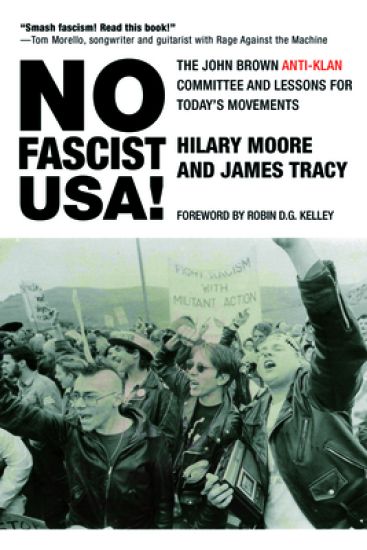
The story of how a national grassroots network fought a resurgence of the KKK and other fascist groups during the Reagan years, laying the groundwork for today’s anti-fascist/anti-racist movements."Smash fascism! Read this book!"—Tom Morello, songwriter and guitarist with Rage Against the Machine"Studying the John Brown Anti-Klan Committee will give readers an understanding of the complexity of deconstructing the weapon of white supremacy from the inside out. Thank you Hilary and James for the precision of this analysis, and the true north of this star."—adrienne maree brown, author of Pleasure Activism and Emergent StrategyIn June 1977, a group of white anti-racist activists received an alarming letter from an inmate at a New York state prison calling for help to fight the Ku Klux Klan's efforts to recruit prison staff and influence the people incarcerated. Their response was to form the first chapter of what would eventually become a powerful, nationwide grassroots network, the John Brown Anti-Klan Committee, dedicated to countering the rise of the KKK and other far-right white nationalist groups.No Fascist USA! tells the story of that network, whose efforts throughout the 1980s—which included exposing white supremacists in public office, confronting neo-Nazis in street protests, supporting movements for self-determination, and engagement with the underground punk scene—laid the groundwork for many anti-racist efforts to emerge since. Featuring original research, interviews with former members, and a trove of graphic materials, their story offers battle-tested lessons for those on the frontlines of social justice work today.Praise for No Fascist USA!:"Hilary Moore and James Tracy have written a magnificent book that not only corrects the record but helps explain the mercurial rise of white supremacist organizations in the 1970s, how the Klan was (temporarily) defeated, and why this period has been largely ignored. No Fascist USA! radically shifts our perspective, challenging the prevailing wisdom that racist terrorism rises in response to economic downturns, white downward mobility, or in a vacuum created by progressive alternatives. I love this book."—Robin D.G. Kelley, from the foreword"No Fascist USA! is not only timely, but also essential in the present period of accelerated white supremacist activity and anti-racist organizing to combat it. In telling the story of the John Brown Anti-Klan Committee, the authors, without romanticizing or condemning, draw important lessons from the fifteen-year history of the group."—Roxanne Dunbar-Ortiz, author of Loaded: A Disarming History of the Second Amendment“With its savvy blend of youth culture and street confrontation, the John Brown Anti-Klan Committee tried to stop Trumpism before Trump. They confronted the rise of white nationalism in prisons, workplaces, and music scenes when precious few paid attention to it . . . Hilary Moore and James Tracy have gifted us with an urgent read.”—Dan Berger, author of Captive Nation: Black Prison Organizing in the Civil Rights Era“James Tracy and Hilary Moore deliver a searing, bold new work that examines another painful and complicated chapter in American race relations. In an eye-opening account, They are able to connect the dots of the John Brown Anti-Klan Committee, a band of contemporary predominantly white activists, and its efforts to expose white supremacist organizations. With a fresh eye and new research, their book uncovers with stunning precision how these groups remain active and exposes some of their unlikely alliances.”—Laurens Grant, filmmaker, The Black Panthers: Vanguard of the Revolution and Freedom Riders“We learned from history. You can too!”—Terry Bisson, author of Fire on the Mountain and former member of the John Brown Anti-Klan Committee"This book is a must-read for anyone wanting to understand the roots of what happened in Charlottesville, and the burgeoning white nationalist membership lists in the U.S. today. We cannot possibly take on the challenges we face without learning from the past. This book is a necessary and long overdue contribution to inform the way forward."—Carla F. Wallace, co-founder, Showing Up for Racial Justice"I've waited thirty years for this book! Our emergency hearts have always driven uprisings to stop white terrorism, but it always takes more than black-bloc tactics in the streets to stop fascists. No Fascist USA! firmly connects today's militant anti-fascist street-fighting movements with important living radical histories to disrupt the cycles that keep the spectre of fascism alive in the modern era. The struggles faced by the John Brown Anti-Klan Committee continue today in our difficult arc towards collective liberation."—scott crow, author of Setting Sights: Histories and Reflections on Community Armed Self-Defense
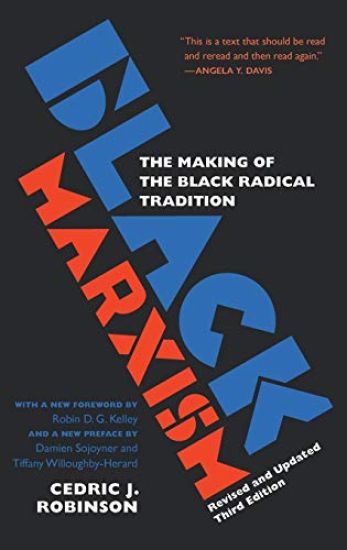
In this ambitious work, first published in 1983, Cedric Robinson demonstrates that efforts to understand Black people's history of resistance solely through the prism of Marxist theory are incomplete and inaccurate. Marxist analyses tend to presuppose European models of history and experience that downplay the significance of Black people and Black communities as agents of change and resistance. Black radicalism, Robinson argues, must be linked to the traditions of Africa and the unique experiences of Blacks on western continents, and any analyses of African American history need to acknowledge this. To illustrate his argument, Robinson traces the emergence of Marxist ideology in Europe, the resistance by Blacks in historically oppressive environments, and the influence of both of these traditions on such important twentieth-century Black radical thinkers as W. E. B. Du Bois, C. L. R. James, and Richard Wright. This revised and updated third edition includes a new preface by Tiffany Willoughby-Herard, and a new foreword by Robin D. G. Kelley.Not for Sale in the UK or Commonwealth
In this ambitious work, first published in 1983, Cedric Robinson demonstrates that efforts to understand Black people's history of resistance solely through the prism of Marxist theory are incomplete and inaccurate. Marxist analyses tend to presuppose European models of history and experience that downplay the significance of Black people and Black communities as agents of change and resistance. Black radicalism, Robinson argues, must be linked to the traditions of Africa and the unique experiences of Blacks on western continents, and any analyses of African American history need to acknowledge this. To illustrate his argument, Robinson traces the emergence of Marxist ideology in Europe, the resistance by Blacks in historically oppressive environments, and the influence of both of these traditions on such important twentieth-century Black radical thinkers as W. E. B. Du Bois, C. L. R. James, and Richard Wright. This revised and updated third edition includes a new preface by Tiffany Willoughby-Herard, and a new foreword by Robin D. G. Kelley.Not for Sale in the UK or Commonwealth
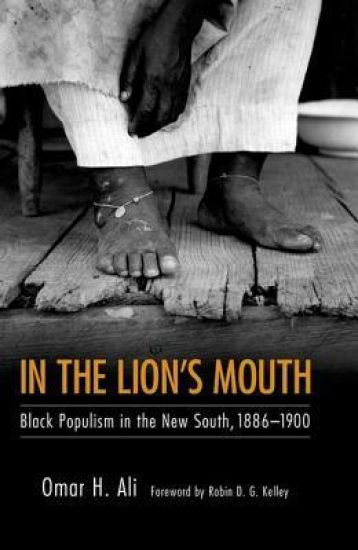
Following the collapse of Reconstruction in 1877, African Americans organized a movement--distinct from the white Populist movement--in the South and parts of the Midwest for economic and political reform: Black Populism. Between 1886 and 1898, tens of thousands of black farmers, sharecroppers, and agrarian workers created their own organizations and tactics primarily under black leadership.As Black Populism grew as a regional force, it met fierce resistance from the Southern Democrats and constituent white planters and local merchants. African Americans carried out a wide range of activities in this hostile environment. They established farming exchanges and cooperatives; raised money for schools; published newspapers; lobbied for better agrarian legislation; mounted boycotts against agricultural trusts and business monopolies; carried out strikes for better wages; protested the convict lease system, segregated coach boxes, and lynching; demanded black jurors in cases involving black defendants; promoted local political reforms and federal supervision of elections; and ran independent and fusion campaigns.Growing out of the networks established by black churches and fraternal organizations, Black Populism found further expression in the Colored Agricultural Wheels, the southern branch of the Knights of Labor, the Cooperative Workers of America, the Farmers Union, and the Colored Farmers Alliance. In the early 1890s African Americans, together with their white counterparts, launched the People's Party and ran fusion campaigns with the Republican Party. By the turn of the century, Black Populism had been crushed by relentless attack, hostile propaganda, and targeted assassinations of leaders and foot soldiers of the movement. The movement's legacy remains, though, as the largest independent black political movement until the rise of the modern civil rights movement.
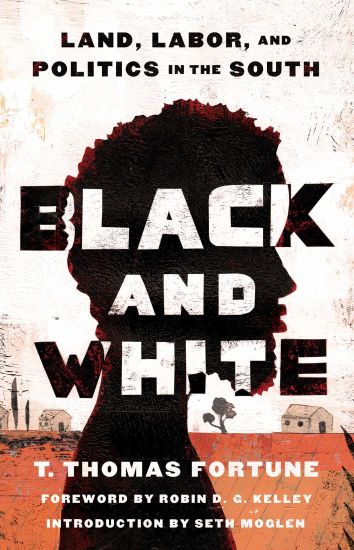
Featuring a new foreword by Robin D. G. Kelley, this updated edition of the classic exploration of the economic inequality that fuels systematic racism, from one of the leading Black public intellectuals of the 19th century, is as timely and radical today as it was when it was first published.“The preeminent Black journalist of his age” (Henry Louis Gates, Jr., author of The Black Church) and an early agitator for civil rights, T. Thomas Fortune astutely and compellingly analyzes the relationship between capitalism and racism in the United States. He reveals that the country’s racial hierarchy has been part of our national fabric since the first European set foot here and is rooted in a much larger system of economic exploitation. He argues that in order for the United States to realize its founding ideals and end racial discrimination, this system must be dismantled, reparations made, and labor fairly remunerated. Fortune’s passionate analysis and radical vision of the United States will force you to rethink what America could have been if his arguments had been heeded in the 1880s and what must be done for us to move forward as a unified nation.
The most comprehensive research-based text on family violence – now more accessible and visually inviting than ever before Streamlined and updated throughout with state-of-the-art information, this Third Edition of the authors' bestselling book gives readers an accessible introduction to the methodology, etiology, prevalence, treatment, and prevention of family violence. Research from experts in the fields of psychology, sociology, criminology, and social welfare informs the book's broad coverage of current viewpoints and debates within the field. Organized chronologically, chapters cover child physical, sexual, and emotional abuse; abused and abusive adolescents; courtship violence and date rape; spouse abuse, battered women, and batterers; and elder abuse.
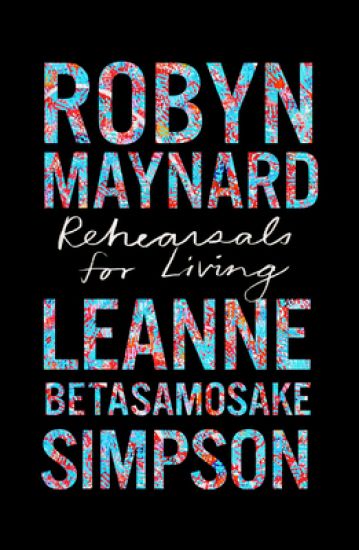
Amid the overlapping crises of a pandemic, ecological disaster, and global capitalism, two leading Black and Indigenous feminist theorists ask one another: what do liberated lands, minds, and bodies look like? These letters are part debate, part dialogue, and part lively and detailed familial correspondence between two razor-sharp thinkers, sending notes to each other during a stormy present. Featuring a foreword by Ruth Wilson Gilmore and an afterword by Robin D.G. Kelley.
Amid the overlapping crises of a pandemic, ecological disaster, and global capitalism, two leading Black and Indigenous feminist theorists ask one another: what do liberated lands, minds, and bodies look like? These letters are part debate, part dialogue, and part lively and detailed familial correspondence between two razor-sharp thinkers, sending notes to each other during a stormy present. Featuring a foreword by Ruth Wilson Gilmore and an afterword by Robin D.G. Kelley.
This new gamemaster’s guide is great for TTRPG writers, but it’s also great for aspiring fiction writers as well. There’s so many essays from famous designers in the TTRPG space that can help level up your games! A sequel to one of our all-time best sellers! Level up your adventure writing skills with advice from famous designers. Includes essays by Ed Greenwood, Luke Gygax, Mike Mearls, Steve Jackson, Robin D. Laws, Kenneth Hite, Kelsey Dionne, Harley Stroh, Jean Rabe, Matt Forbeck, Phil Reed, Steven Winter, Michael Curtis, Chris Doyle, Brendan LaSalle, Sean K. Reynolds, Jerry Grayson, and others.
Samuel Delany; Tananarive Due; Catherine Taylor; Jane Miller; Emilia Nielsen; Ru Puro; Sarah Vap; Rachel Levitsky; Tess Liem; Walter Johnson; Tef Poe; Robin D. G. Kelley; Vijay Iyer; Micki McEyla; Abdullah Taïa; Mattilda Bernstein Sycamore; Mark Nowak; Roderick Ferguson
As initially planned in 1939 by Owen J. Gromme, then curator of birds at the Milwaukee Public Museum, "Wisconsin Birdlife" would not only describe and document every species of bird known to have visited this state, but would also depict each species with his own original paintings. During the next two decades, Gromme concentrated primarily on the latter, resulting in the separate publication in 1963 of his now classic "Birds of Wisconsin." Work on the present volume was assumed in the late 1960s by Samuel D. Robbins, whose labors of more than 20 years give us a veritable encyclopedia of the state's ornithological knowledge. A complement and supplement to field guides, picture books, and recordings, the book is designed to enlarge the reader's understanding and appreciation of statewide history, abundance, and habitat preference of every species reliably recorded in Wisconsin. The volume opens with a summary of the ornithological history of the state and an exposition of its ecological setting. The heart of "Wisconsin Birdlife" ensues: detailed accounts of nearly 400 species, with information on status (population and distribution), habitat, migration dates, breeding data, and wintering presence, followed by extensive discussion and commentary. Dr. James Hall Zimmerman, Senior Lecturer in Landscape Architecture at the University of Wisconsin-Madison, provides a special discussion of bird habitats for the book. In addition, "Wisconsin Birdlife" features a comprehensive status and seasonal distribution chart, a detailed habitat preference chart, and an exhaustive bibliography. The ultimate resource, "Wisconsin Birdlife" belongs within easy reach of everyone from armchair appreciators and casual birdwatchers to ardent birders and professional ornithologists."