Kirjojen hintavertailu. Mukana 11 699 587 kirjaa ja 12 kauppaa.

Kirjahaku

Etsi kirjoja tekijän nimen, kirjan nimen tai ISBN:n perusteella.

1000 tulosta hakusanalla Robert Atkinson

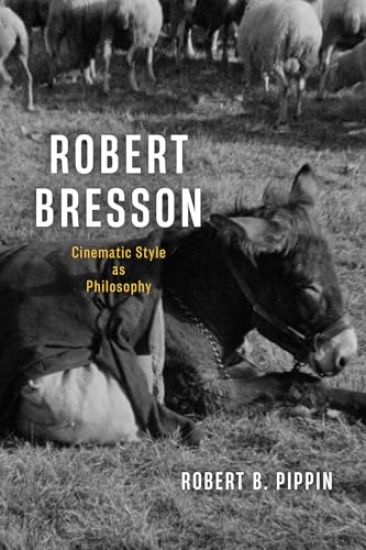
Robert Bresson

Robert Bresson

Robert B. Pippin

THE UNIVERSITY OF CHICAGO PRESS
2026
nidottu
A philosophical engagement with Bresson’s many films, attentive to more than their religiosity. Over a forty-year career, Robert Bresson developed one of the most distinctive cinematic styles in the history of filmmaking. Criticizing conventional movies as “filmed theater,” Bresson proposed instead a way of writing with images, which he called “cinematographs.” Robert B. Pippin argues here for a way of understanding how these stylistic innovations express a range of philosophical commitments, explorations of the possible sources of meaning in late modern life, and the implications of the absence of such sources.
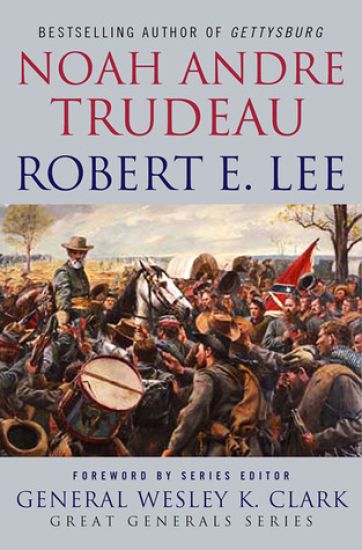
Robert E. Lee

Robert E. Lee

Noah Andre Trudeau

Palgrave Macmillan
2010
nidottu
General Robert E. Lee was a complicated man and military figure. In Robert E. Lee, the 11th book in the critically acclaimed Great Generals Series, Noah Andre Trudeau follows the general's Civil War path with a special emphasis on Lee's changing set of personal values as the conflict wended through four bloody years and by exploring his famous skills as a crafty and daring tactician. Trudeau adds a fresh perspective toward understanding a major figure in American history who remains decidedly an enigma.
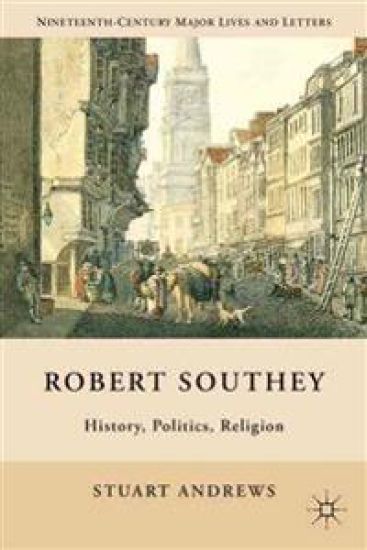
Robert Southey

Robert Southey

S. Andrews

Palgrave Macmillan
2011
sidottu
In Robert Southey , Andrews argues that Robert Southey's denunciation of global Catholicism is essential to understanding his life, works, and times. On this issue, Southey was absolutely consistent in all his work and the Poet Laureate's partisan rhetoric reveals much about the religious culture of this stormy period in England.
Robert Louis Stevenson, Science, and the Fin de Siècle
In this fascinating book, Reid examines Robert Louis Stevenson's writings in the context of late-Victorian evolutionist thought, arguing that an interest in 'primitive' life is at the heart of his work. She investigates a wide range of Stevenson's writing, including Dr Jekyll and Mr Hyde and Treasure Island as well as previously unpublished material from the Stevenson archive at Yale. Reid's interpretation offers a new way of understanding the relationship between his Scottish and South Seas work. Her analysis of Stevenson's engagement with anthropological and psychological debate also illuminates the dynamic intersections between literature and science at the fin de siècle.
Robert Cormier

Robert Cormier

Red Globe Press
2012
sidottu
This compelling New Casebook is the first essay collection devoted to the work of groundbreaking American author Robert Cormier. Written by a team of international children's literature experts, the volume offers a variety of critical and theoretical approaches to the range of Cormier's controversial young adult novels.The newly-commissioned essays explore the author's earlier best-known writings for teenagers as well as his later less critically examined texts, focussing on key issues such as adolescence, identity, bullying and child corruption. Recognizing Cormier's achievement, this long-overdue critical resource is essential reading for anyone with an interest in his influential work and lasting impact on young adult fiction.
Robert Cormier

Robert Cormier

Red Globe Press
2012
nidottu
This compelling New Casebook is the first essay collection devoted to the work of groundbreaking American author Robert Cormier. Written by a team of international children's literature experts, the volume offers a variety of critical and theoretical approaches to the range of Cormier's controversial young adult novels.The newly-commissioned essays explore the author's earlier best-known writings for teenagers as well as his later less critically examined texts, focussing on key issues such as adolescence, identity, bullying and child corruption. Recognizing Cormier's achievement, this long-overdue critical resource is essential reading for anyone with an interest in his influential work and lasting impact on young adult fiction.
Robert E. Lee

Robert E. Lee

Noah Andre Trudeau

Palgrave Macmillan
2009
sidottu
General Robert E. Lee was a complicated man and military figure. In Lee, the 11th book in the critically acclaimed Great Generals Series, Noah Andre Trudeau follows the general's Civil War path with a special emphasis on Lee's changing set of personal values as the conflict wended through four bloody years and by exploring his famous skills as a crafty and daring tactician. Trudeau adds a fresh perspective toward understanding a major figure in American history who remains decidedly an enigma.
Robert Smithson Unearthed

Robert Smithson Unearthed

Eugenie Tsai

Columbia University Press
1992
pokkari
Best known for his sculpture and earthworks, Robert Smithson was a revolutionary and influential post-World War II artist. This volume surveys his works on paper from 1957 until his death in 1973, presenting a large number of reproductions of little-known works from his early career.
Robert K. Merton

Robert K. Merton

Columbia University Press
2010
sidottu
Robert K. Merton (1910-2003) was one of the most influential sociologists of the twentieth century, producing clear theories and innovative research that continue to shape multiple disciplines. Merton's reach can be felt in the study of social structure, social psychology, deviance, professions, organizations, culture, and science. Yet for all his fame, Merton is only partially understood. He is treated by scholars as a functional analyst, when in truth his contributions transcend paradigm. Gathering together twelve major sociologists, Craig Calhoun launches a thorough reconsideration of Merton's achievements and inspires a renewed engagement with sociological theory. Merton's work addressed the challenges of integrating research and theory. It connected different fields of empirical research and spoke to the importance of overcoming divisions between allegedly pure and applied sociology. Merton also sought to integrate sociology with the institutional analysis of science, each informing the other. By bringing together different aspects of his work in one volume, Calhoun illuminates the interdisciplinary--and unifying--dimensions of Merton's approach, while also advancing the intellectual agenda of an increasingly vital area of study. Contributors: Aaron L. Panofsky, University of California; Alan Sica, Pennsylvania State University; Alejandro Portes, Princeton University; Charles Camic, Northwestern University; Charles Tilly, Columbia University; Craig Calhoun, Social Science Research Council and New York University; Cynthia Fuchs Epstein, City University of New York; Harriet Zuckerman, Mellon Foundation; Peter Simonson, University of Colorado; Ragnvald Kalleberg, University of Oslo; Robert J. Sampson, Harvard University; Thomas F. Gieryn, Indiana University; Viviana A. Zelizer, Princeton University
Robert K. Merton

Robert K. Merton

Columbia University Press
2017
pokkari
Robert K. Merton (1910-2003) was one of the most influential sociologists of the twentieth century, producing clear theories and innovative research that continue to shape multiple disciplines. Merton's reach can be felt in the study of social structure, social psychology, deviance, professions, organizations, culture, and science. Yet for all his fame, Merton is only partially understood. He is treated by scholars as a functional analyst, when in truth his contributions transcend paradigm. Gathering together twelve major sociologists, Craig Calhoun launches a thorough reconsideration of Merton's achievements and inspires a renewed engagement with sociological theory. Merton's work addressed the challenges of integrating research and theory. It connected different fields of empirical research and spoke to the importance of overcoming divisions between allegedly pure and applied sociology. Merton also sought to integrate sociology with the institutional analysis of science, each informing the other. By bringing together different aspects of his work in one volume, Calhoun illuminates the interdisciplinary--and unifying--dimensions of Merton's approach, while also advancing the intellectual agenda of an increasingly vital area of study. Contributors: Aaron L. Panofsky, University of California; Alan Sica, Pennsylvania State University; Alejandro Portes, Princeton University; Charles Camic, Northwestern University; Charles Tilly, Columbia University; Craig Calhoun, Social Science Research Council and New York University; Cynthia Fuchs Epstein, City University of New York; Harriet Zuckerman, Mellon Foundation; Peter Simonson, University of Colorado; Ragnvald Kalleberg, University of Oslo; Robert J. Sampson, Harvard University; Thomas F. Gieryn, Indiana University; Viviana A. Zelizer, Princeton University
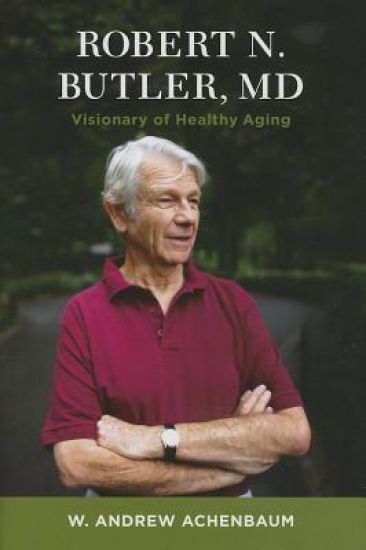
Robert N. Butler, MD

Robert N. Butler, MD

W. Andrew Achenbaum

Columbia University Press
2013
sidottu
Robert Neil Butler (1927-2010) was a scholar, psychiatrist, and Pulitzer Prize-winning author who revolutionized the way the world thinks about aging and the elderly. One of the first psychiatrists to engage with older men and women outside of institutional settings, Butler coined the term "ageism" to draw attention to discrimination against older adults and spent a lifetime working to improve their status, medical treatment, and care. Early in his career, Butler seized on the positive features of late-life development-aspects he documented in his pathbreaking research on "healthy aging" at the National Institutes of Health and in private practice. He set the nation's age-based health care agenda and research priorities as founding director of the National Institute on Aging and by creating the first interprofessional, interdisciplinary department of geriatrics at New York City's Mount Sinai Hospital. In the final two decades of his career, Butler created a global alliance of scientists, educators, practitioners, politicians, journalists, and advocates through the International Longevity Center. A scholar who knew Butler personally and professionally, W. Andrew Achenbaum follows this pioneer's significant contributions to the concept of healthy aging and the notion that aging is not synonymous with physical and mental decline. Emphasizing the progressive aspects of Butler's approach and insight, Achenbaum affirms the ongoing relevance of his work to gerontology, geriatrics, medicine, social work, and related fields.
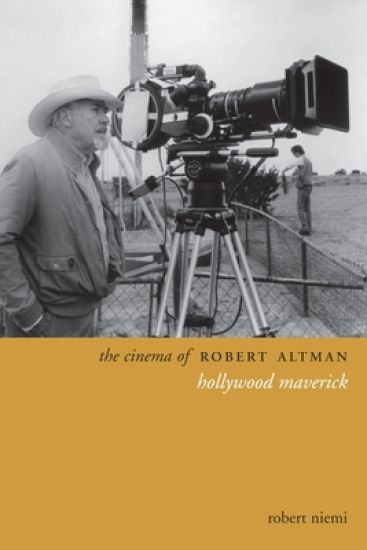
The Cinema of Robert Altman

The Cinema of Robert Altman

Robert Niemi

Wallflower Press
2016
sidottu
In a controversial and tumultuous filmmaking career that spanned nearly fifty years, Robert Altman mocked, subverted, or otherwise refashioned Hollywood narrative and genre conventions. Altman's idiosyncratic vision and propensity for formal experimentation resulted in an uneven body of work: some rank failures and intriguing near-misses, as well as a number of great films that are among the most influential works of New American Cinema. While Altman always professed to have nothing authoritative to say about the state of contemporary society, this volume surveys all of his major films in their sociohistorical context to reposition the director as a trenchant satirist and social critic of postmodern America, depicted as a lonely wasteland of fraudulent spectacle, exploitative social relations, and unfulfilled solitaries in search of elusive community.
The Cinema of Robert Altman

The Cinema of Robert Altman

Robert Niemi

Wallflower Press
2016
pokkari
In a controversial and tumultuous filmmaking career that spanned nearly fifty years, Robert Altman mocked, subverted, or otherwise refashioned Hollywood narrative and genre conventions. Altman's idiosyncratic vision and propensity for formal experimentation resulted in an uneven body of work: some rank failures and intriguing near-misses, as well as a number of great films that are among the most influential works of New American Cinema. While Altman always professed to have nothing authoritative to say about the state of contemporary society, this volume surveys all of his major films in their sociohistorical context to reposition the director as a trenchant satirist and social critic of postmodern America, depicted as a lonely wasteland of fraudulent spectacle, exploitative social relations, and unfulfilled solitaries in search of elusive community.
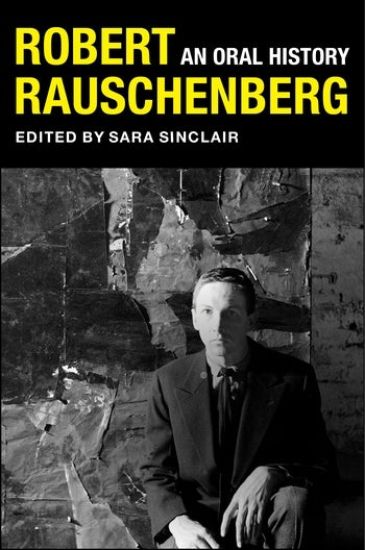
Robert Rauschenberg

Robert Rauschenberg

Columbia University Press
2019
sidottu
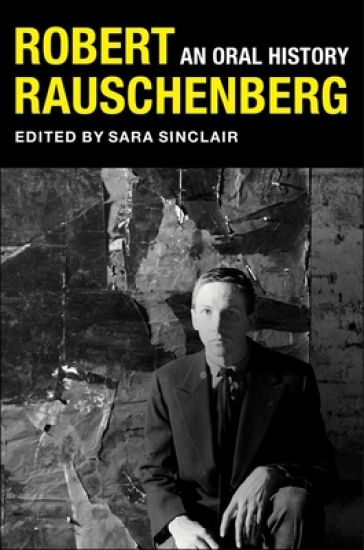
Robert Rauschenberg (1925–2008) was a breaker of boundaries and a consummate collaborator. He used silk-screen prints to reflect on American promise and failure, melded sculpture and painting in works called combines, and collaborated with engineers and scientists to challenge our thinking about art. Through collaborations with John Cage, Merce Cunningham, and others, Rauschenberg bridged the music, dance, and visual-art worlds, inventing a new art for the last half of the twentieth century.Robert Rauschenberg is a work of collaborative oral biography that tells the story of one of the twentieth century’s great artists through a series of interviews with key figures in his life—family, friends, former lovers, professional associates, studio assistants, and collaborators. The oral historian Sara Sinclair artfully puts the narrators’ reminiscences in conversation, with a focus on the relationship between Rauschenberg’s intense social life and his art. The book opens with a prologue by Rauschenberg’s sister and then shifts to New York City’s 1950s and ’60s art scene, populated by the luminaries of abstract expressionism. It follows Rauschenberg’s eventual move to Florida’s Captiva Island and his trips across the globe, illuminating his inner life and its effect on his and others’ art.The narrators share their views on Rauschenberg’s work, explore the curatorial thinking behind exhibitions of his art, and reflect on the impact of the influx of money into the contemporary art market. Included are artists famous in their own right, such as Laurie Anderson and Brice Marden, as well as art-world insiders and lesser-known figures who were part of Rauschenberg’s inner circle. Beyond considering Rauschenberg as an artist, this book reveals him as a man embedded in a series of art worlds over the course of a long and rich life, demonstrating the complex interaction of business and personal, public and private in the creation of great art.
Robert Rauschenberg

Robert Rauschenberg

Columbia University Press
2021
pokkari
Robert Rauschenberg (1925–2008) was a breaker of boundaries and a consummate collaborator. He used silk-screen prints to reflect on American promise and failure, melded sculpture and painting in works called combines, and collaborated with engineers and scientists to challenge our thinking about art. Through collaborations with John Cage, Merce Cunningham, and others, Rauschenberg bridged the music, dance, and visual-art worlds, inventing a new art for the last half of the twentieth century.Robert Rauschenberg is a work of collaborative oral biography that tells the story of one of the twentieth century’s great artists through a series of interviews with key figures in his life—family, friends, former lovers, professional associates, studio assistants, and collaborators. The oral historian Sara Sinclair artfully puts the narrators’ reminiscences in conversation, with a focus on the relationship between Rauschenberg’s intense social life and his art. The book opens with a prologue by Rauschenberg’s sister and then shifts to New York City’s 1950s and ’60s art scene, populated by the luminaries of abstract expressionism. It follows Rauschenberg’s eventual move to Florida’s Captiva Island and his trips across the globe, illuminating his inner life and its effect on his and others’ art.The narrators share their views on Rauschenberg’s work, explore the curatorial thinking behind exhibitions of his art, and reflect on the impact of the influx of money into the contemporary art market. Included are artists famous in their own right, such as Laurie Anderson and Brice Marden, as well as art-world insiders and lesser-known figures who were part of Rauschenberg’s inner circle. Beyond considering Rauschenberg as an artist, this book reveals him as a man embedded in a series of art worlds over the course of a long and rich life, demonstrating the complex interaction of business and personal, public and private in the creation of great art.