Kirjojen hintavertailu. Mukana 11 244 527 kirjaa ja 12 kauppaa.

Kirjahaku

Etsi kirjoja tekijän nimen, kirjan nimen tai ISBN:n perusteella.

1000 tulosta hakusanalla Robert Cornforth

The Letters of Robert Louis Stevenson

The Letters of Robert Louis Stevenson

Robert Louis Stevenson

Yale University Press
1994
sidottu
Robert Louis Stevenson, long recognized as a master storyteller and essayist, was also one of the finest and most delightful of letter writers. Yale University Press is now publishing the definitive edition of Stevenson's collected letters in eight handsomely produced volumes. The edition will contain nearly 2,800 letters, only 1,100 of which have been published before.Volumes III and IV cover the period from August 1879 to June 1884. The six hundred letters tell for the first time the full story of Stevenson's reckless journey to California as an "amateur emigrant," during which he gained a wife but wrecked his health. They describe his return to Europe and his futile search to improve his health in Scotland, Switzerland, and France and reveal interesting aspects of the writing of Treasure Island, Virginibus Puerisque (his first volume of collected essays), and many poems later collected in Underwoods and in A Child's Garden of Verses. Volumes V and VI cover the period from July 1884 to September 1890 and comprise over nine hundred letters. During this time, Stevenson lived as a chronic invalid for three years in Bournemouth, England; searched for improved health in the United States and the South Seas; and achieved fame and success with the Strange Case of Dr. Jekyll and Mr. Hyde, Kidnapped, and A Child's Garden of Verses. The letters convey Stevenson's courage and gaiety in the face of illness and his affection for his family and friends. They also reveal the devoted care given him by his wife, Fanny Stevenson.Ernest Mehew's detailed annotation provides all the background necessary to fully enjoy Stevenson's letters.
The Letters of Robert Louis Stevenson

The Letters of Robert Louis Stevenson

Robert Louis Stevenson

Yale University Press
1994
sidottu
Robert Louis Stevenson, long recognized as a master storyteller and essayist, was also one of the finest and most delightful of letter writers. Yale University Press is now publishing the definitive edition of Stevenson's collected letters in eight handsomely produced volumes. The edition will contain nearly 2,800 letters, only 1,100 of which have been published before.Volumes III and IV cover the period from August 1879 to June 1884. The six hundred letters tell for the first time the full story of Stevenson's reckless journey to California as an "amateur emigrant," during which he gained a wife but wrecked his health. They describe his return to Europe and his futile search to improve his health in Scotland, Switzerland, and France and reveal interesting aspects of the writing of Treasure Island, Virginibus Puerisque (his first volume of collected essays), and many poems later collected in Underwoods and in A Child's Garden of Verses. Volumes V and VI cover the period from July 1884 to September 1890 and comprise over nine hundred letters. During this time, Stevenson lived as a chronic invalid for three years in Bournemouth, England; searched for improved health in the United States and the South Seas; and achieved fame and success with the Strange Case of Dr. Jekyll and Mr. Hyde, Kidnapped, and A Child's Garden of Verses. The letters convey Stevenson's courage and gaiety in the face of illness and his affection for his family and friends. They also reveal the devoted care given him by his wife, Fanny Stevenson.Ernest Mehew's detailed annotation provides all the background necessary to fully enjoy Stevenson's letters.
The Letters of Robert Louis Stevenson

The Letters of Robert Louis Stevenson

Robert Louis Stevenson

Yale University Press
1995
sidottu
Robert Louis Stevenson, long recognized as a master storyteller and essayist, was also one of the finest and most delightful of letter writers. Yale University Press is now publishing the definitive edition of Stevenson's collected letters in eight handsomely produced volumes. The edition will contain nearly 2,800 letters, only 1,100 of which have been published before.Volumes III and IV cover the period from August 1879 to June 1884. The six hundred letters tell for the first time the full story of Stevenson's reckless journey to California as an "amateur emigrant," during which he gained a wife but wrecked his health. They describe his return to Europe and his futile search to improve his health in Scotland, Switzerland, and France and reveal interesting aspects of the writing of Treasure Island, Virginibus Puerisque (his first volume of collected essays), and many poems later collected in Underwoods and in A Child's Garden of Verses. Volumes V and VI cover the period from July 1884 to September 1890 and comprise over nine hundred letters. During this time, Stevenson lived as a chronic invalid for three years in Bournemouth, England; searched for improved health in the United States and the South Seas; and achieved fame and success with the Strange Case of Dr. Jekyll and Mr. Hyde, Kidnapped, and A Child's Garden of Verses. The letters convey Stevenson's courage and gaiety in the face of illness and his affection for his family and friends. They also reveal the devoted care given him by his wife, Fanny Stevenson.Ernest Mehew's detailed annotation provides all the background necessary to fully enjoy Stevenson's letters.
The Letters of Robert Louis Stevenson

The Letters of Robert Louis Stevenson

Robert Louis Stevenson

Yale University Press
1995
sidottu
Robert Louis Stevenson, long recognized as a master storyteller and essayist, was also one of the finest and most delightful of letter writers. Yale University Press is now publishing the definitive edition of Stevenson's collected letters in eight handsomely produced volumes. The edition will contain nearly 2,800 letters, only 1,100 of which have been published before.Volumes III and IV cover the period from August 1879 to June 1884. The six hundred letters tell for the first time the full story of Stevenson's reckless journey to California as an "amateur emigrant," during which he gained a wife but wrecked his health. They describe his return to Europe and his futile search to improve his health in Scotland, Switzerland, and France and reveal interesting aspects of the writing of Treasure Island, Virginibus Puerisque (his first volume of collected essays), and many poems later collected in Underwoods and in A Child's Garden of Verses. Volumes V and VI cover the period from July 1884 to September 1890 and comprise over nine hundred letters. During this time, Stevenson lived as a chronic invalid for three years in Bournemouth, England; searched for improved health in the United States and the South Seas; and achieved fame and success with the Strange Case of Dr. Jekyll and Mr. Hyde, Kidnapped, and A Child's Garden of Verses. The letters convey Stevenson's courage and gaiety in the face of illness and his affection for his family and friends. They also reveal the devoted care given him by his wife, Fanny Stevenson.Ernest Mehew's detailed annotation provides all the background necessary to fully enjoy Stevenson's letters.
The Letters of Robert Louis Stevenson

The Letters of Robert Louis Stevenson

Robert Louis Stevenson

Yale University Press
1995
sidottu
The publication of Volumes VII and VIII completes this major edition of the letters of Robert Louis Stevenson, an edition comprising 2,800 letters, almost two-thirds of which have never been in print before.These volumes contain some 560 letters that provide a vivid picture of the last four years of Stevenson's life, from 1890 to 1894. Stevenson spent these years in Samoa, where he had gone to improve his health. We learn a great deal about Stevenson's exile in Samoa: the early pioneering days during the establishment of the Vailima Plantation; his life as the head of a large household composed of his wife, Fanny, her two children, his mother, native house servants, and estate workers; his hospitality to native Samoan chiefs and to many white visitors; his passionate involvement in local politics; and his literary work--including David Balfour, the sequel to Kidnapped, and Weir of Hermiston, a masterpiece that he died before completing.Ernest Mehew's detailed annotation elucidates the complications of the Samoan background and provides all the information necessary to enjoy Stevenson's letters to the full.
The Letters of Robert Louis Stevenson

The Letters of Robert Louis Stevenson

Robert Louis Stevenson

Yale University Press
1995
sidottu
The publication of Volumes VII and VIII completes this major edition of the letters of Robert Louis Stevenson, an edition comprising 2,800 letters, almost two-thirds of which have never been in print before.These volumes contain some 560 letters that provide a vivid picture of the last four years of Stevenson's life, from 1890 to 1894. Stevenson spent these years in Samoa, where he had gone to improve his health. We learn a great deal about Stevenson's exile in Samoa: the early pioneering days during the establishment of the Vailima Plantation; his life as the head of a large household composed of his wife, Fanny, her two children, his mother, native house servants, and estate workers; his hospitality to native Samoan chiefs and to many white visitors; his passionate involvement in local politics; and his literary work--including David Balfour, the sequel to Kidnapped, and Weir of Hermiston, a masterpiece that he died before completing.Ernest Mehew's detailed annotation elucidates the complications of the Samoan background and provides all the information necessary to enjoy Stevenson's letters to the full.
Selected Letters of Robert Louis Stevenson

Selected Letters of Robert Louis Stevenson

Robert Louis Stevenson

Yale University Press
2001
pokkari
Millions of readers throughout the world continue to enjoy Treasure Island, Dr. Jekyll and Mr. Hyde, A Child’s Garden of Verses, and other books by Robert Louis Stevenson (1850-1894). A celebrated author in many different fields of literature, Stevenson is also recognized as a highly engaging and prolific correspondent: he penned over 2,800 letters, which are contained in eight critically acclaimed volumes published by Yale University Press. In this book, 317 of Stevenson’s most interesting and revealing letters represent each stage of his mature life. With a linking narrative and full annotation, Ernest Mehew sets the letters in the context of Stevenson’s remarkable life.Beginning with the days of his troubled youth in Edinburgh, Stevenson’s letters go on to tell of his love for Frances Sitwell, a beautiful, older married woman; a reckless journey to California in pursuit of Fanny Osbourne, the woman who became his wife; their worldwide but vain search for a healthy place to live; and a period of adventure in the South Seas, where Stevenson wrote some of his best work and became passionately involved in Samoan life. The letters show the author’s zest for living despite daunting illnesses, his struggles with his own writing, his literary tastes, and his affection for his friends. Stevenson writes in many moods, ranging from playful and witty to deeply serious. Better than any biography ever could, these letters in Stevenson’s own words tell the real story of his life.
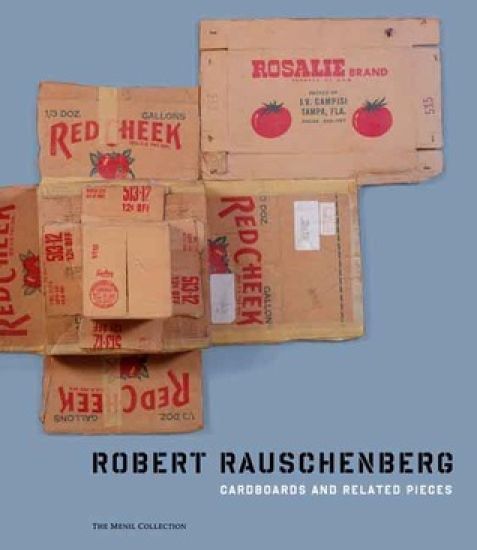
Robert Rauschenberg

Robert Rauschenberg

Yve-Alain Bois

Yale University Press
2007
sidottu
The first comprehensive look at Rauschenberg’s Cardboard series, a previously unexplored realm of the artist’s oeuvre Robert Rauschenberg (b. 1925) began to investigate the boundaries between painting and sculpture in the 1950s, working with a variety of found objects in his Combine paintings and freestanding Combines. Later, in his Cardboard series (1971–72), he confined himself to the use of cardboard boxes, eliminating virtually all imagery, reducing the palette to a near monochrome, and commenting in subtle ways on the materialism and disposability of modern life. This book is the first to focus exclusively on Rauschenberg’s rarely seen Cardboards, along with related works from his Made in Tampa Clay, Cardbirds, Egyptian, and Venetian series. Approximately eighty-eight Cardboards and related sculptural pieces, many from the artist’s personal collection, are reproduced in the book. Full provenance and exhibition history are provided for each work, along with a complete bibliography. In addition, distinguished scholar Yve-Alain Bois offers an insightful essay that discusses the Cardboards and situates these lesser-known but critical pieces within the context of Rauschenberg’s long and creative career.Distributed for The Menil CollectionExhibition Schedule:The Menil Collection, Houston (February 23 – May 13, 2007)
Robert Indiana and the Star of Hope
Perhaps best known for his iconic paintings and sculptures of LOVE, also featured on a U.S. postage stamp, and HOPE, created in support of Barack Obama’s 2008 presidential campaign, Robert Indiana (b. 1928) has been living and working in Maine since 1978. The Star of Hope, his year-round home and studio on the island of Vinalhaven, is a former late 19th-century Odd Fellows lodge listed on the National Register of Historic Places. Robert Indiana and the Star of Hope is both a retrospective of the artist’s work based on his own holdings, and an unprecedented study of his living and working space. His studio is a home, museum, archive, and gallery, all set within the historic interiors of the former Odd Fellows lodge. This book offers a unique examination of how Indiana’s work has unfolded since his move to Vinalhaven and includes works from his student days to storied sculptures such as EAT, prematurely removed from the 1964 New York World’s Fair and not exhibited since.Distributed for the Farnsworth Art MuseumExhibition Schedule:Farnsworth Art Museum, Rockland, Maine (6/20/09 – 10/25/09)
Robert Schumann

Robert Schumann

John Worthen

Yale University Press
2010
pokkari
Shattering longstanding myths, this new biography reveals the robust and positive life of one of the nineteenth century's greatest composers This candid, intimate, and compellingly written new biography offers a fresh account of Robert Schumann’s life. It confronts the traditional perception of the doom-laden Romantic, forced by depression into a life of helpless, poignant sadness. John Worthen’s scrupulous attention to the original sources reveals Schumann to have been an astute, witty, articulate, and immensely determined individual, who—with little support from his family and friends in provincial Saxony—painstakingly taught himself his craft as a musician, overcame problem after problem in his professional life, and married the woman he loved after a tremendous battle with her father. Schumann was neither manic depressive nor schizophrenic, although he struggled with mental illness. He worked prodigiously hard to develop his range of musical styles and to earn his living, only to be struck down, at the age of forty-four, by a vile and incurable disease.Worthen’s biography effectively de-mystifies a figure frequently regarded as a Romantic enigma. It frees Schumann from 150 years of mythmaking and unjustified psychological speculation. It reveals him, for the first time, as a brilliant, passionate, resolute musician and a thoroughly creative human being, the composer of arguably the best music of his generation.
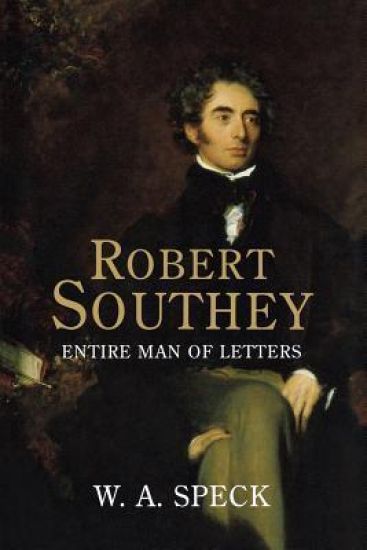
Robert Southey

Robert Southey

William Arthur Speck

Yale University Press
2013
pokkari
In his lifetime Robert Southey was very much the equal of his fellow “Lake poets,” Coleridge and Wordsworth, but since his death his reputation has been overshadowed by their success. In this new biography W. A. Speck argues that if Southey's poetry is no longer considered as significant, his other writings were more salient and his political views far more influential than those of his fellow poets. He was, as Byron conceded, England's “only existing entire man of letters.”The book engages with Southey's voluminous publications, weaving discussion of them into the narrative of his life. Speck also explores Southey's entire correspondence, not only that which appeared in the editions edited by his descendants, and finds a man of considerably greater emotional complexity than previously assumed. The first fully rounded chronicle of Southey's life in sixty years, Speck's account sets Southey in historical context and restores him to the map of English literature.
Robert Penn Warren and American Idealism

Robert Penn Warren and American Idealism

John Burt

Yale University Press
2014
pokkari
Robert Penn Warren has distinguished himself in many areas of endeavor—as a poet, a novelist, a critic, and an observer of American history and politics. In this book, John Burt examines Warren’s writings in these apparently disparate fields and shows how they are tied together not only by their common themes but also by an inner logic that captures the analogies between artistic and political problems.
Robert Motherwell Drawings

Robert Motherwell Drawings

Katy Rogers

YALE UNIVERSITY PRESS
2022
sidottu
This highly anticipated, definitive publication documenting Robert Motherwell’s 1,413 known drawings is an essential resource for artists, scholars, collectors, and aficionados Chosen by Brooklyn Rail as one of the “Ten Best Art Books of 2022” The drawings of Robert Motherwell (1915–1991) are critical to understanding his larger career, but they have been underexplored in scholarship. This long-awaited publication is the first comprehensive compilation of Motherwell’s drawings. During a career that lasted half a century, Motherwell, one of the preeminent artists of the Abstract Expressionist movement, created a large and varied body of work. He employed a broad range of imagery, inventing, refining, and reinventing his signature motifs. Drawing, which Motherwell described as “perhaps the only medium as fast as the mind itself,” was crucial to his output. This two-volume catalogue raisonné includes works from private collections never before seen by the public, as well as works from public collections worldwide. The first volume explores the significance of drawing throughout Motherwell’s career and illuminates how his drawings both inform and are distinct from his work in other media; it also includes a detailed bibliography and exhibition history of the drawings. The second volume illustrates and thoroughly documents his 1,413 known drawings.
Robert Ryman

Robert Ryman

Yale University Press
2017
sidottu
A comprehensive study highlighting the interplay of context and meaning in Robert Ryman’s work This remarkable volume, featuring new photography and original essays by a formidable array of scholars and curators, is the most expansive and thorough investigation of the work of American painter Robert Ryman in over two decades. Arguing that the relationships between his paintings are key to understanding his diverse output, the book offers more faithful reproductions and subtler details of the paintings than have previously been available, and attends closely to the artist’s own strategies of display. Ryman’s paintings are readily identified by their predominantly achromatic surfaces, but his exploration of the values and effects of white was never limited to paint. His experimentations with canvas, board, paper, aluminum, fiberglass, and Plexiglas have evolved into a material vocabulary as revolutionary as his use of white. The texts featured here reflect on the importance of Ryman’s practice to contemporary art: Robert Storr, curator of Ryman’s 1993 retrospective, places the painter in historical context while Courtney J. Martin, curator of his 2015–16 exhibition at Dia Chelsea, looks at Ryman’s three-dimensional works. Drawings scholar Allegra Pesenti investigates his drawing practice; music historian John Szwed traces the influence of jazz in Ryman’s early works; and artist Charles Gaines asks what, in a Ryman, is real.Published in association with Dia Art Foundation
Robert the Bruce

Robert the Bruce

Michael Penman

Yale University Press
2018
pokkari
Robert the Bruce (1274–1329) famously defeated the English at Bannockburn and became the hero king responsible for Scottish independence. In this fascinating new biography of the renowned warrior, Michael Penman focuses on Robert’s kingship in the fifteen years that followed his triumphant victory and establishes Robert as not only a great military leader but a great monarch. Robert faced a slow and often troubled process of legitimating his authority, restoring government, rewarding his supporters, accommodating former enemies, and controlling the various regions of his kingdom, none of which was achieved overnight. Penman investigates Robert’s resettlement of lands and offices, the development of Scotland’s parliaments, his handling of plots to overthrow him, his relations with his family and allies, his piety and court ethos, and his conscious development of an image of kingship through the use of ceremony and symbol. In doing so, Penman repositions Robert within the context of wider European political change, religion, culture, and national identity as well as recurrent crises of famine and disease.
Robert Motherwell Drawing

Robert Motherwell Drawing

Edouard Kopp

YALE UNIVERSITY PRESS
2022
pokkari
A celebration of Robert Motherwell’s drawings that provides new insight into the thematic continuities and techniques that informed the artist’s working methods Throughout his long and prolific career, Robert Motherwell (1915–1991) sustained a fascination with making art on paper. His multifaceted drawing practice was an integral part of his search for a personal, spontaneous language of mark-making. Presenting works spanning from The Mexican Sketchbook of the early 1940s to the Joyce Sketchbook of the 1980s, this overview of Motherwell’s work on paper highlights the way the artist embraced the suggestive potential of his materials—blending the accidental and the intentional in the creative gesture. Large-scale reproductions encourage close looking and immerse the reader in details such as a stroke of the brush or a tear of paper, while an essay by Edouard Kopp examines how the artist’s practice of “automatic drawing” dovetailed with his love of paper and ink in the creation of these unique and compelling works. The book closes with Motherwell’s own “Thoughts on Drawing” (1970).Distributed for the Menil CollectionExhibition Schedule:Menil Drawing Institute, Menil Collection, Houston (November 18, 2022–March 12, 2023)
Robert Wedderburn

Robert Wedderburn

Ryan Hanley

YALE UNIVERSITY PRESS
2025
sidottu
The first-ever biography of the ultra-radical thinker Robert Wedderburn, from his native Jamaica to metropole London, by an award-winning historian Robert Wedderburn (1762–1834/5) was one of the most charismatic, irascible, and radical intellectuals of the eighteenth- and early nineteenth-century Atlantic world. Born to an enslaved woman and a slavemaster in Jamaica, and moving in the radical working-class circles of London, Wedderburn made his name as a fiery political writer and orator—before dying, forgotten, in poverty. Among the few abolitionists bold enough to publicly call for the enslaved in the British West Indies to rise up and violently overthrow their colonial “masters,” Wedderburn was also among the most outspoken and—amid an increasingly repressive British establishment—dangerous advocates for domestic political reform and working-class rights. From award-winning scholar Ryan Hanley, this is the first full-length biography of a man increasingly recognized as central to Black radical political thought in the Revolutionary Atlantic. Tapping newly rediscovered sources, Hanley details Wedderburn’s extraordinary public and private life, explores the central influence of enslaved women on his political ideas, and offers fresh analysis of his contributions to British political thought and activism.
Robert Rauschenberg

Robert Rauschenberg

Michelle White

YALE UNIVERSITY PRESS
2025
sidottu
A survey of Robert Rauschenberg’s innovative use of cloth in the 1970s and its significance in the artist’s oeuvre Centering on a period of Robert Rauschenberg’s career that has not received much attention, this book focuses on three series by the artist that feature fabric: the idiosyncratic Venetians, 1972–73; the gauzy Hoarfrosts, 1974–76; and the large, simple Jammers, 1975–76. Fascinated by the expressive potential of textiles, including silks, gauze, cheesecloth, and drop cloths, Rauschenberg experimented with the ability of woven materials to capture color and light, hold printed images, and move in the air. Essays contextualize Rauschenberg’s work with cloth in the history of 1970s late modernism and Postminimalism, as well as his career-long interest in the intersection of art and the body through his work in scenography and costumes for dance. Michelle White provides an in-depth overview of the three series and related works, while Branden Joseph explores how they connect with the era’s cultural and economic precarity. Nick Mauss examines how the artist used fabric to create a sense of intimacy and revisit past practices, relationships, and dynamics of collaboration. And Joseph N. Newland discusses Rauschenberg’s costumes and scenic designs for the dance companies of Merce Cunningham and Trisha Brown. Distributed for the Menil Collection Exhibition Schedule: The Menil Collection, Houston, TX (September 19, 2025–March 1, 2026)
The Silver Snarling Trumpet: The Birth of the Grateful Dead--The Lost Manuscript of Robert Hunter
Discovered at last, the legendary lost manuscript of Grateful Dead co-founder and primary lyricist Robert Hunter, written in the early 1960s--a wry, richly observed, and enlightening remembrance of "the scene" in Palo Alto that gave rise to an incredible partnership of Hunter and Jerry Garcia, and then to the Grateful Dead itself--with a Foreword by John Mayer, an Introduction by Dennis McNally, and an Afterword by Brigid Meier. "Strange to think back on those days when it was perfectly natural that we all slept on the floor in one small room.... These were the days before practical considerations, matters of 'importance, ' began to eat our minds. We were all poets and philosophers then, until we began to wonder why we had so few concrete worries and went out to look for some." So wrote Robert Hunter in The Silver Snarling Trumpet, both a novelistic singular work of art and the missing piece of the Grateful Dead origin story. In these pages, readers are privy to the early days of Hunter, Garcia, and their cohorts, who sit at coffee shops passing around a single cup of bottomless coffee because they lacked the funds for more than one. Follow these truth-seeking souls into the stacks at Kepler's Books, renting instruments at Swain's House of Music, and through the countryside on mind-expanding road trips. Witness impromptu jams, inspired intellectual pranks, and a dialogue that is, by turns, amusing and brilliant and outrageous. Hunter shares his impressions of his first gig with Garcia for a college audience, along with descriptions of his most intense dreams and psychedelic explorations. All of it, enlivened by Hunter's visionary spirit and profound ideas about creativity and collaboration. The lost manuscript is augmented with a Foreword by John Mayer, an Introduction by Dennis McNally, and an Afterword by Brigid Meier, who was part of their scene in the San Francisco Bay Area that served as a bridge from the beatniks to the hippies. Also included is Hunter's own 1982 assessment of his work--about how he shared it with close confidants but then decided to leave it unpublished. Five years after Hunter's death, the text has been found, so readers and fans of Hunter's indelible poetry and song can explore the origin of his genius and his craft.
The Silver Snarling Trumpet: The Birth of the Grateful Dead--The Lost Manuscript of Robert Hunter
Published at last in 2024 to a celebratory reception among historians, critics, and Deadheads, the legendary lost manuscript of Grateful Dead co-founder and primary lyricist Robert Hunter, written in the early 1960s--a wry, richly observed, and enlightening remembrance of "the scene" in Palo Alto that gave rise to an incredible partnership of Hunter and Jerry Garcia--with a Foreword by John Mayer, an Introduction by Dennis McNally, and an Afterword by Brigid Meier. "Strange to think back on those days when it was perfectly natural that we all slept on the floor in one small room.... These were the days before practical considerations, matters of 'importance, ' began to eat our minds. We were all poets and philosophers then, until we began to wonder why we had so few concrete worries and went out to look for some." So wrote Robert Hunter in The Silver Snarling Trumpet, both a novelistic singular work of art and the missing piece of the Grateful Dead origin story. In these pages, readers are privy to the early days of Hunter, Garcia, and their cohorts, who sit at coffee shops passing around a single cup of bottomless coffee because they lacked the funds for more than one. Follow these truth-seeking souls into the stacks at Kepler's Books, renting instruments at Swain's House of Music, and through the countryside on mind-expanding road trips. Witness impromptu jams, inspired intellectual pranks, and a dialogue that is, by turns, amusing and brilliant and outrageous. Hunter shares his impressions of his first gig with Garcia for a college audience, along with descriptions of his most intense dreams and psychedelic explorations. All of it, enlivened by Hunter's visionary spirit and profound ideas about creativity and collaboration. The lost manuscript is augmented with a Foreword by John Mayer, an Introduction by Dennis McNally, and an Afterword by Brigid Meier, who was part of their scene in the San Francisco Bay Area that served as a bridge from the beatniks to the hippies. Also included is Hunter's own 1982 assessment of his work--about how he shared it with close confidants but then decided to leave it unpublished. Five years after Hunter's death, the text has been found, so readers and fans of Hunter's indelible poetry and song can explore the origin of his genius and his craft.