Kirjojen hintavertailu. Mukana 11 627 220 kirjaa ja 12 kauppaa.

Kirjahaku

Etsi kirjoja tekijän nimen, kirjan nimen tai ISBN:n perusteella.

1000 tulosta hakusanalla Robert D. Lesslie

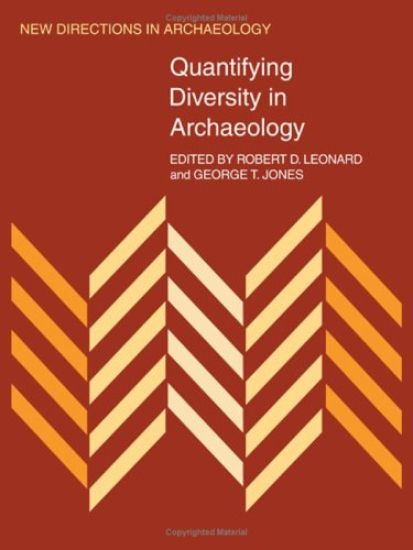
Quantifying Diversity in Archaeology

Quantifying Diversity in Archaeology

Robert D. (EDT) Leonard

Cambridge University Press
1989
sidottu
This study aims to explain what is meant by diversity in human material culture, to review the methods of measurement and formulae which can be applied, and to assess the pitfalls that exist. The value of diversity measures in the study of style, ecology, and cultural geography are considered.
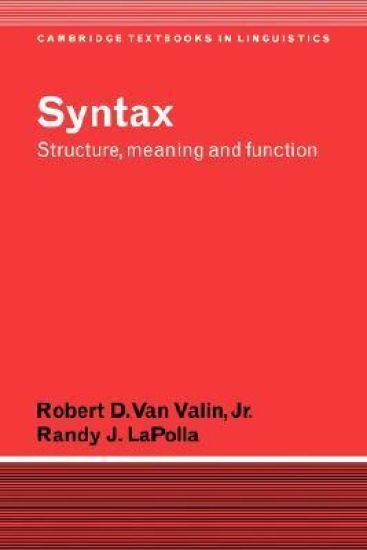
Syntax

Syntax

Robert D. van Valin; Randy J. LaPolla

Cambridge University Press
1997
pokkari
This book is an introduction to syntactic theory and analysis which can be used for both introductory and advanced courses in theoretical syntax. Offering an alternative to the standard generative view of the subject, it deals with the major issues in syntax with which all theories are concerned. It presents syntactic phenomena from a wide range of languages and introduces students to the major typological issues that syntactic theories must address. A generous number of exercises is included, which provide practice with the concepts introduced in the text and in addition expose the student to in-depth analysis of data from many languages. Each chapter contains suggestions for further reading which encompass work from many theoretical perspectives. A separate teaching guide is available.
The Syntax of Welsh

The Syntax of Welsh

Robert D. Borsley; Maggie Tallerman; David Willis

Cambridge University Press
2007
sidottu
Welsh, like the other Celtic languages, is best known amongst linguists for its verb-initial word order and its use of initial consonant mutations. However it has many more characteristics which are of interest to syntacticians. This book, first published in 2007, provides a concise and accessible overview of the major syntactic phenomena of Welsh. A broad variety of topics are covered, including finite and infinitival clauses, noun phrases, agreement and tense, word order, clause structure, dialect variation, and the language's historical Celtic background. Drawing on work carried out in both Principles and Parameters theory and Head-driven Phrase Structure Grammar, it takes contemporary colloquial Welsh as its starting point and draws contrasts with a range of literary and dialectal forms of the language, as well as earlier forms (Middle Welsh) were appropriate. An engaging guide to all that is interesting about Welsh syntax, this book will be welcomed by syntactic theorists, typologists, historical linguists and Celticists alike.
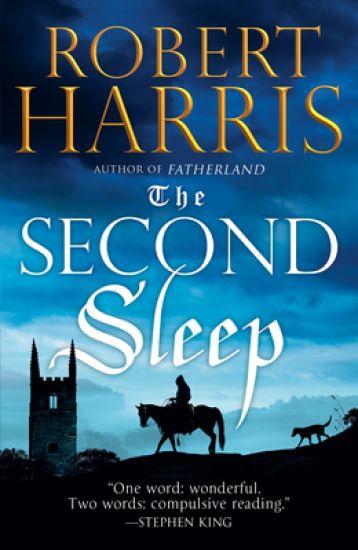
The Second Sleep

The Second Sleep

Robert D. Harris

VINTAGE
2020
nidottu
From the bestselling author of Conclave, Fatherland, and the Cicero Trilogy comes a chilling and dark new thriller unlike anything Robert Harris has done before. 1468. A young priest, Christopher Fairfax, arrives in a remote Exmoor village to conduct the funeral of his predecessor. The land around is strewn with ancient artefacts--coins, fragments of glass, human bones--which the old parson used to collect. Did his obsession with the past lead to his death? Fairfax becomes determined to discover the truth. Over the course of the next six days, everything he believes--about himself, his faith, and the history of his world--will be tested to destruction.
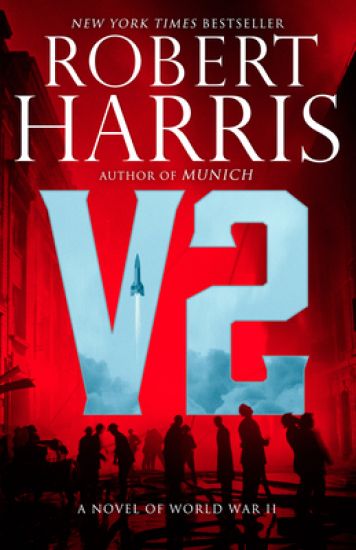
V2: A Novel of World War II

V2: A Novel of World War II

Robert D. Harris

VINTAGE
2021
nidottu
NEW YORK TIMES BESTSELLER - From the bestselling author of Conclave, Fatherland, and Munich comes a WWII thriller about a German rocket engineer, a former actress turned British spy, and the Nazi rocket program. The first rocket will take five minutes to hit London. You have six minutes to stop the second. Rudi Graf is an engineer who always dreamed of sending rockets to the moon. But instead, he finds himself working alongside Wernher von Braun, launching V2 rockets at London for the Nazis from a bleak seaside town in occupied Holland. As the SS increases its scrutiny on the project, Graf, an engineer more than a soldier, has to muster all of his willpower to toe the party line. And when rumors of a defector circulate through the German ranks, Graf becomes a prime suspect. Meanwhile, Kay Caton-Walsh, a young English intelligence officer, is living through the turmoil of war. After she and her lover, an RAF officer, are caught in a V2 attack, she volunteers to ship out for newly liberated Belgium. Armed with little more than a slide rule and a few equations, Kay and her colleagues hope to locate and destroy the launch sites. But at this stage in the war it's hard to know who, if anyone, she can trust. As the death toll soars, these twin stories play out against the background of the German missile campaign during the Second World War. And what the reader comes to understand is that Kay's and Graf's destinies are on a collision course.
From Ignorance to Insanity

From Ignorance to Insanity

Robert D Ohmes

Rdo Publications
2020
pokkari
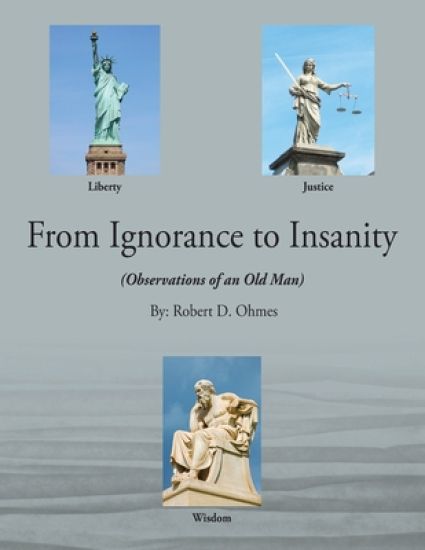
We are living in some of the most discouraging times in my lifetime, which has spanned some very bad periods; the Depression, World War II, the Korean War, the Cuban/Russia nuclear threat, the Cold War, the assassinations of President Kennedy, Bobby Kennedy and Martin Luther King; Vietnam, Segregation and the associated racial tensions, 9/11/2001, and a number of serious economic downturns. There have been protests, anger, divisiveness but ultimately reason and justice seemed to have triumphed, though maybe not perfectly.Today we face totally new challenges, especially the COVID-19 Pandemic that so devastated the world. Anger has turned to hatred and with hatred there is no chance for dialogue. Even where there is no hatred, good people, refuse to listen or discuss.Liberty, Justice and Wisdom. They are portrayed on the cover of this book. These three are so essential to the way that we think and act and so necessary for us to live in peace and harmony with each other. Yet they exist in only small quantities, not just in the United States, but throughout the world. There is one further necessary ingredient and that is Humility. If we could come up with a potion to replace the hate and vindictiveness in the world, we would combine in a crucible the ingredients of liberty, justice and wisdom and also sprinkle in a large dose of humility. Hate would be gone; compromises would be forthcoming and we would have harmony among all people and the door to dialectics would be opened.When we refuse to think for ourselves; when we listen and passively accept everything our educators, our government, our media, our entertainers tell us, when indoctrination takes precedence over education, we are doomed to exist in a continued state of fear, terror and violence. And that is what many of our leaders, educators, entertainers, and media personalities seem to want in their unending quest for power. We are expected to listen to them and accept what they say, without question. And the more we allow ourselves to be indoctrinated, the more excessive will become the indoctrination and the less important will become education. Eventually, liberty, justice, and wisdom disappear altogether and the World as depicted in Orwell's "1984" will become a reality. And make no mistake, this has actually happened for a brief time in the 1930's and 1940's when Hitler and his Third Reich imposed his will with its accompanying horrors on the people of Germany, most particularly the believers in Judaism. The rise to power of Hitler and the attending Holocaust was a perfect case study of what happens when people do not think for themselves. When collectively we do not examine our beliefs, we are subject to being led into chaos, tyranny and a state of existence well described in George Orwell's "1984"Socrates once said, "The unexamined life is not worth living". I would rather say that the unexamined belief is not worth having. That is the objective of my book. To get the reader to examine his own beliefs and at least have some facts to help him formulate his beliefs.
Waste Land: A World in Permanent Crisis

Waste Land: A World in Permanent Crisis

Robert D. Kaplan

Random House
2025
sidottu
An urgent exploration of a world in constant crisis, where every regional disaster threatens to become a global conflict, with lessons from history that can stop the spiral--from the New York Times bestselling author of The Revenge of Geography "Compelling and helpful . . . Kaplan's analysis has enormous implications for U.S. strategy abroad. . . . His conclusion is the only right one."--John Bolton, The Wall Street Journal One of Financial Times' Most Important Books to Read This Year - One of Foreign Policy's Most Anticipated Books of the Year We are entering a new era of global cataclysm in which the world faces a deadly mix of war, climate change, great power rivalry, rapid technological advancement, the end of both monarchy and empire, and countless other dangers. In Waste Land, Robert D. Kaplan, geopolitical expert and author of more than twenty books on world affairs, incisively explains how we got here and where we are going. Kaplan makes a novel argument that the current geopolitical landscape must be considered alongside contemporary social phenomena such as urbanization and digital news media, grounding his ideas in foundational modern works of philosophy, politics, and literature, including the poem from which the title is borrowed, and celebrating a canon of traditionally conservative thinkers, including Alexander Solzhenitsyn, Jeane Kirkpatrick, and many others. As in many of his books, Kaplan looks to history and literature to inform the present, drawing particular comparisons between today's challenges and the Weimar Republic, the post-World War I democratic German government that fell to Nazism in the 1930s. Just as in Weimar, which faced myriad crises inextricably bound up with global systems, the singular dilemmas of the twenty-first century--pandemic disease, recession, mass migration, the destabilizing effects of large-scale democracy and great power conflicts, and the intimate bonds created by technology--mean that every disaster in one country has the potential to become a global crisis, too. According to Kaplan, the solutions lie in prioritizing order in governing systems, arguing that stability and historic liberalism rather than mass democracy per se will save global populations from an anarchic future. Waste Land is a bracing glimpse into a future defined by the connections afforded by technology but with remarkable parallels to the past. Just as it did in Weimar, Kaplan fears the situation may be spiraling out of our control--unless our leaders act first.