
Kirjahaku
Etsi kirjoja tekijän nimen, kirjan nimen tai ISBN:n perusteella.
1000 tulosta hakusanalla Robert L. Read
While much work has been done to apply anthropological insights to the study of missions, the sociological perspective has been generally neglected by missiologists. This volume defines the sociology of missions as a discrete subdiscipline within the sociology of religion and provides a working set of conceptual resources for those involved in mission work to use in furthering their understanding of their task. The author reviews the major areas of sociology that are most relevant to missions and presents his findings as a basis for discussion and a stimulus to further exploration of relevant sociological concepts and theories. One of his main goals is to increase dialogue between missiologists and sociologists of religion, by providing the former with a sociological perspective and the latter with a deeper understanding of the missionary enterprise.
Comparing the spread of Christianity to the East to its more successful spread to the West, Montgomery illustrates the uneven diffusion of one of the world's most influential and successful religions. Through his sociological analysis, the author examines the causes for Christianity's success to the West and its relative failings in major societies to the east of Jerusalem, including India, Persia, and China. Applying five variables, including Christianity's missionary orientation, geography, intersocietal relations, sociocultural structures, and individual perceptions, Montgomery provides a theory of the diffusion of religion in general, and of Christianity in particular.Beginning by laying out the variables he will apply to the study, Montgomery carefully explains his approach, introducing the reader to this unique field of study. He then moves on to examine Christianity's earliest spread to areas east of Jerusalem. An examination of the rise of Islam in the East precedes a comparative analysis of the success of Christianity in its spread to the West to its relative failure to spread to the East. He concludes with a discussion of religious pluralism. Groundbreaking in its attempt to establish a better understanding of religious diffusion, this work will be indispensable to those interested in the study of sociology of religions, religious studies, missionary studies, and Christianity.
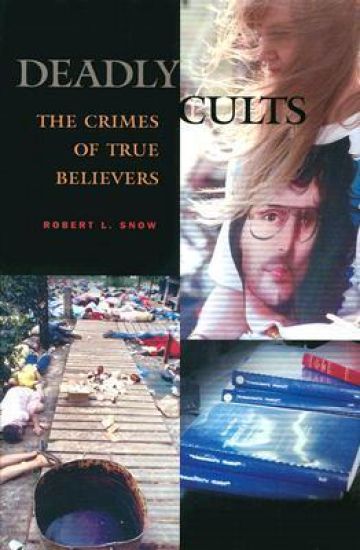
How does a Vampire Cult differ from a Satanic Cult? How do seemingly normal or ordinary citizens suddenly find themselves committed to a group whose leader promotes criminal activities and isolation from families and friends? What should you do if a loved one becomes indoctrinated by a potentially dangerous cult? This book focuses on various cults and their often criminal belief systems. Most readers are shocked by stories of mass suicides and ritualized cult killings, but few understand how such crimes come to be committed. Snow, a seasoned police officer with experience working on cult crimes, examines those cults that commit offenses from murder and fraud to kidnapping and sexual assault. By providing specific accounts of dangerous cults and their destructive acts, Snow illustrates how seemingly innocent groups can turn pernicious when under the sway of a charismatic leader with an agenda, or when members take things too far. He offers advice on how to avoid falling victim to cult indoctrination, concluding with chapters on how to identify cults, how to protect yourself and your family, and what to do if a loved one is ensnared by such a group.
Of all crimes, murder fascinates the public more than any other. While considered a detestable act, for which society reserves its severest punishments, homicide still captivates the American public. But the way homicide and its investigation are depicted in our media fail to capture just how murders get solved. Here, Snow takes us on a tour of murder, its investigation, and its prosecution from the perspective of a seasoned homicide detective. From the commission of the crime to the collection of evidence, examination of the crime scene, roundup of suspects, interrogation, and resolution, he leads readers from the scene to the courtroom, stopping along the way to consider all the elements that go into a murder investigation. He considers the culprits, the motives, the victims and their families, and offers readers a glimpse into the actual techniques and methods used to solve real crimes. This volume will fascinate and inform anyone interested in knowing the truth behind the scene of the crime of murder.

Describes the history, nature, and characteristics of special education in the United States.
No one wants to be robbed at gunpoint, or have his car stolen, or his house robbed. When these crimes happen, victims may feel angry, afraid, or violated. But there is no violation quite so devastating as sexual assault. Victims do not recover easily—either emotionally, psychologically, or physically from such incidents, and the long-term impact can have devastating effects on the victims, their families, and communities. Investigating sexually based crimes is particularly difficult for many reasons. Often the collection of evidence requires a medical examination of the victim—a second violation of sorts. Police must interview the victim, who must recount his or her assault. Often, the victims are children, and offenders range from family members to perfect strangers. But investigating and prosecuting these crimes is crucial to the healing process of many victims, and to the safety of society at large. Detective Snow takes readers on a tour of the ways in which the police investigate and help prosecute such crimes. Each chapter begins with a real-life incident and throughout the book real stories are used to illustrate each step in the process. Snow addresses the processing of the crime scene, the collection of evidence, the development of suspects, the questioning of witnesses and perpetrators, and the preparation for trial. Few members of the public have any idea how complex and delicate the investigation of sex crimes really is. This book sheds light on this important police work and helps readers understand how these crimes are investigated, solved, and prosecuted. Victims and their families will especially benefit from the information in this book, but all readers will gain insight into the crimes, their incidence, their impact on victims, and the way the criminal justice system responds, from the scene of the crime through the capture and incarceration of the perpetrators.
Although for much of the mid-20th century police departments across the U.S. had been reluctant to embrace new technology, depending instead on traditional police techniques, detectives in Los Angeles finally departed from this practice when they found themselves stymied in their attempts to solve the infamous Night Stalker serial murder case. This murderer and rapist had gone on a deadly rampage during the spring and summer of 1985, and though the police used every traditional police technique, they could not solve the crime. Finally, in desperation, they decided to do something different: use what was then the latest, cutting edge-technology. This new technology, the laser print finder, worked perfectly and the police arrested the Night Stalker the next day. Following this astonishing success, police departments across the nation suddenly began clamoring to obtain all kinds of new technology to assist them in solving crimes. This rush to embrace the latest technology hasn't slowed in the intervening 21 years.This book takes readers through every major branch of law enforcement and shows how technology has radically changed police department operations during the last two decades. It also shows how these changes continue today as technology advances and refines techniques already in practice. Beginning with the Night Stalker case, the author illustrates how the use and reliance on new technologies in solving crimes has made policing and detective work more accurate and efficient in capturing and convicting criminals (and courts more recently in releasing innocents convicted of crimes). Capitalizing on the interest in all things forensic, this book illuminates the behind the scenes technologies that go into solving crimes and keeping dangerous criminals off the street. Snow covers DNA and fingerprint technologies, vehicle technologies, undercover work, bomb detection, and other methods. Using many real life examples and first hand anecdotes, he shows how technology has become part and parcel of criminal justice efforts to solve crimes.
Where water supply, railway transportation, and oil reserves have been abundant, towns in central West Texas have prospered; where these resources are few, settlements have maintained only slight growth or disappeared entirely. Supporting his conclusions with profuse statistical evidence, Robert L. Martin traces the economic development of six major towns in the area, all with over 10,000 residents in 1960: Lamesa, Snyder, Sweetwater, Big Spring, Midland, and Odessa. Ranching brought the first settlers to West Texas in the 1870s and dominated the economy until 1900. In the 1880s farmers began to arrive, and between 1900 and 1930 agricultural production replaced ranching as the most important industry. With the influx of population came the railroad, and small settlements were established along its route. Those with sufficient water supply prospered and, as counties were organized, became county seats and supply centers for the surrounding agricultural regions. The land could not support a large agricultural population, and agriculture-related manufactures soon drew population to the towns. However, it was not until the oil discoveries of the 1920's that the modern city emerged. After World War II, oil production and oil-related industries generated great wealth and caused a boom in population growth and urban development. Despite the growth in prosperity, the economy is precariously balanced. Urban centers dependent on oil-an industry of limited life-have matured in an area without sufficient water or agricultural resources to support them. Martin concludes that, without careful planning and a solution to the water problem, these cities could some day become ghost towns on the plains.

Few Elizabethans left the image of their personalities cut so deeply into the Renaissance imagination as did Sir Philip Sidney. Widely admired in his own time, Sidney must seem to the modern reader almost universally accomplished. His talents as courtier, diplomat, soldier, scholar, novelist, and poet are history. Almost immediately after Sidney's death in battle against the Spaniards in the Low Countries, the process of legend began, and the legend has survived, sometimes obscuring the facts. The versatile "Renaissance man" has become, in the eyes of some critics, the romantic lover whose frustrations and despair found release in the "confessional" form of the sonnet sequence, Astrophel and Stella, and in other poems. To show these poems to be consciously constructed works of art, not simply passionate outbursts of romantic emotion, is one aim of this study. The author examines Sidney as poet and critic, concentrating his study on rhetorical technique and poetic rhythm and form. He shows Sidney experimenting with the symmetrical possibilities of rhythm and phrase; practicing the ornateness current and acceptable in his day. He examines Sidney's comment on such a style in The Defense of Poesy and the ways in which the poet's own work agreed with or departed from his expressed opinions. He also balances Sidney's poetry against the powerful tradition of Petrarchan love literature and the equally powerful Renaissance impulse to subject passion to the rule of reason. Finally, in an extended analysis of Astrophel and Stella, he shows Sidney as the master of a plainer, wittier, more subtly fashioned style and a complex, more dramatically immediate form. What emerges from the study is not the personality of the poet, but the principles of his art and the value of his achievement in the mainstream of English Renaissance verse.
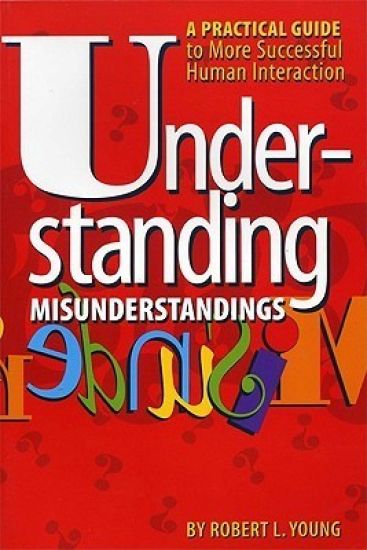
Have you ever meant one thing, but said another? Reacted angrily when no offense was intended? Wished that the earth would open up and swallow you? Understanding Misunderstandings will help you get out and stay out of these difficulties. Robert L. Young explains why many common types of misunderstandings arise and how they can be avoided or corrected. In the first part of the book, he breaks the process of misunderstanding down into stages, showing how it can occur when we misspeak, mishear, misinterpret, or react in inappropriate ways. In the second part, he expertly analyzes the kinds of misunderstandings that can arise from differences in culture, social class, race and ethnicity, and gender. Real-life examples illustrate many of the problems and solutions he describes. Because misunderstanding can destroy friendships and marriages, wreck careers, and lead to clashes between whole segments of society, understanding and diffusing it is of the utmost importance. This reader-friendly book provides the practical guidance to do just that. Educators, business people, psychologists, parents-in fact, everyone who interacts with other people-will benefit from it.
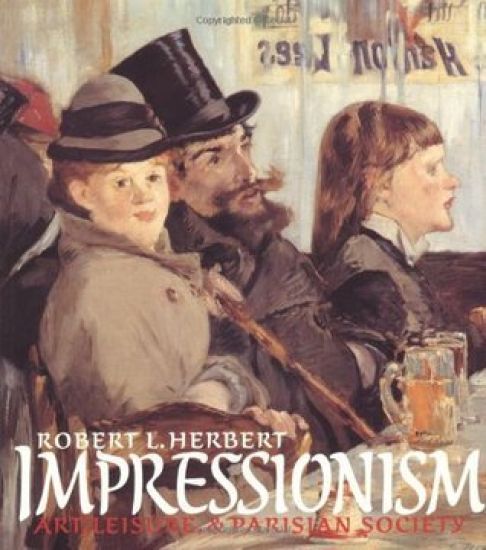
“Long-awaited, this full-scale revision of Impressionism immediately supersedes all other studies in the field. Herbert rejuvenates even the most famous paintings by seeing them in a dense and flexible context touching on everything from the hierarchy of theater boxes to the role of beer-hall waitresses. His mind and eye are as supple as his lucid prose, and his command of sociological data is staggering. In this classic of art history, both art and history are triumphantly reborn.”—Robert Rosenblum, New York UniversityThis remarkable book will transform the way we look at Impressionist art. The culmination of twenty years of research by a preeminent scholar in the field, it fundamentally revises the conventional view of the Impressionist movement and shows for the first time how it was fully integrated into the social and cultural life of the times. Robert L. Herbert explores the themes of leisure and entertainment that dominated the great years of Impressionist painting between 1865 and 1885. Cafes, opera houses, dance halls, theaters, racetracks, and vacations by the sea were the central subjects of the majority of these paintings, and Herbert relates these pursuits to the transformation of Paris under the Second Empire.Sumptuously illustrated with many of the most beautiful Impressionist images, both familiar and unfamiliar, this book presents provocative new interpretations of a wide range of famous masterpieces. Artists are seen to be active participants in, as well as objective witnesses to, contemporary life, and there are many profound insights into the social and cultural upheaval of the times.“A social history of Impressionist art that is truly about the art, informed by a penetrating analysis of the ways in which its pictorial structure and qualities communicate its social content. Herbert brings that society to life, but above all he makes some of the most familiar and frequently discussed works in the history of art come wonderfully and vividly to life again.”—Theodore Reff, Columbia UniversityRobert L. Herbert is Robert Lehman Professor of the History of Art at Yale University. He is the author or editor of numerous books and articles on nineteenth-century French art.
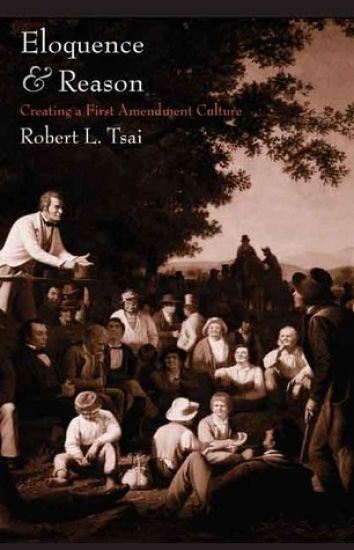
This provocative book presents a theory of the First Amendment’s development. During the twentieth century, Americans gained trust in its commitments, turned the First Amendment into an instrument for social progress, and exercised their rhetorical freedom to create a common language of rights. Robert L. Tsai explains that the guarantees of the First Amendment have become part of a governing culture and nationwide priority. Examining the rhetorical tactics of activists, presidents, and lawyers, he illustrates how committed citizens seek to promote or destabilize a convergence in constitutional ideas. Eloquence and Reason reveals the social and institutional processes through which foundational ideas are generated and defends a cultural role for the courts.
This book contains the proceedings of the International Symposium on Alternative and Advanced Automotive Engines, held in Vancouver, B.C., on August 11 and 12, 1986. The symposium was sponsored by EXPO 86 and The University of British Columbia, and was part of the specialized periods program of EXPO 86, the 1986 world's fair held in Vancouver. Some 80 attendees were drawn from 11 countries, representing the academic, auto motive and large engine communities. The purpose of the symposium was to provide a critical review of the major alternatives to the internal combustion engine. The scope of the symposium was limited to consideration of combustion engines, so that electric power, for example, was not considered. This was not a reflec tion on the possible contribution which electric propulsion may make in the future, but rather an attempt to focus the proceedings more sharply than if all possible propulsion systems had been considered. In this way all of the contributors were able to participate in the sometimes lively discussion sessions following the presentation of each paper.
Contemporary Systems Thinking is a series of texts, each of which deals comparatively and/or critically with different aspects of holistic thinking at the frontiers of the discipline. Traditionally, writings by systems thinkers have been concerned with single theme propositions such as General Systems Theory, Cybernetics, Operations Research, System Dynamics, Soft Systems Methodology and many others. Recently there have been attempts to fulfil a different yet equally important role by comparative analyses of viewpoints and approaches, each addressing disparate areas of study such as: modeling and simulation, measurement, management, 'problem solving' methods, international relations, social theory and last, but not exhaustively or least, philosophy. In a recent book these were drawn together within a multiform framework as part of an eclectic discussion -a nearly impossible task as I discovered (see Dealing With Complexity -An Introduction to the Theory and Application of Systems Science, R. L. Flood and E. R. Carson, Plenum, New York, 1988). Nevertheless, bringing many sources together led to several achievements, among which was showing a great diversity of approaches, ideas and application areas that systems thinking contributes to (although often with difficulties remaining unresolved). More important, however, while working on that manuscript I became aware of the need for and potential value in a series of books, each focusing in detail on the study areas mentioned above.
Dealing with Complexity
Robert L. Flood; Ewart R. Carson
Kluwer Academic/Plenum Publishers
1993
sidottu
Contents 11. 2. 2. Four Main Areas of Dispute 247 11. 2. 3. Summary . . . 248 11. 3. Making Sense of the Issues . . 248 11. 3. 1. Introduction . . . . 248 11. 3. 2. The Scientific Approach 248 11. 3. 3. Science and Matters of Society . 249 11. 3. 4. Summary . 251 11. 4. Tying It All Together . . . . 251 11. 4. 1. Introduction . . . . 251 11. 4. 2. A Unifying Framework 251 11. 4. 3. Critical Systems Thinking 253 11. 4. 4. Summary 254 11. 5. Conclusion 254 Questions . . . 255 REFERENCES . . . . . . . . . . . . . . . . . . . 257 INDEX . . . . . . . . . . . . . . . . . . . . . . 267 Chapter One SYSTEMS Origin and Evolution, Terms and Concepts 1. 1. INTRODUCTION We start this book with Theme A (see Figure P. I in the Preface), which aims to develop an essential and fundamental understanding of systems science. So, what is systems science? When asked to explain what systems science is all about, many systems scientists are confronted with a rather daunting task. The discipline tends to be presented and understood in a fragmented way and very few people hold an overview understanding of the subject matter, while also having sufficient in-depth competence in many and broad-ranging subject areas where the ideas are used. Indeed, it was precisely this difficulty that identified the need for a comprehensive well-documented account such as is presented here in Dealing with Complexity.
The Muse of History and the Science of Culture
Robert L. Carneiro
Kluwer Academic/Plenum Publishers
2000
sidottu
Is history more than (in Boswell's words) a `chronological series of remarkable events'? Does it have a pattern? Is it fraught with `meaning'? Can we discern its trends? What determines its course? In short, can a substantial and coherent philosophy of history be devised that offers answers to these questions? These issues, which have intrigued -and bedeviled - historians for centuries, are explored in this thoughtful book.
The Muse of History and the Science of Culture
Robert L. Carneiro
Kluwer Academic/Plenum Publishers
2000
nidottu
Is history more than (in Boswell's words) a `chronological series of remarkable events'? Does it have a pattern? Is it fraught with `meaning'? Can we discern its trends? What determines its course? In short, can a substantial and coherent philosophy of history be devised that offers answers to these questions? These issues, which have intrigued -and bedeviled - historians for centuries, are explored in this thoughtful book.
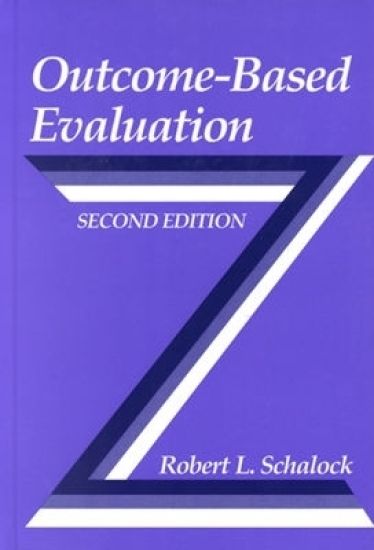
Outcome-based evaluation continues to play a central role in the larger field of policy analysis and speaks to the needs and interests of administrators, students, policymakers, funders, consumers, and educators. In a thoroughgoing revision of the first edition of this classic text and reference, published by Plenum in 1995, the author broadens the coverage from his previous emphasis on developmental disabilities to include other areas of human and social service delivery such as education, health, mental health, aging, substance abuse, and corrections.
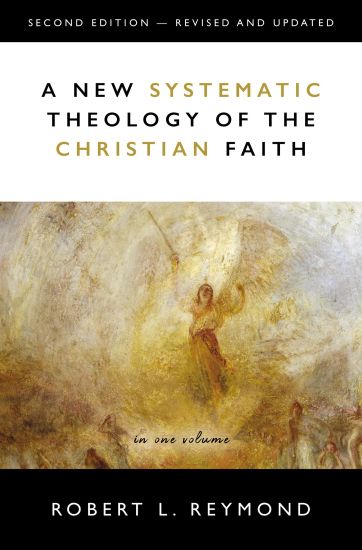
A comprehensive and contemporary statement of classic Reformed faithA New Systematic Theology of the Christian Faith expresses a fully biblical Reformed faith, showing its enduring appeal, coherence, and truthfulness. This standard of Reformed theology is saturated with Scripture, performing more exegesis and quoting more Scripture than other one-volume theologies and always encouraging the reader to measure theological assertions by the ultimate standard of Scripture itself. The result is theology that is God-centered.Other important features include:A truly systematic theology: comprehensive--covering all the main teachings of Scripture; coherent--showing how these teachings interrelate; contextual--relating biblical teachings to current issues; and conversational--engaging biblical, historical, and contemporary points of viewDistinctively biblical perspectives on matters such as a presuppositional approaches to Scripture, the use of traditional arguments for God's existence, the description and classification of God's attributes, the view of the Trinity freed from medieval embellishments; and much moreUpholds classic Calvinist positions on baptism, the Trinity, church government, and much moreInteracts with contemporary issues, the work of other theologians, and important contemporary theological documents, including Catechism of the Catholic Church and "Evangelicals and Catholics Together"Terms from biblical languages appear in Hebrew or Greek and in transliteration, allowing English-only readers full access.Numerous appendices covering special topicsAbundant resources for further study through footnotes, and a carefully compiled theological bibliographyThe book captures the author's warmth and sensitivity born of more than twenty-five years as a professor at leading Reformed seminariesTheology students, preachers, teachers, and professional theologians alike will benefit from A New Systematic Theology of the Christian Faith, finding it to be a rich resource for study and reference as they seek to understand and communicate about God and his ways.