This new edition of Health Services: Policy and Systems for the Therapists provides a comprehensive introduction to the structure and organization of the U.S. health care system, and the application of private and government insurance programs across a range of clinical practice areas.The book provides an essential introduction to the latest policy developments, exploring issues such as access, cost, quality, licensure, informed consent, and medical liability. The book provides, too, detailed guidance on practical issues, including communication with managed care organizations and government claims reviewers, compliance and fraud/abuse prevention, and the completion of key documentation. This new edition has also been updated not only with the latest policy changes, but with new material on population health, value-based health care, and telehealth. This is the ideal text to enable both students and practitioners across allied health disciplines to feel confident and assured working within the U.S. health care system.
This international market-leading book, aimed at both students and practising managers, provides a comprehensive and balanced introduction to service operations management. Building on the basic principles of operations management, the authors examine the operations decisions that managers face in controlling their resources and delivering services to their customers.
Stating that human idealism is the primary motivator behind the call to service, a collection of personal stories recounts the experiences of civil rights activists, charity workers, members of the Peace Corps and military, volunteers, and more. Reprint.
A guide to improving sales and profits in consumer financial services that stresses the development of a sales and service culture. The key principles discussed are interaction with customers, cultural support and values, service from the customer's point of view, service selling, characteristics of successful sales organizations, star sales people, perfecting the sales process, dealing with prospective clients, and ongoing interaction with the client.
In 2004, Robert F. Lusch and Stephen L. Vargo published their groundbreaking article on the evolution of marketing theory and practice toward 'service-dominant (S-D) logic', describing the shift from a product-centred view of markets to a service-led model. Now, in this keenly anticipated book, the authors present a thorough primer on the principles and applications of S-D logic. They describe a clear alternative to the dominant worldview of the heavily planned, production-oriented, profit-maximizing firm, presenting a coherent, organizing framework based on ten foundational premises. The foundational premises of S-D logic have much wider implications beyond marketing for the future of the firm, transcending different industries and contexts, and will provide readers with a deeper sense of why the exchange of service is the fundamental basis of all social and economic exchange. This accessible book will appeal to students, as well as to researchers and practitioners.
In 2004, Robert F. Lusch and Stephen L. Vargo published their groundbreaking article on the evolution of marketing theory and practice toward 'service-dominant (S-D) logic', describing the shift from a product-centred view of markets to a service-led model. Now, in this keenly anticipated book, the authors present a thorough primer on the principles and applications of S-D logic. They describe a clear alternative to the dominant worldview of the heavily planned, production-oriented, profit-maximizing firm, presenting a coherent, organizing framework based on ten foundational premises. The foundational premises of S-D logic have much wider implications beyond marketing for the future of the firm, transcending different industries and contexts, and will provide readers with a deeper sense of why the exchange of service is the fundamental basis of all social and economic exchange. This accessible book will appeal to students, as well as to researchers and practitioners.
Services are replacing manufacturing as the employment base in most advanced economies. These essays provide valuable insight into the causes, problems, and prospects of this transition. Commissioned for the Wharton-ARA Conference on the Service Economy, this collection examines the rise of the new economic order in the United States, Japanese, and international economies, and the future and potential of the service sector. The volume concludes with an agenda for future research and policy of the service economy.
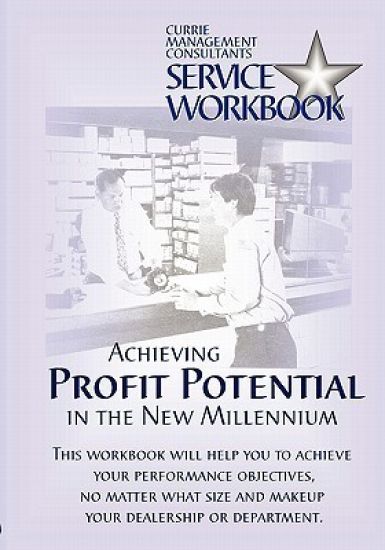
Currie Management Consultants has over 50 years of experience advising dealers and distributors on how to maximize their business performance. In this book, founder Bob Currie shares his extensive knowledge of the best practices for service managers in the industrial equipment industry. This book covers a comprehensive list of topics including: financial modeling for maximum profitability, expense control, leadership skills, hiring, revenue generation, aftermarket, and more.
First published in 1993. In the 1990s the education service faces challenging new priorities. As teachers seek to extend their skills and develop new expertise, they need continued, career-long professional development. This volume examines how teachers play key roles in providing and evaluating training. From schools in four education authorities varied styles of INSET are represented, drawing on words and experience of those at the centre of INSET activities. The book reflects some of the problems they face and how these are resolved. The authors link theory with practice of evaluation. They address issues of principle alongside day-to-day experience. This book offers a range of alternative models and styles of INSET for practitioners to consider and adapt to their own needs. The authors recognize the value of practitioner knowledge and suggest that in evaluating INSET, teachers can articulate for themselves and for an outside audience provide much information about what it means to teach and learn.
First published in 1993. In the 1990s the education service faces challenging new priorities. As teachers seek to extend their skills and develop new expertise, they need continued, career-long professional development. This volume examines how teachers play key roles in providing and evaluating training. From schools in four education authorities varied styles of INSET are represented, drawing on words and experience of those at the centre of INSET activities. The book reflects some of the problems they face and how these are resolved. The authors link theory with practice of evaluation. They address issues of principle alongside day-to-day experience. This book offers a range of alternative models and styles of INSET for practitioners to consider and adapt to their own needs. The authors recognize the value of practitioner knowledge and suggest that in evaluating INSET, teachers can articulate for themselves and for an outside audience provide much information about what it means to teach and learn.
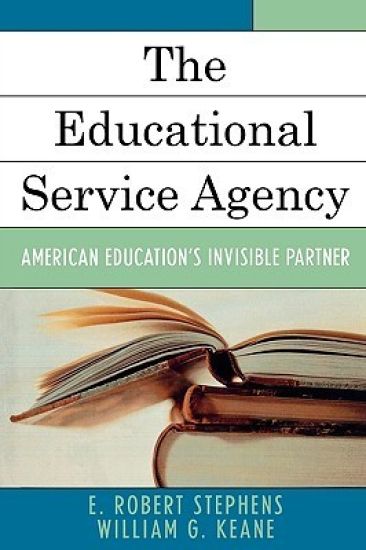
Education service agencies (ESAs), the middle echelon in the P-12 education structure, serve local school districts and their children in 42 states. Since these agencies work directly with local school districts and their students, they are largely invisible to the general public and, incredibly, not a small number of legislators. Yet ESAs are responsible for the direct or indirect expenditure of billions of dollars and are perhaps the main vehicle for training in-service teachers, administrators, and other staff members throughout the country. In addition, they provide technical assistance for a wide range of management areas such as finance, food service, transportation, purchasing, and technology. This highly researched, well-referenced book, the first ever to document the work of service agencies in America, begins with four chapters that summarize the history and development of service agencies into current times and catalogue the different financing and governance structures under which they function. Three chapters are devoted to descriptions of programs and services offered for students, whether they have special interests or needs. Another chapter deals with ESAs as the lynch pin for partnerships with community agencies, businesses, and other levels of government. The book concludes with two chapters about the growing insistence on accountability for ESAs and a final chapter projects three scenarios about the possible future roles of ESAs in the American education system.
Service Management Workbook: Achieving Profit Potential In the New Millennium It is said that luck is when opportunity meets preparedness. The goal of the new Millennium is to be prepared when opportunity arises. To achieve this goal it is The evolution of service as a valuable product has necessitated the development of the service manager. It takes increased skills to define customer needs rather than waiting for them to tell you what they want. It takes increased effort to develop a contract with a customer that includes all of their unit, parts and service needs, rather than just servicing the units that the sales department sells. Eliminating the work of scheduling regular maintenance, finding emergency repair service at any time or place, and tracking total cost of ownership is valuable to every customer, large or small. The service department in any dealership is becoming increasingly important, making your role, as manager, more complex and challenging than ever. Fewer and fewer decision-makers will determine who services their equipment. Building a strong relationship with these customers is vital to every dealership. Fleet management contracts are becoming the norm as customers outsource all functions that are not part of their core businesses. The success of these long-term, contractual relationships rests, in large part, with you and your department. The customer service that you provide, the value of your services and the cost control that you maintain will determine your dealership's success in the future. The purpose of this workbook is to prepare you for this opportunity. The Service Workbook is a tool to help you professionally manage the service department of your dealership. The view of service and the service manager that we present may be very different than the way in which you currently view your position and your department. We argue that service is increasing in its importance to customer satisfaction, and as a profit center. It is vital to look at service individually in terms of efficiency, effectiveness, productivity, expense control, and profitability. We present long-term objectives in a number of critical areas that you can use as guidelines. It will be your job to set short-term objectives based on your company's strategies and markets. This reference book is designed to be a tool regardless of your short and long-term objectives. We present methods for improving results. No matter what the size and makeup of your dealership is, this workbook will help you to achieve your performance objectives. Industrial products are increasingly viewed as commodity items and have become more price-sensitive. It is very difficult to distinguish yourself through product quality and innovation for any extended length of time. After-market services are becoming increasingly more profitable. Quality services tailored for the customer and carried out by well-trained personnel are key for your service department in today's market. Work with the customer to define their needs and the customer is yours. Providing products becomes an extension of the services you provide them. This skill and effort can pay off if, as a dealership, you are ready to make the commitment to broaden your product line. No longer are you only selling units and making a profit on parts and sales. Now you are selling service; it is a product and should provide an appropriate profit. In fact, appropriate pricing will make service the most profitable business area of the dealership, as a percent of sales.
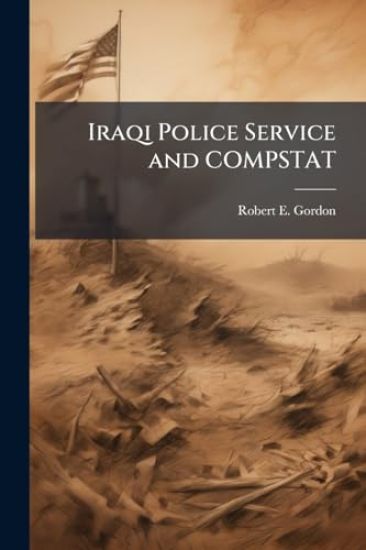
The purpose of this monograph is to determine the applicability of the New York Police Department's (NYPD) COMPSTAT crime control model to restoring order in Iraq. The Iraqi Police Service (IPS) performs similar police functions to those executed by the NYPD. Although different in scope and scale, the conditions in Iraq today are comparable to those that existed in pre-1994 New York City. The country is inundated with firearms and explosives which are used in a continuous cycle of violence in order to achieve political, religious or criminal objectives. The cycle of violence is perpetrated by Sunni rejectionists bent on restoring their pre-invasion power base. They attempt to achieve this goal through attacks on coalition forces as well as Iraqi Security Forces and the majority Shia population. Foreign fighters seeking a caliphate in Iraq exacerbate the Sunni-Shia tensions. Shia militia groups avenge attacks on their members by conducting sectarian attacks against Sunni neighborhoods. In many parts of the country this cycle of violence has overwhelmed the IPS. These rival groups, armed with a seemingly endless supply of firearms and explosives, transit through public spaces to carry out their attacks. The IPS offers little protection in these public spaces, thus allowing the cycle to continue. The bulging, disenfranchised youth population in Iraq provides a ripe recruiting pool for all groups and many have taken an active role in the cycle of violence. Beset by fear and disorder, the Iraqi population cannot turn to the IPS due to a perception of corruption, militia infiltration or general incompetence. This cycle of violence is the prevailing condition in Iraq and the central challenge to IPS efforts to restore order. Pre-1994 New York was a city plagued by skyrocketing firearms related homicides and extensive fear and disorder. Disorder emanated from a loss of control of public spaces to criminal elements. These criminal elements often utilized truant youths to ca This work has been selected by scholars as being culturally important, and is part of the knowledge base of civilization as we know it. This work was reproduced from the original artifact, and remains as true to the original work as possible. Therefore, you will see the original copyright references, library stamps (as most of these works have been housed in our most important libraries around the world), and other notations in the work. This work is in the public domain in the United States of America, and possibly other nations. Within the United States, you may freely copy and distribute this work, as no entity (individual or corporate) has a copyright on the body of the work. As a reproduction of a historical artifact, this work may contain missing or blurred pages, poor pictures, errant marks, etc. Scholars believe, and we concur, that this work is important enough to be preserved, reproduced, and made generally available to the public. We appreciate your support of the preservation process, and thank you for being an important part of keeping this knowledge alive and relevant.
Address real-world organisational challenges by applying the principles of Service Operations Management Service Operations Management, 6th edition is a leading text in the field and provides an understanding of how service performance can be improved in organisations. It applies underlying theories to the real-world issues faced daily by service operations managers, by providing a diverse range of examples and illustrations from a wide range of international businesses, plus frameworks and techniques to help you better analyse existing operations and understand ways to deal with operational challenges. This book can be used to support a dedicated Service Operations Management course, or a service-focused course in Operations Management. The book is also ideal if you want to build on knowledge of the basic principles of operations management, and it serves as a handbook for operations managers in service organisations. Key features: Real-life examples from organisations around the world ensure all types of service are covered, from Metro Bank to Médecins Sans Frontières, from Apple to Aldi, from Costa coffee machines to Cubitts eyewear, and moreEnd-of-chapter case studies cover essential concepts and offer application opportunities that will strengthen your understandingA focus on how concepts work out in practice, such as in the expanded Service Concept and Customer Relationships chapters, both of which now incorporate new 'running' case studiesMajor updates for this edition include thoroughly revised and updated chapters on Service Strategy and People in the Service Operation, new material on the impacts of innovative technologies on services, and a greater consideration of the environmental and sustainability impact of operations "The leading Service Operations book, which we have used for 9 years. Excellent range of theory, very accessible to all student levels and extremely applicable within the global business world." Andrew Parker, Associate Professor and former Senior Industrial Operations Practitioner, University of Birmingham "A highly readable text with invaluable insights into modern service operations. It covers cutting-edge technologies, emphasises sustainability, and illustrates key concepts though real-world examples. An essential resource for students and managers" Dr Marina Papalexi, Senior Lecturer in Operations and Project Management, Manchester Metropolitan University "Everyone should understand what services are. We exist in them, for them and we are them. This book brings this to life through case study, theory and application". Professor Liz Breen, Professor of Health Service Operations, School of Pharmacy & Medical Sciences, University of Bradford Author Biographies Robert Johnston was Professor of Operations Management at Warwick Business School. Robert also served on the editorial boards of ten leading journals and was an Honorary Fellow of the European Operations Management Association and a Vice President of the Institute of Customer Service. Michael Shulver has lectured on Service Operations Management at Bath School of Management, Warwick Business School and Birmingham Business School. At Birmingham Michael designed and set up the world's first accredited wholly online MBA Programme. Nigel Slack is Emeritus Professor of Operations Management and Strategy at Warwick Business School, an Honorary Professor at Bath University and 'Honorary Fellow of the European Operations Management Association'. Nigel is a consultant, researcher and teacher with experience in financial services, oil and gas, utilities, retail, professional services, general services, aerospace, FMCG and engineering manufacturing. Alan Betts founded HT2 Limited, a pioneering learning software company, which he led to win the Queen's Award for Innovation. Alan has worked at Warwick Business School and the University of San Diego.
MODERN FOOD SERVICE PURCHASING: BUSINESS ESSENTIALS TO PROCUREMENT addresses the needs of the future executive chef by providing in-depth coverage of essential purchasing concepts, storeroom operations, and financial stewardship. This comprehensive resource brings the four most important fundamentals in foodservice purchasing under one cover: market and distribution systems, storeroom operations, cost controls and comprehensive product information. This text offers a chef-focused overview of financial management and the formulas used to control a successful business.