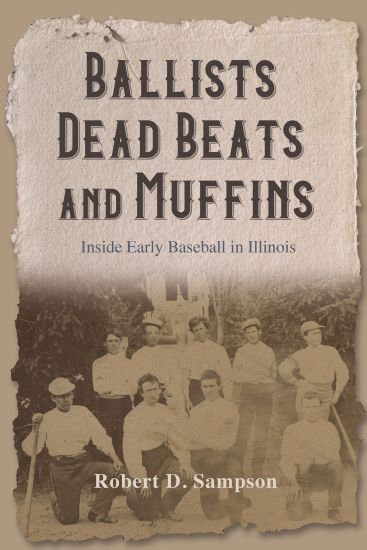
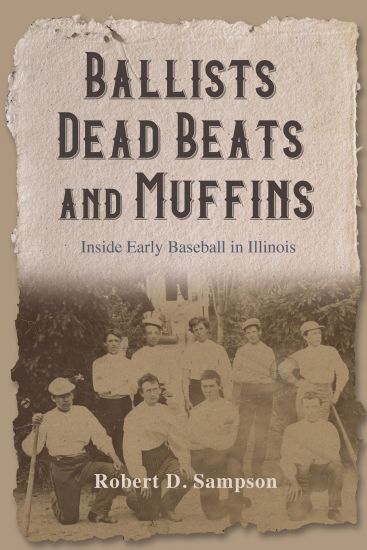
Winner of the Russell P. Strange Book of the Year Award from the Illinois State Historical Society Baseball’s spread across Illinois paralleled the sport’s explosive growth in other parts of the country.Robert D. Sampson taps a wealth of archival research to transport readers to an era when an epidemic of “base ball on the brain” raged from Alton to Woodstock. Focusing on the years 1865 to 1869, Sampson offers a vivid portrait of a game where local teams and civic ambition went hand in hand and teams of paid professionals displaced gentlemen’s clubs devoted to sporting fair play. This preoccupation with competition sparked rules disputes and controversies over imported players while the game itself mirrored society by excluding Black Americans and women. The new era nonetheless brought out paying crowds to watch the Rock Island Lively Turtles, Fairfield Snails, and other teams take the field up and down the state. A first-ever history of early baseball in Illinois, Ballists, Dead Beats, and Muffins adds the Prairie State game’s unique shadings and colorful stories to the history of the national pastime.
Winner of the Russell P. Strange Book of the Year Award from the Illinois State Historical Society Baseball’s spread across Illinois paralleled the sport’s explosive growth in other parts of the country.Robert D. Sampson taps a wealth of archival research to transport readers to an era when an epidemic of “base ball on the brain” raged from Alton to Woodstock. Focusing on the years 1865 to 1869, Sampson offers a vivid portrait of a game where local teams and civic ambition went hand in hand and teams of paid professionals displaced gentlemen’s clubs devoted to sporting fair play. This preoccupation with competition sparked rules disputes and controversies over imported players while the game itself mirrored society by excluding Black Americans and women. The new era nonetheless brought out paying crowds to watch the Rock Island Lively Turtles, Fairfield Snails, and other teams take the field up and down the state. A first-ever history of early baseball in Illinois, Ballists, Dead Beats, and Muffins adds the Prairie State game’s unique shadings and colorful stories to the history of the national pastime.
This new explanation of crime over the life course provides an important foundation for rethinking contemporary theory and criminal justice policy. It is based on the reanalysis of a classic set of data: Unraveling Juvenile Delinquency, Sheldon and Eleanor Gluecks’ mid-twentieth-century study of 500 delinquents and 500 nondelinquents from childhood to adulthood. Several years ago, Robert Sampson and John Laub dusted off sixty cartons of the Gleucks’ data that had been stored in the basement of the Harvard Law School. After a lengthy process of recoding and reanalyzing these data, they developed and tested a theory of informal social control that acknowledges the importance of childhood behavior but rejects the implication that adult social factors have little relevance.
A leading sociologist’s groundbreaking three-decade study challenges outdated views of crime and character, revealing that traditional risk factors alone poorly predict children's futures.Between 1970 and 2020, the United States experienced first a dramatic rise in crime and incarceration, then an unexpected decline. Along with plummeting violence came declines in substance use, car accidents, child poverty, and lead exposure. By 2020, incarceration rates hit a twenty-five-year low, with African Americans benefiting the most. Yet these positive shifts have not registered in public discourse or policies that continue to rely on outdated studies and reductive narratives of moral character and personal responsibility.A major reason for this oversight lies in how social scientists study youth development—typically through single-birth-cohort approaches that fail to capture generational change. In a pioneering three-decade study of over 1,000 Chicago children across multiple age-groups, Robert J. Sampson challenges this convention. He finds that children with similar self-control and family backgrounds, yet born just a decade apart, experienced dramatically different life paths. Strikingly, children born in the mid-1980s faced twice the likelihood of arrest by their mid-twenties than those born ten years later.This research challenges deeply ingrained assumptions about social decline and the importance of individual fortitude. Sampson spotlights the role of shifting social conditions and structural change in driving measurable improvements in youth trajectories.The era into which a child is born shapes their future as profoundly as race, upbringing, or neighborhood. Rethinking how we understand progress, inequality, and policy means recognizing the transformative power of time itself.
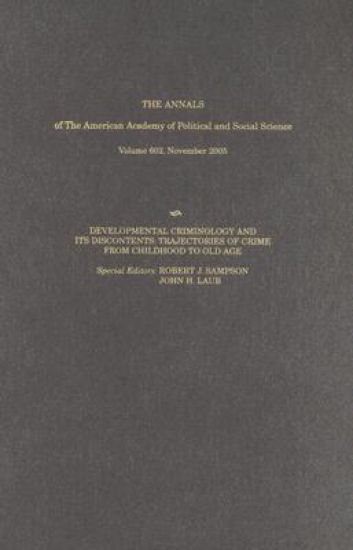
Life-course criminology has generated new energy and provoked sharp debate over competing ideas about the fundamental relationship between age and crime. A major catalyst for this debate - a 2003 American Society of Criminology (ASC) conference session entitled "Age, Crime, and Human Development: The Future of Life-Course Criminology," chaired by the editors of this issue - provided a springboard for this special issue of The Annals. With an eye to the future, this special issue provides critical debate on patterns of age and crime across the full life course - from infancy to late adulthood. Criminal career topics such as onset, continuation, termination, and career length are also discussed, along with the viability of developmental and taxonomic theories of crime, the suitability of existing data archives to test theories, and the prospects for marrying longitudinal and experimental studies. The distinguished papers that appear in this compelling collection include the full set of presentations from the inaugural Albany Symposium on Crime and Justice: "Developmental Criminology and Its Discontents: Offender Typologies and Trajectories of Crime," which took place in April 2005 and built upon the questions raised at the ASC conference session. In addition to the revised original papers and commentaries from the Albany symposium, this journal also includes never-before-published responses to the commentaries by each of the papers' authors. An overview by Alfred Blumstein of the central issues raised at the symposium and a book-review essay by Hans-J rgen Kerner rounds out the volume and collectively provides a comprehensive representation of the provocative discussion ignited by these intriguing session panels. Centered on the fundamental discussions raised by the life-course paradigm in criminology, this historical issue of The Annals will potentially shape the theoretical and research agenda for years to come. It is an essential resource for scholars, researchers, and practitioners in the fields of criminology, sociology, psychology, criminal justice, aging, human development, and social policy. With a diverse set of viewpoints, this well-rounded and in-depth look at age, crime, and human development is a valuable contribution to existing studies and will serve as a foundation for future research into this lively topic.
New Edition Now Available!Career Development and Planning: A Comprehensive Approach provides content from cognitive psychology, sociology, and economics that can be used to solve career problems and make career decisions. Career Development and Planning is an inclusive, integrated system of career learning activities intended to improve instruction and enhance learning outcomes. Career Development and Planning features three knowledge domains: cognitive and social foundations, the occupational world and work behavior, and career choice and development in individuals and organizations.Career Development and Planning includes theoretical work in cognitive psychology and relevant knowledge from the applied behavioral sciences:Part I focuses on the theory base in cognitive information processing, with detailed, practical examples of the application of the theory in typical career situations, including self-knowledge, occupational knowledge, and decision making.Part II provides a multidisciplinary overlay of issues that affect career decisions, such as economic trends, organizational culture, new work styles, and dual careers.Part III focuses on concrete steps for executing a strategic career plan and seeking employment, including an examination of familiar topics such as interviewing, resume writing, negotiating, and work adjustment, from a cognitive and multidisciplinary perspective.Career Development and Planning: A Comprehensive Approach can be re-ordered, appended with your content, and customized to fit any existing course structure! In addition, the text also comes with a comprehensive instructor manual that includes activities related to course content and PowerPoint presentations for each chapter.In addition to meeting general education requirements, this text fulfills five criteria cited by the American Psychological Association. The text embraces and builds upon the following APA professional development guidelines for the undergraduate psychology major:""Apply psychological content and skills to career goals."" (APA 2016)The text focuses on the topic of self-knowledge and helps students apply this information to career decision-making. Students assess and evaluate their Values, Interests, and Skills, providing them with vital information for career planning. Utilizing cognitive information processing theory and Holland's RIASEC theory, students learn about self-knowledge for educational and career planning.""Exhibit self-efficacy and self-regulation."" (APA 2016)The text provides valuable information from cognitive psychology to aid students in making proactive, self-directed decisions about their futures. It presents a five-phase career decision-making model and explains how one's metacognitions can be changed to enhance decision-making effectiveness.""Refine project-management skills."" (APA 2016)The text guides students through concrete, measureable steps for meeting their career goals, providing them with an understanding of how to break down complex tasks into smaller, manageable actions. It features a conceptual framework based on theory and research, the CASVE Cycle, which empowers students with a schema for executing educational, occupational, or employment plans.""Enhance teamwork capacity."" (APA 2016)The text explains how individual careers may unfold in the context of organizational behavior; the global economy; new ways of working; and the relationships among supervisors, co-workers, and family members. The text prompts readers to network in their communities and draw upon the knowledge of others as mentors and advisors.""Develop meaningful professional direction for life after graduation."" (APA 2016)All aspects of the text are written to help students develop professional goals and maximize opportunities for discovering and executing post-graduation plans. Through the presentation of resources and strategies that help students explore their interests and options, the text gives them the tools to pursue meaningful careers in further education, employment, or community engagement.(American Psychological Association. (2016). Guidelines for the undergraduate psychology major: Version 2.0. American Psychologist, 71, 102-111.)
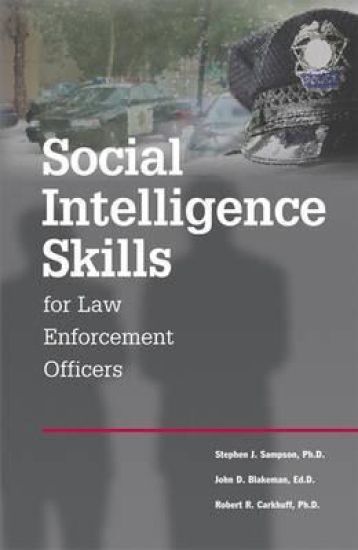
The highly successful intervention model is demonstrated through practical skill related exercises including - The Basics (sizing up skills), The Add-ons (communicating skills), and The Applications (controlling skills). This is a worthwhile series for any Law Enforcement or Governmental Organization.
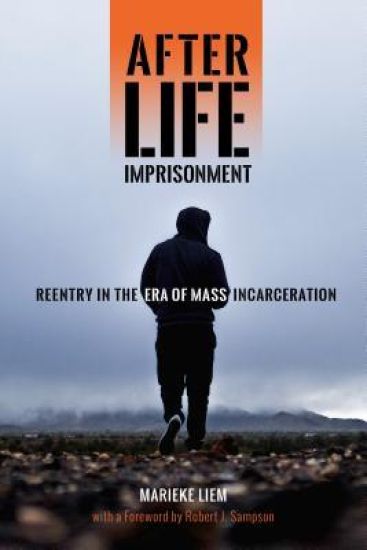
One out of every ten prisoners in the United States is serving a life sentence—roughly 130,000 people. While some have been sentenced to life in prison without parole, the majority of prisoners serving 'life' will be released back into society. But what becomes of those people who reenter the everyday world after serving life in prison? In After Life Imprisonment, Marieke Liem carefully examines the experiences of "lifers" upon release. Through interviews with over sixty homicide offenders sentenced to life but granted parole, Liem tracks those able to build a new life on the outside and those who were re-incarcerated. The interviews reveal prisoners' reflections on being sentenced to life, as well as the challenges of employment, housing, and interpersonal relationships upon release. Liem explores the increase in handing out of life sentences, and specifically provides a basis for discussions of the goals, costs, and effects of long-term imprisonment, ultimately unpacking public policy and discourse surrounding long-term incarceration. A profound criminological examination, After Life Imprisonment reveals the untold, lived experiences of prisoners before and after their life sentences.
One out of every ten prisoners in the United States is serving a life sentence—roughly 130,000 people. While some have been sentenced to life in prison without parole, the majority of prisoners serving 'life' will be released back into society. But what becomes of those people who reenter the everyday world after serving life in prison? In After Life Imprisonment, Marieke Liem carefully examines the experiences of "lifers" upon release. Through interviews with over sixty homicide offenders sentenced to life but granted parole, Liem tracks those able to build a new life on the outside and those who were re-incarcerated. The interviews reveal prisoners' reflections on being sentenced to life, as well as the challenges of employment, housing, and interpersonal relationships upon release. Liem explores the increase in handing out of life sentences, and specifically provides a basis for discussions of the goals, costs, and effects of long-term imprisonment, ultimately unpacking public policy and discourse surrounding long-term incarceration. A profound criminological examination, After Life Imprisonment reveals the untold, lived experiences of prisoners before and after their life sentences.
This book analyzes newly collected data on crime and social development up to age 70 for 500 men who were remanded to reform school in the 1940s. Born in Boston in the late 1920s and early 1930s, these men were the subjects of the classic study Unraveling Juvenile Delinquency by Sheldon and Eleanor Glueck (1950). Updating their lives at the close of the twentieth century, and connecting their adult experiences to childhood, this book is arguably the longest longitudinal study of age, crime, and the life course to date. John Laub and Robert Sampson's long-term data, combined with in-depth interviews, defy the conventional wisdom that links individual traits such as poor verbal skills, limited self-control, and difficult temperament to long-term trajectories of offending. The authors reject the idea of categorizing offenders to reveal etiologies of offending--rather, they connect variability in behavior to social context. They find that men who desisted from crime were rooted in structural routines and had strong social ties to family and community.By uniting life-history narratives with rigorous data analysis, the authors shed new light on long-term trajectories of crime and current policies of crime control.
The 18th century was a wealth of knowledge, exploration and rapidly growing technology and expanding record-keeping made possible by advances in the printing press. In its determination to preserve the century of revolution, Gale initiated a revolution of its own: digitization of epic proportions to preserve these invaluable works in the largest archive of its kind. Now for the first time these high-quality digital copies of original 18th century manuscripts are available in print, making them highly accessible to libraries, undergraduate students, and independent scholars.Medical theory and practice of the 1700s developed rapidly, as is evidenced by the extensive collection, which includes descriptions of diseases, their conditions, and treatments. Books on science and technology, agriculture, military technology, natural philosophy, even cookbooks, are all contained here.++++The below data was compiled from various identification fields in the bibliographic record of this title. This data is provided as an additional tool in helping to insure edition identification: ++++British LibraryT145401Glasguae: in aedibus academicis excudebant Robertus et Andreas Foulis, 1756. 8],411, 1]p.: ill.; 4
An astonishingly cute children's tale, "Sampson The Snowflake" tells the story of a special snowflake made for Christmas night winds. A winter wind blows him off his course and now he needs to find his way back in time for Christmas Eve.
Many books have been written about the superintendency and all aspects of it. Additionally, “standards for superintendents” have been written by the American Association for School Administrators (AASA). These eight standards deal with Leadership and District Culture, Policy and Governance, Communications and Community Relations, Organizational Management, Curriculum Planning and Development, Instructional Management, Human Resource Management, and Values and Ethics of Leadership.States have standards that mirror these. Texas, for example, put the standards into three domains: Leadership of the Educational Community; Instructional Leadership; and Administrative Leadership. Within these three domains are listed the eight competencies which reflect AASA’s eight standards. Daily Devotions for Superintendents covers many of the standards but really hones in on Competency 1 which read, “The superintendent knows how to act with integrity, fairness, and in an ethical manner in order to promote the success of all students.”Containing 366 devotionals written to challenge, encourage, and to daily feed the superintendents as they face the many different situations in their personal lives and in the schools under their leadership, Daily Devotions for School Superintendents looks at all areas of the superintendency and provides daily devotionals from every book in the Bible. In addition, each daily verse is followed with powerful reflections to clearly illustrate and drive the principles home. All verses are taken from the King James version of the Bible and uncover God’s presence, power, and provision for directing superintendents in their daily activities.
In the novel's Preface, the Author states: "In a few short words, the content of the book is this: A boy dedicates himself to the clerical profession with the fire of childlike enthusiasm, the youth goes astray in his profession, and the man, 'because not all flowering dreams ripened, ' has the notion of giving it up and 'fleeing to the desert.' Yet Heaven has decided otherwise. With resignation he comes back to himself and begins again to believe in his calling. Besides this, everything which is presented in the book belongs partly to the characteristics of the hero appearing in it, partly to the characteristics of our time chiefly with regard to religious, ecclesiastical, and especially clerical matters."