Kirjojen hintavertailu. Mukana 11 510 049 kirjaa ja 12 kauppaa.

Kirjahaku

Etsi kirjoja tekijän nimen, kirjan nimen tai ISBN:n perusteella.

1000 tulosta hakusanalla Rudolf Dietsch

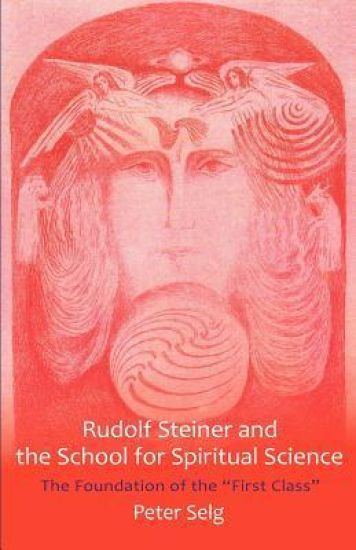
Rudolf Steiner and the School for Spiritual Science
Following Rudolf Steiner's death, the mysteries cannot be revealed further at the present time, but we must continue to cultivate a living, not only rational but also ritual, continuity of the mystery contents he has given, passing them to people who did not know Rudolf Steiner and yet seek to connect with him esoterically and not just intellectually. --Ludwig Count Polzer-Hoditz Since Rudolf Steiner's death in 1925, little has been written about the "First Class" of the School for Spiritual Science in Dornach. The Class continues as an esoteric institution in the hearts of its disciples and in the mantras and meditations. This meditative work is hidden from view, yet, behind the scenes, it lives on in the inner striving for development of soul and spirit that is part of any mystery school. Rudolf Steiner himself guarded the content of the Class Lessons strictly, only intimating to members of the General Society that his esoteric school existed and how it worked. In this book, Peter Selg provides a context for the "reading" of the Class Lessons, the School for Spiritual Science itself, as well as for Rudolf Steiner's intentions for such an esoteric undertaking. The School for Spiritual Science was the work of an initiate, and through the esoteric collaboration of Rudolf Steiner and those who worked with him a Christian mystery center began to unfold. But Steiner's aim has not yet been achieved. Intense work is still needed for its realization--unwavering efforts with awareness of the foundations Rudolf Steiner laid down and consciousness of the mystery dimension of the endeavor. As an aspect of that wider mystery dimension, Peter Selg also looks back to Ita Wegman as Rudolf Steiner's "helper" in the First Class. He seeks to leave behind the conflicts of the 1920s and 1930s as Ita Wegman herself left them behind her. As Ita Wegman said, "For me the matter is settled. There are so many misunderstandings that I consider it better to leave things well alone. We all thought we were doing the right thing. Looking forward is more important now than looking back." In its exploration of the First Class, Rudolf Steiner and the School for Spiritual Science provides a much-needed perspective on what ought to be at the very heart of Anthroposophy and the movement for Spiritual Science that Rudolf Steiner brought into the world.
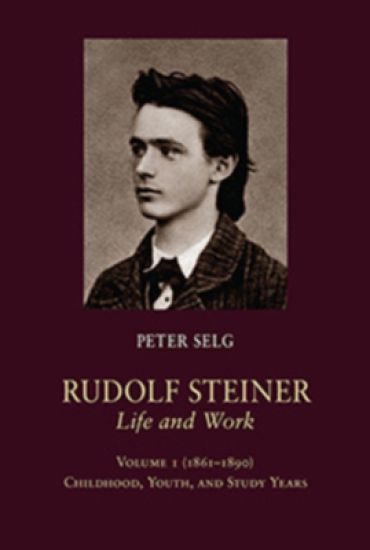
Rudolf Steiner, Life and Work

Rudolf Steiner, Life and Work

Peter Selg

SteinerBooks, Inc
2014
nidottu
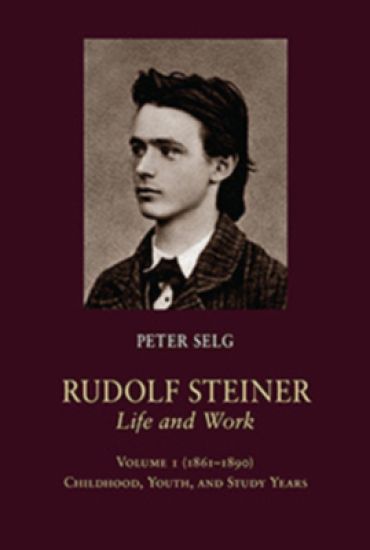
"I have never in my life pursued personal ambitions, nor will I in future." --Rudolf Steiner To acknowledge and understand Rudolf Steiner's unique achievement and life's work, one must be able to accept that the founder and spiritual researcher of Anthroposophy was "a citizen of two worlds"--both the spiritual and the physical. Anthroposophy teaches that this duality, rather than being a quality reserved for special individualities, is inherent to human nature. According to Rudolf Steiner, it is a central aspect of being human, even in times when the suprasensory aspect of humanity is eclipsed (for ordinary day consciousness) and almost eliminated by certain civilizations. The interest in Rudolf Steiner's person and essence, in his attitude toward life and work, will continue to grow in the decades and centuries that lie ahead, both within and outside the anthroposophical movement. It will take hold of entirely different groups of people, including those who come with spiritual questions or discover them in times of need. Rudolf Steiner's work grew to be "one unique effort of bringing courage to human beings" (Michael Bauer). This is the first of seven comprehensive volumes on Rudolf Steiner's "being, intentions, and journey." It presents Rudolf Steiner from childhood and youth through his doctorate degree and up to the time of his work for the Goethe Archives as editor of Goethe's scientific writings. By considering his formative years in depth, we come to understand better the roots and development of Rudolf Steiner's later spiritual research and teachings. -- -- -- "In the summer of 1881, Rudolf Steiner visited Felix Koguzki twice in his village. He saw the cottage that was full of medicinal herbs and the library, and he met Koguzki's wife and his children, whose development Koguzki recorded so impressively in his diary. 'God's blessing is everything, ' was written above the door of Koguzki's cottage in Trumau, where he prepared his herbal teas. Richard Koguzki wrote about his father, 'With all his spiritual openness, he was pious and devout. Goethe said: "Who ne'er his bread in sorrow ate, Who ne'er the mournful midnight hours Weeping upon his bed has sate, He knows you not, ye Heavenly Powers." He knew them.'" --Peter Selg (chapter 2)
Rudolf Steiner, Life and Work

Rudolf Steiner, Life and Work

Peter Selg

SteinerBooks, Inc
2014
sidottu
This is the first of seven volumes that offer the most comprehensive biography to date of Rudolf Steiner (1861-1925), founder of Anthroposophy (or Spiritual Science) and the Anthroposophical Society, which today has branches around the world. His unique genius gave rise to new impulses in education, medicine, agriculture, the arts, economics, and religion. Volume 1 presents Rudolf Steiner's life from birth and youth, through his doctorate degree and work as editor of Goethe's scientific works for the Goethe Archives.
Rudolf Steiner, Life and Work

Rudolf Steiner, Life and Work

Peter Selg

SteinerBooks, Inc
2014
nidottu
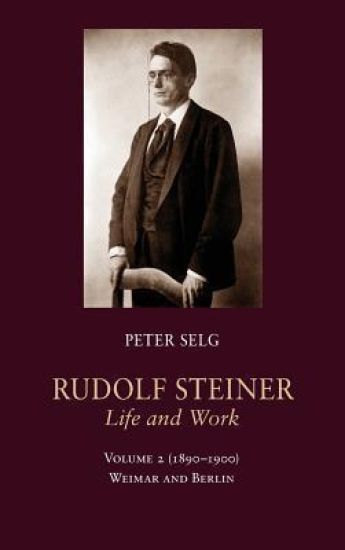
"It makes no sense to stop where Goethe stood. Yet we cannot progress unless we absorb Goethe deeply and allow ourselves to be wholly inspired by the impulses he brought into the world. This cannot be achieved as quickly as people today would like this to happen. There is nothing for it; anyone who was careless enough to live at the end of the nineteenth century must bear it." --Rudolf Steiner, July 18, 1891The first chapter of this volume looks at Rudolf Steiner's years in Weimar, beginning with his work at the Goethe Archives editing Goethe's scientific works. It was in this capacity that Steiner was able to comprehend the great spiritual depth of Goethe's life and work, which became the foundation for his own lifework. This chapter also looks at his social circles and the writing and publication of his works Truth and Knowledge (CW 3) and The Philosophy of Freedom (CW 4). It also highlights his encounter with the work of Friedrich Nietzsche, his visits to the Nietzsche Archives in Naumburg, and the writing of his book Friedrich Nietzsche: Fighter for Freedom (CW 5). Rudolf Steiner's time in Weimar comes to a close with the creation of his second book on Goethe: Goethe's World View (CW 6), a fruit of his work at the Archives. The second chapter focuses on Rudolf Steiner's time in Berlin, where he worked as editor of a cultural periodical, Magazin f r Litteratur, and accepted a position as lecturer at the Workers' School. There he was able to grow into his capacity as a teacher and where, although he encountered many ideological challenges, his insight into historical development found wide appreciation among students. The third chapter covers the turn of the century and Rudolf Steiner's inner transition to speaking and writing more openly of his esoteric observations on the evolution of consciousness, the "I," and the training of cognition. His decisive 1899 essay, Individualism in Philosophy, marked this impulse, followed by invitations to lecture freely before the Theosophical Society, where Rudolf Steiner presented the esoteric nature of Goethe's fairy tale and the content of what later became his own books Mystics after Modernism (CW 7) and Christianity as Mystical Fact and the Mysteries of Antiquity (CW 8). Rudolf Steiner, Life and Work, volume 2 is a translation from German of chapters 4 and 5 of Rudolf Steiner. 1861-1925: Lebens- und Werkgeschichte. Band 1: 1861-1914 (Ita Wegman Institut, 2012).

Rudolf Steiner, Life and Work

Rudolf Steiner, Life and Work

Peter Selg

SteinerBooks, Inc
2015
pokkari
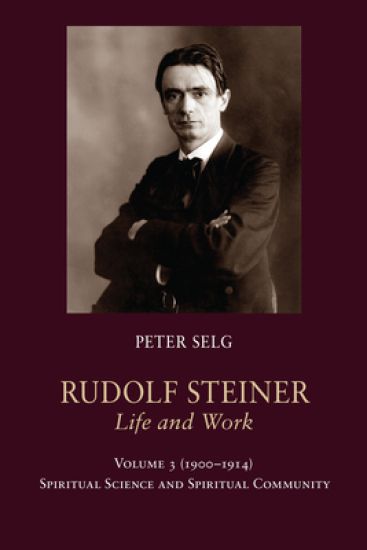
This third volume of Peter Selg's comprehensive presentation of Rudolf Steiner's life and work begins with Steiner's invitation to lecture in the Theosophical Society during the summer of 1900. From the outset of his theosophical involvement, Steiner was resolved to serve and develop the Western path to the spirit, traversed in full, conscious clarity of thought. He was therefore critical of the tendency to avoid the modern standards of a sound knowledge process in matters of spirituality and esotericism, and instead emphasized the importance of idealist philosophy as groundwork for understanding spiritual cognition.
Rudolf Steiner, Life and Work

Rudolf Steiner, Life and Work

Peter Selg

SteinerBooks, Inc
2016
nidottu
In volume 4, Peter Selg continues his thorough and careful exploration into Rudolf Steiner's life and work, focusing on the period of 1914 to 1918 and World War I. Steiner experienced the assassination in Sarajevo as a deeply serious tragedy that would inevitably lead to war and lamented the widespread reluctance to regard such critical events with the appropriate earnestness and concern. Steiner saw the dark time of World War I as largely the result of mounting economic tensions between England and Germany, marked by unsustainably materialistic and nationalistic thinking. In his view, the prevalent social concepts resisted evolution toward a form of society that would enable a long-term future peace; he would soon propose his alternative in the form of the "threefold nature of the social organism." The core idea of this concept is that, to maintain societal health, sovereign and mutually interdependent relations must be upheld among the three principal domains of social life--the political, economic, and cultural-spiritual realms. Rudolf Steiner felt strongly that the threefold concept would be the only hope for lasting peace in war-torn Europe and devoted tremendous energy to promoting and clarifying his "threefold idea." In the end, his many attempts to reach out to those capable of bringing this idea to realization did not succeed, though certain high-ranking individuals did reach out to Steiner for counsel. Volume 4 describes a dramatic period during which Rudolf Steiner showed competence and devotion in his attempts to communicate and implement a long-term path to peaceful relations in Europe. His lectures during this time focused heavily on themes of inwardly accompanying those who have died; caring for the wounded; the importance of selflessly experiencing the full tragic reality of world events; and the vital importance of truthfulness in journalism. He regarded the deficiency of truthful reporting to be so dire that he considered founding a news organization in Switzerland. Steiner's deep concern for the tragedy that had befallen Europe, for the many lives violently cut short, and for the political exploitation attempted in the aftermath of the war, led him to imbue his anthroposophic activity with a fundamentally new gesture, focusing on practical contributions to society in a way never before attempted in the anthroposophical movement. This volume is a translation from German of the first chapter of Rudolf Steiner. 1861 - 1925: Lebens- und Werkgeschichte. Band 2: 1914 - 1922 (Ita Wegman Institut, 2012).
Rudolf Steiner, Life and Work

Rudolf Steiner, Life and Work

Peter Selg

SteinerBooks, Inc
2016
sidottu
In volume 4, Peter Selg continues his thorough and careful exploration into Rudolf Steiner s life and work, focusing on the period of 1914 to 1918 and World War I. Steiner experienced the assassination in Sarajevo as a deeply serious tragedy that would inevitably lead to war and lamented the widespread reluctance to regard such critical events with the appropriate earnestness and concern. Steiner saw the dark time of World War I as largely the result of mounting economic tensions between England and Germany, marked by unsustainably materialistic and nationalistic thinking. In his view, the prevalent social concepts resisted evolution toward a form of society that would enable a long-term future peace; he would soon propose his alternative in the form of the threefold nature of the social organism. The core idea of this concept is that, to maintain societal health, sovereign and mutually interdependent relations must be upheld among the three principal domains of social life the political, economic, and cultural-spiritual realms. Rudolf Steiner felt strongly that the threefold concept would be the only hope for lasting peace in war-torn Europe and devoted tremendous energy to promoting and clarifying his threefold idea. In the end, his many attempts to reach out to those capable of bringing this idea to realization did not succeed, though certain high-ranking individuals did reach out to Steiner for counsel. Volume 4 describes a dramatic period during which Rudolf Steiner showed competence and devotion in his attempts to communicate and implement a long-term path to peaceful relations in Europe. His lectures during this time focused heavily on themes of inwardly accompanying those who have died; caring for the wounded; the importance of selflessly experiencing the full tragic reality of world events; and the vital importance of truthfulness in journalism. He regarded the deficiency of truthful reporting to be so dire that he considered founding a news organization in Switzerland. Steiner s deep concern for the tragedy that had befallen Europe, for the many lives violently cut short, and for the political exploitation attempted in the aftermath of the war, led him to imbue his anthroposophic activity with a fundamentally new gesture, focusing on practical contributions to society in a way never before attempted in the anthroposophical movement. This volume is a translation from German of the first chapter of Rudolf Steiner. 1861 - 1925: Lebens- und Werkgeschichte. Band 2: 1914 - 1922 (Ita Wegman Institut, 2012). "
Rudolf Steiner, Life and Work

Rudolf Steiner, Life and Work

Peter Selg

Rudolf Steiner Press
2017
pokkari
"Try to become one with the world--that will be the best and most important 'program.' It is something that cannot be contained in statutes but needs to burn in our hearts as a flame." --Rudolf SteinerFollowing the widespread destruction of World War I, Europe in 1918 was faced with political, economic, and social chaos, especially in Germany. In volume 5 of his seven-volume biography of Rudolf Steiner, Peter Selg focuses on the three years following the "Great War" and Steiner's efforts to help restructure society in a way that might avoid a recurrence of such a terrible calamity in the future. He saw the root sociopolitical and spiritual causes of the devastation and sought to change the flawed worldviews and impulses that led to the hubris behind the World War. Rudolf Steiner thus began to concentrate on various means to renew and invigorate society, both through immediate measures--especially in his plan for a "threefold social order"--and through the new form of pedagogy that came to fruition with the Waldorf education movement. Steiner saw that a renewed form of education was necessary to the development of peaceful and healthy social conditions in the future. This education was intended to help children grow into responsible, free, and imaginative adults. This was a time of intense work for Rudolf Steiner, including a full schedule of travel and lectures, reaching out to political leaders, training teachers for the new schools, and working with theologians and ministers toward religious renewal.Rudolf Steiner, Life and Work, Seven VolumesVol. 1. (1861-1890): Childhood, Youth, and Study Years(ISBN: 9781621480822 Pbk - ISBN: 9781621480839 Hbk)Vol. 2. (1890-1900): Weimar and Berlin(ISBN: 9781621480853 Pbk - ISBN: 9781621480860 Hbk)Vol. 3. (1900-1914): Spiritual Science and Spiritual Community(ISBN: 9781621480884 Pbk - ISBN: 9781621480891 Hbk)Vol. 4. (1914-1918): The Years of World War I(ISBN: 9781621481577 Pbk - ISBN: 9781621481584 Hbk)Vol. 5. (1919-1922): Social Threefolding and the Waldorf School(ISBN: 9781621481935 Pbk - ISBN: 9781621481942 Hbk)Vol. 6. (1923): The Burning of the Goetheanum(ISBN: 9781621482192 Pbk - ISBN: 9781621482208 Hbk)Vol. 7. (1924-1925): The Anthroposophical Society and the School for Spiritual Science(ISBN: 9781621482321 Pbk - ISBN: 9781621482338 Hbk)
Rudolf Steiner

Rudolf Steiner

Christoph Lindenberg

Rudolf Steiner Press
2017
pokkari
"I don't want to be revered! I want to be understood." --Rudolf Steiner, 1915Whoever follows Rudolf Steiner's life will gain the impression that, from a certain point on, his constant attempt was to awake, in numerous ways, an active, working understanding for Anthroposophy. He used creative imagination to treat particular themes and tasks, ever anew, and in many forms. If we observe the variations of those presentations, we see in them the intentions that guided his whole life. A biography that shows Steiner's intentions and efforts in the context of the times and his life circumstances will not only relate what happened, but also why. His work does not, as in many modern biographies, disappear behind the life story.This is one of the most comprehensive biographies of Rudolf Steiner, tracing his life and development through a profound look at his life and work, which encompassed numerous areas, including his Goethean research, philosophy, esoteric work, pedagogy, medicine, sociology, agriculture, architecture, painting, movement arts, and poetry. This biography, which tracks his divergent activities, shows how Rudolf Steiner was most concerned with bringing a new approach to knowledge through Spiritual Science and to revitalizing the most important areas of human culture and society. Includes 119 photographic reproductions.C O N T E N T SForewordIntroduction1. The Stranger2. Learning 3. Student in Vienna 4. The Lonely Wanderer 5. Goethe: A Source of Hope 6. In Need of Special Care 7. Theory of Knowledge 8. Social Life in Vienna 9. The Editor: An Excursion into Politics 10. Aesthetics 11. First Journeys12. Friedrich Eckstein, Theosophy, and Rosa Mayreder 13. Spirit and Nature: The Foundation of a Spiritual Philosophy 14. Weimar: At the Goethe-Schiller Archive 15. Lonely in the Company of Many Friends -- Images, Part One16. The Philosophy of Freedom 17. For and against Nietzsche 18. A New World Opens Up 19. The Maelstrom of Berlin 20. Time of Trial 21. Three Attempts at the Turn of the Century 22. The Way into the Theosophical Society 23. The Theosophical Society 24. Establishing the German Section of the Theosophical Society 25. Attempts to Fructify the Art of Living 26. The Three Paths 27. The Munich Congress: A Conference in a Rosicrucian Temple28. Breadth and Depth29. The Illumination of the Christian Mysteries 30. The Mystery Plays 31. Separation from the Theosophical Society 32. Surrounded by Artists: 1907-1918 33. Building -- Images, Part Two34. Wartime in Dornach 35. The Destiny of Central Europe 36. The Idea of the Threefold Human Organism 37. The Threefold Social Movement during the War 38. Preparations for the Postwar Period 39. Struggle for the Threefold Commonwealth 40. The Independent Waldorf School 41. Commercial Ventures 42. The Need to Communicate Impulses for Cultural Renewal 43. A Broader Understanding of Healing 44. Establishing The Christian Community 45. Possibilities--Realities46. The Goetheanum Fire 47. Stuttgart 192348. Spring 1923: The Struggle to Rebuild 49. Summer 1923: England -- Images, Part Three 50. Autumn 1923: The Way to Decision 51. The Christmas Conference of 1923 52. Foundations 53. Spring 1924 54. The Final Intensification: Summer 1924 55. Sickbed and Death Epilogue The Collected Works of Rudolf Steiner Bibliography
Rudolf Steiner, Life and Work

Rudolf Steiner, Life and Work

Peter Selg

SteinerBooks, Inc
2018
pokkari
"Try to become one with the world--that will be the best and most important 'program.' It is something that cannot be contained in statutes but needs to burn in our hearts as a flame." --Rudolf Steiner In 1923, Central Europe was still in disarray and social chaos created by the polarizing events of World War I. In volume 6 of his seven-volume biography of Rudolf Steiner, Peter Selg focuses on one of the most tragic years for the anthroposophical movement, including especially the rise of nationalism and the seeds of hatred spawned by Adolf Hitler and his followers. The very beginning of that pivotal year began with the destruction of the nearly finished Goetheanum building in Dornach, Switzerland, delivering a heavy blow to the Anthroposophical Society and to Rudolf Steiner, both spiritually and on a personal level. It was evident that the fire had been caused by arson, and Steiner immediately expressed determination to rebuild and move forward, despite the friction in the Anthroposophical Society and the movement as a whole. Steiner noted, "It will not be viable if things continue as before," suggesting that the Society needed to be suffused with the "will to wake up...because then it can inspire an awakening of the present civilization as a whole." He devoted the remainder of 1923--indeed, his life--to that cause.
Rudolf Steiner, Life and Work

Rudolf Steiner, Life and Work

Peter Selg; Rudolf Steiner

SteinerBooks, Inc
2019
pokkari
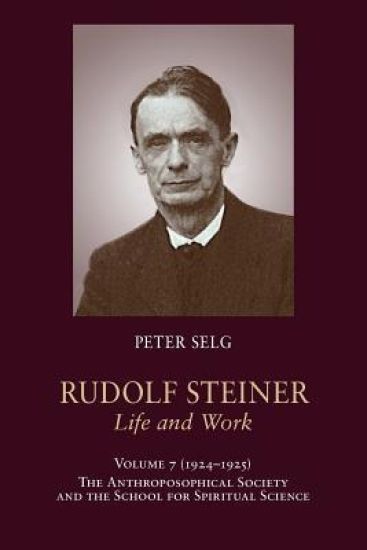
In the seventh and final volume in his comprehensive biography of Rudolf Steiner, Peter Selg describes Steiner's final months on Earth. Although his health was beginning to decline, 1924 was arguably his most productive and fruitful year. It saw a new beginning for the Anthroposophical Society, as well as the beginnings of the Esoteric School and the School for Spiritual Science, both of which continue to constitute the heart of the Society's core mission in the world. The year began with the "Christmas Conference," during which the new mystery stream of the Anthroposophical Society was reborn: "All those experiencing the Christmas Conference, the Michael Conference, in the right way felt transformed, felt how they became different persons, how the spiritual world drew very close--how we were, in fact, within it" (Ita Wegman). The year 1924 also witnessed Rudolf Steiner's series of "Karmic Relationships" lectures, as well as the serialized "Leading Thoughts" published in Das Goetheanum, the weekly newsletter to Anthroposophical Society members, in which he summarized the whole of Anthroposophy in a series of aphoristic food for thought and meditation, supplemented by essays on the Michaelic nature of Anthroposophy. Also serialized in the Goetheanum newsletter were Rudolf Steiner's Autobiography--seventy chapters in his life up to 1907. During that time, too, Steiner clearly defined his spiritual relationships with Ita Wegman, Marie Steiner, and Lili Kolisko and their significant connection to the Society and his spiritual legacy. New initiatives were also planted in the world during this time, including anthroposophically extended medicine and biodynamic agriculture. From his sickbed at the foot of his monumental sculpture--The Representative of Humanity--Steiner also formed plans and a model for rebuilding the Goetheanum in Dornach, Switzerland. Also included in this volume is a lecture by Rudolf Steiner on June 4, 1924, "The Festival of Pentecost."
Rudolf Steiner's Esoteric Teaching Activity

Rudolf Steiner's Esoteric Teaching Activity

Hella Wiesberger

SteinerBooks, Inc
2019
pokkari
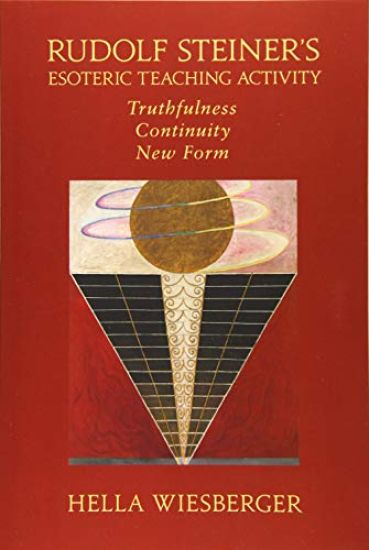
These accounts by Hella Wiesberger (1920-2014) offer an overview of the nature, background, and history of Rudolf Steiner's esoteric teaching activity. This book is the result of her lifelong study of this aspect of Steiner's work, including documents she oversaw as an editor of Rudolf Steiner's Collected Works. Wiesberger's collegial relationships with certain esoteric students also helped her shine a light on some of Steiner's less accessible documents. Hella Wiesberger's writings were published over two decades as introductions and commentaries in relevant volumes of Rudolf Steiner's Collected Works, placing them in biographical and historical context. The essays were edited in various degrees for this volume in consideration of more recent context, insights, and knowledge. Also included are commentaries and contributions related to the Esoteric School from Rudolf Steiner, Marie Steiner, and Adolf Arenson, as well as several letters to and from Rudolf Steiner. We are fortunate to have these records from a devoted and diligent student of Rudolf Steiner and Anthroposophy. They provide valuable insights into the story and substance of Spiritual Science and its esoteric school and teaching.
Four Large Watercolour Motifs of Rudolf Steiner

Four Large Watercolour Motifs of Rudolf Steiner

Rudolf Steiner; Virginia Sease

STEINERBOOKS, INC
2023
sidottu
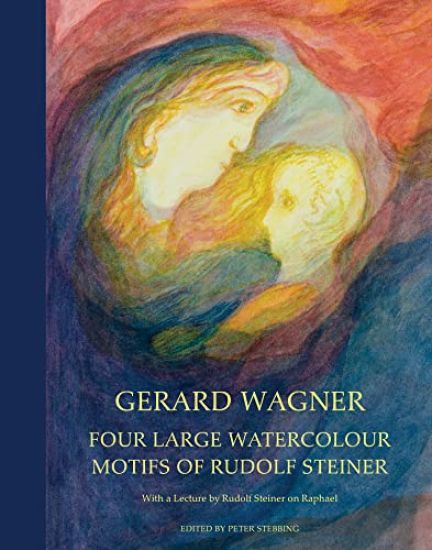
"The art of the future will be an art of inner maturity. What leads to artistic activity will be sensed only at a relatively advanced age in life. It will no longer be assumed that one cannot have the necessary youth forces for artistic creation in later years--as is still often asserted today. It will be found that only by way of inner deepening augmented by spiritual scientific insight are the forces released that lead to artistic creation." --Rudolf Steiner, Dornach, February 7, 1915The painter Henni Geck convinced Rudolf Steiner to paint five watercolors featured in this book: - The Moon Rider (The Dream Song of Olaf steson), January 1924- New Life (Mother and Child), February 1924- Easter (Three Crosses), April 1924- The Archetypal Plant, May 1924- Archetypal Human Being (or Archetypal Animal) July/August 1924The paintings reproduced in this book--also including a small selection from the work of the painter Gerard Wagner--are images that arise from direct color experience and "imagination" as Rudolf Steiner's describes this inner capacity. The purpose of this volume is to focus on the unique possibilities that can open up for the future of art in the world and become a means and path for spiritual-scientific inquiry."We are at a point in the fifth post-Atlantean age when current views must be directed to spiritual forms in art." --Rudolf Steiner, Dornach, August 31, 1918
Rudolf Zwirner: Give Me the Now

Rudolf Zwirner: Give Me the Now

Rudolf Zwirner; Nicola Kihn; Gerard Goodrow

David Zwirner
2021
sidottu
Rudolf Zwirner, “the man who invented the art market,” as coined in Der Spiegel, reflects on more than sixty years in the art business in his authoritative autobiography. An art dealer of the ages, Rudolf Zwirner, father of the esteemed gallerist David Zwirner, reached many milestones in his career. From co-founding Art Cologne, the first fair for contemporary art, in 1967, to showing works by Georg Baselitz, Gerhard Richter, and Andy Warhol, Zwirner transformed the contemporary art scene in Cologne. Born in 1933, he presented more than three hundred exhibitions from the early 1960s to 1991. In his autobiography, Zwirner reveals stories of artists, his gallery, and his most important collector, Peter Ludwig, whose collection forms the cornerstone of the Ludwig Museum in Cologne. First published in 2019 in German, and translated and adapted here for the first time in English, the book explores the most significant moments of Zwirner’s career and the fast-changing postwar art world of. Also included in this edition is a new introduction by Lucas Zwirner, Rudolf’s grandson, who reflects on his grandfather’s role in bringing us to the global art landscape we find ourselves in now.
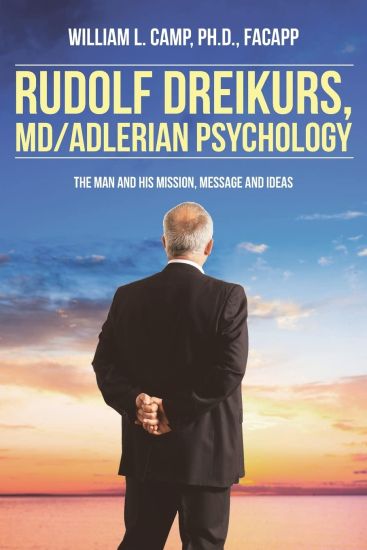
Rudolf Dreikurs, M.D.-Adlerian Psychology

Rudolf Dreikurs, M.D.-Adlerian Psychology

William L Camp Facapp

Christian Faith
2022
pokkari
Rudolf Dreikurs, MD, was an Australian-born American psychiatrist and educator, who lived from 1897 to 1972. He originally helped to develop the Australian psychologist Alfred Adler's ideas called individual psychology into a pragmatic method for understanding the purposes of inappropriate childhood behavior without punishment or reward. He worked with Dr. Adler both in Europe and in the United States and later organized and refined Dr. Adler's and his own ideas into an effective treatment system. These insights and treatment methods were then further refined by Dr. Dreikurs during the remainder of his life to become a highly usable theory of personality and psychological treatment, not only for use with children but also with families, counselors, teachers, and others, including groups. The content of this book summarizes the results of his commitment and mission in doing this work as he created, tested, refined, and applied these concepts in creation of methods for understanding and treatment of a wide variety of behavior problems and disorders common in families worldwide. He also trained people to use these methods in various countries throughout the world. In doing so, he adapted and applied his knowledge in work with business, industry and government, including the military. The ideas and methods contained in this volume are easily understood and may be applied immediately by parents and their families, by teachers in classrooms, and by others -- now, today -- with valuable positive results. The chapters in this book provide a distillation of logical techniques and procedures, for productive application of his original insights including those originated by Dr. Adler and others. Dr. Camp had the honor to meet Dr. Dreikurs in 1970, two years before his death. At that time Dr. Dreikurs told him and a few others that if he had their youth, he would write another book or books to further update and share his insights with new/upcoming generations. This volume is part of an attempt to do exactly that.
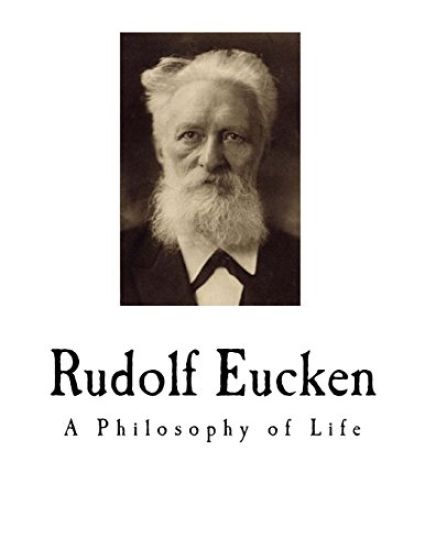
Rudolf Eucken: A Philosophy of Life

Rudolf Eucken: A Philosophy of Life

Abel J. Jones

Createspace Independent Publishing Platform
2018
nidottu
Rudolf Eucken: A Philosophy of Life by Abel J. Jones. Rudolf Christoph Eucken; 5 January 1846 - 15 September 1926) was a German philosopher. He received the 1908 Nobel Prize for Literature "in recognition of his earnest search for truth, his penetrating power of thought, his wide range of vision, and the warmth and strength in presentation with which in his numerous works he has vindicated and developed an idealistic philosophy of life", after he had been nominated by a member of the Swedish Academy. Before we proceed to outline Eucken's philosophical position, it will be well if we can first be clear as to the special problem with which he concerns himself. Philosophers have at some time or other considered all the problems of heaven and earth to be within their province, especially the difficult problems for which a simple solution is impossible. Hence it is, perhaps, that philosophy has been in disrepute, especially in English-speaking countries, the study of the subject has been very largely limited to a small class of students, and the philosopher has been regarded as a dreamy, theorising, and unpractical individual. Many people, when they hear of Eucken, will put him out of mind as an ordinary member of a body of cranks. From Eucken's point of view this is the most unfortunate thing that can happen, for his message is not directed to a limited number of advanced students of philosophy, but is meant for all thinking members of the human race. The problem he endeavours to solve is far from being one of mere theoretical interest; on the contrary it has to do with matters of immediate practical concern to the life of the individual and of the community. To ignore him will be to fail to take account of one of the most rousing philosophies of modern times.
Commandant of Auschwitz: The Autobiography of Rudolf Hoess
Rudolf Hoess was a German SS officer during the Nazi era who, after the defeat of Nazi Germany, was convicted for war crimes. He was the longest-serving commandant of the Auschwitz concentration and extermination camp (from 4 May 1940 to November 1943, and again from 8 May 1944 to 18 January 1945). He tested and implemented means to accelerate Hitler's order to systematically exterminate the Jewish population of Nazi-occupied Europe, known as the Final Solution. On the initiative of one of his subordinates Hoess introduced the pesticide Zyklon B to be used in gas chambers, where more than a million people were killed. Hoess was hanged in 1947 following a trial before the Polish Supreme National Tribunal. During his imprisonment, at the request of the Polish authorities, he wrote his memoirs, released in English under the title Commandant of Auschwitz: The Autobiography of Rudolf Hoess. Like most things in his life, Hoess undertook the autobiography with great diligence. A careful checking by researchers showed he took great pains to tell the truth. The result: a vivid and unforgettable picture of the 20th century's defining and most horrific event.