Observera att förlaget som ger ut denna produkt baserar innehållet i sina produkter på fria källor som Wikipedia. Boken är med stor sannolikhet endast ett utdrag ur dessa informationskällor, alltså inte en vanlig bok i den bemärkelsen.
There are over 3000 runic inscriptions on stone made in Scandinavia in the late Viking Age. This book is the first attempt by a historian to study the material as a whole. The analysis reveals significant regional variations that reflect different stages in the process of conversion, and the growth of royal power. Many monuments were declarations of faith or manifestations of status; but virtually all reflect inheritance claims, and cast unexpected light on the prehistory of the inheritance customs found in later Scandinavian law codes. The results of this analysis make a significant contribution to understanding developments in other parts of the Germanic world, as well as Scandinavia. The inclusion of a digest of the data-base on which this book is based will facilitate further study of this rich vein of evidence.
There are over 3,000 runic inscriptions on stone made in Scandinavia in the late Viking Age. This book is the first attempt by a historian to study the material as a whole. The analysis reveals significant regional variations that reflect the different stages in the process of conversion to Christianity and the growth of royal power. Many monuments were declarations of faith or manifestations of status; but virtually all reflect inheritance customs found in later Scandinavian law codes. The results of this analysis make a significant contribution to understanding developments in other parts of the Germanic world, as well as Scandinavia. The inclusion of a digest of the data-base on which this book is based will facilitate further study of this rich vein of evidence.
The fifth and final novel in the Spellcrackers series, this is a brilliant and action-filled adventure that's packed with humour, magic, romance, and even a few revelations. You can also expect the cameo appearance of a few characters from Ben Aaronovitch's Peter Grant novels! THE HIDDEN RUNE OF IRON is a cracking end to a fantastic story.
Ed Lewis has been dragged to Medieval Faires for as long as he can remember. Now 17, he's sick of the whole scene: helping his uncle make bows, minding the store, and - most of all - translating his mute mother's sign language as she reads runes for a stream of gaga faire-goers. Only one thing makes him come this time, a last chance to impress a certain young woman by winning the archery tournament. It feels like a matter of life and death. All that changes when Ed discovers an ancient, rune-marked arrowhead tucked in his bedroll. He has no idea who put it there and doesn't ask. Angered by his uncle's endless chores, embarrassed by losing the tournament, he buries himself in making an arrow for his find. What he creates is beyond his ken, for the arrowhead is a gate-key to another world, his mother's world, locked in battle between her people and its old masters, a war chief and druid witch of the Britons. It's the world where his father was lost, and mad harpers pluck illusions from their tunes. A world where there be monsters, for Beowulf's saga is fresh and real. A world of magic and war, where skill, wit, friendship, and a healthy dose of fear solve riddles that reveal the true nature of life and death.
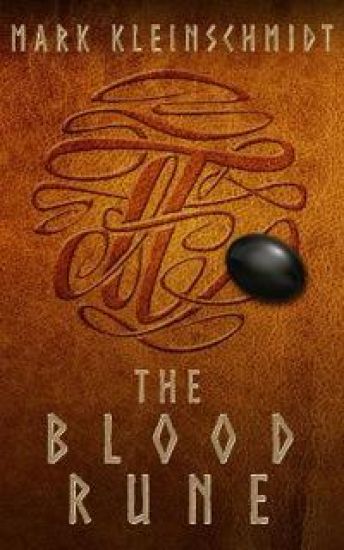
The Blood Rune: the heart-warming adventure of an ordinary teenager's extraordinary escape from domestic violence.Ronan Ryan's world is thrown into turmoil when he steals a polished pebble and a leather notebook from his abusive stepfather.A bullet to the back pitches him into the abyss. He awakes in another place and time, caught in a web of contradictions, untruths, deceptions and disbelief.Can he untangle himself, determine reality, confront his nemesis, and protect his family from further danger?And what does the Norse Goddess, Freyja, have to do with it?The Blood Rune is a crossover novel, written for young adults, but with wide appeal to the adult audience. Ten percent of book profits goes to domestic violence charities.
Unlock the wisdom of nature and ancient Norse runes with this captivating deck that weaves together the potent symbolism of owls, bats, badgers, and foxdeers (a specially designed hybrid). Dawid Lipka and Bartosz Mazik merge the power of the animal kingdom with the esoteric mysteries of runic lore. Discover the profound and practical insights offered by each of the 25 strikingly illustrated cards and accompanying messages, illuminating every aspect of your life, from relationships to health to career choices. The comprehensive guidebook also includes instructions for creating spellbinding runic talismans and reveals the connections between the runes and tarot, astrology, and chakras. Divine your destiny by journeying into the enchanting realm of the Elder Futhark, allowing your animal helpers to lead you every step of the way.
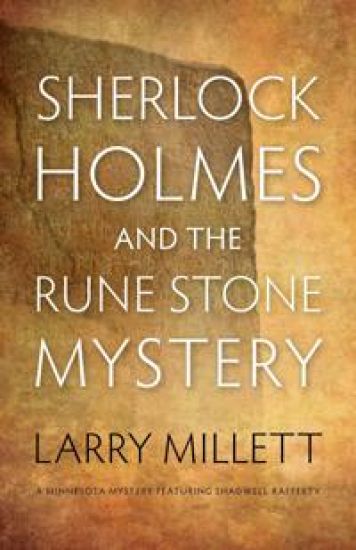
Sherlock Holmes is bored between cases at 221B Baker Street. So when King Oskar II of Sweden-who has heard of the discovery of the Kensington Rune Stone by a farmer in Minnesota-asks to engage his services, Holmes jumps at the chance to decipher the runes and determine whether the find is real or a hoax. With Dr. John H. Watson by his side, faithfully recording every detail, Holmes makes his way to Minnesota for a third time. But, in the first of many strange and unfortunate coincidences, the farmer who found the mysterious stone is murdered, and the stone itself is stolen on the day the famous detective arrives.With the help of one Shadwell Rafferty, now a friend and partner, Holmes must solve this baffling case to find both the stone and the murderer.
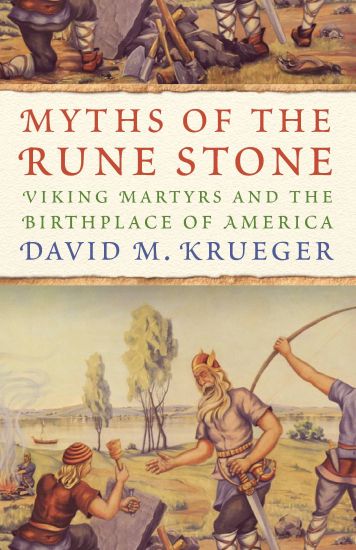
What do our myths say about us? Why do we choose to believe stories that have been disproven? David M. Krueger takes an in-depth look at a legend that held tremendous power in one corner of Minnesota, helping to define both a community’s and a state’s identity for decades.In 1898, a Swedish immigrant farmer claimed to have discovered a large rock with writing carved into its surface in a field near Kensington, Minnesota. The writing told a North American origin story, predating Christopher Columbus’s exploration, in which Viking missionaries reached what is now Minnesota in 1362 only to be massacred by Indians. The tale’s credibility was quickly challenged and ultimately undermined by experts, but the myth took hold.Faith in the authenticity of the Kensington Rune Stone was a crucial part of the local Nordic identity. Accepted and proclaimed as truth, the story of the Rune Stone recast Native Americans as villains. The community used the account as the basis for civic celebrations for years, and advocates for the stone continue to promote its validity despite the overwhelming evidence that it was a hoax. Krueger puts this stubborn conviction in context and shows how confidence in the legitimacy of the stone has deep implications for a wide variety of Minnesotans who embraced it, including Scandinavian immigrants, Catholics, small-town boosters, and those who desired to commemorate the white settlers who died in the Dakota War of 1862.Krueger demonstrates how the resilient belief in the Rune Stone is a form of civil religion, with aspects that defy logic but illustrate how communities characterize themselves. He reveals something unique about America’s preoccupation with divine right and its troubled way of coming to terms with the history of the continent’s first residents. By considering who is included, who is left out, and how heroes and villains are created in the stories we tell about the past, Myths of the Rune Stone offers an enlightening perspective on not just Minnesota but the United States as well.
What do our myths say about us? Why do we choose to believe stories that have been disproven? David M. Krueger takes an in-depth look at a legend that held tremendous power in one corner of Minnesota, helping to define both a community’s and a state’s identity for decades.In 1898, a Swedish immigrant farmer claimed to have discovered a large rock with writing carved into its surface in a field near Kensington, Minnesota. The writing told a North American origin story, predating Christopher Columbus’s exploration, in which Viking missionaries reached what is now Minnesota in 1362 only to be massacred by Indians. The tale’s credibility was quickly challenged and ultimately undermined by experts, but the myth took hold.Faith in the authenticity of the Kensington Rune Stone was a crucial part of the local Nordic identity. Accepted and proclaimed as truth, the story of the Rune Stone recast Native Americans as villains. The community used the account as the basis for civic celebrations for years, and advocates for the stone continue to promote its validity despite the overwhelming evidence that it was a hoax. Krueger puts this stubborn conviction in context and shows how confidence in the legitimacy of the stone has deep implications for a wide variety of Minnesotans who embraced it, including Scandinavian immigrants, Catholics, small-town boosters, and those who desired to commemorate the white settlers who died in the Dakota War of 1862.Krueger demonstrates how the resilient belief in the Rune Stone is a form of civil religion, with aspects that defy logic but illustrate how communities characterize themselves. He reveals something unique about America’s preoccupation with divine right and its troubled way of coming to terms with the history of the continent’s first residents. By considering who is included, who is left out, and how heroes and villains are created in the stories we tell about the past, Myths of the Rune Stone offers an enlightening perspective on not just Minnesota but the United States as well.
Mastering runes is an ongoing task many undertake but few achieve. In this book, you will find all the elementary skills needed to master High Galdr and unleash the full power of the runes. Rune mastery starts with the development and unification of the Self: without knowledge of the Self, mastery of rune use is impossible. It is only with the understanding and mastery of our Self that actual rune mastery can begin.In here, you will find essential basics of the teachings from The Breath of O in Awakens, The Spirit of H nir Awakens (Parts 1 & 2) and The Blood of L urr Awakens, providing a quick guide to help you develop the skills and abilities you need for High Galdr. Learn about the Breath ( nd), the Megin (archetypal force or power) and Hamingja, the Spirit ( r), Mind (Hugr), Memory (Minni), Shadow Self (Sal), Energy Body or 'soul' (Hamr), physical body (Lik) and how to wield them 'runically'.Mastering these fundamental parts of your Self will enable you to start using the runes, their powers, characteristics, energies and influences across multiple levels of reality.An essential guide for those who have not progressed through the The Breath of Odin Awakens, The Spirit of H nir Awakens (Parts 1 & 2) and The Blood of L urr Awakens and want to cover the minimal foundational practice for High Galdr.
Runes, runes and more runes The sacred science of the Gods, the runes were made available to their children, our ancestors. Much information is available about the runes, yet so very little is known as to how they are actually used. They are chanted, they are written, and they are drawn, yet all these methods fail to produce rapid or tangible manifestations.Using the runes is a science and, like any science, the rules under which their principles and practices operate need to be known. Unleashing a runic vocalisation using proper Galdr has been kept secret for ages, known to only an extremely select few who were capable of mastering their very Self. These methods for Galdr (rune use) were passed down through generations as part of our spoken tradition, with only sparse written instruction preserved.At long last, actual methods and underlying principles of manifesting the power of the runes are being made known within these pages. Learn how to wield the runes, how to unleash and manifest them, how our ancestors use them to recode reality and reform events in life. Written in clear practical steps this books is the ideal guide for the beginner and experienced rune seeker. Each and every rune holds a secret, a key, a power, a source of knowledge and a potential.Learn to unleash it ALL using actual High Galdr.
Our fascination with spirits dates back to the most ancient of times. It spans across time and tradition. Humanity has long been fascinated with spirits, seeking answers, knowledge, power and companionship. The thrill of the spirit has called out to so many. It calls to you now. Will you answer its call?The ancient Norse arts of Sei r provide extensive insights into working with spirits. These highly involved and complex practices have been laid clear and are provided here for use by the modern-day practitioners who wish to avail themselves of this most mysterious spiritual art.'Spirit Walking for the Rune Mystic' dives into the reality where walking in the spirit world is not only possible but made accessible even to the novice practitioner. It looks at the nature of spirits and introduces you to methods of making contact, interacting with and growing alongside selected spirits.Drawing from Ancient Arts of Norse Seidr, you will learn how to walk within the spirits in their own realities, how to allow them to walk in yours, build them an energy body (Hamr) so they can function in this reality, exchange energy with them, merge your consciousness with theirs, and for the adventurous, have the opportunity to discover the most exciting and secret practices of spirit sex.The author invites you to share a most fascinating journey deep within the hidden potential of all human beings and walk within more than just your daily reality. The 'Spirit Walking for the Rune Mystic' is your call. Will you accept the invitation. Will you answer the call of the spirit walker?
R n Valdr is a new and independent energy system of magic created with the help of the God Odin and the Goddess Freyja. While sharing some characteristics with the popular healing system, Reiki, it is quite different. It is not a healing system, but rather a system of magic Making use of the Runes and other symbols, R n Valdr offers new and exciting tools for your magic, from creating magical objects to connecting easily to power sources to fuel your workings or sigil work.
The book has several color illustrations, charts of the symbols, and a clear chapterized text. Runes and Rune Reading: An Introduction to the Runic Symbols of Northern Europe joins a fairly large contingent of volumes contributing to this popular topic. Modern readers of all ages are fascinated by the medieval world, and many adults are also drawn to the intuitive possibilities of the somewhat mysterious nordic runes. "Rune Reading" occurs when a person looks at a runic symbol, chosen in one of various ways, and reflects on the qualities which it traditionally represents. This can be done for oneself, or for others. It can be done just to provide "a thought for the day" as inspiration from the natural world. Or, for believers - the author admits to being one such, despite his early training in science - the runes might be considered a tool for accessing a beneficial higher guidance. But we can also call this simply common sense, or conscience, or a blend of the two. The bottom line, however, is always that we make our own decisions, and are at our best when acting prudently and for the benefit of all. This particular author makes remarks that might have come from the language of psychology and counseling. He has lived in or traveled in the lands from which the runes emerged (and, although he does not say so in the book, has an academic background in language and linguistics). But this is not meant as an academic book as such. Far from it. It is meant to be fully accessible to general readers from teen upwards. The glimpse which the book Runes and Rune Reading provides, into the northern European mindset of a thousand years ago, is expressed with humor and a mildly scholarly touch. Each of the best-accepted 24 runes (they are primarily letters of an alphabet that never saw general use) is presented in a mini-chapter of its own. Its link with nature is established, as is its meaning for the "enquirer", assisted by the "rune reader" to whom the book is mainly directed. The rune names given and discussed are the Old English or Anglo-Saxon ones. The continental Germanic names are provided in charts, and many of these are mentioned in the text. The Viking connection is not ignored: it was Viking longships which brought rune-lore to many places outside Scandinavia, including of course the British Isles and Ireland. Whatever reason buyers or borrowers may have for picking up the book, they will come away with a sense of a piece of history which is not entirely remote; at once alien yet quite tantalizingly familiar in places.