
Kirjahaku
Etsi kirjoja tekijän nimen, kirjan nimen tai ISBN:n perusteella.
1000 tulosta hakusanalla Ruth Erickson

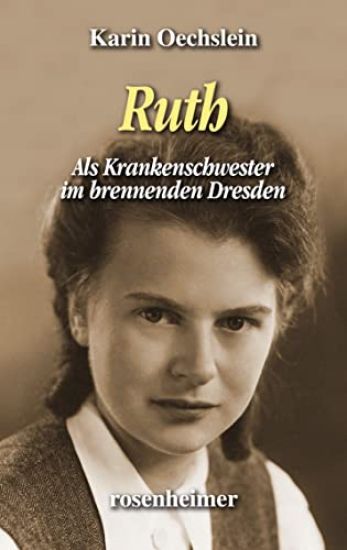
Ruth ist ein Waisenm dchen in Bethlehem, das auf wundersame Weise einem neugeborenen Kind begegnet. Von diesem Kind ist Ruth so anger hrt, dass sie mit der ganzen Kraft ihrer Seele w nscht, f r immer bei ihm bleiben zu k nnen. Ein Wunsch, der in Erf llung geht. Sie flieht mit Maria, Josef und diesem Kind Jesus nach gypten. Dort lebt sie in den folgenden Jahren an seiner Seite wie seine ltere Schwester. Als sie im sp teren Leben ein gro er Schicksalsschlag trifft und ihr alles aussichtslos erscheint, wird ihr Leid in ihrer letzten Begegnung mit Jesus gewandelt in eine gro e Freude, weil sie wei Jesus ist ihr gerade jetzt ganz besonders nah. Ein wichtiger Gedankenansto f r alle, die in entscheidenden Zeiten ihres Lebens das Leid nicht einordnen und das Wirken Jesu nicht erkennen k nnen.
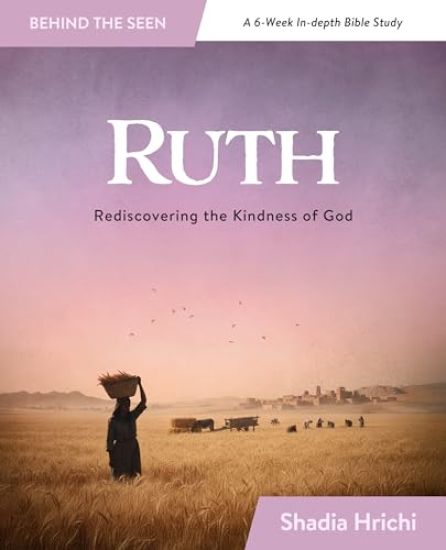
Ruth
ACU Press/Leafwood Publishers
2026
pokkari
Ruth
Bookmundo
2025
pokkari
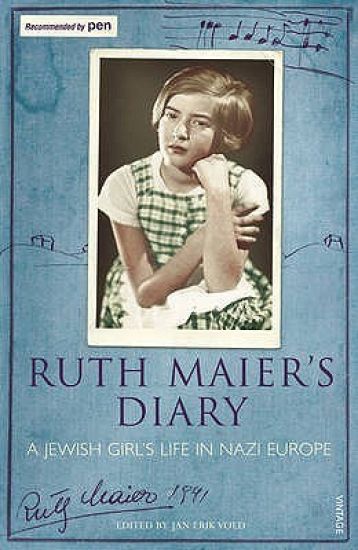
Ruth Maier was born into a middle-class Jewish family in interwar Vienna. Following the Anschluss of Austria in March 1938, her world collapsed. In early 1939, her sister having left for England, Ruth emigrated to Norway and lived with a family in Lillestrøm, near Oslo. Although she loved many things about her new country and its people, Ruth became increasingly isolated until she met a soulmate, Gunvor Hofmo, who was to become a celebrated poet. When Norway became a Nazi conquest in April 1940, Ruth's effort to join the rest of her family in Britain became ever more urgent.Ruth Maier kept a diary from 1934 until she was deported to Auschwitz in 1942 at the age of twenty-two. Although she was only in her teens, she shows a sophisticated understanding of the political forces shaping Europe. Ruth is lyrical, witty and incisive and explores universal themes of isolation, identity, love, friendship, desire and justice. Most of all, she seeks what it means to be a human being.

In Ruth Hall, one of the bestselling novels of the 1850s, Fanny Fern drew heavily on her own experiences: the death of her first child and her beloved husband, a bitter estrangement from her family, and her struggle to make a living as a writer. Written as a series of short vignettes and snatches of overheard conversations, it is as unconventional in style as in substance and strikingly modern in its impact.
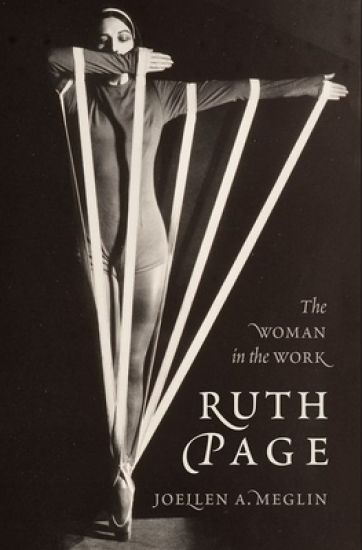
In Ruth Page: The Woman in the Work, the Chicago ballerina emerges as a highly original choreographer who, in her art, sought the iconoclastic as she transgressed boundaries of genre, gender, race, class, and sexuality. Author Joellen A. Meglin shows how her works were often controversial and sometimes censored even as she succeeded in roles usually reserved for men in the ballet world: choreographer, artistic director, and impresario. From extensive dramaturgical analysis of her most famous ballets — La Guiablesse, Frankie and Johnny, Billy Sunday, Revenge, The Merry Widow, Camille, Carmina Burana, and Alice — to embodied re-imagining of an avant-garde solo performed in a "sack" designed by Isamu Noguchi, this biography follows the global reach of Ruth Page's career spanning the greater part of the twentieth century. In the process of discovering the woman in the work, one encounters an international cast of dancers (Anna Pavlova, Harald Kreutzberg, Frederic Franklin, Alicia Markova), composers (William Grant Still, Aaron Copland, Jerome Moross, Darius Milhaud), visual artists (Noguchi, Pavel Tchelitchew, Antoni Clavé), and companies (Ballet Russe de Monte Carlo, Ballets des Champs-Elysées, London Festival Ballet). Disrupting notions that New York was the only cradle of the American ballet, and George Balanchine, its exponent to eclipse all others, Ruth Page explores the woman's unique sensibility, corporeal praxis, and collaborative ethos to reveal her Chicago-centered network of creativity.
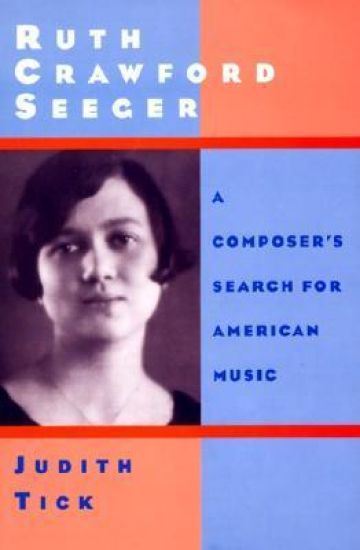
Ruth Crawford Seeger (1901-1953) is frequently considered the most significant American female composer in this century. Joining Aaron Copland and Henry Cowell as a key member of the 1920s musical avant-garde, she went on to study with modernist theorist and future husband Charles Seeger, writing her masterpiece, String Quartet 1931, not long after. But her legacy extends far beyond the cutting edge of modern music. Collaborating with poet Carl Sandburg on folk song arrangements in the twenties, and with the famous folk-song collectors John and Alan Lomax in the 1930s, she emerged as a central figure in the American folk music revival, issuing several important books of adaptations (transcriptions and arrangements) and pioneering the use of American folk songs in children's music education. Radicalized by the Depression, she spent much of the ensuing two decades working aggressively for social change with her husband and stepson, the folksinger Pete Seeger. This engrossing new biography emphasizes the choices Crawford Seeger made in her roles as composer, activist, teacher, wife and mother. The first woman to win a Guggenheim Foundation Fellowship in music composition, Crawford Seeger nearly gave up writing music as the demands of family, politics, and the folk song movement intervened. It was only at the very end of her life, with cancer sapping her strength, that she returned to composing. Written with unique insight and compassion, this book offers the definitive treatment of a fascinating twentieth-century figure.
Ruth Crawford Seeger (1901-1953) is frequently considered the most significant American female composer in this century. Joining Aaron Copland and Henry Cowell as a key member of the 1920s musical avant-garde, she went on to study with modernist theorist and future husband Charles Seeger, writing her masterpiece, String Quartet 1931, not long after. But her legacy extends far beyond the cutting edge of modern music. Collaborating with poet Carl Sandburg on folk song arrangements in the twenties, and with the famous folk-song collectors John and Alan Lomax in the 1930s, she emerged as a central figure in the American folk music revival, issuing several important books of adaptations (transcriptions and arrangements) and pioneering the use of American folk songs in children's music education. Radicalized by the Depression, she spent much of the ensuing two decades working aggressively for social change with her husband and stepson, the folksinger Pete Seeger. This engrossing new biography emphasizes the choices Crawford Seeger made in her roles as composer, activist, teacher, wife and mother. The first woman to win a Guggenheim Foundation Fellowship in music composition, Crawford Seeger nearly gave up writing music as the demands of family, politics, and the folk song movement intervened. It was only at the very end of her life, with cancer sapping her strength, that she returned to composing. Written with unique insight and compassion, this book offers the definitive treatment of a fascinating twentieth-century figure.

By weaving discussions of the personal and professional writings of Ruth Benedict (1887-1948), Margaret Mead offers a deeply insightful portrait of a woman who overcame the barriers of sexism to become one of the most compelling intellectual figures in twentieth-century American life. In this work, Mead defends Benedict's humanistic approach to anthropology and considers her most important works. Benedict's work is also presented in the context of her personal life. Benedict was a shy young woman who felt alienated from her conservative family and society's expectations. Ultimately, she defined her life through her extraordinary work in anthropology and a commitment to public service. Benedict believed that anthropology should speak to contemporary ethical and political questions. In addition to a selection of Benedict's anthropological writings, this edition includes new forewords by two leading Benedict scholars.
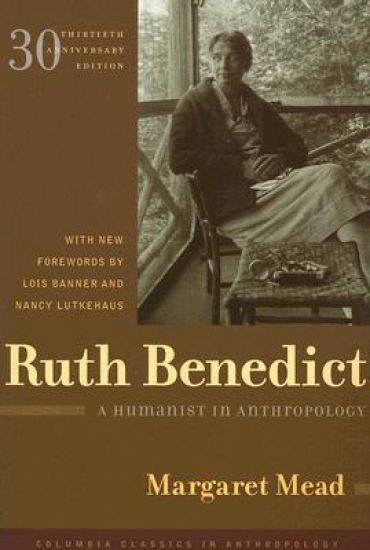
By weaving discussions of the personal and professional writings of Ruth Benedict (1887-1948), Margaret Mead offers a deeply insightful portrait of a woman who overcame the barriers of sexism to become one of the most compelling intellectual figures in twentieth-century American life. In this work, Mead defends Benedict's humanistic approach to anthropology and considers her most important works. Benedict's work is also presented in the context of her personal life. Benedict was a shy young woman who felt alienated from her conservative family and society's expectations. Ultimately, she defined her life through her extraordinary work in anthropology and a commitment to public service. Benedict believed that anthropology should speak to contemporary ethical and political questions. In addition to a selection of Benedict's anthropological writings, this edition includes new forewords by two leading Benedict scholars.

The brilliant debut novel from Emilie Pine, author of the international bestseller NOTES TO SELFDublin, 7 October 2019One day, one city, two women: Ruth and Pen. Neither knows the other, but both are asking the same questions: how to be with others and how, when the world won't make space for you, to be with yourself?Ruth's marriage to Aidan is in crisis. Today she needs to make a choice - to stay or not to stay, to take the risk of reaching out, or to pull up the drawbridge.For teenage Pen, today is the day the words will flow, and she will speak her truth to Alice, to ask for what she so desperately wants.RUTH & PEN is the fictional debut from Emilie Pine, author of the international bestseller NOTES TO SELF. Deeply involving, poignant and radiantly intelligent, it is a portrait of the limits of grief and love, of how we navigate our inner and outer landscapes, and the tender courage demanded by the simple, daily quest of living.
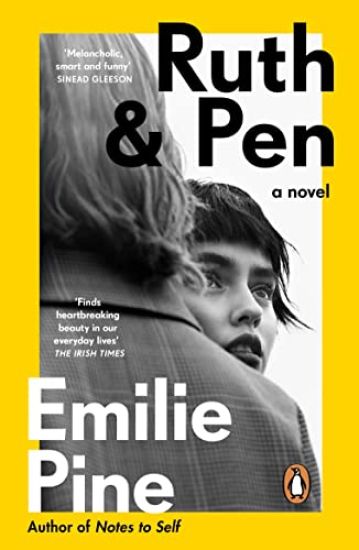
The brilliant debut novel from Emilie Pine, author of the international bestseller Notes to SelfDublin, 7 October 2019One day, one city, two women: Ruth and Pen. Neither knows the other, but both are asking the same questions: how to be with others and how, when the world won't make space for you, to be with yourself?Ruth's marriage to Aidan is in crisis. Today she needs to make a choice - to stay or not to stay, to take the risk of reaching out, or to pull up the drawbridge. For teenage Pen, today is the day the words will flow, and she will speak her truth to Alice, to ask for what she so desperately wants.Deeply involving, poignant and radiantly intelligent, it is a portrait of the limits of grief and love, of how we navigate our inner and outer landscapes, and the tender courage demanded by the simple, daily quest of living.'Emilie Pine is one of the most important new voices in Irish Literature. Everything she writes is imbued with wisdom' David Park'Emilie Pine's debut novel is ambitious, poignant and playful, with a feminist nod to Joyce . . . it is as surprising and playful as it is ambitious and relevant' Irish Independent'This is an exciting, warm and engaging debut that signals, one hopes, even greater things to come' The Business PostWINNER OF THE KATE O'BRIEN AWARD
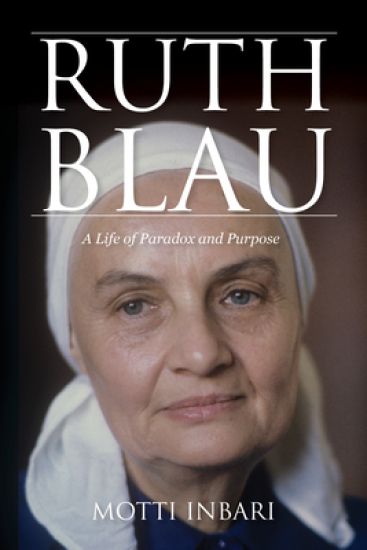
Ruth Blau: A Life of Paradox and Purpose explores the life of a curious, if not mysterious, character in modern Jewish history. Born a French Catholic, Ruth Blau (Ben-David) (1920–2000) lived a constantly twisting life. During World War II, Blau was active in the French Resistance, and under their command, she joined the Gestapo as a double agent. After the war, she studied philosophy as a PhD candidate at the Sorbonne during the 1950s. After converting to Judaism and moving to Israel in 1960, Blau was involved in concealing Yossele Schumacher, a seven-year-old child, as part of a militant conflict between ultra-Orthodox and secular Jews in Israel. In 1965, despite a huge scandal, she married Amram Blau, head of the anti-Zionist ultra-Orthodox Neturei Karta. After the death of her husband in 1973, Blau took upon herself to travel to Arab countries to help the Jewish communities in distress in Lebanon and Iran, where she met Yasser Arafat, head of the Palestinian Liberation Organization, and his deputy Abu Jihad. But the most significant connections she made were in Iran. In 1979, she met with the leader of the Iranian revolution, Ayatollah Khomeini. Ruth Blau: A Life of Paradox and Purpose represents the first full-length biography of this remarkable woman. Drawing on a trove of archival materials and interviews with those who knew Ruth, Motti Inbari offers a complex, multifaceted portrait of a woman undertaking a remarkable and influential journey through modern European and Middle Eastern history.
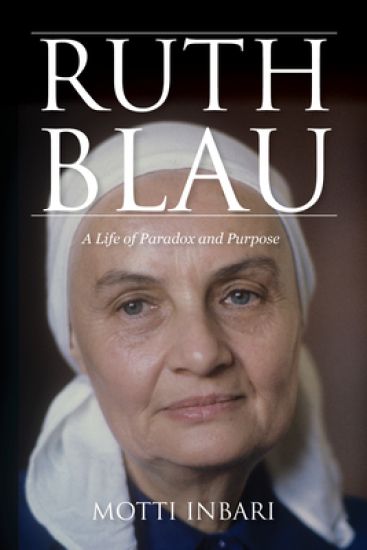
Ruth Blau: A Life of Paradox and Purpose explores the life of a curious, if not mysterious, character in modern Jewish history. Born a French Catholic, Ruth Blau (Ben-David) (1920–2000) lived a constantly twisting life. During World War II, Blau was active in the French Resistance, and under their command, she joined the Gestapo as a double agent. After the war, she studied philosophy as a PhD candidate at the Sorbonne during the 1950s. After converting to Judaism and moving to Israel in 1960, Blau was involved in concealing Yossele Schumacher, a seven-year-old child, as part of a militant conflict between ultra-Orthodox and secular Jews in Israel. In 1965, despite a huge scandal, she married Amram Blau, head of the anti-Zionist ultra-Orthodox Neturei Karta. After the death of her husband in 1973, Blau took upon herself to travel to Arab countries to help the Jewish communities in distress in Lebanon and Iran, where she met Yasser Arafat, head of the Palestinian Liberation Organization, and his deputy Abu Jihad. But the most significant connections she made were in Iran. In 1979, she met with the leader of the Iranian revolution, Ayatollah Khomeini. Ruth Blau: A Life of Paradox and Purpose represents the first full-length biography of this remarkable woman. Drawing on a trove of archival materials and interviews with those who knew Ruth, Motti Inbari offers a complex, multifaceted portrait of a woman undertaking a remarkable and influential journey through modern European and Middle Eastern history.
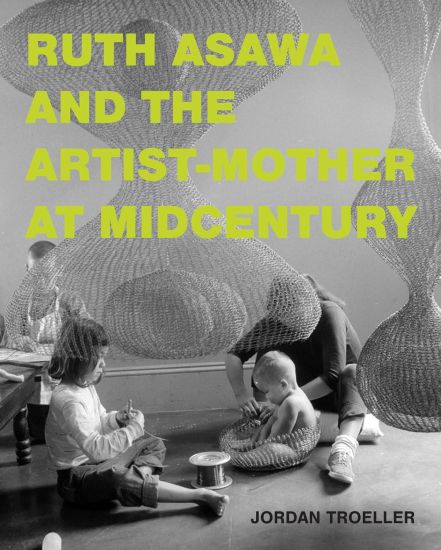
How a group of artist-mothers in postwar San Francisco refused the centuries-old belief that a woman could not make art while also raising children. For most of modern history, to be an artist and a mother was to embody a contradiction in terms. This awful dichotomy, as painter Alice Neel put it, pitted artmaking against caretaking and argued that the best art was made at the expense of family and futurity. But in San Francisco in the 1950s and 60s, a group of artists gathered around Ruth Asawa (1926 2013) began to reject this dominant narrative. In Ruth Asawa and the Artist-Mother at Midcentury, Jordan Troeller analyzes this remarkable moment. Insisting that their labor as mothers fueled their labor as artists, these women redefined key aesthetic concerns of their era, including autonomy, medium-specificity, and originality. Delving into the archive, where the traces of motherhood have not yet been erased from official history, Troeller reveals Ruth Asawa s personal and professional dialogue with several other artist-mothers including Merry Renk, Imogen Cunningham, and Sally Woodbridge. For these women, motherhood was not an essentialized identity, but rather a means to reimagine the terms of artmaking, outside of the patriarchal policing of reproduction. This project unfolded in three broad areas, which also structure the book s chapters: domesticity and decoration; metaphors for creativity; and maternal labor in the public sphere, especially in the public schools. Drawing on queer theory and feminist writings, Troeller argues that in belatedly accounting for the figure of the artist-mother, art history must reckon with an emergent paradigm of artmaking, one predicated on reciprocity, caretaking, and futurity.

Poet, anthropologist, feminist—Ruth Fulton Benedict was all of these and much more. Born into the last years of the Victorian era, she came of age during the Progressive years and participated in inaugurating the modern era of American life. Ruth Benedict: Stranger in This Land provides an intellectual and cultural history of the first half of the twentieth century through the life of an important and remarkable woman.As a Lyricist poet, Ruth Benedict helped define Modernism. As an anthropologist, she wrote the classic Patterns of Culture and at one point was considered the foremost anthropologist in the United States—the first woman ever to attain such status. She was an intellectual and an artist living in a time when women were not encouraged to be either. In this fascinating study, Margaret Caffrey attempts to place Benedict in the cultural matrix of her time and successfully shows the way in which Benedict was a product of and reacted to the era in which she lived.Caffrey goes far beyond providing simple biographical material in this well-written interdisciplinary study. Based on exhaustive research, including access for the first time to the papers of Margaret Mead, Benedict's student and friend, Caffrey is able to put Benedict's life clearly in perspective. By identifying the family and educational influences that so sharply influenced Benedict's psychological makeup, the author also closely analyzes the currents of thought that were strong when Victorianism paralleled the Modernism that figured in Benedict's life work. The result is a richly detailed study of a gifted woman.This important work will be of interest to students of Modernism, poetry, and women's studies, as well as to anthropologists.
Ruth Asawa
Yale University Press
2019
sidottu
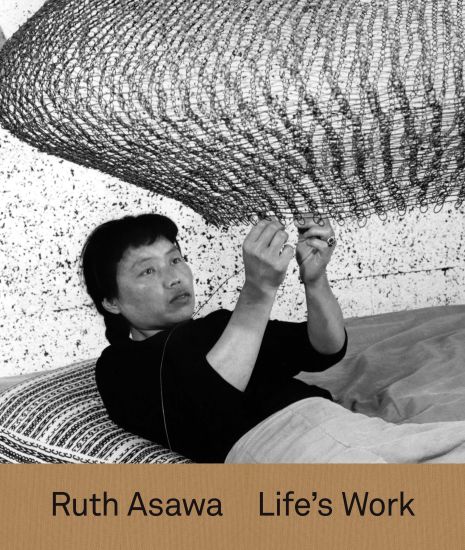
“Doing is living. That is all that matters.”—Ruth Asawa Throughout her long and prolific career American artist Ruth Asawa (1926–2013) developed innovative sculptures in wire, a medium she explored through increasingly complex forms using craft-based techniques she learned while traveling in Mexico in 1947. In 1949, after studying at Black Mountain College, Asawa moved to San Francisco and created dozens of wire works, among them an iconic bronze fountain—the first of many public commissions—for the city’s Ghirardelli Square. Bringing together examples from across Asawa’s full and extraordinary career, this expansive volume serves as an unprecedented reorientation of her sculptures within the historical context of 20th-century art. In particular, it includes careful consideration of Asawa’s advocacy for arts education in public schools, while simultaneously focusing on her vital—and long under-recognized—contributions to the field of sculpture. Insightful essays explore the intersection of formal experimentation and identity to offer a fresh assessment of this celebrated artist. Richly illustrated with exquisite new installation views, Ruth Asawa: Life’s Work introduces original scholarship that traces the dynamic evolution of form in the artist’s work.Published in association with the Pulitzer Arts FoundationExhibition Schedule:Pulitzer Arts Foundation, St. Louis (09/14/18–02/16/19)
Ruth Asawa Through Line
YALE UNIVERSITY PRESS
2023
sidottu
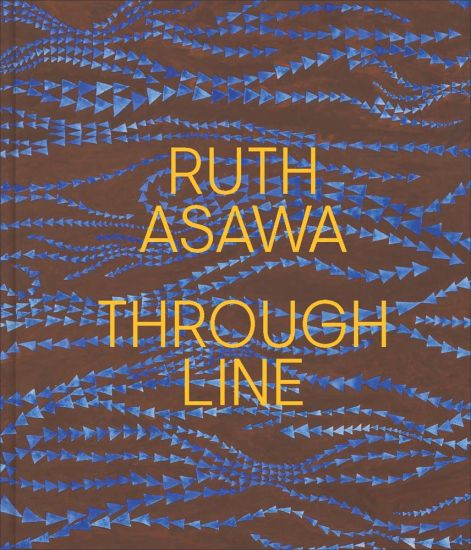
A groundbreaking examination of how the act of drawing was a vital component of Ruth Asawa’s multifaceted art “A revelatory exhibition. . . . [A] fine exhibition catalog.”—Nancy Princenthal, New York Times, “Critic’s Pick” Ruth Asawa (1926–2013), widely known for her looped-wire sculptures, was an inveterate drawer. She filled sketchbook after sketchbook and even stated that drawing was central to her sculpture. This volume is the first to consider the significance of drawing in Asawa’s oeuvre throughout her career, featuring essays that examine the range of Asawa’s aesthetic maneuvers across materials and techniques; how Asawa’s drawing intertwined with the Bay Area arts community and her contributions to public education as a teacher and organizer; and the influence of Josef Albers’s pedagogy and Asawa’s lifelong adoption of his type of paper folding. Tracing Asawa’s artistic journey from her first formal art lessons in a Japanese American internment camp during World War II through her time at Black Mountain College and beyond, this comprehensive overview of the artist’s drawings includes reproductions of more than one hundred works—many of which have never been published—organized into eight thematic sections that cut through time, reflecting an art-making practice that was more circular or cyclical than linear. Distributed for the Menil Collection and the Whitney Museum of American Art Exhibition Schedule: Whitney Museum of American Art, New York (September 16, 2023–January 15, 2024) The Menil Collection, Houston (March 22–July 21, 2024)