Kirjojen hintavertailu. Mukana 11 342 296 kirjaa ja 12 kauppaa.

Kirjahaku

Etsi kirjoja tekijän nimen, kirjan nimen tai ISBN:n perusteella.

1000 tulosta hakusanalla S. Englander

Women's Worlds in Seventeenth-Century England
Womens Worlds in England presents a unique collection of source materials on womens lives in sixteenth and seventeenth century England. The book introduces a wonderfully diverse group of women and a series of voices that have rarely been heard in history, Drawing on unpublished, archival materials, the book explores women's:* experiences of work, sex, marriage and motherhood* beliefs and spirituality* political activities* relationships* mental worlds.In a time when few women could write, this book reveals the multitude of ways in which their voices have left traces in the written record, and deepens our understanding of womens lives in the past.
'The Winter's Tale' in Performance in England and America 1611–1976

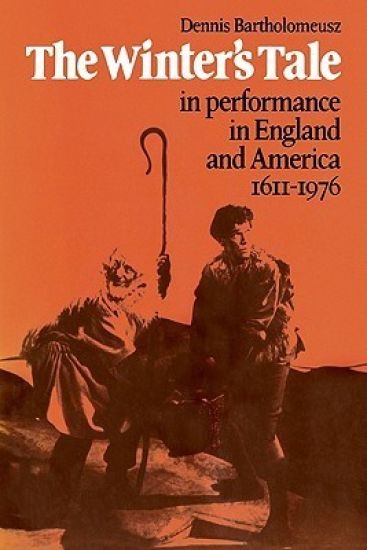
'The Winter's Tale' in Performance in England and America 1611–1976

Dennis Bartholomeusz

Cambridge University Press
2011
pokkari
This 1982 book demonstrates the value of the approach to Shakespeare which works on the assumption that in the final judgement it is only in performance that a play is fully realised. Recapturing in lively detail the major performances of The Winter's Tale from Jacobean England to the twentieth century, the book ranges through England and America. Productions by Reinhardt in Germany and Copeau in France are also glanced at; the staging of the play by the Duke of Saxe-Meiningen's company in London is given more detailed treatment. Dennis Bartholomeusz sees the great performances as acts of criticism and creation, and pays close attention the effect of textual cuts, grouping and movement, costume, set design and music, illustrating the text with contemporary paintings, prints, scene designs and photographs. The Winter's Tale was chosen because it raises salient issues that are critical to the staging of Shakespeare's plays.
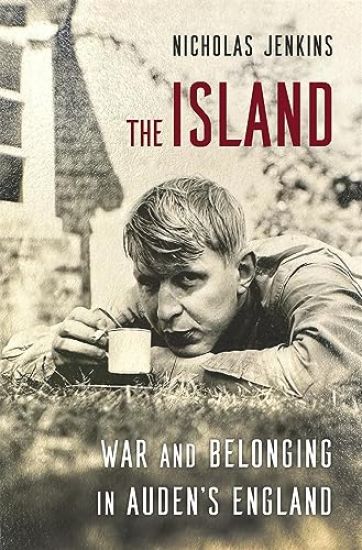
The Island: War and Belonging in Auden's England
A Times Literary Supplement Best Book of the Year A groundbreaking reassessment of W. H. Auden's early life and poetry, shedding new light on his artistic development as well as on his shifting beliefs about political belonging in interwar England. W. H. Auden's early works, from his first poems in 1922 to the publication of his landmark collection On This Island in the mid-1930s, are prized for their psychological depth. Yet Nicholas Jenkins argues that they are political poems as well, illuminating Auden's intuitions about a key aspect of modern experience: national identity. The Island presents a new picture of Auden as he explored a genteel, lyrical nationalism in response to World War I. Amid artists' and intellectuals' "rediscovery" of England's rural landscapes, Auden's poems reflect on a world in ruins while cultivating visions of a beautiful--if morally compromised--English isle. They also speak to aspects of Auden's personal search for belonging, including his negotiation of the codes that structured gay life. As Europe veered toward a second immolation, Auden began to realize that poetic myths centered on English identity held little potential. Reexamining one of the twentieth century's most moving and controversial poets, The Island is a fresh account of Auden's early works and a striking parable about the politics of modernism.
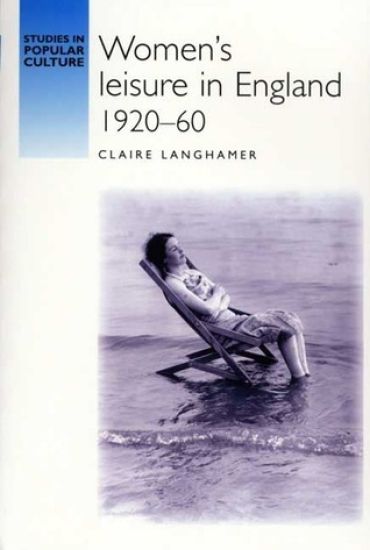
Women's Leisure in England 1920–60

Women's Leisure in England 1920–60

Claire Langhamer

Manchester University Press
2000
nidottu
This insightful book offers a timely assessment of the complex relationship between women and leisure in England, drawing upon recent feminist theory. Departing from approaches which focus on particular activities or institutions, it places everyday experiences at its centre, presenting a wide-ranging and lively account of changing perceptions, representations and experiences of leisure across the period 1920–60. It addresses the nature of leisure within women’s lives, examining shifting understandings of the concept and identifying areas of definitional ambiguity such as the ‘family’ holiday, shopping and handicrafts. Focusing upon experiences of leisure across the life cycle, it provides a detailed assessment of the particular forms of leisure enjoyed by women at distinct stages of their lives, including cinema-going, dancing, socialising and home-based pursuits. The book demonstrates that experiences and perceptions of leisure were fundamentally structured along life cycle lines: leisure in youth was often characterised by freedom and independence whilst leisure in adulthood became a vehicle for service and duty to others.
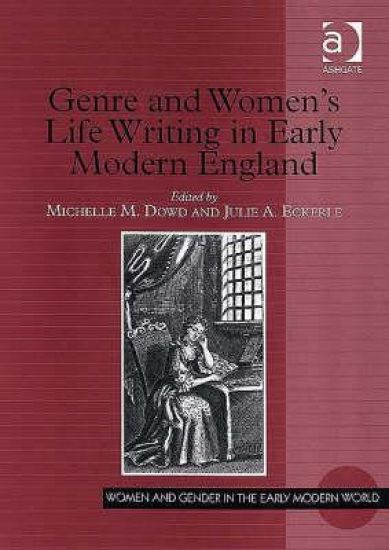
Genre and Women's Life Writing in Early Modern England
By taking account of the ways in which early modern women made use of formal and generic structures to constitute themselves in writing, the essays collected here interrogate the discursive contours of gendered identity in sixteenth- and seventeenth-century England. The contributors explore how generic choice, mixture, and revision influence narrative constructions of the female self in early modern England. Collectively they situate women's life writings within the broader textual culture of early modern England while maintaining a focus on the particular rhetorical devices and narrative structures that comprise individual texts. Reconsidering women's life writing in light of recent critical trends-most notably historical formalism-this volume produces both new readings of early modern texts (such as Margaret Cavendish's autobiography and the diary of Anne Clifford) and a new understanding of the complex relationships between literary forms and early modern women's 'selves'. This volume engages with new critical methods to make innovative connections between canonical and non-canonical writing; in so doing, it helps to shape the future of scholarship on early modern women.
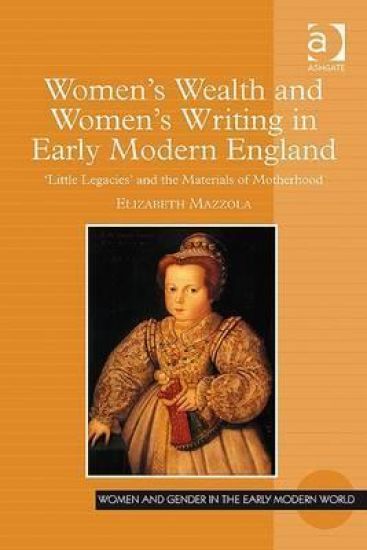
Women's Wealth and Women's Writing in Early Modern England

Women's Wealth and Women's Writing in Early Modern England

Elizabeth Mazzola

Ashgate Publishing Limited
2009
sidottu
Focusing on both literary and material networks in early modern England, this book examines the nature of women's wealth, its peculiar laws of transmission and accumulation, and how a world of goods and favors, mothers and daughters was transformed by market culture. Drawing on the long and troubled relationship between Elizabeth Tudor, Mary Stuart, Bess of Hardwick, and Arbella Stuart, Elizabeth Mazzola more broadly explores what early modern women might exchange with or leave to each other, including jewels and cloth, needlework, combs, and candlesticks. Women's writings take their place in this circulation of material things, and Mazzola argues that their poems and prayers, letters and wills are particularly designed with the aim of substantiating female ties. This book is an interdisciplinary one, making use of archival research, literary criticism, social history, feminist theory, and anthropological studies of gift exchange to propose that early modern women - whatever their class, educational background or marital status - were key economic players, actively pursuing favors, trading services, and exchanging goods.
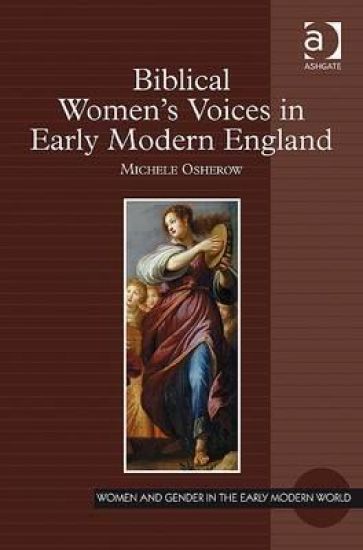
Biblical Women's Voices in Early Modern England

Biblical Women's Voices in Early Modern England

Michele Osherow

Ashgate Publishing Limited
2009
sidottu
Biblical Women's Voices in Early Modern England documents the extent to which portrayals of women writers, rulers, and leaders in the Hebrew Bible scripted the lives of women in early modern England. Attending to a broad range of writing by Protestant men and women, including John Donne, Mary Sidney, John Milton, Rachel Speght, and Aemilia Lanyer, the author investigates how the cultural requirement for feminine silence informs early modern readings of biblical women's stories, and furthermore, how these biblical characters were used to counteract cultural constraints on women's speech. Bringing to bear a commanding knowledge of Hebrew Scripture, Michele Osherow presents a series of case studies on biblical heroines, juxtaposing Old Testament stories with early modern writers and texts. The case studies include an investigation of references to Miriam in Lady Mary Sidney's psalm translations; an unpacking of comparisons between Deborah and Elizabeth I; and, importantly, a consideration of the feminization of King David through analysis of his appropriation as a model for early modern women in writings by both male and female authors. In deciphering the abundance of biblical characters, citations, and allusions in early modern texts, Osherow simultaneously demonstrates how biblical stories of powerful women challenged the Renaissance notion that women should be silent, and explores the complexities and contradictions surrounding early modern women, their speech, and their power.
Who's Who in Tudor England

Who's Who in Tudor England

C R Routh; Peter Holmes

Stackpole Books
2001
sidottu
Stackpole is pleased to introduce the final two installments in the Who's Who in British History series. Chronologically arranged and extensively indexed, these eight volumes are an indispensable guide to the people of 2,000 years of British history, from kings and archbishops to artists, warriors, and revolutionaries. Each volume paints a portrait of an age. Unlike in typical biographical dictionaries, entries of the subjects are placed in the contexts of their time and the chronological arrangements foster a sense of intimacy and narrative, allowing readers to read the volumes from cover to cover and to gain new insights into the particular era's history.
Swein Forkbeard's Invasions and the Danish Conquest of England, 991-1017
New insight gained into this exciting period of English history through focusing on the activities of Swein Forkbeard and, after his death in 1014, the Danish warlord Thorkell the Tall. From the battle of Maldon in 991 during the reign of Æethelred (the Unready), England was invaded by Scandinavian armies of increasing size and ferocity. Swein Forkbeard, king of Denmark, played a significant part in these invasions, which culminated in the domination of England and the long reign of his son, Cnut. This analysis of the invasions demonstrates beyond doubt that Æthelred was no indolent and worthless king who bribed invading Vikings to goaway: his relationship with the Scandinavian armies was more complex and more interesting than has been supposed. It is equally apparent that Swein was more than a marauding Viking adventurer: he was a sophisticated politician who laid the foundations for a great northern empire which was ruled by his descendents for many years after his death. New insight into this exciting period of English history is gained by focusing on the activities of Swein Forkbeard and, after his death in 1014, the Danish warlord Thorkell the Tall, both outstanding warriors and political leaders of what is sometimes called 'the Second Viking Age'. Many factors leading to the invasions and conquest are investigated through a critical analysis of the chronology of events, an explanation of the economic background, plotting the itineraries of the Scandinavian armies, and a fresh examination ofthe sources, including the Anglo-Saxon Chronicle, the Encomium, and John of Worcester's Chronicle. IAN HOWARD has a PhD from Manchester University and is a Fellow of the Institute of Chartered Accountants in England and Wales. After a career in industry and commerce, he has returned to full-time research and has produced several papers covering a variety of aspects of early medieval history.
Chaucer's Fame in England

Chaucer's Fame in England

Jackson Campbell Boswell; Sylvia Wallace Holton

Modern Language Association of America
2005
sidottu
This new bibliography of over 1,300 Chaucer references builds on a rich tradition of vigorous scholarship, starting with Caroline Spurgeon’s 1925 landmark compilation, Five Hundred Years of Chaucer Criticism and Allusion, 1357–1900. Since the publication of Spurgeon’s volume, two additional bibliographic tools became available to Chaucer scholars: the Short-Title Catalogue, which lists books printed in English from 1475 to 1640, and the University Microfilms project, which makes microfilm versions of those books available to researchers. Chaucer’s Fame lists Chaucer references, allusions, and echoes for books listed in the STC, incorporates and emends all 300 of Spurgeon’s references to books in English, and presents additional Chaucer references unearthed by scholars since 1925, some of which are here published for the first time.
Botanical Culture and Popular Belief in Shakespeare's England

Botanical Culture and Popular Belief in Shakespeare's England

Bonnie Lander Johnson

Cambridge University Press
2025
sidottu
The Shakespearean stage offered London playgoers a glimpse of the illiterate and rural plant cultures rapidly disappearing from their increasingly urban and sophisticated lives. The same cultures also circulated in popular texts offstage: bawdy tree ballads, botanical tales, almanacs and accounts of kitchen physic. Here Bonnie Lander Johnson argues that, while Shakespeare's plants offered audiences a nostalgic vision of childhood, domestic education and rural pastimes, this was in fact done with an ironic gesture that claimed for illiterate culture an intellectual relevance ignored by the learned and largely Protestant realm of print. Addressing a long-standing imbalance in early modern scholarship, she reveals how Shakespeare's plays – and the popular, low botanical beliefs they represent – engaged with questions usually deemed high, literate and elite: theological and liturgical controversies, the politics of state, England's role in Elizabethan naval conflict and the increasingly learned realm of medical authority.