Kirjojen hintavertailu. Mukana 11 717 486 kirjaa ja 12 kauppaa.

Kirjahaku

Etsi kirjoja tekijän nimen, kirjan nimen tai ISBN:n perusteella.

1000 tulosta hakusanalla Samir Balbal

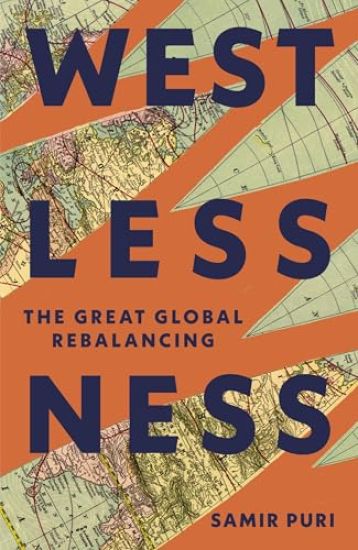
Westlessness

Westlessness

Samir Puri

Hodder Stoughton
2024
nidottu
What if the sun truly is setting on the Western world's outsized influence over the rest of the planet? In Westlessness, former UK diplomat Dr Samir Puri vividly demonstrates how in demographic, economic, military and cultural terms, we are hurtling into a far more diverse global future. Many of our certainties about the present, built on centuries of massive Western global impact, are increasingly fragile. Untold wealth is moving from the West to the East, as nations like India and Indonesia are set to reach new heights of growth and confidence. And China continues its ascent to the peak of the economic mountain - but are cracks appearing? And will the Western world, under the aegis of US global military, economic, technological and cultural power, give up its privileged position willingly?Nothing is linear and nothing is predictable. Are we prepared, personally and professionally, for a far more diverse global future?Prepared or unprepared, Westlessness is essential reading for us all.
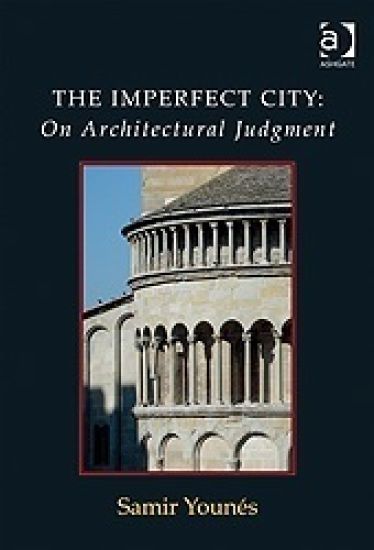
The Imperfect City: On Architectural Judgment

The Imperfect City: On Architectural Judgment

Samir Younes

Ashgate Publishing Limited
2012
sidottu
If architectural judgment were a city, a city of ideas and forms, then it is a very imperfect city. When architects judge the success or failure of a building, the range of ways and criteria which can be used for this evaluation causes many contentious and discordant arguments. Proposing that the increase in number and intensity of such arguments threatens to destabilize the very grounds upon which judgment is supposed to rest, this book examines architectural judgment in its historical, cultural, political, and psychological dimensions and their convergence on that most expressive part of architecture, namely: architectural character. It stresses the value of reasoned judgment in justifying architectural form -a judgment based on three sets of criteria: those criteria that are external to architecture, those that are internal to architecture, and those that pertain to the psychology of the architect as image-maker. External criteria include, philosophies of history or theories of modernity; internal criteria include architectural character and architectural composition; while the psychological criteria pertain to 'mimetic rivalry', or rivaling desires for the same architectural forms. Yet, although architectural conflicts can adversely influence judgment, they can at the same time, contribute to the advancement of architectural culture.
Oceans Apart --to the Far Side of the World
Every once in a while story of powerful love exquisitely chronicles human hearts, and it becomes an experience to remember forever. At twenty years old, Samir Garib, back in United States was hunted by catastrophic dreams, and memories of the girl taken away from him two years earlier. At nighteen, socialite Nikki Oman, was forced by her parents to leave the U.S., and move back to Bosnia after her short lasting visit with Samir, who once again stole her heart. Challenged by the mystery, and pulled by emotions he doesn't fully understand, Samir was asked to reunite with Nikki that will later change his life. What happens to him was unexpected, perhaps reunion was miraculous--an encounter that embraces all of his hopes for finding once again someone special, to continue with love perhaps for another time, a love timeless and everlasting...Thus begins the story of love so powerful that once again turned tragedy into triumph, or perhaps, it created a miracle...
Dream Machine

Dream Machine

Samir Dayal

Temple University Press,U.S.
2015
sidottu
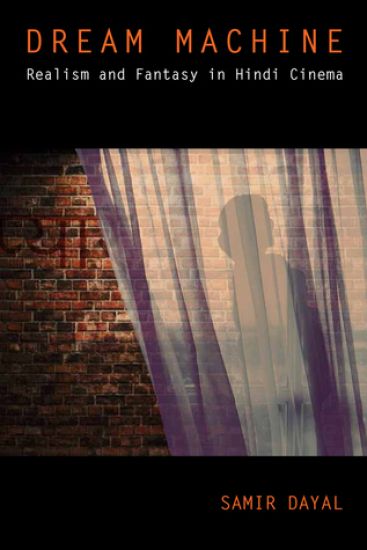
Popular Hindi films offer varied cinematic representations ranging from realistic portraits of patriotic heroes to complex fantasies that go beyond escapism. In Dream Machine, Samir Dayal provides a history of Hindi cinema starting with films made after India’s independence in 1947. He constructs a decade-by-decade consideration of Hindi cinema’s role as a site for the construction of “Indianness.” Dayal suggests that Hindi cinema functions as both mirror and lamp, reflecting and illuminating new and possible representations of national and personal identity, beginning with early postcolonial films including Awaara and Mother India, a classic of the Golden Age. More recent films address critical social issues, such as My Name is Khan and Fire, which concern terrorism and sexuality, respectively. Dayalalso chronicles changes in the industry and in audience reception, and the influence of globalization, considering such films as Slumdog Millionaire. Dream Machine analyzes the social and aesthetic realism of these films concerning poverty and work, the emergence of the middle class, crime, violence, and the law while arguing for their sustained and critical attention to forms of fantasy.
Dream Machine

Dream Machine

Samir Dayal

Temple University Press,U.S.
2015
pokkari
Popular Hindi films offer varied cinematic representations ranging from realistic portraits of patriotic heroes to complex fantasies that go beyond escapism. In Dream Machine, Samir Dayal provides a history of Hindi cinema starting with films made after India’s independence in 1947. He constructs a decade-by-decade consideration of Hindi cinema’s role as a site for the construction of “Indianness.” Dayal suggests that Hindi cinema functions as both mirror and lamp, reflecting and illuminating new and possible representations of national and personal identity, beginning with early postcolonial films including Awaara and Mother India, a classic of the Golden Age. More recent films address critical social issues, such as My Name is Khan and Fire, which concern terrorism and sexuality, respectively. Dayalalso chronicles changes in the industry and in audience reception, and the influence of globalization, considering such films as Slumdog Millionaire. Dream Machine analyzes the social and aesthetic realism of these films concerning poverty and work, the emergence of the middle class, crime, violence, and the law while arguing for their sustained and critical attention to forms of fantasy.
The Evolution of a Cricket Fan

The Evolution of a Cricket Fan

Samir Chopra

Temple University Press,U.S.
2021
sidottu
Samir Chopra is an immigrant, a “voluntary exile,” who discovers he can tell the story of his life through cricket, a game that has long been an influence-really, an obsession-for him. In so doing, he reveals how his changing views on the sport mirror his journey of self-discovery. In The Evolution of a Cricket Fan, Chopra is thus able to reflect on his changing perceptions of self, and of the nations and cultures that have shaped his identity, politics, displacement, and fandom. Chopra’s passion for the sport began as a child, when he rooted for Pakistan and against his native India. When he migrated, he became a fan of the Indian team that gave him a sense of home among the various cultures he encountered in North America and Australia. This “shapeshifting” exposes the rift between the Old and the New world, which Chopra acknowledges is “cricket’s greatest modern crisis.” But it also illuminates the identity dilemmas of post-colonial immigrants in the Indian diaspora.Chopra’s thoughts about the sport and its global influence are not those of a player. He provides access to the inner world of the global cricket fan navigating the world that colonial empire wrought and that cricket continues to connect and animate. He observes that the Indian cricket team carries many burdens-not only must they win cricket matches, but their style of play must generate a pride that assuages generations of wounds inflicted by history. And Chopra must navigate where he stands in that history.The Evolution of a Cricket Fan shows Chopra’s own wins and losses as his life takes new directions and his fandom changes allegiances.
The Evolution of a Cricket Fan

The Evolution of a Cricket Fan

Samir Chopra

Temple University Press,U.S.
2021
nidottu
Samir Chopra is an immigrant, a “voluntary exile,” who discovers he can tell the story of his life through cricket, a game that has long been an influence-really, an obsession-for him. In so doing, he reveals how his changing views on the sport mirror his journey of self-discovery. In The Evolution of a Cricket Fan, Chopra is thus able to reflect on his changing perceptions of self, and of the nations and cultures that have shaped his identity, politics, displacement, and fandom. Chopra’s passion for the sport began as a child, when he rooted for Pakistan and against his native India. When he migrated, he became a fan of the Indian team that gave him a sense of home among the various cultures he encountered in North America and Australia. This “shapeshifting” exposes the rift between the Old and the New world, which Chopra acknowledges is “cricket’s greatest modern crisis.” But it also illuminates the identity dilemmas of post-colonial immigrants in the Indian diaspora.Chopra’s thoughts about the sport and its global influence are not those of a player. He provides access to the inner world of the global cricket fan navigating the world that colonial empire wrought and that cricket continues to connect and animate. He observes that the Indian cricket team carries many burdens-not only must they win cricket matches, but their style of play must generate a pride that assuages generations of wounds inflicted by history. And Chopra must navigate where he stands in that history.The Evolution of a Cricket Fan shows Chopra’s own wins and losses as his life takes new directions and his fandom changes allegiances.
Managing Today’s News Media

Managing Today’s News Media

Samir A. Husni; Debora Halpern Wenger; Hank Price

CQ Press
2015
nidottu
The business of journalism is in the midst of massive change. Managing Today’s News Media: Audience First offers practical solutions on how to cope with and adapt to the evolving media landscape. News media experts Samir Husni, Debora Halpern Wenger, and Hank Price introduce a forward-looking framework for understanding why change is occurring and what it means to the business of journalism. Central to this new paradigm is a focus on the audience. The authors introduce "The 4Cs Strategy" to describe how customers, control, choice, and change are all part of a strategy for successful media organizations. Every chapter in the book relates to one or more of these four key principles: Customer – Each platform must offer a unique experience to the customer. Choice – The audience has more options than ever, and news organizations must work harder to be the preferred choice. Control – Sharing power and control with the audience is now a necessary part of running a successful news operation. Change – Companies can manage change through adaptation. Real-world case studies, important theoretical grounding, and a focus on understanding rather than resisting the customer’s desire for choice and control make this an unbeatable resource for students and managers alike who want to succeed in this changed media business landscape.
Evaluation of Inflammatory Bowel Disease, An Issue of Gastroenterology Clinics

Evaluation of Inflammatory Bowel Disease, An Issue of Gastroenterology Clinics

Samir Shah; Edward Feller; Adam Harris

W B Saunders Co Ltd
2012
sidottu
The Guest Editors have focused on methods of diagnosing and evaluating IBD to help guide optimal treatment to maximize clinical outcomes and minimize risks. Authors have provided state-of-the-art updates with practical information/guidelines/algorithms and cutting-edge data for incorporation into practice. The first set of articles deals with endoscopy: its role in diagnosis and monitoring IBD; the growing importance of chromoendoscopy in IBD surveillance exams; assessment of post-operative recurrence; and finally the emerging role of capsule endoscopy. The second section focuses on specific scenarios that IBD physicians encounter frequently: health maintenance in IBD focusing on proper vaccinations; the growing problem of Clostridium difficile in IBD; assessment of pouch problems; optimal evaluation of perianal disease; the state of the art in using thiopurines including use of allopurinol to optimize metabolites and optimizing the use of infliximab by measuring levels and antibodies to infliximab; factors to consider in choosing monotherapy versus combination therapy and communication of risk/benefit to patients; and finally disability assessment in IBD. The third and final section highlights noninvasive methods to evaluate IBD: clinical predictors of aggressive or disabling disease; the evolving role of specific antibodies in diagnosing, subtyping and most recently prognosticating in IBD; stool markers (calproctectin and lactoferrin) for evaluating and monitoring IBD; the growing role of imaging modalities with emphasis on MR enterography and CT enterography; and finally, the genetics of IBD and the potential role of genetic testing in the diagnosis/prognosis and tailoring of therapy.
Saphenous Vein Graft Lesions and Thrombectomy for Acute Myocardial Infarction, An Issue of Interventional Cardiology Clinics
This issue of Interventional Cardiology Clinics covers bypass graft lesions and thrombectomy. Expert authors review the most current information available about saphenous vein grafts, including distal embolic protection devices, drug eluting stents vs bare metal stents, management of complications, optimal stenting, and more. Adjunctive pharmacotherapy for thrombotic coronary lesions and thrombectomy devices in coronary intervention are also discussed. Keep up-to-the-minute with the latest developments in this important aspect of interventional cardiology practice.