

Kirjahaku
Etsi kirjoja tekijän nimen, kirjan nimen tai ISBN:n perusteella.
1000 tulosta hakusanalla Schelling Hans
Anthologie aus Schelling's Werken
Friedrich Wilhelm Joseph Von Schelling; Friedrich Wilhelm Joseph Von Schelling
Outlook Verlag
2025
pokkari
Unver nderter Nachdruck der Originalausgabe von 1844.

Grund Der Kunst: Schelling Und Runge
Brill Fink
2025
sidottu
Zeitgenossenschaft, die gleichzeitige Befragung der Kunst vonseiten der Philosophie und der bildenden Kunst, der historische Horizont, der sich zwischen den paradigmatischen Positionen Schellings und Runges er ffnet -- das sind die Themen dieses Bandes, in dem sich alles um Konstellationen dreht. Die Kunst genoss um 1800 in Deutschland hohes Ansehen wie nie zuvor. Zugleich steckte die zeitgen ssische bildende Kunst in einer tiefen Krise. Es mehrten sich Zweifel an Winckelmanns am griechischen Vorbild orientierten Postulat, die Sch nheit sei der h chste Endzweck und Mittelpunkt der Kunst . Die idealistischen Philosophen wie die K nstler der jungen, romantischen Generation dr ngten auf eine Neubegr ndung der Kunst. In dieser historischen Konstellation leisteten Friedrich Wilhelm Joseph Schelling (1775-1854) und Philipp Otto Runge (1777-1810) einen entscheidenden Beitrag zur Entwicklung der Kunst des 19. Jahrhunderts.

Actualites de Schelling
Librarie Philosophique J. Vrin
1979
nidottu
Friedrich Wilhelm Joseph Schelling: Le Monotheisme
A. Pernet
Librarie Philosophique J. Vrin
1992
nidottu
Le cours de Schelling sur le Monotheisme, discretement polemique ( a l'egard de Schleiermacher et surtout de Hegel), enseigne a Munich a partir de 1828, forme dans l'edition posthume le porche de la Philosophie de la mythologie. Cette situation due a l'editeur n'est pourtant pas pleinement satisfaisante. Car alors le Monotheisme fait double emploi avec l'Introduction historico-critique a la Mythologie, avec laquelle il a sans doute alterne selon les semestres. Or l'elaboration parallele de l'expose de l'empirisme philosophique (Darstellung) et, plus tardive, de la Philosophie rationnelle a retenti dans l'intervalle sur la signification du Monotheisme. La distinction de plus en plus accusee d'un negatif rationnel et d'un positif historique englobe desormais celle de la Mythologie ou du paganisme et de la Revelation ou du christianisme. A la philosophie negative revient la dignite de philosophie premiere. La mythologie, des lors coloree negativement, projette ses effigies de neant, mais comme des prefigurations de l'avenir. La refonte successive des seules versions de l'Introduction a la Revelation confere au cours sur le Monotheisme une certaine autonomie. Dans la ligne ideale d'un developpement synchronise, le Monotheisme occupe, bien que relativement en porte-a-faux, l'emplacement charniere, le point delicat d'amorcage de la philosophie historique, documentee. La presentation du Monotheisme comme theogonie transcendantale et theorie des principes ou puissances est en outre le plus simple et le plus clair de tous les textes de Schelling traitant du probleme de la transition.
Le Dernier Schelling: Raison Et Positivitae
Librarie Philosophique J. Vrin
1994
nidottu
Friedrich Wilhelm Joseph Schelling: Exposition de Mon Systeme de la Philosophie Sur Le Vrai Concept de la Philosophie de la Nature: Suivi de J.G. Fich
E. Cattin
Librarie Philosophique J. Vrin
2000
nidottu
L'annee 1801 est pour Schelling celle de l'auto-affirmation. Avec l'Exposition de mon systeme de la philosophie, il se libere definitivement de l'idealisme transcendantal de Fichte et risque la tentative d'une fondation metaphysique de la philosophie comme philosophie absolue de l'absolu. Surmontant l'opposition de la philosophie transcendantale et de la philosophie de la nature, et moyennant une critique radicale de la subjectivite, Schelling eleve la philosophie a l'idealisme absolu. Ses deux plus grands lecteurs, Fichte et Hegel, ne s'y sont pas trompes, l'un pour en refuser la possibilite meme, l'autre pour en saluer l'esprit: l'Exposition est pour tout l'idealisme allemand le livre de son tournant speculatif.

Schelling est le dernier grand penseur de l'idealisme allemand et le devenir de sa pensee epouse le mouvement d'ensemble du postkantisme. La recherche d'un equilibre entre la philosophie de la nature et la philosophie de l'esprit le conduit d'abord a affirmer l'identite absolue du reel et du rationnel et a proposer le premier systeme de la philosophie classique allemande. La prise en compte toujours plus vive de la liberte humaine et de la liberte divine l'amene ensuite a interroger la realite d'un point de vue historique et a tenter d'articuler speculation et experience de facon inedite sous la forme d'une science positive. Jamais personne avant le dernier representant du grand rationalisme europeen ne s'etait montre aussi attentif a l'effectivite vivante et a ce que l'existence historique a d'irreductible. Schelling est le dernier grand penseur de l'idealisme allemand et le devenir de sa pensee epouse le mouvement d'ensemble du postkantisme. La recherche d'un equilibre entre la philosophie de la nature et la philosophie de l'esprit le conduit d'abord a affirmer l'identite absolue du reel et du rationnel et a proposer le premier systeme de la philosophie classique allemande. La prise en compte toujours plus vive de la liberte humaine et de la liberte divine l'amene ensuite a interroger la realite d'un point de vue historique et a tenter d'articuler speculation et experience de facon inedite sous la forme d'une science positive. Jamais personne avant le dernier representant du grand rationalisme europeen ne s'etait montre aussi attentif a l'effectivite vivante et a ce que l'existence historique a d'irreductible.
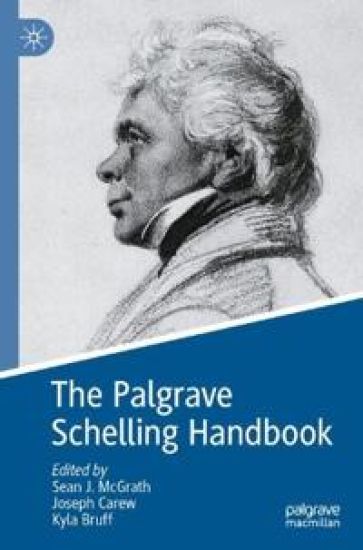
The Palgrave Schelling Handbook
Palgrave Handbooks in German Idealism
2027
nidottu
The Difference Between Fichte's and Schelling's System of Philosophy
G.W.F. Hegel
State University of New York Press
1988
pokkari
In this essay, Hegel attempted to show how Fichte's Science of Knowledge was an advance from the position of Kant in the Critique of Pure Reason, and how Schelling (and incidentally Hegel himself) had made a further advance from the position of Fichte.In this essay, Hegel attempted to show how Fichte's Science of Knowledge was an advance from the position of Kant in the Critique of Pure Reason, and how Schelling (and incidentally Hegel himself) had made a further advance from the position of Fichte.Hegel finds the idealism of Fichte too abstractly subjective and formalistic, and he tries to show how Schelling's philosophy of nature is the remedy for these weaknesses. But the most important philosophical content of the essay is probably to be found in his general introduction to these critical efforts where he deals with a number of problems about philosophical method in a way which is of general interest to philosophers, and not merely interesting to those who accept the Hegelian "dialectic method" which grew out of these first beginnings. Finally, the Difference essay is important in the development of "Nature-Philosophy" as a movement in the history of science.
Examen Critique De La Philosophie Religieuse De Schelling (1860)
Emile Alfred Weber
KESSINGER PUBLISHING, LLC
2010
pokkari
The Philosophical Foundations of the Late Schelling
Sean J. McGrath
EDINBURGH UNIVERSITY PRESS
2023
nidottu
A defence of the rationality and rigour of the late Schelling's visionary philosophy of religion A major new effort to organise and evaluate Schelling's arguments for a Philosophy of Revelation and to demonstrate their importance for contemporary debates Finds in largely unexamined texts of the late Schelling new resources for critiquing rationalism, reductive naturalism, and posthumanism Will appeal to the many scholars in various fields working on political eschatology in the works of Benjamin, Taubes, Rosenzweig, Derrida, i ek, Moltmann and Levinas Schelling's positive philosophy has long been recognised as the historical root of Marxism, existentialism, and other central trends in continental philosophy, but its main argument has never been fully elaborated as a tenable philosophical strategy for thinking Christianity forward into its future. According to McGrath, Schelling's late turn to speculative theological realism (the positive) is neither fideistic nor arbitrary, but rather the consequence of the free decision of the philosopher who has soberly assessed the results of logic, nature-philosophy and historical-critical and systematic theology.
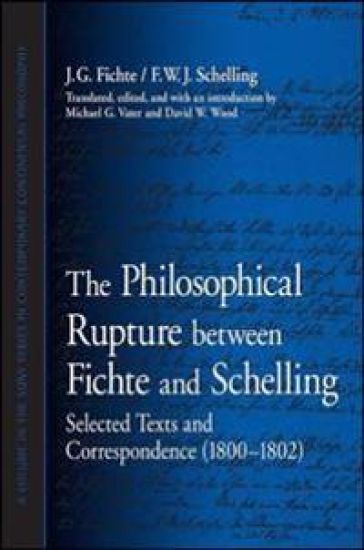
The Philosophical Rupture between Fichte and Schelling
J. G. Fichte; F. W. J. Schelling
State University of New York Press
2013
pokkari
Correspondence and texts by Fichte and Schelling illuminate their thought and the trajectory of their philosophical falling out.The disputes of philosophers provide a place to view their positions and arguments in a tightly focused way, and also in a manner that is infused with human temperaments and passions. Fichte and Schelling had been perceived as "partners" in the cause of Criticism or transcendental idealism since 1794, but upon Fichte's departure from Jena in 1799, each began to perceive a drift in their fundamental interests and allegiances. Schelling's philosophy of nature seemed to move him toward a realistic philosophy, while Fichte's interests in the origin of personal consciousness, intersubjectivity, and the ultimate determination of the agent's moral will moved him to explore what he called "faith" in one popular text, or a theory of an intelligible world. This volume brings together the letters the two philosophers exchanged between 1800 and 1802 and the texts that each penned with the other in mind.
The Suspension of Reason in Hegel and Schelling
Christopher Lauer
Continuum Publishing Corporation
2012
nidottu
In this rigorous historical analysis, Lauer challenges traditional readings that have reduced two of German idealism's most important thinkers to opposing caricatures: Hegel the uncompromising systematist blind to the novelty and contingency of human life and Schelling the protean thinker drawn to all manner of pseudoscientific charlatanry. Bringing together recent scholarship that is just beginning to realise Schelling's centrality in the overthrow of metaphysics and Hegel's openness to diversity and innovation, this book shows that both thinkers can be read as contributing to the Kantian project of showing both the utter necessity and the limitations of reason. In readings of texts spanning each thinker's career, Lauer shows that animating much of Hegel and Schellings' most passionate work is their recognition of the need neither for a canonization of reason nor for its overthrow, but for its 'suspension'. Their lifelong willingness to revisit both their definitions of reason and their accounts of its role in philosophy give these discussions a vitality and depth that few in the history of philosophy can match.
The Suspension of Reason in Hegel and Schelling
Christopher Lauer
CONTINUUM PUBLISHING CORPORATION
2010
sidottu
In this rigorous historical analysis, Lauer challenges traditional readings that have reduced two of German idealism's most important thinkers to opposing caricatures: Hegel the uncompromising systematist blind to the novelty and contingency of human life and Schelling the protean thinker drawn to all manner of pseudoscientific charlatanry. Bringing together recent scholarship that is just beginning to realise Schelling's centrality in the overthrow of metaphysics and Hegel's openness to diversity and innovation, this book shows that both thinkers can be read as contributing to the Kantian project of showing both the utter necessity and the limitations of reason. In readings of texts spanning each thinker's career, Lauer shows that animating much of Hegel and Schellings' most passionate work is their recognition of the need neither for a canonization of reason nor for its overthrow, but for its 'suspension'. Their lifelong willingness to revisit both their definitions of reason and their accounts of its role in philosophy give these discussions a vitality and depth that few in the history of philosophy can match.
The Poetic Imagination in Heidegger and Schelling
Christopher Yates
Bloomsbury Academic
2013
sidottu
The imagination is a decisive, if underappreciated, theme in German thought since Kant. In this rigorous historical and textual analysis, Christopher Yates challenges an oversight of traditional readings by presenting the first comparative study of F.W.J. Schelling and Martin Heidegger on this theme. By investigating the importance of the imagination in the thought of Schelling and Heidegger, Yates’ study argues that Heidegger’s later, more poetic, philosophy cannot be understood properly without appreciating Schelling’s central importance for him. A key figure in post-Kantian German Idealism, Schelling’s penetrating attention to the creative character of thought remains undervalued. Capturing the essential manner in which Heidegger’s ontology and Schelling’s idealism intersect, The Poetic Imagination in Heidegger and Schelling likewise presents an introduction to better understanding Heidegger’s later thought. It reveals how his engagement with Schelling encouraged Heidegger to recover and refine the imagination as a poetic, as opposed to reductive and dogmatic, collaborator in the life of truth.Tracing the theme of imagination in new readings of these major thinkers, Yates’ study not only acknowledges Schelling’s provocative place in post-Kantian German Idealism, but demonstrates as well the significance of Schelling’s philosophical focus and style for Heidegger’s own concentration on the creative vocation of human artistry and thought.
The Poetic Imagination in Heidegger and Schelling
Christopher Yates
Bloomsbury Academic
2015
nidottu
The imagination is a decisive, if underappreciated, theme in German thought since Kant. In this rigorous historical and textual analysis, Christopher Yates challenges an oversight of traditional readings by presenting the first comparative study of F.W.J. Schelling and Martin Heidegger on this theme. By investigating the importance of the imagination in the thought of Schelling and Heidegger, Yates’ study argues that Heidegger’s later, more poetic, philosophy cannot be understood properly without appreciating Schelling’s central importance for him. A key figure in post-Kantian German Idealism, Schelling’s penetrating attention to the creative character of thought remains undervalued. Capturing the essential manner in which Heidegger’s ontology and Schelling’s idealism intersect, The Poetic Imagination in Heidegger and Schelling likewise presents an introduction to better understanding Heidegger’s later thought. It reveals how his engagement with Schelling encouraged Heidegger to recover and refine the imagination as a poetic, as opposed to reductive and dogmatic, collaborator in the life of truth.Tracing the theme of imagination in new readings of these major thinkers, Yates’ study not only acknowledges Schelling’s provocative place in post-Kantian German Idealism, but demonstrates as well the significance of Schelling’s philosophical focus and style for Heidegger’s own concentration on the creative vocation of human artistry and thought.
Hegel in Der Kritik Zwischen Schelling Und Marx
Wolfdietrich Schmied-Kowarzik
Peter Lang AG
2014
sidottu
Dieses Buch thematisiert, auf zentrale Fragestellungen Hegels bezogen, die beiden grundlegendsten Kritiken seines absoluten Idealismus. Hegels Dialektik ist der Versuch, den Geist als das UEbergreifende uber sich als Denken und sein Anderes, das Sein, zu begreifen. Doch kann der Geist in dieser Dialektik das Sein immer nur als Gegenstand des Denkens fassen, nicht aber als eigenstandige Wirklichkeit, der es selbst mit angehoert. Dies arbeitet Schelling in seiner Auseinandersetzung mit der Logik seines Jugendfreundes Hegel heraus und expliziert dies insbesondere am Problembereich der Naturphilosophie. Unabhangig davon kommt etwas spater Marx zu einer ganz ahnlichen Kritik, die er vor allem an Problemstellungen der Gesellschafts- und Geschichtsphilosophie darlegt.


Ein Bildnis der Caroline Schlegel-Schelling anhand ihrer Briefe
Dorothee Noras
Grin Verlag
2008
nidottu