

Kirjahaku
Etsi kirjoja tekijän nimen, kirjan nimen tai ISBN:n perusteella.
184 tulosta hakusanalla Slobodan Perovic



Dr. Leonardo’s Journey to Sloboda Switzerland with His Future Lover, the Beautiful Alcesta
Maik Yohansen
HARVARD UNIVERSITY PRESS
2025
sidottu
Italian doctor Leonardo Pazzi and Alcesta, his “future lover,” travel through the picturesque, hilly region of Sloboda, near Kharkiv in northeast Ukraine. They experience a series of encounters with local Ukrainians and nature, disappearances, and transformations filled with paradoxes. The characters are bright, marionette-like caricatures whom the author constructs and moves ostentatiously in full view of the reader, revealing his artistic devices with a sense of absurd, mischievous humor.A novel of exuberance and whim that deconstructs the very principles of writing and estranges everyday phenomena, Dr. Leonardo’s Journey marks the highpoint of Ukrainian modernism right before it was violently cut down by Stalin’s repressions. The novel shifts away from character or plot as such and instead celebrates the places and spaces in which these things come into being, and the sheer joy of movement and experience. In this sense, Maik Yohansen’s heroes echo Mykola Hohol, whose tour through Russia’s vast spaces in Nikolai Gogol’s Dead Souls is an obvious reference point, and Laurence Sterne, whose irreverent narrative style and textual games Yohansen emulates. Presented here in a contemporary, deft English translation, the novel is a must read for everyone interested in discovering the rich heritage of Ukrainian modernism.

Dr. Leonardo’s Journey to Sloboda Switzerland with His Future Lover, the Beautiful Alcesta
Maik Yohansen
HARVARD UNIVERSITY PRESS
2025
nidottu
Italian doctor Leonardo Pazzi and Alcesta, his “future lover,” travel through the picturesque, hilly region of Sloboda, near Kharkiv in northeast Ukraine. They experience a series of encounters with local Ukrainians and nature, disappearances, and transformations filled with paradoxes. The characters are bright, marionette-like caricatures whom the author constructs and moves ostentatiously in full view of the reader, revealing his artistic devices with a sense of absurd, mischievous humor.A novel of exuberance and whim that deconstructs the very principles of writing and estranges everyday phenomena, Dr. Leonardo’s Journey marks the highpoint of Ukrainian modernism right before it was violently cut down by Stalin’s repressions. The novel shifts away from character or plot as such and instead celebrates the places and spaces in which these things come into being, and the sheer joy of movement and experience. In this sense, Maik Yohansen’s heroes echo Mykola Hohol, whose tour through Russia’s vast spaces in Nikolai Gogol’s Dead Souls is an obvious reference point, and Laurence Sterne, whose irreverent narrative style and textual games Yohansen emulates. Presented here in a contemporary, deft English translation, the novel is a must read for everyone interested in discovering the rich heritage of Ukrainian modernism.
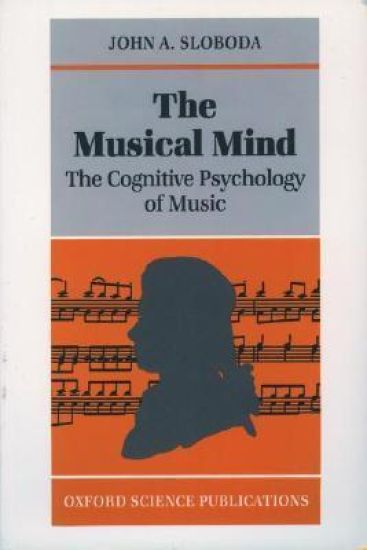
What are the mental processes involved in listening to, performing, and composing music? What is involved in 'understanding' a piece of music? How are such skills acquired? Questions such as these form the basis of the cognitive psychology of music. The author addresses these questions by surveying the growing experimental literature on the subject. The topics covered will be of interest to psychologists, as windows onto a human cognitive skill of some complexity that is only now beginning to receive the attention devoted to such skills as language. They are also relevant to musicians who are seeking to understand the psychological bases of their skills. The author does not simply review existing research, but takes a critical look at what has been achieved in the subject, introducing such topics as composition and musical skill in non-literate cultures. He draws freely on his own knowledge and experience as a practising musician, as well as a psychologist, to provide an overview that is scholarly and also accessible to the general reader.
Since the publication in 1986 of Sloboda's book The Musical Mind, music psychology has developed as a vibrant area of research, exerting influence on areas as diverse as music education and cognitive neuroscience. This new book brings together 23 selected essays and reviews written by an internationally acclaimed authority on music and the mind.
In the 20 years since publication of John Sloboda's landmark volume The Musical Mind, music psychology has developed as a vibrant area of research - exerting influence on areas as diverse as music education and cognitive neuroscience. This new book brings together 24 selected essays and reviews written by an internationally acclaimed authority on music and the mind. Chapters are grouped into four main areas of study. These are, cognitive processes (including music reading, memory and performance), emotion and motivation, talent and skill development, and music in the real world (including functions of music in everyday life and culture). The book ends with a newly written chapter on music psychology and social benefits. The book brings together in one place a range of influential writings, whose links to one another provide a compendious overview of a subject that has come to maturity during the author's career, a career which has significantly contributed to the development of the field.
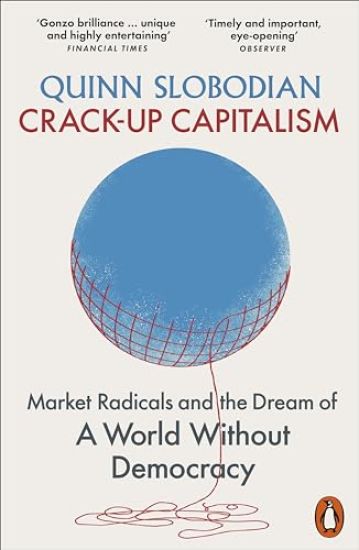
'Gonzo brilliance ... unique and highly entertaining' Financial Times'Revelatory reading' Adam Tooze, author of Crashed'After reading Quinn Slobodian's new book, you are not likely to think about capitalism the same way' JacobinLook at a map of the world and you'll see a neat patchwork of nation-states. But this is not where power actually resides. From the 1990s onwards, globalization has shattered the map, leading to an explosion of new legal entities: tax havens, free ports, city-states, gated enclaves and special economic zones. These new spaces are freed from ordinary forms of regulation, taxation and mutual obligation - and with them, ultracapitalists believe that it is possible to escape the bonds of democratic government and oversight altogether.Historian Quinn Slobodian follows the most notorious radical libertarians - from Milton Friedman to Peter Thiel - around the globe as they search for the perfect home for their free market fantasy. The hunt leads from Hong Kong in the 1970s to South Africa in the late days of apartheid, from the neo-Confederate South to the medieval City of London, and finally into the world's oceans and war zones, charting the relentless quest for a blank slate where capitalism and democracy can be finally uncoupled.Crack-Up Capitalism is a propulsive history of the recent past, and an alarming view of our near future.
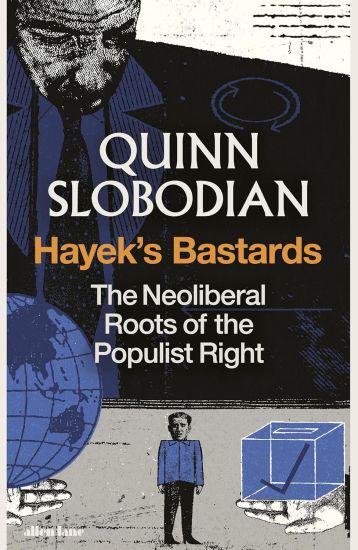
'Bracingly original... Hayek’s Bastards demonstrates how a history of ideas can be riveting. Slobodian grounds intellectual abstractions in the lives of the people who espoused them... His book offers an illuminating history to our current bewildering moment, as right-wing populists join forces with billionaire oligarchs to take a chain saw to the foundations of public life, until there’s nothing left to stand on' - Jennifer Szalai, The New York Times A revelatory exploration of how today’s rightwing authoritarianism emerged not in opposition to neoliberalism, but from within itAfter the end of the Cold War, neoliberalism, with its belief in the virtues of markets and competition, seemed to have triumphed. Communism had been defeated – and Friedrich Hayek, the spiritual father of neoliberal economics, had just about lived to see it. But in the decades that followed, Hayek’s disciples knew that they had a problem. The rise of social movements, from civil rights and feminism to environmentalism, were now proving roadblocks in the road to freedom, nurturing a culture of government dependency, public spending, political correctness and special pleading. Neoliberals needed an antidote.In this illuminating new book, historian Quinn Slobodian reveals how, from the 1990s onwards, neoliberal thinkers turned to nature, in an attempt to roll back social changes and to return to a hierarchy of gender, race and cultural difference. He explores how these thinkers drew on the language of science, from cognitive psychology to genetics, in order to embed the idea of ‘competition’ ever deeper into social life, and to advocate cultural homogeneity as essential for markets to truly work. Reading and misreading the writings of their sages, Friedrich Hayek and Ludwig von Mises, they forged the alliances with racial psychologists, neoconfederates, ethnonationalists that would become known as the alt-right. Hayek’s Bastards shows that many contemporary iterations of the Far Right, from Javier Milei to Donald Trump, emerged not in opposition to neoliberalism, but within it. As repellent as their politics may be, these supposed disruptors are not defectors from the neoliberal order, but its latest cheerleaders.
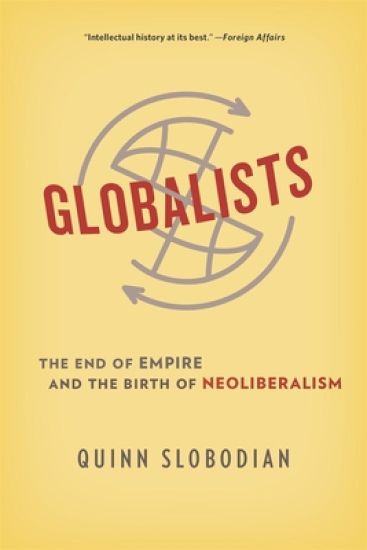
George Louis Beer Prize WinnerWallace K. Ferguson Prize FinalistA Marginal Revolution Book of the Year“A groundbreaking contribution…Intellectual history at its best.”—Stephen Wertheim, Foreign AffairsNeoliberals hate the state. Or do they? In the first intellectual history of neoliberal globalism, Quinn Slobodian follows a group of thinkers from the ashes of the Habsburg Empire to the creation of the World Trade Organization to show that neoliberalism emerged less to shrink government and abolish regulations than to redeploy them at a global level. It was a project that changed the world, but was also undermined time and again by the relentless change and social injustice that accompanied it.“Slobodian’s lucidly written intellectual history traces the ideas of a group of Western thinkers who sought to create, against a backdrop of anarchy, globally applicable economic rules. Their attempt, it turns out, succeeded all too well.”—Pankaj Mishra, Bloomberg Opinion“Fascinating, innovative…Slobodian has underlined the profound conservatism of the first generation of neoliberals and their fundamental hostility to democracy.”—Adam Tooze, Dissent“The definitive history of neoliberalism as a political project.”—Boston Review
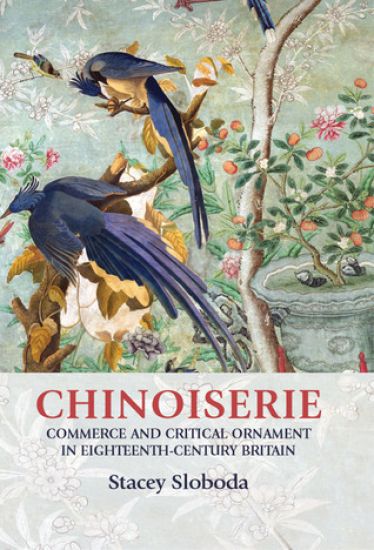
In a critical reassessment of chinoiserie, a style both praised and derided for its triviality, prettiness and ornamental excesses, Stacey Sloboda argues that chinoiserie was no mute participant in eighteenth-century global consumer culture, but was instead a critical commentator on that culture. Analysing ceramics, wallpaper, furniture, garden architecture and other significant examples of British and Chinese design, this book takes an object-focused approach to studying the cultural phenomenon of the ‘Chinese taste’ in eighteenth-century Britain. It is essential reading for anyone interested in the critical history of design and the decorative arts in the period, and students and scholars of art history, material culture, eighteenth-century studies and British history will find a novel approach to studying the decorative arts and a forceful argument for their critical capacities.

It is often asserted that West German New Leftists "discovered the Third World" in the pivotal decade of the 1960s. Quinn Slobodian upsets that storyline by beginning with individuals from the Third World themselves: students from Africa, Asia, and Latin America who arrived on West German campuses in large numbers in the early 1960s. They were the first to mobilize German youth in protest against acts of state violence and injustice perpetrated beyond Europe and North America. The activism of the foreign students served as a model for West German students, catalyzing social movements and influencing modes of opposition to the Vietnam War. In turn, the West Germans offered the international students solidarity and safe spaces for their dissident engagements. This collaboration helped the West German students to develop a more nuanced, empathetic understanding of the Third World, not just as a site of suffering, poverty, and violence, but also as the home of politicized individuals with the capacity and will to speak in their own names.
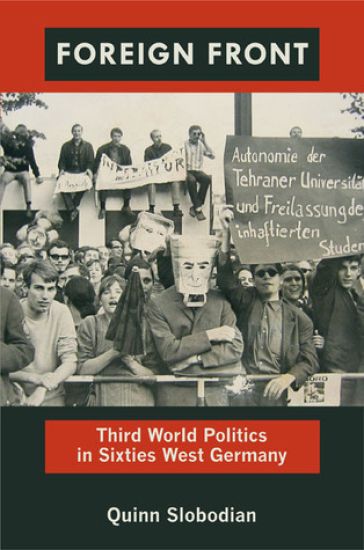
It is often asserted that West German New Leftists "discovered the Third World" in the pivotal decade of the 1960s. Quinn Slobodian upsets that storyline by beginning with individuals from the Third World themselves: students from Africa, Asia, and Latin America who arrived on West German campuses in large numbers in the early 1960s. They were the first to mobilize German youth in protest against acts of state violence and injustice perpetrated beyond Europe and North America. The activism of the foreign students served as a model for West German students, catalyzing social movements and influencing modes of opposition to the Vietnam War. In turn, the West Germans offered the international students solidarity and safe spaces for their dissident engagements. This collaboration helped the West German students to develop a more nuanced, empathetic understanding of the Third World, not just as a site of suffering, poverty, and violence, but also as the home of politicized individuals with the capacity and will to speak in their own names.

Drugs Were Not An Option: ...Admitting My Failures as A Parent of a Child with ADHD
Joelle Sloboda Mickelson
Independently Published
2019
nidottu
Attention all Parents who want help understanding your loved ones who struggle with learning disabilities. "Drugs Were Not An Option" educates you on alternative methods rather than turning to prescription medications. As well as giving her insight on understanding and sympathizing with those who suffer from learning disabilities and social anxieties, the author wants you to know that there are options and natural alternative methodsIf you're looking for answers, or you're curious about alternate methods for ADD/ADHD then this brand new book by Joelle is a must-read. It gives an insight to her journey on understanding her son & his use of CBD to relieve the pain caused by his anxiety and ADD/ADHD. Never before have you had such a unique opportunity nor had access to such a personal journey on the path to helping a loved one. She will take you by the hand and explain not only the education surrounding CBD, but also how she learned to understand her son & his use of CBD Most of what you need is encouragement and some direction from someone who has "been there and done that " Get this book NOW and claim your copy for those searching for answers about alternate methods for ADD/ADHD.
Crack-Up Capitalism: Market Radicals and the Dream of a World Without Democracy
Quinn Slobodian
Metropolitan Books
2023
sidottu
A Fortune best nonfiction book of 2023 In a revelatory dispatch from the frontier of capitalist extremism, an acclaimed historian of ideas shows how free marketeers are realizing their ultimate goal: an end to nation-states and the constraints of democracy. Look at a map of the world and you'll see a colorful checkerboard of nation-states. But this is not where power actually resides. Over the last decade, globalization has shattered the map into different legal spaces: free ports, tax havens, special economic zones. With the new spaces, ultracapitalists have started to believe that it is possible to escape the bonds of democratic government and oversight altogether. Crack-Up Capitalism follows the most notorious radical libertarians--from Milton Friedman to Peter Thiel--around the globe as they search for the perfect space for capitalism. Historian Quinn Slobodian leads us from Hong Kong in the 1970s to South Africa in the late days of apartheid, from the neo-Confederate South to the former frontier of the American West, from the medieval City of London to the gold vaults of right-wing billionaires, and finally into the world's oceans and war zones, charting the relentless quest for a blank slate where market competition is unfettered by democracy. A masterful work of economic and intellectual history, Crack-Up Capitalism offers both a new way of looking at the world and a new vision of coming threats. Full of rich details and provocative analysis, Crack-Up Capitalism offers an alarming view of a possible future.
Crack-Up Capitalism: Market Radicals and the Dream of a World Without Democracy
Quinn Slobodian
Metropolitan Books
2024
nidottu
A Fortune best nonfiction book of 2023 In a revelatory dispatch from the frontier of capitalist extremism, an acclaimed historian of ideas shows how free marketeers are realizing their ultimate goal: an end to nation-states and the constraints of democracy. Look at a map of the world and you'll see a colorful checkerboard of nation-states. But this is not where power actually resides. Over the last decade, globalization has shattered the map into different legal spaces: free ports, tax havens, special economic zones. With the new spaces, ultracapitalists have started to believe that it is possible to escape the bonds of democratic government and oversight altogether. Crack-Up Capitalism follows the most notorious radical libertarians--from Milton Friedman to Peter Thiel--around the globe as they search for the perfect space for capitalism. Historian Quinn Slobodian leads us from Hong Kong in the 1970s to South Africa in the late days of apartheid, from the neo-Confederate South to the former frontier of the American West, from the medieval City of London to the gold vaults of right-wing billionaires, and finally into the world's oceans and war zones, charting the relentless quest for a blank slate where market competition is unfettered by democracy. A masterful work of economic and intellectual history, Crack-Up Capitalism offers both a new way of looking at the world and a new vision of coming threats. Full of rich details and provocative analysis, Crack-Up Capitalism offers an alarming view of a possible future.


While living in Paris at the beginning of the twentieth century, expatriate American writers Edith Wharton (1862-1937) and Gertrude Stein (1874-1946) never crossed paths. Even so, they did rub shoulders in print, in autobiographical essays published by The Atlantic Monthly in 1933. Noel Sloboda shows that the authors pursued many of the same professional goals in these essays and in the book-length life writings that grew out of them, A Backward Glance (1934) and The Autobiography of Alice B. Toklas (1933). By analyzing the personal and cultural contexts in which these works were produced, as well as subjects common to both of them, Sloboda illuminates a previously unrecognized solidarity between Wharton and Stein. The relationship between the authors is built upon careful analysis of A Backward Glance and The Autobiography of Alice B. Toklas, and it is framed by a consideration of the markets into which their life writings were first released. The alignment of Wharton and Stein as life writers will be of interest to those studying autobiography, modern literature, and American women writers.