

Kirjahaku
Etsi kirjoja tekijän nimen, kirjan nimen tai ISBN:n perusteella.
1000 tulosta hakusanalla Steven C Harbert


Acceptance and Commitment Therapy
Steven C. Hayes; Jason Lillis
American Psychological Association
2012
nidottu
Acceptance and Commitment Therapy (ACT) is a unique empirically-based psychological intervention that uses acceptance and mindfulness processes, and commitment and behaviour change processes to produce psychological flexibility. Steven C. Hayes, who helped develop ACT, and co-author Jason Lillis provide an overview of ACT's main influences and its basic principlesIn this succinct and understandable survey, the authors show how ACT illuminates the ways that language encourages unhelpful skirmishing in clients' psychic lives, and how to use ACT to help clients accept private experiences, become more mindful of thoughts, develop greater clarity about personal values, and commit to needed behaviour change. The latest edition in the Theories of Psychotherapy Series.Acceptance and Commitment Therapy examines the therapy's history and process, evaluates the therapy's evidence base and effectiveness, and suggests future directions in the therapy's development..



Epilepsy afflicts more than two million people in the United States and over 50 million people globally. This issue of Neurologic Clinics contains the following articles on this condition: Sudden Unexplained Death in Epilepsy; Approaches to Seizure Prediction; Localizing Seizure Onset; Concomitant Mood Disorders; Advances in the Genetics of Epilepsy; Psychogenic Nonepileptic Seizures; Selection of AEDs; Indentification of Refractory Epilepsy; Therapeutic Brain Stimulation in Epilepsy; AED Tertogneiticity; Hormonal Aspects of Epilepsy; Epilepsy and Radiosurgery; Epilepsy and Cognition; and Determinants of Quality of Life in Epilepsy.

Conflict in Aristotle's Political Philosophy
Steven C. Skultety
State University of New York Press
2019
sidottu
Offers a careful analysis of how Aristotle understands civil war, partisanship, distrust in government, disagreement, and competition, and explores ways in which these views are relevant to contemporary political theory.Do only modern thinkers like Machiavelli and Hobbes accept that conflict plays a significant role in the origin and maintenance of political community? In this book, Steven Skultety argues that Aristotle not only took conflict to be an inevitable aspect of political life, but further recognized ways in which conflict promotes the common good. While many scholars treat Aristotelian conflict as an absence of substantive communal ideals, Skultety argues that Aristotle articulated a view of politics that theorizes profoundly different kinds of conflict. Aristotle comprehended the subtle factors that can lead otherwise peaceful citizens to contemplate outright civil war, grasped the unique conditions that create hopelessly implacable partisans, and systematized tactics rulers could use to control regrettable, but still manageable, levels of civic distrust. Moreover, Aristotle conceived of debate, enduring disagreement, social rivalries, and competitions for leadership as an indispensable part of how human beings live well together in successful political life. By exploring the ways in which citizens can be at odds with one another, Conflict in Aristotle's Political Philosophy presents a dimension of ancient Greek thought that is startlingly relevant to contemporary concerns about social divisions, constitutional crises, and the range of acceptable conflict in healthy democracies.
Conflict in Aristotle's Political Philosophy
Steven C. Skultety
State University of New York Press
2020
pokkari
Offers a careful analysis of how Aristotle understands civil war, partisanship, distrust in government, disagreement, and competition, and explores ways in which these views are relevant to contemporary political theory.Do only modern thinkers like Machiavelli and Hobbes accept that conflict plays a significant role in the origin and maintenance of political community? In this book, Steven Skultety argues that Aristotle not only took conflict to be an inevitable aspect of political life, but further recognized ways in which conflict promotes the common good. While many scholars treat Aristotelian conflict as an absence of substantive communal ideals, Skultety argues that Aristotle articulated a view of politics that theorizes profoundly different kinds of conflict. Aristotle comprehended the subtle factors that can lead otherwise peaceful citizens to contemplate outright civil war, grasped the unique conditions that create hopelessly implacable partisans, and systematized tactics rulers could use to control regrettable, but still manageable, levels of civic distrust. Moreover, Aristotle conceived of debate, enduring disagreement, social rivalries, and competitions for leadership as an indispensable part of how human beings live well together in successful political life. By exploring the ways in which citizens can be at odds with one another, Conflict in Aristotle's Political Philosophy presents a dimension of ancient Greek thought that is startlingly relevant to contemporary concerns about social divisions, constitutional crises, and the range of acceptable conflict in healthy democracies.
Winner of a Shingo Research and Professional Publication AwardInformation Technology is supposed to enable business performance and innovation, improve service levels, manage change, and maintain quality and stability, all while steadily reducing operating costs. Yet when an enterprise begins a Lean transformation, too often the IT department is either left out or viewed as an obstacle. What is to be done? Winner of a 2011 Shingo Research and Professional Publication Award, this book shares practical tips, examples, and case studies to help you establish a culture of continuous improvement to deliver IT operational excellence and business value to your organization. Praise for:...will have a permanent place in my bookshelf.—Gene Kim, Chief Technology Officer, Tripwire, Inc.... provides an unprecedented look at the role that Lean IT will play in making this revolutionary shift and the critical steps for sustained success.—Steve Castellanos, Lean Enterprise Director, Nike, Inc.Twenty years from now the firms which dominate their industries will have fully embraced Lean strategies throughout their IT organizations. —Scott W. Ambler, Chief Methodologist for Agile and Lean, IBM Rational… a great survival manual for those needing nimble and adaptive systems.—Dr. David Labby, MD, PhD, Medical Director and Director of Clinical Support and Innovation, CareOregon… makes a major contribution in an often-ignored but much-needed area.—John Bicheno, Program Director MS in Lean Operations, Cardiff University… a comprehensive view into the world of Lean IT, a must read!—Dave Wilson, Quality Management, Oregon Health & Science University

The most passionate advocates of Italy’s unification in the nineteenth century possessed an almost limitless faith in the benefits of civic association. They also shared a common concern: once Italian unification was achieved and various freedoms were established, would ordinary Italians naturally become responsible, progressive citizens – especially after centuries of foreign rule, regional division, and economic decline? Most unification advocates doubted that their fellow citizens could form a modern, progressive civil society on their own, or that a vibrant association life would develop from the ground up. Building a Civil Society is the first book-length English-language study of associational life in nineteenth-century Italy. Drawing on extensive research in published and unpublished documents – including associational records, newspapers, periodicals, government documents, guidebooks, exhibition catalogues, memoirs, and private letters – Steven C. Soper provides a complex account of Italian liberalism during Europe’s age of association. His study also raises important questions about the role that associations play in emerging democracies.

Today, a company's capability to conceive and design quality prototypes and bring a variety of superior products to market quicker than its competitors is increasingly the focal point of competition, contend leading product development experts Steven Wheelwright and Kim Clark. Drawing on six years of in-depth, systematic, worldwide research, they present proven principles for developing the critical capabilities for speed, efficiency, and quality that have worked again and again in scores of successful Japanese, American, and European fast-cycle firms.The authors argue that to survive, let alone succeed, today's companies must construct a new "platform" -- with new methodologies -- on which they can compete. Using their model for development strategies, Wheelwright and Clark show that firms can create a solid architecture for the integration of marketing, manufacturing, and design functions for problem solving and fast action -- particularly during the critical design-build-test cycles of prototype creation.They demonstrate further how successful firms such as Honda in automobiles, Compaq in personal computers, Applied Materials in semi-conductors, Sony in audio equipment, The Limited in apparel, and Hill-Rom in hospital beds have employed recent methodologies to bring new products to market at break-neck speed. Such innovations include design for manufacturability, quality function deployment, computer-aided design, and computer-aided engineering.Finally, Wheelwright and Clark emphasize the importance of learning in the organization. Companies that consistently "design it right the first time" and follow a path of continuous improvement in product and process development have a formidable edge in the crucial race to market.



Bot Programming: Intelligent Automation For Windows Applications And Games
Steven C. Miller Jr
Createspace Independent Publishing Platform
2010
nidottu


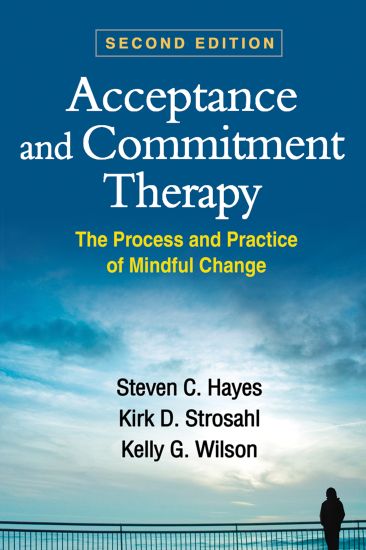
Acceptance and Commitment Therapy, Second Edition
Steven C. Hayes; Kirk D. Strosahl; Kelly G. Wilson
Guilford Press
2016
nidottu
Since the original publication of this seminal work, acceptance and commitment therapy (ACT) has come into its own as a widely practiced approach to helping people change. This book provides the definitive statement of ACT--from conceptual and empirical foundations to clinical techniques--written by its originators. ACT is based on the idea that psychological rigidity is a root cause of a wide range of clinical problems. The authors describe effective, innovative ways to cultivate psychological flexibility by detecting and targeting six key processes: defusion, acceptance, attention to the present moment, self-awareness, values, and committed action. Sample therapeutic exercises and patient-therapist dialogues are integrated throughout. New to This Edition *Reflects tremendous advances in ACT clinical applications, theory building, and research. *Psychological flexibility is now the central organizing focus. *Expanded coverage of mindfulness, the therapeutic relationship, relational learning, and case formulation. *Restructured to be more clinician friendly and accessible; focuses on the moment-by-moment process of therapy. See also Experiencing ACT from the Inside Out: A Self-Practice/Self-Reflection Workbook for Therapists, by Dennis Tirch, Laura R. Silberstein-Tirch, R. Trent Codd III, Martin J. Brock, and M. Joann Wright.

Long Island's Vanished Heiress: The Unsolved Alice Parsons Kidnapping
Steven C. Drielak
History Press
2020
nidottu
Alice McDonell Parsons was the heir to a vast fortune among Long Island's wealthy elite when she was kidnapped from Long Meadow Farm in Stony Brook in 1937. The crime shocked the nation and was front-page news for several months. J. Edgar Hoover personall