Kirjojen hintavertailu. Mukana 11 417 157 kirjaa ja 12 kauppaa.

Kirjahaku

Etsi kirjoja tekijän nimen, kirjan nimen tai ISBN:n perusteella.

1000 tulosta hakusanalla Steven J. Howell

Demystifying Schizophrenia For The General Practitioner

Demystifying Schizophrenia For The General Practitioner

Steven J Siegel; LaRiena Ralph

Jones and Bartlett Publishers, Inc
2009
nidottu
Schizophrenia is devastating psychiatric disorder that is often misunderstood. Demystifying Schizophrenia for the General Practitioner is an essential manual for clinicians illustrating how schizophrenia affects patients, their families and society using poignant real world examples to explain its onset, progression and prognosis. This book includes criteria for diagnosing schizophrenia based on the Diagnostic Statistical Manual (DSM). Special emphasis is placed on differential diagnosis, co-morbidities, medications, and additional treatment options. The authors provide expert guidance on helping patients to cope with family and cultural issues for this highly complex disorder.
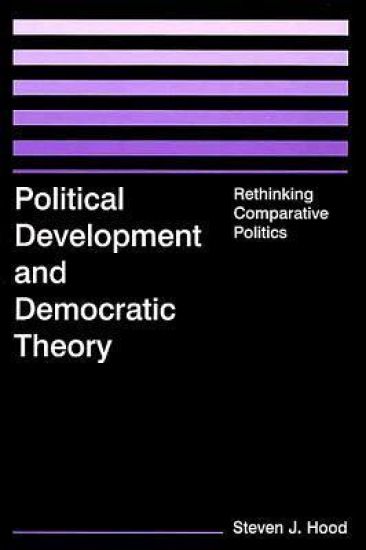
Political Development and Democratic Theory
Most comparativists have assumed that democratization is best understood by looking at regimes in the transition and consolidation phases of democracy without really considering the essence of democracy - liberal rights and democratic virtues. Democracy is seen as a mechanistic process without considering the ideas that build democratic regimes. This book begins afresh by proposing that comparativists need to consider democracy to be a combination of rights and virtues, and that the difficulties of democratic transitions, consolidation, and maintenance are essentially problems relating to balancing rights and virtues in the regime. How do we reemphasize these aspects of democracy at a time when comparative literature focuses almost solely on democratic procedure? By combining the best elements of comparative theory and liberal democratic philosophy, Hood argues that comparativists can sharpen the scholarly tools we need to understand both the problems of democratization and maintaining democracy. He provides the reader with a valuable overview of comparative theory and how our abandonment of political philosophy has led to our acceptance of social science methods that can only lead to superficial analyses of democratizing regimes and established democracies.
Political Development and Democratic Theory
Most comparativists have assumed that democratization is best understood by looking at regimes in the transition and consolidation phases of democracy without really considering the essence of democracy - liberal rights and democratic virtues. Democracy is seen as a mechanistic process without considering the ideas that build democratic regimes. This book begins afresh by proposing that comparativists need to consider democracy to be a combination of rights and virtues, and that the difficulties of democratic transitions, consolidation, and maintenance are essentially problems relating to balancing rights and virtues in the regime. How do we reemphasize these aspects of democracy at a time when comparative literature focuses almost solely on democratic procedure? By combining the best elements of comparative theory and liberal democratic philosophy, Hood argues that comparativists can sharpen the scholarly tools we need to understand both the problems of democratization and maintaining democracy. He provides the reader with a valuable overview of comparative theory and how our abandonment of political philosophy has led to our acceptance of social science methods that can only lead to superficial analyses of democratizing regimes and established democracies.
Teaching the Humanities Online: A Practical Guide to the Virtual Classroom
This practical guide is essential for anyone new to or intimidated by online instruction. Drawing on the expertise of teachers of the humanities who have deep experiences in the online environment, this work explores a variety of areas within the online teaching experience. It discusses the differences between online and face-to-face learning environments and assesses and evaluates best practices in developing and teaching online courses. This volume is not really about the technology, but instead focuses on the ways in which available technologies can be used to enhance teaching in both synchronous and asynchronous forums, and as such it will still be worth the read many years from now—even in the face of rapid technological change. Contributions from faculty members teaching in art education, communication, English, history, social studies education, and interdisciplinary studies departments, as well as directors of writing centers and online education and distance learning programs are included. Essays in this volume will assist instructors, faculty members, and administrators new to the online experience, but who want to learn more about making the transition to online teaching, in navigating this transition gracefully.
Teaching the Humanities Online: A Practical Guide to the Virtual Classroom
This practical guide is essential for anyone new to or intimidated by online instruction. Drawing on the expertise of teachers of the humanities who have deep experiences in the online environment, this work explores a variety of areas within the online teaching experience. It discusses the differences between online and face-to-face learning environments and assesses and evaluates best practices in developing and teaching online courses. This volume is not really about the technology, but instead focuses on the ways in which available technologies can be used to enhance teaching in both synchronous and asynchronous forums, and as such it will still be worth the read many years from now—even in the face of rapid technological change. Contributions from faculty members teaching in art education, communication, English, history, social studies education, and interdisciplinary studies departments, as well as directors of writing centers and online education and distance learning programs are included. Essays in this volume will assist instructors, faculty members, and administrators new to the online experience, but who want to learn more about making the transition to online teaching, in navigating this transition gracefully.
Rabbinical Counseling

Rabbinical Counseling

Steven J. Kaplan

Jason Aronson Inc. Publishers
2011
sidottu
Rabbinical Counseling provides a perspective on mental, emotional, and spiritual healing for the hurting individual. Rabbi Steven Kaplan explores the time-honored tradition of healing within Judaism and the often-revered status of the healer within the Jewish community. Kaplan first explains the foundations of rabbinical counseling before delving into a discussion of specific psychological problems and the therapeutic processes that can be used to address them. The underlying causes and forerunners of these problems are explained and clarified, providing the rabbi with a clear and comprehensible understanding of the nature of what is truly causing distress to the person. The text proceeds to discuss the "God-connection," where a method of developing a new, different, and deeper relationship with God is explained, allowing the individual to bring a new spiritual dimension to his/her life.
Race, Class and Power in the Building of Richmond, 1870-1920
Using post-Civil War Richmond, Virginia, as a case study, Hoffman explores the role of race and class in the city building process from 1870 to 1920. Richmond's railroad connections enabled the city to participate in the commercial expansion that accompanied the rise of the New South. A highly compact city of mixed residential, industrial and commercial space at the end of the Civil War, Richmond remained a classic example of what historians call a "walking city" through the end of the century. As city streets were improved and public transportation became available, the city's white merchants and emerging white middle class sought homes removed from the congested downtown. The city's African American and white workers generally could not afford to take part in this residential migration. As a result, the mixture of race and class that had existed in the city since its inception began to disappear. The city of Richmond exemplified characteristics of both Northern and Southern cities during the period from 1870 to 1920. Retreating Confederate soldiers had started fires that destroyed the city in 1865, but by 1870, the former capital of the Confederacy was on the road to recovery from war and reconstruction, reestablishing itself as an important manufacturing and trade center. The city's size, diversity and economic position at the time not only allows for comparisons to both Northern and Southern cities but also permits an analysis of the role of groups other than the elite in city building process. By taking a look at Richmond, we are able to see a more complete picture of how American cities have come to be the way they are.
Desegregation in Boston and Buffalo

Desegregation in Boston and Buffalo

Steven J. L. Taylor

State University of New York Press
1998
pokkari
Examines how citizens and the political leadership of two cities dealt with controversial court orders to end the segregation of public schools. Desegregation in Boston and Buffalo examines how the citizens and the political leadership of the two cities dealt with controversial court orders to end the segregation of public schools. Although the cities shared many similarities, they witnessed very dissimilar outcomes. Taylor covers key factors such as inter-ethnic relations and the struggle of various ethnic groups for political empowerment, and focuses on the political development of African American communities in urban environments and the role of Black elected leadership in helping to diffuse potentially volatile situations.
Constructing Test Items

Constructing Test Items

Steven J. Osterlind

Springer
1997
sidottu
Constructing test items for standardized tests of achievement, ability, and aptitude is a task of enormous importance. The interpretability of a test's scores flows directly from the quality of its items and exercises. Concomitant with score interpretability is the notion that including only carefully crafted items on a test is the primary method by which the skilled test developer reduces unwanted error variance, or errors of measurement, and thereby increases a test score's reliability. The aim of this entire book is to increase the test constructor's awareness of this source of measurement error, and then to describe methods for identifying and minimizing it during item construction and later review. Persons involved in assessment are keenly aware of the increased attention given to alternative formats for test items in recent years. Yet, in many writers' zeal to be `curriculum-relevant' or `authentic' or `realistic', the items are often developed seemingly without conscious thought to the interpretations that may be garnered from them. This book argues that the format for such alternative items and exercises also requires rigor in their construction and even offers some solutions, as one chapter is devoted to these alternative formats. This book addresses major issues in constructing test items by focusing on four ideas. First, it describes the characteristics and functions of test items. A second feature of this book is the presentation of editorial guidelines for writing test items in all of the commonly used item formats, including constructed-response formats and performance tests. A third aspect of this book is the presentation of methods for determining the quality of test items. Finally, this book presents a compendium of important issues about test items, including procedures for ordering items in a test, ethical and legal concerns over using copyrighted test items, item scoring schemes, computer-generateditems and more.
New Life in Christ

New Life in Christ

Steven J. Lawson; Sinclair Ferguson

Baker Books, a division of Baker Publishing Group
2020
nidottu
The single most important event in a person's life is the new birth. Yet, this is also one of the most neglected doctrines in the church. Many Christians would be hard-pressed to describe exactly what the new birth is, let alone what it means to the rest of their walk with God. What happens when we are born again? Does everything in our lives change immediately? Is it just a kind of spiritual do-over, a chance to get it right this time? What happens when we fail? Does it mean we weren't really born again to begin with? With a pastor's heart and a professor's insight, Steven Lawson carefully examines the encounter between Jesus and Nicodemus found in John 3 to uncover the nature of this spiritual rebirth. He shows you the necessity of the new birth, how God changes our hearts through it, and what follows after, from baptism and involvement in a local church to handling doubts and setbacks. This book is perfect for believers who want to understand what happened when they believed and for non-Christians who are curious about what a new life in Christ is all about.
Called to Preach – Fulfilling the High Calling of Expository Preaching
In every generation, the church stands in dire need of God-called people to preach the Word with precision and power. Preachers who will not replace sound theology with culturally palatable soundbites. Preachers who will clearly and faithfully share the gospel and inspire those in their churches to live godly lives.Through in-depth biblical analysis and inspiring examples from church history, Steven J. Lawson paints a picture of God's glory magnified through faithful preaching, reclaiming the high ground of biblical preaching for the next generation. With helpful advice and practical guidance gleaned from 50 years in ministry, Lawson helps aspiring preachers know if they are called to preach; understand the qualifications for ministry; and develop, improve, and deliver strong expository sermons that illuminate the Word of God in a dark world.
Liberalism and Community

Liberalism and Community

Steven J. Kautz

Cornell University Press
1997
pokkari
Contemporary political theory has experienced a recent revival of an old idea: that of community. In Liberalism and Community, Steven Kautz explores the consequences of this renewed interest for liberal politics. Whereas communitarian critics argue that liberalism is both morally and politically deficient because it does not adequately account for equality and virtue, Kautz defends liberalism by presenting reports of various partisan quarrels among liberals (who love liberty), democrats (who love equality), and republicans (who love virtue). Founded on the classic texts of Locke and Montesquieu, the liberalism that Kautz advocates is cautious and conservative. He defends it against the arguments of important new communitarians—Richard Rorty, Michael Walzer, Benjamin Barber, and Michael Sandel—and contrasts communitarian and liberal views on key questions. He discusses Walzer' s account of moral reasoning in a democratic community, engages Barber on the nature and limits of republican community, and takes on Rorty's communitarian account of moral psychology and the nature of the self. Kautz also explores the concepts of virtue, tolerance, and patriotism—issues of particular interest to communitarians which pose special problems for liberal political theory—in an effort to rebuild a new and more tenable interpretation of liberal rationality.
A Colonial Complex

A Colonial Complex

Steven J. Oatis

University of Nebraska Press
2008
pokkari
In 1715 the upstart British colony of South Carolina was nearly destroyed in an unexpected conflict with many of its Indian neighbors, most notably the Yamasees, a group whose sovereignty had become increasingly threatened. The South Carolina militia retaliated repeatedly until, by 1717, the Yamasees were nearly annihilated, and their survivors fled to Spanish Florida. The war not only sent shock waves throughout South Carolina's government, economy, and society, but also had a profound impact on colonial and Indian cultures from the Atlantic Coast to the Mississippi River. Drawing on a diverse range of colonial records, A Colonial Complex builds on recent developments in frontier history and depicts the Yamasee War as part of a colonial complex: a broad pattern of exchange that linked the Southeast's Indian, African, and European cultures throughout the late seventeenth and early eighteenth centuries. In the first detailed study of this crucial conflict, Steven J. Oatis shows the effects of South Carolina's aggressive imperial expansion on the issues of frontier trade, combat, and diplomacy, viewing them not only from the perspective of English South Carolinians but also from that of the societies that dealt with the South Carolinians both directly and indirectly. Readers will find new information on the deerskin trade, the Indian slave trade, imperial rivalry, frontier military strategy, and the major transformations in the cultural landscape of the early colonial Southeast.
Living Out of Bounds

Living Out of Bounds

Steven J. Overman

Bison Books
2010
pokkari
Despite enormous differences in pay among professional athletes, most aspects of their daily lives remain surprisingly constant across sports and income levels. Living Out of Bounds provides answers to persistent questions about what it's really like to be an athlete and discusses the filtered image of the athlete that emerges through books and other media. Steven J. Overman mines a wide array of sports biographies, autobiographies, memoirs, and diaries to construct a representative picture of the athlete's life from the rise of American sport in the late nineteenth century to the present day. In so doing, he reveals the person behind the sports celebrity as he exists on a daily basis. Individual chapters cover topics such as college athletics, the pressure of celebrity, the difficulty of balancing sports and everyday life, sex and sexuality, race in sports, the obsession with the body, and the difficulties associated with retiring. In the course of the work, a portrait emerges that transcends individual lives. The shared experiences of devoted training, of travel and hotels, and of tension within and beyond the clubhouse or gym force us to appreciate the often oppressive reality of the sporting life; at the same time, individual lives provide a glimpse of the rewards that make sports so compelling to audiences and athletes across America.
The Jews of Odessa

The Jews of Odessa

Steven J. Zipperstein

Stanford University Press
1991
pokkari
Founded in 1794 as a frontier city on the Black Sea, Odessa soon grew to be one of Russia's busiest seaports. Settlers of all nationalities went there to seek their fortune, among them Jews who came to form one of the largest, wealthiest, and most culturally fertile Jewish communities in Europe. This history of Jewish Odessa traces the rise of that community from its foundation in 1794 to the pogroms of 1881 that erupted after the assassination of Alexander II. Zipperstein emphasizes Jewish acculturation: changes in behavior, attitude, and ideology as reflected in schools, synagogues, newspapers, and other institutions of the period. The patterns set then affected the community's cultural development well into the second decade of the twentieth century. More a modern metropolis than any other Russian city with a significant Jewish population, Odessa offers a window into the diversity of Russian Jewish experience.
Power Balance

Power Balance

Steven J Haberfeld

UNIVERSITY OF OKLAHOMA PRESS
2022
nidottu
Negotiation, understood simply as “working things out by talking things through,” is often anything but simple for Native nations engaged with federal, state, and local governments to solve complex issues, promote economic and community development, and protect and advance their legal and historical rights. Power Balance builds on traditional Native values and peacemaking practices to equip tribes today with additional tools for increasing their negotiating leverage. As cofounder and executive director of the Indian Dispute Resolution Service, author Steven J. Haberfeld has worked with Native tribes for more than forty years to help resolve internal differences and negotiate complex transactions with governmental, political, and private-sector interests. Drawing on that experience, he combines Native ideas and principles with the strategies of “interest-based negotiation” to develop a framework for overcoming the unique structural challenges of dealing with multilevel government agencies. His book offers detailed instructions for mastering six fundamental steps in the negotiating process, ranging from initial planning and preparation to hammering out a comprehensive, written win-win agreement. With real-life examples throughout, Power Balance outlines measures tribes can take to maximize their negotiating power—by leveraging their special legal rights and historical status and by employing political organizing strategies to level the playing field in obtaining their rightful benefits. Haberfeld includes a case study of the precedent-setting negotiation between the Timbisha Shoshone Tribe and four federal agencies that resolved disputes over land, water, and other natural resource in Death Valley National Park in California. Bringing together firsthand experience, traditional Native values, and the most up-to-date legal principles and practices, this how-to book will be an invaluable resource for tribal leaders and lawyers seeking to develop and refine their negotiating skills and strategies.
Power Balance

Power Balance

Steven J Haberfeld

UNIVERSITY OF OKLAHOMA PRESS
2022
sidottu
Negotiation, understood simply as “working things out by talking things through,” is often anything but simple for Native nations engaged with federal, state, and local governments to solve complex issues, promote economic and community development, and protect and advance their legal and historical rights. Power Balance builds on traditional Native values and peacemaking practices to equip tribes today with additional tools for increasing their negotiating leverage. As cofounder and executive director of the Indian Dispute Resolution Service, author Steven J. Haberfeld has worked with Native tribes for more than forty years to help resolve internal differences and negotiate complex transactions with governmental, political, and private-sector interests. Drawing on that experience, he combines Native ideas and principles with the strategies of “interest-based negotiation” to develop a framework for overcoming the unique structural challenges of dealing with multilevel government agencies. His book offers detailed instructions for mastering six fundamental steps in the negotiating process, ranging from initial planning and preparation to hammering out a comprehensive, written win-win agreement. With real-life examples throughout, Power Balance outlines measures tribes can take to maximize their negotiating power—by leveraging their special legal rights and historical status and by employing political organizing strategies to level the playing field in obtaining their rightful benefits. Haberfeld includes a case study of the precedent-setting negotiation between the Timbisha Shoshone Tribe and four federal agencies that resolved disputes over land, water, and other natural resource in Death Valley National Park in California. Bringing together firsthand experience, traditional Native values, and the most up-to-date legal principles and practices, this how-to book will be an invaluable resource for tribal leaders and lawyers seeking to develop and refine their negotiating skills and strategies.
A Very Different Age

A Very Different Age

Steven J Diner

Hill Wang
1998
pokkari
The early twentieth century was a time of technological revolution in the United States. New inventions and corporations were transforming the economic landscape, bringing a stunning array of consumer goods, millions of additional jobs, and ever more wealth. Steven J. Diner draws on the rich scholarship of recent social history to show how these changes affected Americans of all backgrounds and walks of life, and in doing so offers a striking new interpretation of a crucial epoch in our history.
Straddling Worlds

Straddling Worlds

Steven J. Harper

Northwestern University Press
2019
nidottu
Author Steven J. Harper pays tribute to a well-respected teacher with this biography of a distinguished William Smith Mason Professor of History at Northwestern University, Richard W. Leopold. Harper had maintained contact with his former professor, as had hundreds of other alumni, meeting with him in the apartment to which his age and health confined him. When Leopold invited him to review his biographical materials to prepare a New York Times obituary, Harper began to catch glimpses of a deeper history in Leopold's life: that of Jews in America after the turn of the century.Across two years of Sundays, Leopold's life came together and Harper began to notice parallels between the life of his professor and the life of his recently deceased father-in-law. Both grew up in less orthodox households but were still identified as Jewish by others; both attended Ivy League colleges, fighting (and beating) anti-Semitism there; and both served their country with distinction in World War II. The two men persevered through a twentieth century Jewish-American experience that they and many others shared, but rarely discussed. Steven Harper has caught them both on the page just in time to document their lives, their culture, and the nation that grew and changed alongside them.