Cicero's Accretive Style is a book about the nature of the Ciceronian exordium and its rhetorical structure and function. Through a sentence-by-sentence stylistic analysis of the exordia of a selection of Cicero's judicial speeches, this book explores how Cicero uses a variety of rhetorical strategies to fulfill the aims of the exordium as he himself defined them. The speeches selected for study include the Pro Quinctio, Pro Roscio Amerino, and Pro Rege Deiotaro, and cover the span of Cicero's career. The focus of the analysis is on Cicero's "accretive" style—not a rhetorical device in the formal sense, but a conscious, stylistic effort whose effect is rhetorical. Because Cicero also wrote important treatises on oratory and rhetoric, this book measures how closely Cicero followed his own guidelines laid down for the exordium, and how and under what circumstances he deviated or departed from them.
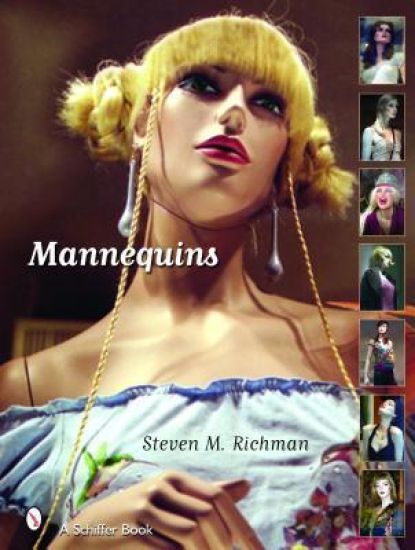
A photographer's artistic fascination with mannequins is explored through a series of 390 portraits from around the world. This compelling photographic essay captures the personalities and drama of storefront figures, while presenting intriguing questions about the nature of mannequins: their relationship to art and the role they play in shaping women's form in perception and fantasy. Retailers, merchandisers, members of the fashion industry, and photography enthusiasts will all find this book a valuable source of inspiration.
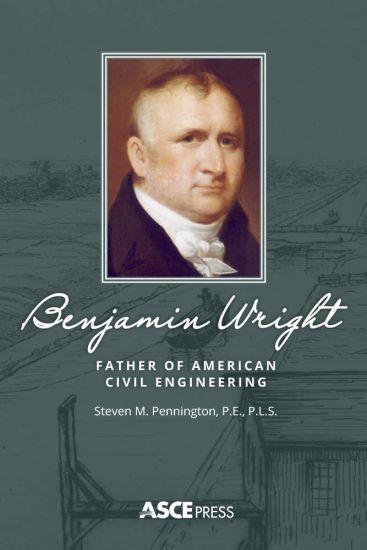
The early nineteenth century was a time of great change as the United States transitioned from the colonial era to the industrial age. Benjamin Wright's engineering career spanned the better part of that time from 1790 to 1840.In Benjamin Wright: Father of American Civil Engineering, Steven M. Pennington chronicles Wright's life and varied career from country surveyor to his early work on America's railroads. After surveying the Mohawk River for navigation improvements and supervising the engineering of the Erie Canal project, he then went on to contribute to such projects as the Chesapeake and Delaware Canal near Philadelphia, and the Chesapeake and Ohio Canal near Washington, DC. From the capital city, Wright advanced his engineering practice as America grew and viewed its manifest expansion to the West.Throughout his life and work, Wright's personal connections, politically, socially, and technically, were far reaching. Wright understood the mechanics and connectivity of how politics and economics demonstrated themselves. He worked with leaders across the business and engineering communities to make a lasting social, economic, and historical contribution.Benjamin Wright understood the necessity to establish an organization of practicing engineers to stimulate technical, business, ethical, and professional attitudes. In 1839, he participated in organizational meetings of what would become the American Society of Civil Engineers which, in 1970, designated him the "Father of American Civil Engineering.
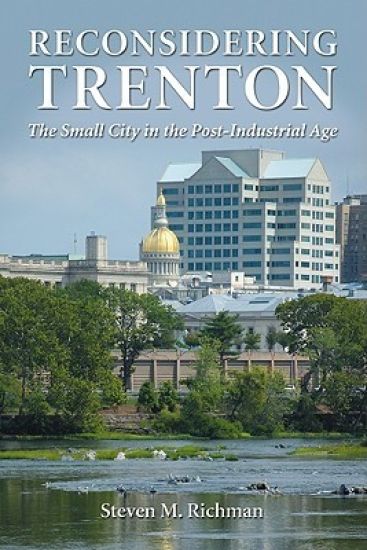
Trenton, like the state of New Jersey, is often maligned these days, but there was a time when Trenton was the fiftieth largest city in the United States and boasted worldwide leaders in the iron and steel, rubber, and pottery industries. Like many cities of its comparative size and prowess that came of age in the Industrial Revolution, Trenton diminished in the aftermath of World War II and has become, for many, one of the "lost cities"--a place of lessened population, abandoned houses, and shuttered factories. Featuring a series of meditative explorations on the essence of the American post-industrial city through the prism of Trenton, this book explores the city's history, architecture, parks, factories, and neighborhoods through text and image, highlighting the importance of such post-industrial cities.
Most of the world’s population is in the dark when it comes to the consumer patterns of gay men. But in Twenty Million New Customers!: Understanding Gay Men’s Consumer Behavior, you’ll leave all the dark, homophobic myths behind where they belong--in the closet--and come out into the light. In its colorful and informative chapters, you’ll see why gay men are a vital consumer lifeline to today’s clothing industries as you tap into revealing psychological characteristics that will benefit any business manager. A scholarly yet personal, poignant study, Twenty Million New Customers! is a mixed shopping bag, taking you on a day-in-the-life tour of the buying patterns of 44 gay men. As an up-to-date catalog of scholarly data, it helps you see how “mainstream” businesses can tailor their marketing methods to this rapidly expanding demand in a competent, professional, and ethical manner. As a commentary on lifestyle, it transports you to unexplored consumer behavior territory that most people still consider “deviant.” Specifically, you’ll read about:in-depth, personal interviews from gay consumers real-life problems and market needs of gay men consumer behavior as political protest self-concept, identity, community, and culture the creation and maintenance of gay consumer subculture research methods and managerial implications of the studyA recent survey estimates that over six percent of U.S. consumers openly acknowledges themselves as gay--clearly a priceless niche. So if you’re a gay man trying to get the skinny on the latest bodysuit trends, a marketing scholar involved in quantitative methods research, or a manager interested in retiring your old, outdated business savvy to the closet and exchanging it for a flashy, new, informed sense of marketing pizzazz, read Twenty Million New Customers! It’ll shut the closet on the harmful myths surrounding gay consumerism and open the door to success.
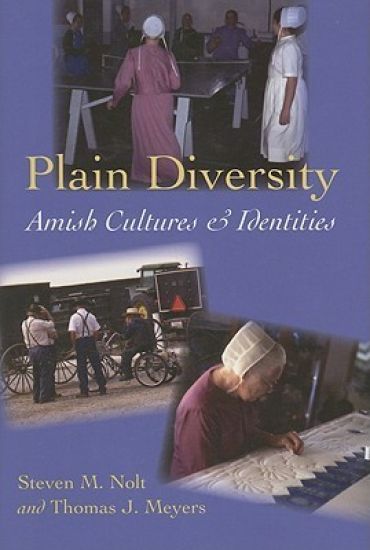
Plain and simple. American popular culture has embraced a singular image of Amish culture that is immune to the complexities of the modern world: one-room school houses, horses and buggies, sound and simple morals, and unfaltering faith. But these stereotypes dangerously oversimplify a rich and diverse culture. In fact, contemporary Amish settlements represent a mosaic of practice and conviction. In the first book to describe the complexity of Amish cultural identity, Steven M. Nolt and Thomas J. Meyers explore the interaction of migration history, church discipline, and ethnicity in the community life of nineteen Amish settlements in Indiana. Their extensive field research reveals the factors that influence the distinct and differing Amish identities found in each settlement and how those factors relate to the broad spectrum of Amish settlements throughout North America. Nolt and Meyers find Amish children who attend public schools, Amish household heads who work at luxury mobile home factories, and Amish women who prefer a Wal-Mart shopping cart to a quilting frame. Challenging the plain and simple view of Amish identity, this study raises the intriguing question of how such a diverse people successfully share a common identity in the absence of uniformity.
The trading, selling, and buying of personal transport has changed little over the past one hundred years. Whether horse trading in the early twentieth century or car buying today, haggling over prices has been the common practice of buyers and sellers alike. Horse Trading in the Age of Cars offers a fascinating study of the process of buying an automobile in a historical and gendered context. Steven M. Gelber convincingly demonstrates that the combative and frequently dishonest culture of the showroom floor is a historical artifact whose origins lie in the history of horse trading. Bartering and bargaining were the norm in this predominantly male transaction, with both buyers and sellers staking their reputations and pride on their ability to negotiate the better deal. Gelber comments on this point-of-sale behavior and what it reveals about American men. Gelber's highly readable and lively prose makes clear how this unique economic ritual survived into the industrial twentieth century, in the process adding a colorful and interesting chapter to the history of the automobile.
In From Pentecost to the Triune God Steven Studebaker puts forth a provocative Pentecostal Trinitarian theology, arguing that the Holy Spirit completes the fellowship of the triune God and therefore shapes the identities of the Father and the Son. The Holy Spirit, Studebaker maintains, is not simply a passive end-product of a procession from the Father and Son but, rather, a dynamic person who plays an active role in the Trinity and a constitutional, consummational role in the history of redemption. In the course of his study, Studebaker shows the theological yield of the Pentecostal experience of the Holy Spirit and uncovers the biblical narratives of the Spirit from creation to Pentecost. A constructive and ecumenical contribution to Trinitarian theology, From Pentecost to the Triune God also engages major historical and contemporary figures such as Augustine, the Cappadocians, Weinandy, and Zizioulas, as well as representatives from the evangelical and charismatic traditions. Finally, Studebaker applies his Pentecostal Trinitarian theology to the theology of religions and creation care, proposing that Christians embrace an inclusive posture toward people of other religious traditions and have an earth orientation that sees creation care as Christian formation.
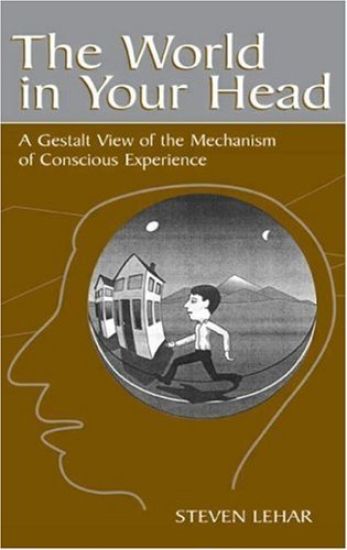
The World In Your Head: A Gestalt View of the Mechanism of Conscious Experience represents a bold assault on one of the greatest unsolved mysteries in science: the nature of consciousness and the human mind. Rather than examining the brain and nervous system to see what they tell us about the mind, this book begins with an examination of conscious experience to see what it can tell us about the brain. Through this analysis, the first and most obvious observation is that consciousness appears as a volumetric spatial void, containing colored objects and surfaces. This reveals that the representation in the brain takes the form of an explicit volumetric spatial model of external reality. Therefore, the world we see around us is not the real world itself, but merely a miniature virtual-reality replica of that world in an internal representation. In fact, the phenomena of dreams and hallucinations clearly demonstrate the capacity of the brain to construct complete virtual worlds even in the absence of sensory input. Perception is somewhat like a guided hallucination, based on sensory stimulation. This insight allows us to examine the world of visual experience not as scientists exploring the external world, but as perceptual scientists examining a rich and complex internal representation. This unique approach to investigating mental function has implications in a wide variety of related fields, including the nature of language and abstract thought, and motor control and behavior. It also has implications to the world of music, art, and dance, showing how the patterns of regularity and periodicity in space and time--apparent in those aesthetic domains--reflect the periodic basis set of the underlying harmonic resonance representation in the brain.
Moving beyond the work of Rawls and his critics, this concise collection contains critical essays in contemporary political philosophy. All have been chosen for their importance and accessibility, and some have been edited by their authors for inclusion in this work. Political Philosophy in the Twenty-First Century covers five main topics: equality, justice, liberty, democracy, and human rights. To assist readers, the editors have also provided section introduction and study questions as well as an overall introduction explaining the background to contemporary work in political philosophy. Beginning where most other anthologies in political philosophy conclude, this book can be used alone or in conjunction with any collection of historical sources.
Steven Buecheler has written a comparative sociological analysis of the woman suffrage movement (1840s-1920) and the contemporary women’s movement (1960s to the present). His identification of similarities and differences between these movements reveals persistent feminist issues over time as well as the distinctive concerns of each movement in the sociohistorical context. Buecheler compares these two movements in terms of their origins, organizations, ideologies, class and racial diversities, countermovement’s, and outcomes. He uses resource mobilization theory. Buecheler explains why women’s movements arise, the forms of organization they adopt, the diversity of ideologies they espouse, and the class and racial composition of women’s movements. He also helps us to understand the roots of countermovements, as well as the mixture of successes and failures that has characterized both past and present women’s movements. While recognizing both the setbacks and the victories of the contemporary movement, Buecheler identifies grounds for relative optimism about the lasting consequences of this ongoing mobilization.Buechler also explores the complex relationship between social change and social movements. Rapid change both enables and constricts the potential for collective action, which in turn reshapes social structure, By studying long-lived moments in a comparative framework, Buechler sheds light on the broader dialectical relation between agency and structure that is embodied in movement efforts at social change.
Frank Lloyd Wright designed and realized over 500 buildings between 1886 and 1959 for a wide range of clients. In Frank Lloyd Wright's Pope-Leighey House, architect Steven Reiss presents the updated and detailed story of one of Wright’s few Virginia commissions. Designed and built for Loren and Charlotte Pope and later purchased by Marjorie and Robert Leighey, the Pope-Leighey House stands as a stunning example of an innovative form of shelter—which Wright called Usonian—for families beset by the Great Depression. Here, and elsewhere, Wright offered a unique and unprecedented approach for homes that would be small yet architecturally significant, carefully sited, and constructed of readily available local materials. He believed that anyone with an acre of land should have the opportunity to own a Usonian home. Set in Northern Virginia, the Pope-Leighey House has an unusual history in that it has been moved twice, first to the grounds of the National Trust’s Woodlawn to rescue it from the path of Route 66 in Falls Church, then to re-site it to better correspond to its original orientation. Wright’s mission was to remind us that ""we need to see life in simpler terms."" In this amply illustrated book, Reiss echoes Wright’s reminder that small, carefully built structures should be the starting point of sustainable and environmentally responsible house design.
In Frank Lloyd Wright’s Pope-Leighey House, architect Steven M. Reiss presents the updated and detailed story of one of Wright’s few Virginia commissions. Designed and built for Loren and Charlotte Pope and later purchased by Marjorie and Robert Leighey, the Pope-Leighey House stands as a stunning example of an innovative form of shelter—which Wright called Usonian—for families beset by the Great Depression. Here, and elsewhere, Wright offered a unique and unprecedented approach for homes that would be small yet architecturally significant, carefully sited, and constructed of readily available local materials. He believed that anyone with an acre of land should have the opportunity to own a Usonian home. In this amply illustrated book, Reiss echoes Wright’s reminder that small, carefully built structures should be the starting point of sustainable and environmentally responsible house design.
Some students find philosophy engrossing; others are merely bewildered. How can professors meet the challenge of teaching introductory-level philosophy so that their students, regardless of initial incentive or skill, come to understand and even enjoy the subject?For nearly a decade, renowned philosopher and teacher Steven M. Cahn offered doctoral students a fourteen-week, credit-bearing course to prepare them to teach undergraduates. At schools where these instructors were appointed, department chairs reported a dramatic increase in student interest. In this book, Cahn captures the essence of that course. Yet many of the topics he discusses concern all faculty, regardless of subject: a teacher’s responsibilities, the keys to effective instruction, the proper approach to term papers, examinations, and grades; and suggestions for how administrators should demonstrate that they take teaching seriously. Such matters are covered in the first seven chapters and in the final, fourteenth chapter. The intermediate six chapters focus on teaching introductory philosophy and, in particular, on critical thinking, free will, philosophy of religion, ethics, and political philosophy. Cahn’s writing is lucid and lively, using vivid examples and avoiding educational jargon. In sum, this book is not only a guide on how to inspire students but also an inspiration for teachers themselves.
The concept of "flesh" in philosophical terms derives from the writings of Maurice Merleau-Ponty. This was the word he used to name the concrete realm of sentient bodies and life processes that has been eclipsed by the abstractions of science, technology, and modern culture. Topology, to conventional understanding, is the branch of mathematics that concerns itself with the properties of geometric figures that stay the same when the figures are stretched or deformed. Topologies of the Flesh is an original blend of continental thought and mathematical imagination. Steven M. Rosen opens up a new area of philosophical inquiry: topological phenomenology. Through his unique application of qualitative mathematics, he extends the approaches of Merleau-Ponty and Heidegger so as to offer a detailed exploration of previously uncharted dimensions of human experience and the natural world. Rosen's unprecedented marriage of topology and phenomenology is motivated by the desire to help overcome the pervasive dualism of contemporary philosophy and Western culture at large. To carry this to completion, he must address his own dualistic stance as author. Challenging the author's traditional posture of detachment and anonymity, Rosen makes his presence vividly felt in his final chapter, and his philosophical analysis is transformed into a living reality.
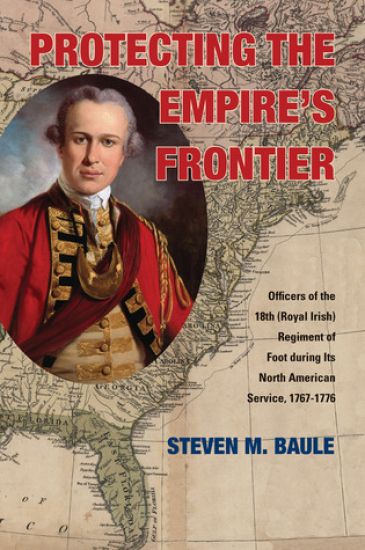
Protecting the Empire's Frontier tells stories of the roughly eighty officers who served in the 18th (Royal Irish) Regiment of Foot, which served British interests in America during the crucial period from 1767 through 1776. The Royal Irish was one of the most wide-ranging regiments in America, with companies serving on the Illinois frontier, at Fort Pitt, and in Boston, New York, and Philadelphia, with some companies taken as far afield as Florida, Spanish Louisiana, and present-day Maine. When the regiment was returned to England in 1776, some of the officers remained in America on staff assignments. Others joined provincial regiments, and a few joined the American revolutionary army, taking up arms against their king and former colleagues. Using a wide range of archival resources previously untapped by scholars, the text goes beyond just these officers' service in the regiment and tells the story of the men who included governors, a college president, land speculators, physicians, and officers in many other British regular and provincial regiments. Included in these ranks were an Irishman who would serve in the U.S. Congress and as an American general at Yorktown; a landed aristocrat who represented Bath as a member of Parliament; and a naval surgeon on the ship transporting Benjamin Franklin to France. This is the history of the American Revolutionary period from a most gripping and everyday perspective. An epilogue covers the Royal Irish's history after returning to England and its part in defending against both the Franco-Spanish invasion attempt and the Gordon Rioters. With an essay on sources and a complete bibliography, this is a treat for professional and amateur historians alike.
Protecting the Empire's Frontier tells stories of the roughly eighty officers who served in the 18th (Royal Irish) Regiment of Foot, which served British interests in America during the crucial period from 1767 through 1776. The Royal Irish was one of the most wide-ranging regiments in America, with companies serving on the Illinois frontier, at Fort Pitt, and in Boston, New York, and Philadelphia, with some companies taken as far afield as Florida, Spanish Louisiana, and present-day Maine. When the regiment was returned to England in 1776, some of the officers remained in America on staff assignments. Others joined provincial regiments, and a few joined the American revolutionary army, taking up arms against their king and former colleagues. Using a wide range of archival resources previously untapped by scholars, the text goes beyond just these officers' service in the regiment and tells the story of the men who included governors, a college president, land speculators, physicians, and officers in many other British regular and provincial regiments. Included in these ranks were an Irishman who would serve in the U.S. Congress and as an American general at Yorktown; a landed aristocrat who represented Bath as a member of Parliament; and a naval surgeon on the ship transporting Benjamin Franklin to France. This is the history of the American Revolutionary period from a most gripping and everyday perspective. An epilogue covers the Royal Irish's history after returning to England and its part in defending against both the Franco-Spanish invasion attempt and the Gordon Rioters. With an essay on sources and a complete bibliography, this is a treat for professional and amateur historians alike.
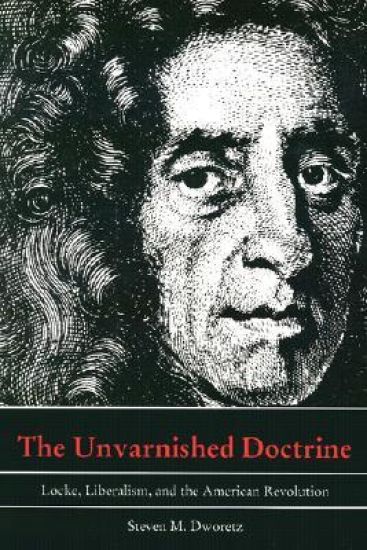
In The Unvarnished Doctrine, Steven M. Dworetz addresses two critical issues in contemporary thinking on the American Revolution-the ideological character of this event, and, more specifically, the relevance of "America’s Philosopher, the Great Mr. Locke," in this experience. Recent interpretations of the American revolution, particularly those of Bailyn and Pocock, have incorporated an understanding of Locke as the moral apologist of unlimited accumulation and the original ideological crusader for the "spirit of capitalism," a view based largely on the work of theorists Leo Strauss and C. B. Macpherson. Drawing on an examination of sermons and tracts of the New England clergy, Dworetz argues that the colonists themselves did not hold this conception of Locke. Moreover, these ministers found an affinity with the principles of Locke’s theistic liberalism and derived a moral justification for revolution from those principles. The connection between Locke and colonial clergy, Dworetz maintains, constitutes a significant, radicalizing force in American revolutionary thought.