

Kirjahaku
Etsi kirjoja tekijän nimen, kirjan nimen tai ISBN:n perusteella.
1000 tulosta hakusanalla Susan L. Mitchell

Moral Orientation in Senior Leadership of a Fortune 100 Corporation
Susan L. Harwood
Walker Publications
2013
nidottu

Don't ACT Like Prey!: A Woman's Guide to Self-Empowerment
Susan L. Farrell
Slf Publishing
2013
nidottu
If you're like many women, from birth you were taught to be passive. While the boys were being rowdy, we were taught to be quiet. While men could argue, we were told to avoid conflict. Be nice. Speak softly. Don't make a fuss. Now we're adults, and we've discovered that passivity allows people to take advantage of us in both our personal and professional relationships. In response, some women adopt an aggressive stance. Unfortunately, that doesn't usually work either. If docility encourages disrespect and aggression makes us disrespectful, what choice is there? In Don't Act Like Prey , author and women's self-empowerment consultant Susan L. Farrell offers a third option: respectful assertiveness. Drawing on the natural world and her personal life for examples, Farrell reveals how assertiveness strikes a balance between the passivity that characterizes prey and the aggression that is the mark of a predator. It is in this balance we find a way to stand up for ourselves without harming others or damaging relationships. Written in clear, straightforward language, Don't Act Like Prey includes exercises to foster your growing sense of assertiveness. It's time to abandon passivity without embracing aggression. It's time for the empowerment that comes with assertiveness.

52 Weeks of Wisdom: A Woman's Guide to Self-Empowerment
Susan L. Farrell
Slf Publishing
2015
nidottu
It's no secret that women face an uphill battle when trying to succeed in the working world. Sexist policies, bosses, and coworkers conspire to keep us from earning the promotions or wages we deserve. Times are changing, but they aren't changing fast enough; it's time for us to take charge of our own destinies. 52 Weeks of Wisdom contains salient suggestions from successful businesswoman Susan L. Farrell. There's one piece of wisdom for every week of the year, plus space for personal notes. Here are just a few examples: Finish what you start. Play your own game. Do things that make you smile. Embrace yourself while improving yourself. Just do something. Whether you feel utterly lost or are already the mistress of your domain, you'll find the wisdom in this book to be extremely helpful in your personal life as well as your professional life. Discover and put to work your values, beliefs, passions, and motivations with help from Farrell's decades of experience. You have the power to become the woman you want to be-but first you must discover who she is.

3 Good Choices: Change It, Accept It or Leave It: A Woman's Guide to Self-Empowerment
Susan L. Farrell
Slf Publishing
2018
nidottu
Professional, personal, and wellness issues are common areas of anxiety plaguing women every day. But there is hope Are you dissatisfied with your current job? Consider changing to a career you love. Have you been struggling to end a relationship that's no longer fulfilling? Accept that you've tried your best and are ready to move on. Does your health or self-esteem require a lifestyle change? Learn to love yourself, and let go of self-doubt. Life is the culmination of choices. The size and shape of conflicts might vary, but the one constant is that a decision must be made. In this informative guide, learn the breakdown of three distinctly positive choices-change, acceptance, and letting go-and the ways in which they can improve all aspects of your life. Each chapter of Three Good Choices offers unique insights to identify your challenges. Reflect on internal factors such as core values, mind-sets, and behaviors. Explore external factors such as acquiring skills, financial opportunities, and public perceptions. Discover positive solutions, and make choices that will most empower you


Crossing SydneySydney Geyer first killed at the age of twelve. Now, forty-eight years later, a medical prognosis indicates that death is only months away. With time running out, Sydney decides to come clean to the FBI and confess to multiple unsolved murders. When that plan falls short, Sydney randomly chooses Dr. Gabriel Miller as the psychiatrist to hear the story. Day after day, for five weeks, Dr. Miller listens to Sydney relay the stories of the gruesome and heartless murders that were committed over a period of forty-eight years. Knowing that he is dealing with a psychopath, Dr. Miller wrestles with his conscience regarding doctor-patient confidentiality and his fear of Sydney. Should he turn Sydney over to the FBI now before another murder, possibly his, takes place? Or, should he risk it?Crossing Sydney will keep you totally riveted from the shocking first page to the mind blowing last sentence.

Don't Smother Your Mother When Melissa Johnson's husband crosses the line, she pulls out her .45, fires a few warning shots, and boots his butt out the door. He disappears, leaving her to raise three little boys on her own. It is now twenty-three years later, Melissa is struggling to make ends meet, and her three grown sons are still living at home. Tired of supporting them, she finally puts her foot down and gives them three months to move out. However, before they pack up and leave, Melissa comes into a windfall, and they decide they aren't going anywhere.Disappearing steps, objects falling from trees, shots being fired and a missing toe makes Melissa start to think that someone just might be trying to kill her. For the first time in years, she cleans her gun, loads it, and puts it under her pillow.

A Bad Week in Hollister Melissa Johnson's death has been solved and Sheriff "Cowboy" Berkson figures Hollister, Missouri has finally returned to normal. His plans are to spend his days with his feet up on his desk, drinking coffee, and enjoying an occasional piece of homemade pie from Minnie's Diner. That plan is short lived, however, after a key witness from the Melissa Johnson trial is found floating in Lake Taneycomo. Now, it seems the Sheriff's main problem isn't that he hasn't got a suspect - it's that he's got too many. Never one to play by the rules, Sheriff Berkson walks a fine line, as he tries to narrow down the list of suspects. Just when he figures he's got his man, a new clue points him in a different direction. One thing the Sheriff is sure of, though, is that the killer has a swimming pool. And, he's not going to quit looking, even if it means checking out every single pool in Hollister.Join the Sheriff, Deputy Casey George, and the colorful characters from "Don't Smother Your Mother" in this new and exciting Sheriff Berkson mystery novel, by Susan L. Pare'.

Let's Play AutopsyKalispell cop, Detective Myers, was on the job the night two twelve year old children lost their lives in a tragic accident. The six surviving kids swore to each other that they would never tell the true story of what happened, and they've kept that promise for sixteen years. Now, one by one, the survivors of that horrible night are being brutally murdered. Detective Myers delves into his old case files to see if he can find a connection between what happened sixteen years ago, and the murders. The pressure is on to find the killer, but Myers has nothing to work with and is afraid these cases will go cold.When another body is found just outside of Helena, Detective Myers joins forces with Detective West, of the Helena Police Department. Just when the detectives think they might have their man, a new suspect emerges, taking them in a new direction.Are these people being murdered by a relative looking for revenge or is it all just a coincidence?

FLOATING FACE DOWNBobby Johnson has a target on his back and his former best friend, Cal Cuddihey, has him in his sights. Cal's first attempt to wipe Bobby off the face of the earth fails, but Cal doesn't give up. He figures there's more than one way to skin a cat, and that cat's name is Bobby Johnson. But, when a stray bullet misses Bobby head by inches, Bobby decides it's time to put on the gloves and start fighting back. Officer Funtelli's old girlfriend, JoJo, who went missing three years ago, is found with a gunshot wound to her head on a filthy bathroom floor in a local bar. JoJo and her parents refuse to explain her disappearance. When Officer Funtelli figures it out, he is torn between his feelings for JoJo and getting revenge.No one is talking. As Sheriff Berkson tries to figure out who is killing who, and why, he finds himself up against one dead end after another. Then, when he finally discovers the biggest clue as to 'who done it', he still hasn't got a clue what it means.Is Sheriff Berkson going to be left with an unsolved murder and an open case? Or, will he finally figure it all out?

COWTOWN Freddie Demonti grew up in small Chicago neighborhood, called Cowtown. Back in the 1800's, Cowtown consisted of a general store, a one room school house, a church, a couple of saloons, and was surrounded by cattle farms. Over the years, the farms were sold off to greedy land developers, houses were built, and the town grew and prospered. Early in the 1900's, Cowtown was annexed to the City of Chicago. Freddie Demonti's great grand-father, Alfredo, was born in Cowtown around that time, and his parents decided it would be a good place to settle down and raise their family. Throughout the years, the Demonti men were known for their fast tempers and quick fists, and Freddie lived up to their reputation. The slightest thing could set him off and he earned the nickname, 'Firecracker', when he was just a kid. Soon after Freddie beats up Mike Campanale for spilling a drink on him, three young women decide to get even by embarrassing Freddie in front of the town. They hit Freddie where they know it will hurt him the most - they mess with his Conquest Knight XV. Big mistake What starts out as a prank quickly turns into a war between the two families.After one of Mike's sisters goes missing, Detective Peppers, of the Chicago Police Department, is brought in to investigate. As he runs into one stumbling block after another, he quickly realizes that dealing with the Demonti and Campanale families is way beyond the norm.

Shortly after Jack Willerton's head and torso are found hanging in his barn, his fifteen year daughter, Rachel, is arrested and charged with his murder. Judge Reinhold appoints Peter Fisher, who has just recently passed his bar exams, to represent Rachel. Peter quickly realizes he is in over his head and wants no part of it. He contacts, Jessica Patterson, the best lawyer in Iron Mountain, and asks her to take over. Jessica, aware that this case could be bigger than the O.J. trial, agrees to partner with him to defend his client.After Jessica begins to investigate her client's background, the nightmares that have tormented her for years, become more frequent. Recognizing that she needs help, Jessica makes an appointment with Dr. Bentley, a psychiatrist and allows him to hypnotize her. The mystery of her nightmares begins to surface, only to raise more uncertainties. Now the real question is - who is she? Is she really Jessica Patterson? Or, is she Claire Ann Willerton, the daughter of Jack Willerton, and Rachel's half-sister?

The Mayor's sonIt's summer time, 1957. Early on a Sunday morning, a young woman is found dead in the street. She's been murdered and thrown away like a sack of garbage. Hours later, a second woman is pulled out of the Crawfish River, another victim of a brutal killing. Chief Augie Austin, Columbus' top cop, suspects that he may be dealing with a serial killer. But, when the clues send him in two different directions, he realizes that is dealing with two murderers, not one.Austin's peaceful world is turned upside down, as he realizes that Columbus is not the unspoiled, perfect little town he thought it was. As he interviews witnesses and friends of the deceased, he finds himself up against one road block after another. People aren't talking and he wants to know why.As the evidence builds, Austin recognizes that it is pointing to one of his own officers. Already suspicious that this cop has been bending the rules for personal gain, Austin realizes that he may have a murderer patrolling his streets. Knowing he must tread carefully, Austin sets out to build a rock solid case against Officer Drollstrom - the Mayor's son.

What's Behind the Screen Door?In 2001, fifteen year old Lyle Sleeter is coerced into confessing that he murdered Marjorie Finnegan, and is sentenced to spend this rest of his life in prison. Sixteen years later, now thirty-one years old, the appeals court commutes Sleeter's sentence and he returns to his hometown of Cary, Illinois. The case is re-opened by Sheriff Tickman, who originally led the investigation. Suddenly, new evidence is found by Tickman's wife, Francis. Angry at being deceived, she gives it to the only cop she trusts, Deputy Laura Edwards. Did Sheriff Tickman railroad Sleeter? And, was he the one who really killed Marjorie Finnegan? Or, was Sleeter the real killer, after all?Once again, Pare' has you turning the pages, as you delve into a world of murder, sex, and police corruption. And, it's pretty much guaranteed that you will never see the ending coming.
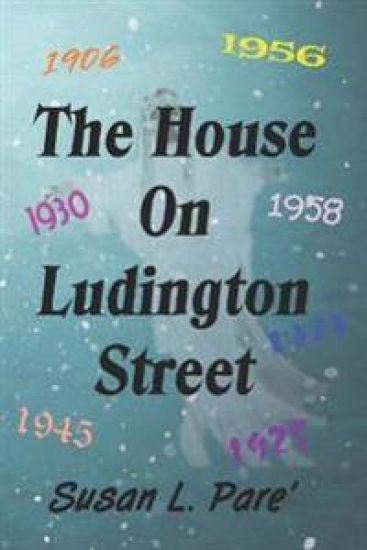
Except for the survivors, if there are any, that is, does anyone really know what goes on behind closed doors? If a house could speak, what ghastly tales could it tell?Of course, there's always a slight possibility that there is that one person, still living, who will speak for it. It's 1956 and Samuel Hassel is old and bored and ready to kick the bucket. So, when a couple of curious teenage boys ask him a simple question, he grabs at the opportunity to start talking. There's a house, on Ludington Street, which was built in the early 1900s. Samuel helped build that house, and now, after all these years, he has an audience and he is ready to tell its story.As the two teenagers sit by his side, Samuel recounts the stories of the families who lived and died in that house from 1906 to the present day. A house that was surely cursed from the day the foundation was laid. (1906)Von Schmidt reached for the gun and aimed it at the terrified school teacher's knee. Just as he was about to pull the trigger, the stone mason yelled. "It was me. For God's sake, don't shoot him." Von Schmidt turned the gun away from Flannagan and pointed it at the mason. "You did this? You violated this woman? You confess that it was you?"(1921) "I ran to help him. He was just lying there. There was blood everywhere. I asked him what had happened and he whispered that it was the ghost. He said the ghost had grabbed one of his swords and plunged it into his chest."

Unjustly Accused: The True Story of One Man's Experience In, and Escape From, a Dominican Republic Prison
Susan L. Stewart
Take Flight Press
2017
nidottu
When Corey and Jeff, a friend from work, decide to go to the Dominican Republic, they have no idea of what is waiting for them. Someone they know recommends Diego, a local who speaks English, to be their taxi driver and tour guide. On their second day, Diego takes them on a rambling ride through the capital city of Santo Domingo. They are on an eight-lane bridge filled with cars crawling along in both directions when two men on a moped dressed in plain-clothes pull them over in an attempted car jacking. Things only get worse when the uniformed police arrive and want to know what is going on. The carjackers pull out baseball caps with "Policia" across the front. Even though there is no physical evidence and their rights were trampled on, within a week, all three of them are arrested, charged with drug trafficking and sentenced to one-to-three years in Nayajo, the Dominican Republic's second largest prison. The fact that Corey and Jeff are innocent means nothing to the corrupt legal system.Corey tells his story as he battles dysentery, pneumonia, depression, and ADHD. Despite his failing health, the horrific, inhumane conditions and rampant corruption, he out thinks the lawyers, guards and prison system to create their defense and escape plan. Once outside the prison gates, he and Jeff race across the city to the airport while trying to avoid the police and the very real possibility of being recaptured before they can gain their freedom. And if they fail? They face a mandatory 20-year prison sentence with no possibility of parole. This gripping true story will keep you in suspense from the first to the last page and make you think twice before hiring a taxi while on vacation in a third-world country

Imagine a world in which clothing wasn't superabundant – cheap, disposable, indestructible – but perishable, threadbare and chronically scarce. Eighty years ago, when World War II ended, a textile famine loomed. What would everyone wear as uniforms were discarded and soldiers returned home, Nazi camps were liberated, and millions of uprooted people struggled to subsist? In this richly textured history, Carruthers unpicks a familiar wartime motto, 'Make Do and Mend', to reveal how central fabric was to postwar Britain. Clothes and footwear supplied a currency with which some were rewarded, while others went without. Making Do moves from Britain's demob centres to liberated Belsen – from razed German cities to refugee camps and troopships – to uncover intimate ties between Britons and others bound together in new patterns of mutual need. Filled with original research and personal stories, Making Do illuminates how lives were refashioned after the most devastating war in human history.

This book is the first introduction to Western art that not only considers how choice of materials can impact form, but also how objects in different media can alter in appearance over time, and the role of conservators in the preservation of our cultural heritage.The first four chapters cover wall and easel paintings, sculpture, drawings, and prints, from the late Middle Ages to the present day. They examine, with numerous examples, how these works have been produced, how they might have been transformed, and how efforts regarding their preservation can sometimes be misleading or result in controversy. The final two chapters look at how photography, new techniques, and modern materials prompted innovative ways of creating art in the twentieth century, and how the rapid expansion of technology in the twenty-first century has led to a revolution in how artworks are constructed and seen, generating specific challenges for collectors, curators, and conservators alike.This book is primarily directed at undergraduates interested in art history, museum studies, and conservation, but will also be of interest to a more general non-specialist audience.

This book is the first introduction to Western art that not only considers how choice of materials can impact form, but also how objects in different media can alter in appearance over time, and the role of conservators in the preservation of our cultural heritage.The first four chapters cover wall and easel paintings, sculpture, drawings, and prints, from the late Middle Ages to the present day. They examine, with numerous examples, how these works have been produced, how they might have been transformed, and how efforts regarding their preservation can sometimes be misleading or result in controversy. The final two chapters look at how photography, new techniques, and modern materials prompted innovative ways of creating art in the twentieth century, and how the rapid expansion of technology in the twenty-first century has led to a revolution in how artworks are constructed and seen, generating specific challenges for collectors, curators, and conservators alike.This book is primarily directed at undergraduates interested in art history, museum studies, and conservation, but will also be of interest to a more general non-specialist audience.