Kirjojen hintavertailu. Mukana 11 699 587 kirjaa ja 12 kauppaa.

Kirjahaku

Etsi kirjoja tekijän nimen, kirjan nimen tai ISBN:n perusteella.

1000 tulosta hakusanalla T'Sade

T-Shirt Talk Stickers

T-Shirt Talk Stickers

Ellen Scott; R Edwin Hicks

Dover Publications Inc.
2020
muu
Everyone will love this cool collection of tiny "talking" tees Each of the 20 colorful stickers is decorated with funny sayings such as "Be Nice, I Bite," "Let's Chill," "Did Someone Say Pizza?," and more. Use them to decorate notebooks, scrapbooks, stationery, phones, mirrors, lockers, and other personal items.
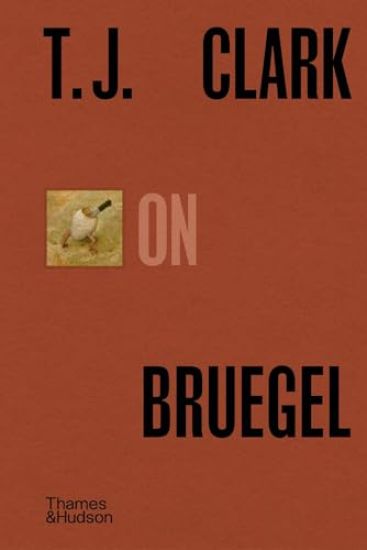
T.J. Clark on Bruegel

T.J. Clark on Bruegel

T. J. Clark

THAMES HUDSON LTD
2024
sidottu
‘Thames & Hudson’s new, affordable, covetable ‘Pocket Perspectives’: beautifully illustrated essays by canonical writers’ Financial Times A Financial Times Book of the Year: T.J. Clark offers profound insights on Bruegel’s art, where we encounter a reality formed from wholly worldly materials, yet suspended between belief and disbelief. Renowned art historian T. J. Clark unveils the hidden depths of Bruegel the Elder’s work in this captivating analysis of some of the artist's most famous masterpieces. Taking the medieval concept of Schlaraffenland, a whimsical dreamland of milk and honey, as his starting point, Clark reveals the satire behind Bruegel’s depictions of paradise and damnation. In an age marked by enforced orthodoxy, religious wars and threats of burning hellfire, Bruegel the Elder reflected on the powers as well as limitations of religion, deriding the sanctimonious and ridiculing the righteous. At the heart of this book stands Bruegel’s ironic yet highly tender picture of The Land of Cockaigne, where we encounter a vision not of heaven above, but on earth. A parody of paradise, Bruegel’s heaven is consumptive, empty, idle and irresponsible; made of wholly worldly materials, just on the precipice of possibility.
T. S. Eliot

T. S. Eliot

Elisabeth W. Schneider

University of California Press
2021
pokkari
This title is part of UC Press's Voices Revived program, which commemorates University of California Press’s mission to seek out and cultivate the brightest minds and give them voice, reach, and impact. Drawing on a backlist dating to 1893, Voices Revived makes high-quality, peer-reviewed scholarship accessible once again using print-on-demand technology. This title was originally published in 1975.
T. S. Eliot

T. S. Eliot

Elisabeth W. Schneider

University of California Press
2021
sidottu
This title is part of UC Press's Voices Revived program, which commemorates University of California Press’s mission to seek out and cultivate the brightest minds and give them voice, reach, and impact. Drawing on a backlist dating to 1893, Voices Revived makes high-quality, peer-reviewed scholarship accessible once again using print-on-demand technology. This title was originally published in 1975.
T. S. Eliot and the Ideology of Four Quartets

T. S. Eliot and the Ideology of Four Quartets

Cooper John Xiros

Cambridge University Press
2008
pokkari
Criticism of Eliot has ignored the public dimension of his life and work. His poetry is often seen as the private record of an internal spiritual struggle. Professor Cooper shows how Eliot deliberately addressed a North Atlantic 'mandarinate' fearful of social disintegration during the politically turbulent 1930s. Almost immediately following publication, Four Quartets was accorded canonical status as a work that promised a personal harmony divorced from the painful disharmonies of the emerging postwar world. Cooper connects Eliot's careers as banker, director and editor to a much wider cultural agenda. He aimed to reinforce established social structures during a period of painful political transition. This powerful and original study re-establishes the public context in which Eliot's work was received and understood. It will become an essential reference work for all interested in a wider understanding of Eliot and of Anglo-American cultural relations.
T. S. Eliot and Indic Traditions

T. S. Eliot and Indic Traditions

Cleo McNelly Kearns

Cambridge University Press
2008
pokkari
T. S. Eliot's allusions to Indic philosophy in several poems - from the Sanskrit ending of The Waste Land to the 'What Krishna meant' section of Four Quartets - have puzzled and intrigued readers since the poems first appeared. In T. S. Eliot and Indic Traditions, Professor Cleo McNelly Kearns places Eliot's lifelong interest in Indic philosophy and religion in the context of his concomitant studies in Western philosophy and his views on literary theory and poetic practice. The author establishes the depth and extent of his knowledge not only of Sanskrit and Pali texts but also of the scholarly tradition through which they were interpreted in the West. She explores as well Eliot's keen sense of the important distinctions between specific schools of thought. Kearns concludes that Eliot was less interested in synthesizing various traditions than in comparing texts and traditions for what he called 'the difference they can make to one another'.
T. R. Malthus, An Essay on the Principle of Population: Volume 2
Published in two volumes, these books provide a student audience with an excellent scholarly edition of Malthus' Essay on Population. Written in 1798 as a polite attack on post-French revolutionary speculations on the theme of social and human perfectibility, it remains one of the most powerful statements of the limits to human hopes set by the tension between population growth and natural resources. Based on the authoritative variorum edition of the versions of the Essay published between 1803 and 1826, and complete with full introduction and bibliographic apparatus, this edition is intended to show how Malthusianism impinges on the history of political thought, and how the author's reputation as a population theorist and political economist was established.
T. R. Malthus: Principles of Political Economy: Volume 1

T. R. Malthus: Principles of Political Economy: Volume 1

T. R. Malthus

Cambridge University Press
2008
pokkari
Published in two volumes or as a set this provides a definitive scholarly variorum edition of Malthus's Principles of Political Economy. It contains the full text of the first 1820 edition, including Malthus's own invaluable 70-page summary, and contains details of all the additions, omissions and emendations that occurred between the first and the second, posthumous, edition of 1836. The first edition is extremely rare, and for over 150 years confusions and disagreements have inevitably occurred in the interpretation of Malthus's economics because of the absence of any systematic record of the differences between the two editions. The editor has written a lengthy and authoritative introduction giving an account, derived mainly from contemporary correspondence, of the events and circumstances surrounding the publication of the two editions. It shows the relationship between the Principles and Malthus's other writings and activities as a political economist. There is also an editorial commentary that aims to explain the significance and origin of the alterations.
T. R. Malthus: Principles of Political Economy: Volume 2

T. R. Malthus: Principles of Political Economy: Volume 2

T. R. Malthus

Cambridge University Press
2008
pokkari
Published in two volumes or as a set this provides a definitive scholarly variorum edition of Malthus's Principles of Political Economy. It contains the full text of the first 1820 edition, including Malthus's own invaluable 70-page summary, and contains details of all the additions, omissions and emendations that occurred between the first and the second, posthumous, edition of 1836. The first edition is extremely rare, and for over 150 years confusions and disagreements have inevitably occurred in the interpretation of Malthus's economics because of the absence of any systematic record of the differences between the two editions. The editor has written a lengthy and authoritative introduction giving an account, derived mainly from contemporary correspondence, of the events and circumstances surrounding the publication of the two editions. It shows the relationship between the Principles and Malthus's other writings and activities as a political economist. There is also an editorial commentary that aims to explain the significance and origin of the alterations.
T'ao Yüan-ming: Volume 1, Translation and Commentary

T'ao Yüan-ming: Volume 1, Translation and Commentary

A. R. Davis

Cambridge University Press
2009
pokkari
All the works of the Chinese poet T'ao Yuan-ming (AD 365–427) generally considered genuine have been translated here with commentary and annotation. T'ao, in the author's opinion, is of all the major Chinese poets especially concerned with personal integrity and the meaning of man's life. His poetry for this reason may be able to transcend the barriers of cultural difference. For centuries of Chinese readers, however, the image of T'ao Yuan-ming as an eccentric wine-loving recluse who embraced purity and simplicity and rejected the corruption of political society has virtually been as important as his own writing. Studies of the poet, from the Sung dynasty on, have applied a political interpretation of his work. The author believes that this approach is generally mistaken and seeks to combat it in detail. The work has been arranged in two volumes. The first, containing the translations with explanatory commentary and notes, is aimed at a wider audience than the professional. The second contains a complete Chinese text.
T'ao Yüan-ming: Volume 2, Additional Commentary, Notes and Biography
All the works of the Chinese poet T'ao Yuan-ming (AD 365–427) generally considered genuine have been translated here with commentary and annotation. T'ao, in the author's opinion, is of all the major Chinese poets especially concerned with personal integrity and the meaning of man's life. His poetry for this reason may be able to transcend the barriers of cultural difference. For centuries of Chinese readers, however, the image of T'ao Yuan-ming as an eccentric wine-loving recluse who embraced purity and simplicity and rejected the corruption of political society has virtually been as important as his own writing. Studies of the poet, from the Sung dynasty on, have applied a political interpretation of his work. The author believes that this approach is generally mistaken and seeks to combat it in detail. The work has been arranged in two volumes. The first, containing the translations with explanatory commentary and notes, is aimed at a wider audience than the professional. The second contains a complete Chinese text.
T. S. Eliot

T. S. Eliot

Cambridge University Press
2009
pokkari
The centenary of Eliot's birth in 1988 provided the salutary occasion for a fresh look at his life and work and a reassessment in light of issues raised by the various critical movements - the new historicism, feminism, reader-reception theory - that have succeeded the New Criticism, loosely subsumable under the rubric post-structuralist. The essays assembled here vary in approach, but they share a commitment to the discipline of history and an awareness that history can function as critique as well as celebration. Several contributors take issue with Eliot's self-presentation and include documents Eliot chose not to emphasise. Others address topics including the business of producing culture in twentieth-century writing, the impact of self-professed masculinist poetry on women readers and modernism's social vouchers.
T. S. Eliot

T. S. Eliot

Cambridge University Press
2009
pokkari
Widely regarded as one of the most important and influential poets of the twentieth century, T. S. Eliot was also extremely prolific. T. S. Eliot: The Contemporary Reviews is a testament to both these aspects of Eliot's work. In it, Jewel Spears Brooker presents the most comprehensive gathering of newspaper and magazine reviews of Eliot's work ever assembled. It includes reviews from both American and British journals. Brooker expands on the major themes of the reviews and shows how the reviews themselves influenced not only Eliot, but also literary history in the twentieth century.
T. S. Eliot and the Art of Collaboration

T. S. Eliot and the Art of Collaboration

Badenhausen Richard

Cambridge University Press
2009
pokkari
Richard Badenhausen examines the crucial role that collaboration with other writers played in the development of T. S. Eliot's works from the earliest poetry and unpublished prose to the late plays. He demonstrates Eliot's dependence on collaboration in order to create, but also his struggle to accept the implications of the process. In case-studies of Eliot's collaborations, Badenhausen reveals the complexities of Eliot's theory and practice of collaboration. Examining a wide range of familiar and uncollected materials, Badenhausen explores Eliot's social, psychological, textual encounters with collaborators such as Ezra Pound, John Hayward, Martin Browne, and Vivienne Eliot, among others. Finally, this study shows how Eliot's later work increasingly accommodates his audience as he attempted to apply his theories of collaboration more broadly to social, cultural, and political concerns.
T. S. Eliot and the Concept of Tradition
T. S. Eliot's reformulation of the idea of literary tradition has been one of the key critical concepts of the twentieth century. In this reappraisal of tradition, an international team of scholars explores the concept from a variety of theoretical and historical perspectives, including a series of illuminating case studies evaluating Eliot's version of tradition alongside the theories of other major twentieth-century critics. This 2007 volume will be of great interest to students of literary theory, modernist studies and intellectual history, initiating a dialogue between Continental and Anglo-American investigations into the nature of literary traditions. Tradition is a concept often viewed by contemporary critics with misunderstanding or even hostility. This book powerfully reaffirms the continuing importance of our artistic and cultural traditions in shaping the past and creating the future.
T. H. Huxley on Education

T. H. Huxley on Education

Cambridge University Press
2010
pokkari
Thomas Henry Huxley (1825–1895) is known primarily as a scientist but he was also an influential educationalist, spending most of his working life teaching at the School of Mines (which later became Imperial College of Science and Technology). In this 1971 text, the most significant of his writings on education have been selected, edited and gathered together. The book is introduced by a substantial essay in which Cyril Bibby assesses Huxley's influence on the historical development of education and indicates the ways in which his educational thinking bears closely on many problems of twentieth-century society. The book contains sufficient bibliographical apparatus to guide the reader in further study, together with a useful chronology of Huxley's life and writings in their historical context.
T. R. Malthus: The Unpublished Papers in the Collection of Kanto Gakuen University: Volume 2
This is the second and final volume of manuscripts by or relating to Thomas Robert Malthus (1766–1834) that are now held at Kanto Gakuen University in Japan. Volume I contains 75 items of correspondence, while Volume II contains transcriptions of further original manuscripts, including: four of Malthus' sermons; his diary of a tour of the Lake District; an extensive set of calculations in the bullion trade, suggesting that he was giving serious thought to becoming a bullion trader on his own account; lecture notes on European history from the fifth to the tenth century; his wife's diary of their holiday in Scotland in 1826 and an essay on foreign trade. These previously unknown and unpublished manuscripts promise insights into his intellectual development and the events and circumstances of his life, as well as glimpses of the lifestyle of his wider family and contemporaries.
T. R. Malthus: The Unpublished Papers in the Collection of Kanto Gakuen University: Volume 1
This volume comprises a collection of manuscripts by or relating to T. R. Malthus, recently discovered in the estate of a distant nephew, and previously unpublished. They consist of correspondence, sermons, essays and lecture notes on political economy and history. The manuscripts provide insights into Malthus' personal life - especially his relationships with his parents and his tutors. They also give details of the books he studied as a student, and suggest hitherto unknown influences on his intellectual development. They suggest a solution to the question of who or what influenced him to omit the controversial theological chapters from later editions of his Essay on Population, and his sermons present further evidence of his religious views. The manuscripts represent a remarkable discovery, more than 150 years after Malthus' death, of his correspondence and other unknown writings.
T. S. Eliot: The Poems

T. S. Eliot: The Poems

Martin Scofield

Cambridge University Press
1988
pokkari
This book is designed to provide a comprehensive and stimulating introduction to T. S. Eliot’s poetry for those reading and studying it. The poems, as well as some of the poetic drama (particularly Sweeney Agonistes) and relevant sections of the prose criticism, are discussed in detail and placed in relation to the development of Eliot’s œuvre, and more briefly to his life and a wider context of philosophical and religious enquiry. In sections devoted to each major poem or group of poems, Martin Scofield examines Eliot’s techniques of personae or masks; his use of musical effects; the tension between fragmentation and cohesion in The Waste Land and other verse; the place in his work of symbolism and imagism, as well as less explored elements such as surrealism and comedy; the relevance to his poetry of concepts worked out in his critical writing; and the criticism of his ‘poetic workshop’, those essays on other poets which he saw as part of the development of his own verse. One recurring theme in the study is the poetic treatment of the relationship (often conflict) between experience in life and experience in art; another is the relation between Eliot’s beliefs and his poetry, and between poetry and belief in general. Eliot in his finest poems is seen above all as a poet of what he called ‘the first voice’, ‘oppressed by the burden which he must bring to birth’. The book concludes with a detailed and helpful study of Four Quartets: here as elsewhere Martin Scofield is concerned to look first of all at the texture of the verse and the qualities of the poetic ‘surface’, while clarifying obscurities and explaining allusions where appropriate. Both students and general readers will find his book informative and his commitment to the poetry infectious.