Kirjojen hintavertailu. Mukana 11 342 296 kirjaa ja 12 kauppaa.

Kirjahaku

Etsi kirjoja tekijän nimen, kirjan nimen tai ISBN:n perusteella.

1000 tulosta hakusanalla Theodore Besterman

In the Words of Theodore Roosevelt

In the Words of Theodore Roosevelt

Theodore Roosevelt

Cornell University Press
2012
sidottu
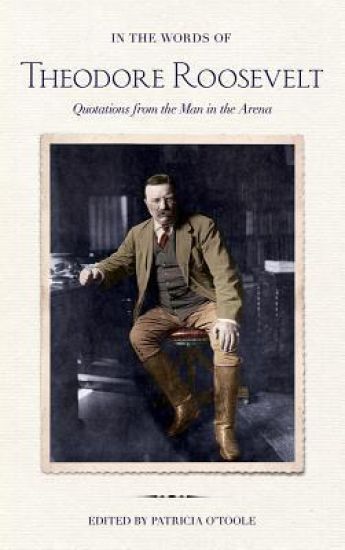
"We cannot do great deeds unless we are willing to do the small things that make up the sum of greatness."—on Action "The American people are good-natured to the point of lax indifference; but once roused, they act with the most straightforward and practical resolution."—on America "Speak softly and carry a big stick—you will go far. If a man continually blusters, if he lacks civility, a big stick will not save him from trouble; and neither will speaking softly avail, if back of the softness there does not lie strength, power."—on the Big Stick "We are, as a whole, still in that low state of civilization where we do not understand that it is also vandalism wantonly to destroy or to permit the destruction of what is beautiful in nature, whether it be a cliff, a forest, or a species of mammal or bird. Here in the United States we turn our rivers and streams into sewers and dumping-grounds, we pollute the air, we destroy forests, and exterminate fishes, birds and mammals—not to speak of vulgarizing charming landscapes with hideous advertisements. But at last it looks as if our people were awakening."—on Natural Resources The public life of Theodore Roosevelt (1858–1919) was marked by his service as the twenty-sixth President of the United States, Vice President, Governor of New York State, Assistant Secretary of the Navy, U.S. Civil Service Commissioner, President of the New York City Police Commission, and New York State Assemblyman. In his life outside of government he was famous as an author, naturalist, rancher, big game hunter, and explorer. The twentieth century would become known as the American Century, and it was Theodore Roosevelt, through his foreign policy, who ushered the United States into the ranks of the world's great powers. In domestic affairs, he used his presidential powers to level the playing field between capital and labor, to protect consumers, and to establish a conservation program that was far-sighted and comprehensive, covering the nation's natural resources, its wilderness areas, its endangered species, its scenic beauty, and the cultural artifacts of its indigenous peoples. Distilled from Roosevelt's voluminous writings and speeches, In the Words of Theodore Roosevelt is a discerning collection of quotations by this American icon who continues to inspire and captivate an extraordinary array of twenty-first-century Americans. Carefully selected and organized by topic by Patricia O'Toole, these quotations reflect the vast range of Roosevelt's interests, the depth of his wisdom, his almost superhuman energy, and his directness. Many of the issues that Roosevelt addressed—from America's international role to the environment—remain pressing concerns today, giving his century-old words remarkable currency. This singular collection of quotations—enhanced by O'Toole's illuminating introductory essay, notes on biographical and historical context, and bibliographies of Roosevelt's writings—is a trove for writers, teachers, students, and all who recognize Theodore Roosevelt's unique role in U.S. history.
Theodore E. White and the Development of Zooarchaeology in North America
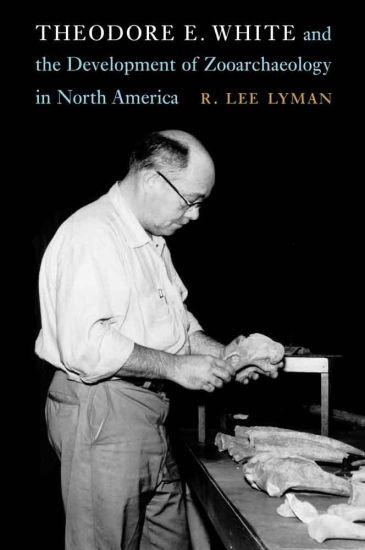
Theodore E. White and the Development of Zooarchaeology in North America illuminates the researcher and his lasting contribution to a field that has largely ignored him in its history. The few brief histories of North American zooarchaeology suggest that Paul W. Parmalee, John E. Guilday, Elizabeth S. Wing, and Stanley J. Olsen laid the foundation of the field. Only occasionally is Theodore White (1905–77) included, yet his research is instrumental for understanding the development of zooarchaeology in North America. R. Lee Lyman works to fill these gaps in the historical record and revisits some of White’s analytical innovations from a modern perspective. A comparison of publications shows that not only were White’s zooarchaeological articles first in print in archaeological venues but that he was also, at least initially, more prolific than his contemporaries. While the other “founders” of the field were anthropologists, White was a paleontologist by training who studied long-extinct animals and their evolutionary histories. In working with remains of modern mammals, the typical paleontological research questions were off the table simply because the animals under study were too recent. And yet White demonstrated clearly that scholars could infer significant information about human behaviors and cultures. Lyman presents a biography of Theodore White as a scientist and a pioneer in the emerging field of modern anthropological zooarchaeology.
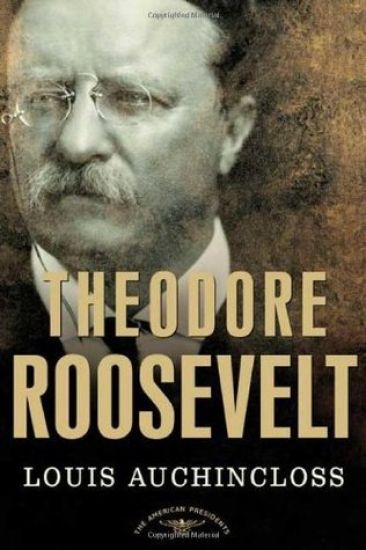
Theodore Roosevelt

Theodore Roosevelt

Louis Auchincloss

HENRY HOLT COMPANY INC
2003
nidottu
Louis Auchincloss's warm and knowing biography introduces us to the man behind the many myths of Theodore Roosevelt. From his early involvement in the politics of New York City and then New York State, we trace his celebrated military career and finally his ascent to the national political stage. Caricatured through history as the "bull moose," Roosevelt was in fact a man of extraordinary discipline whose refined and literate tastes actually helped spawn his fascination with the rough-and-ready worlds of war and wilderness.
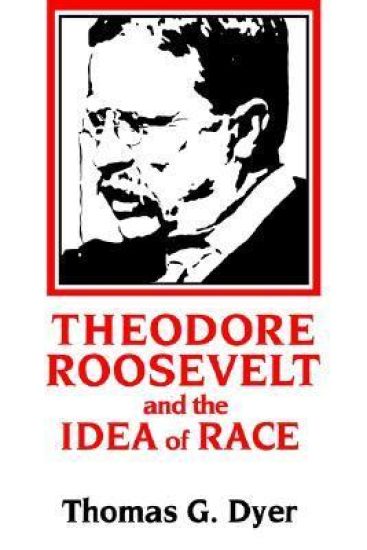
Theodore Roosevelt and the Idea of Race

Theodore Roosevelt and the Idea of Race

Thomas G. Dyer

Louisiana State University Press
1992
nidottu
This provocative study examines Theodore Roosevelt's ideas about race, focusing especially on his attitude toward blacks, American Indians, immigration, and imperialism. Thomas G. Dyer gives careful attention to formal and nonformal aspects of Roosevelt's thought, as revealed in his voluminous published works and personal papers.Dyer's book asks a number of important questions. In what proportions do popular thought and formal racial theory appear in Roosevelt's attitudes? What was the intellectual context of his speculations on race? How was his racial thought related to broader areas of intellectual activity such as natural science and social philosophy? How did Roosevelt regard various white and nonwhite ethnic groups? How did Roosevelt's racial thought conform to the prevailing philosophies of the late nineteenth and early twentieth centuries?Historians have traditionally disagreed about the character of Theodore Roosevelt's racial ideology. Dyer's illuminating study clarifies many of the relevant issues by viewing Roosevelt's racial theory as an integrated whole.
Theodore Roethke's Far Fields

Theodore Roethke's Far Fields

Peter Balakian

Louisiana State University Press
1999
nidottu
In this critical study of Theodore Roethke's poetry, Peter Balakian treats the evolution of the poet's work from his first book, Open House (1941), to his last, The Far Field (1964). Balakian argues that Roethke was among the most innovative poets of his time and that The Lost Son and Other Poems (1948) brought America to a new frontier in the contemporary era. Balakian maintains that Roethke combined and furthered major traditions in English and American poetry -- the formal poetics and meditative sensibility of British metaphysical and Romantic poetry, the American visionary tradition, and the innovations of modernism. The early chapters of the book explore Roethke's intellectual, religious, and psychological development and his development as a poet. Balakian discusses the influence of William Carlos Williams on Roethke's work and claims that the relationship between the two poets provided Roethke with a sense of the American grain. Later chapters treat the shift from self-absorption to union with otherness that marks Roethke's love poems, exploring the poet's development of mysticism and a poetic persona and examining the influences of Eliot and Whitman on his work. Balakian also discusses the metaphysical language necessary for Roethke's late poems and follows Roethke's spiritual progress as he prophetically faces his final work. In presenting the evolution of Roethke's career, Balakian offers fresh and original readings of the poetry. He avoids any monolithic approach to the body of Roethke's work, employing instead various approaches to Roethke's stages of poetic evolution. Balakian makes use of the psychology of C.G. Jung and Erich Neumann, the writings of the mystics, the aesthetics of William Carlos Williams, and the myth of the American frontier. With a literary historian's concern for Roethke's place in history and a critic's eye for the sources and structures of poetry, Balakian studies the resonances of language and the inner life of this poet's craft. Theodore Roethke's Far Fields places Roethke firmly in literary and intellectual history and asserts his place as a major poet.
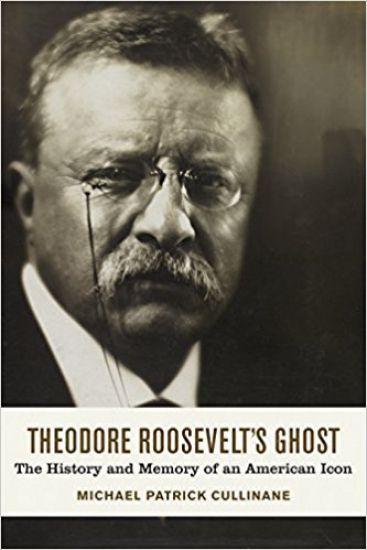
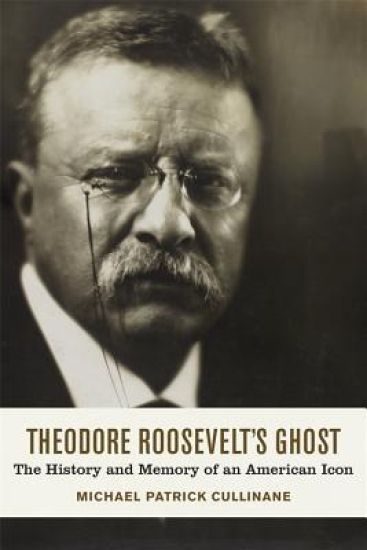
Theodore Roosevelt's Ghost

Theodore Roosevelt's Ghost

Michael Patrick Cullinane

Louisiana State University Press
2017
sidottu
A century after his death, Theodore Roosevelt remains one of the most recognizable figures in U.S. history, with depictions of the president ranging from the brave commander of the Rough Riders to a trailblazing progressive politician and early environmentalist to little more than a caricature of grinning teeth hiding behind a mustache and pince-nez. Theodore Roosevelt's Ghost follows the continuing shifts and changes in this president's reputation since his unexpected passing in 1919.In the most comprehensive examination of Roosevelt's legacy, Michael Patrick Cullinane explores the frequent refashioning of this American icon in popular memory. The immediate aftermath of Roosevelt's death created a groundswell of mourning and goodwill that ensured his place among the great Americans of his generation, a stature bolstered by the charitable and political work of his surviving family. When Franklin Roosevelt ascended to the presidency, he worked to situate himself as the natural heir of Theodore Roosevelt, reshaping his distant cousin's legacy to reflect New Deal values of progressivism, intervention, and patriotism. Others retroactively adapted Roosevelt's actions and political record to fit the discourse of social movements from anticommunism to civil rights, with varying degrees of success. Richard Nixon's frequent invocation led to a decline in Roosevelt's popularity and a corresponding revival effort by scholars endeavoring to give an accurate, nuanced picture of the 26th president.This wide-ranging study reveals how successive generations shaped the public memory of Roosevelt through their depictions of him in memorials, political invocations, art, architecture, historical scholarship, literature, and popular culture. Cullinane emphasizes the historical contexts of public memory, exploring the means by which different communities worked to construct specific representations of Roosevelt, often adapting his legacy to suit the changing needs of the present. Theodore Roosevelt's Ghost provides a compelling perspective on the last century of U.S. history as seen through the myriad interpretations of one of its most famous and indefatigable icons.
Theodore Roosevelt's Ghost

Theodore Roosevelt's Ghost

Michael Patrick Cullinane

Louisiana State University Press
2017
nidottu
A century after his death, Theodore Roosevelt remains one of the most recognizable figures in U.S. history, with depictions of the president ranging from the brave commander of the Rough Riders to a trailblazing progressive politician and early environmentalist to little more than a caricature of grinning teeth hiding behind a mustache and pince-nez. Theodore Roosevelt's Ghost follows the continuing shifts and changes in this president's reputation since his unexpected passing in 1919.In the most comprehensive examination of Roosevelt's legacy, Michael Patrick Cullinane explores the frequent refashioning of this American icon in popular memory. The immediate aftermath of Roosevelt's death created a groundswell of mourning and goodwill that ensured his place among the great Americans of his generation, a stature bolstered by the charitable and political work of his surviving family. When Franklin Roosevelt ascended to the presidency, he worked to situate himself as the natural heir of Theodore Roosevelt, reshaping his distant cousin's legacy to reflect New Deal values of progressivism, intervention, and patriotism. Others retroactively adapted Roosevelt's actions and political record to fit the discourse of social movements from anticommunism to civil rights, with varying degrees of success. Richard Nixon's frequent invocation led to a decline in Roosevelt's popularity and a corresponding revival effort by scholars endeavoring to give an accurate, nuanced picture of the 26th president.This wide-ranging study reveals how successive generations shaped the public memory of Roosevelt through their depictions of him in memorials, political invocations, art, architecture, historical scholarship, literature, and popular culture. Cullinane emphasizes the historical contexts of public memory, exploring the means by which different communities worked to construct specific representations of Roosevelt, often adapting his legacy to suit the changing needs of the present. Theodore Roosevelt's Ghost provides a compelling perspective on the last century of U.S. history as seen through the myriad interpretations of one of its most famous and indefatigable icons.
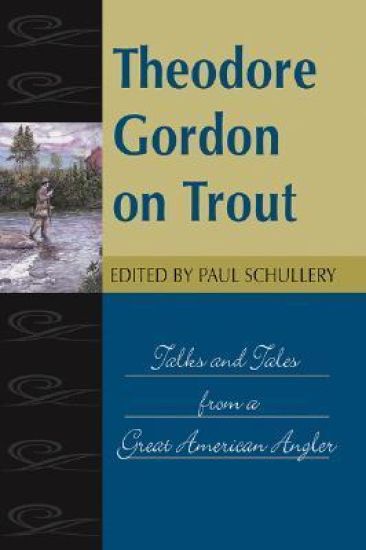
Theodore Gordon on Trout
Theories on trout behavior and imitating fliesRelive with Gordon the ascendency of the bamboo fly rod and eyed hookIn this selection of Gordon's trout-fishing tales and lessons, a new generation of readers will be introduced to one of American angling's freshest and most original voices, rich with the adventure and awe that come from a lifetime of inspired engagement with nature. Despite the considerable differences between his time and ours, today's anglers will be fascinated by the similarities this great writer shares about the sport, which still hold true today. Read one of fly fishing's liveliest, freshest, and most appealing voices.
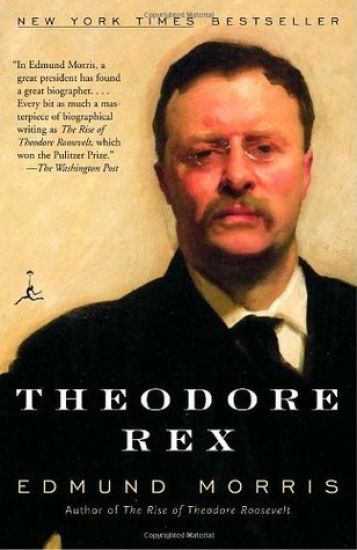
Theodore Rex

Theodore Rex

Edmund Morris

Random House Inc
2002
pokkari
Describes Theodore Roosevelt's presidency as he faced the challenges of a new century in which the United States would become a world power, and discusses his accomplishments and failures, the enemies he made, and his family life. Reprint. 250,000 first printing.
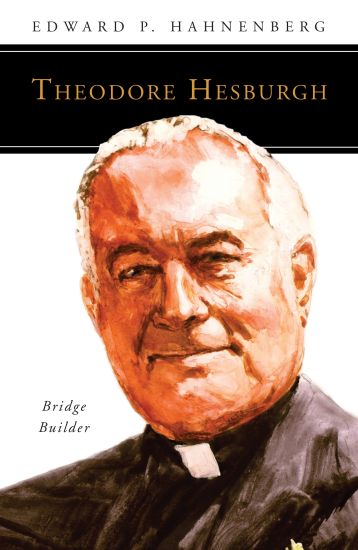
Theodore Hesburgh, CSC

Theodore Hesburgh, CSC

Edward P. Hahnenberg

Liturgical Press
2020
pokkari
2021 Association of Catholic Publishers third place award in biography When asked what he wanted written on his tombstone, Fr. Theodore Hesburgh responded with one word: Priest. This giant of a man—a man who advised presidents and counseled popes, who championed civil rights and world peace, who accepted 16 presidential appointments and 150 honorary degrees, who served an unprecedented thirty-five years as president of the University of Notre Dame—could have listed any number of accolades. Instead, he chose his first and most important vocation. Fr. Ted never felt that his calling to be a priest set him apart. Rather, it drew him into relationships with others and out in service to the world. It was a call to serve as mediator, to bridge the divides that separate church and society, conservatives and liberals, the powerful and those on the margins. He spent his life bringing people together.This new biography is the first to tell the story of the spirituality that shaped one of the twentieth century’s most distinguished public servants. It is a story to inspire all those who strive to live out their faith in the midst of a deeply divided world.
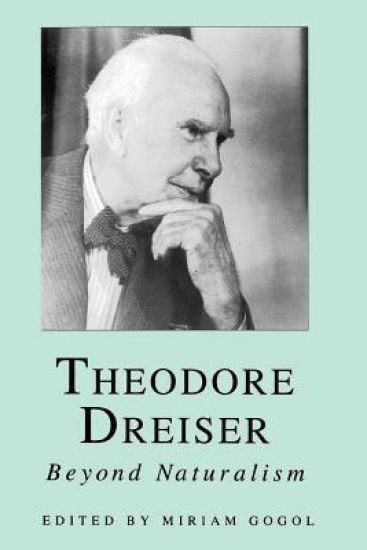
Theodore Dreiser

Theodore Dreiser

New York University Press
1995
pokkari
Theodore Dreiser is indisputably one of America's most important twentieth-century novelists. An American Tragedy, Sister Carrie, and Jennie Gerhardt have all made an indelible mark on the American literary landscape. And yet, remarkably few critical books and no recent collections of critical essays have been published that attempt to answer current theoretical questions about Dreiser's entire canon. This collection is the first to appear in twenty-four years. The ten contributing essayists offer original interpretations of Dreiser's works from such disparate points of view as new historicism, poststructuralism, psychoanalysis, feminism, film studies, and canon formation. A vital reassessment, Theodore Dreiser: Beyond Naturalism brings this influential modern writer into the 1990s by viewing him through the lens of the latest literary theory and cultural criticism.
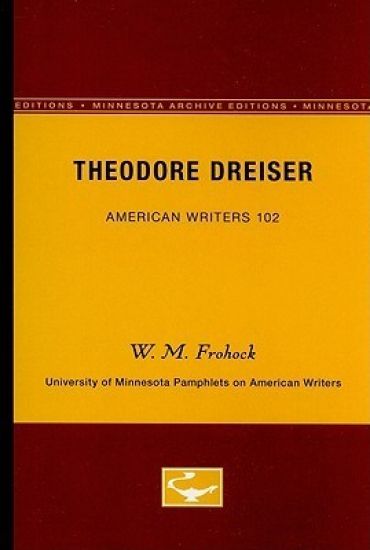
Theodore Dreiser - American Writers 102

Theodore Dreiser - American Writers 102

Frohock W.M.

UNIVERSITY OF MINNESOTA PRESS
1972
nidottu
Theodore Dreiser - American Writers 102 was first published in 1972. Minnesota Archive Editions uses digital technology to make long-unavailable books once again accessible, and are published unaltered from the original University of Minnesota Press editions.
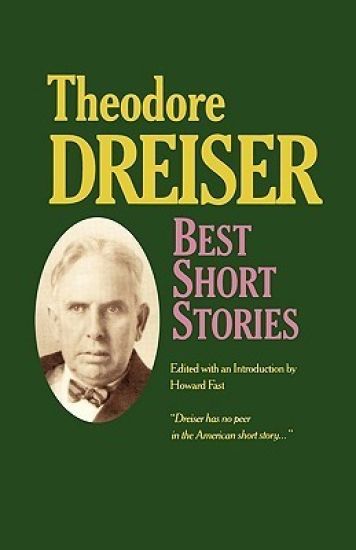
Best Short Stories of Theodore Dreiser

Best Short Stories of Theodore Dreiser

Theodore Dreiser; Howard Fast

Ivan R Dee, Inc
1989
pokkari
This extraordinary collection of short stories reminds us how great a talent Dreiser was. A giant among American writers, he fought throughout his career to capture life in realistic terms. In his stories as well as his celebrated novels, he sought to uncover the problems of common Americans at the turn of the century—their struggles with society and their dreams of power and wealth against a backdrop of threatening poverty. "Dreiser has no peer in the American short story.…As fine as his novels are, they do not attain the artistic wholeness of his short tales. Among the moderns, there is almost no one capable of writing tales like these. The best of today is pallid and non-human when compared with Dreiser’s compassionate searchings."—from the Introduction by Howard Fast.
Theodore Waddell

Theodore Waddell

Rick Newby

Drumlummon Institute
2017
nidottu
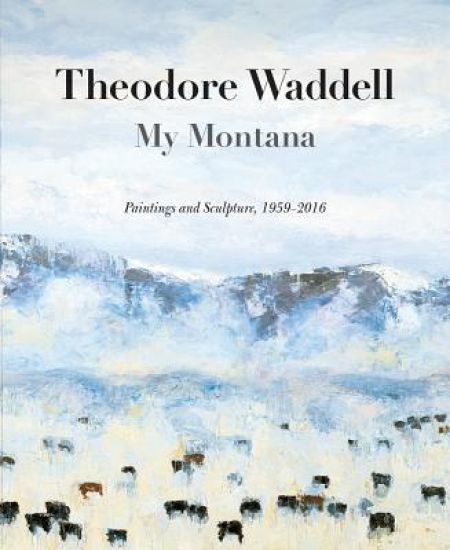
Born in 1941 in Billings, Montana, painter, sculptor, and rancher Theodore Waddell stands as one of the West's most celebrated contemporary artists. His late modern "landscapes with animals" couple abstract expressionist technique with creatures--Black Angus cattle, horses, and bison--that populate the high plains and mountain valleys of today's ranching West. Heavily illustrated with the artist's own work, as well as images from his personal archive, Theodore Waddell: My Montana traces Waddell's influences, ranging from the Cezannesque works of Montana rancher and teacher Isabelle Johnson to the abstract expressionism of Robert Motherwell, the expressionist figuration of Robert DeNiro Sr., and the classic western paintings of Karl Bodmer, Charles M. Russell, Frederic Remington, Thomas Moran, Joseph Henry Sharp, and Maynard Dixon. With access to Waddell's journals and letters and an extensive oral history recently completed, author Rick Newby offers unprecedented insight into Waddell's first years as an avowed artist and his period of struggle and disciplined creativity. Newby portrays Waddell's decades as a practicing rancher and the years of his success--when his sculptures and vast canvases have found homes in leading museums. Ultimately, Theodore Waddell's works are important, not simply because they bring together disparate traditions but because they stand as emotionally and sensuously resonant works of art that speak of landscapes and animals, life and death, austerity and abundance. They possess, in the words of Seattle Times critic Robin Updike, an "immense, poetic dignity." This volume also includes a gathering of essays celebrating the life and art of Theodore Waddell by the Montana curators, critics, scholars, poets, and fiction writers who have known him best. Contributors include the Honorable Pat Williams, Robyn Peterson, Bob Durden, Gordon McConnell, Mark Browning, Donna Forbes, Greg Keeler, Patrick Zentz, Scott McMillion, William Hjortsberg, Paul Zarzyski, and Brian Petersen.
Theodore Waddell

Theodore Waddell

Rick Newby

Drumlummon Institute
2017
sidottu
Born in 1941 in Billings, Montana, painter, sculptor, and rancher Theodore Waddell stands as one of the West's most celebrated contemporary artists. His late modern "landscapes with animals" couple abstract expressionist technique with creatures--Black Angus cattle, horses, and bison--that populate the high plains and mountain valleys of today's ranching West. Heavily illustrated with the artist's own work, as well as images from his personal archive, Theodore Waddell: My Montana traces Waddell's influences, ranging from the Cezannesque works of Montana rancher and teacher Isabelle Johnson to the abstract expressionism of Robert Motherwell, the expressionist figuration of Robert DeNiro Sr., and the classic western paintings of Karl Bodmer, Charles M. Russell, Frederic Remington, Thomas Moran, Joseph Henry Sharp, and Maynard Dixon. With access to Waddell's journals and letters and an extensive oral history recently completed, author Rick Newby offers unprecedented insight into Waddell's first years as an avowed artist and his period of struggle and disciplined creativity. Newby portrays Waddell's decades as a practicing rancher and the years of his success--when his sculptures and vast canvases have found homes in leading museums. Ultimately, Theodore Waddell's works are important, not simply because they bring together disparate traditions but because they stand as emotionally and sensuously resonant works of art that speak of landscapes and animals, life and death, austerity and abundance. They possess, in the words of Seattle Times critic Robin Updike, an "immense, poetic dignity." This volume also includes a gathering of essays celebrating the life and art of Theodore Waddell by the Montana curators, critics, scholars, poets, and fiction writers who have known him best. Contributors include the Honorable Pat Williams, Robyn Peterson, Bob Durden, Gordon McConnell, Mark Browning, Donna Forbes, Greg Keeler, Patrick Zentz, Scott McMillion, William Hjortsberg, Paul Zarzyski, and Brian Petersen.