Kirjojen hintavertailu. Mukana 12 390 323 kirjaa ja 12 kauppaa.

Kirjahaku

Etsi kirjoja tekijän nimen, kirjan nimen tai ISBN:n perusteella.

1000 tulosta hakusanalla Thomas L. Constable

Along the Tigris

Along the Tigris

Thomas L. Day

Schiffer Publishing Ltd
2007
sidottu
"Along the Tigris" tells the story of 16,000 soldiers in combat, from the training grounds of Fort Campbell, through the toughest battles in the blitz of Baghdad to the Nineveh province, where the 101st Airborne Division anchored for eight months after the overthrow of Saddam Hussein. Without precedent or a plan, the division sketched the blueprint to win the peace as they went - rebuilding schools and health clinics, reestablishing the local infrastructure, standing up city governments and building trust with the local people. "Along the Tigris" gets beyond the headlines, telling the true story of the Army's most storied division in the Iraq war.
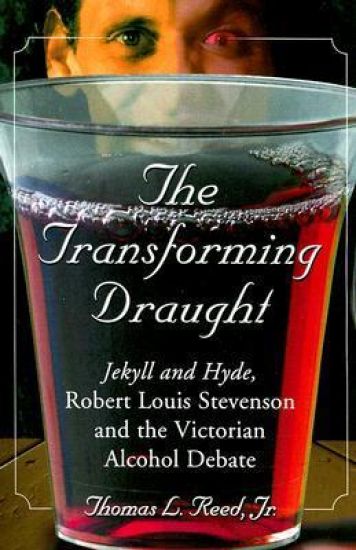
The Transforming Draught

The Transforming Draught

Thomas L. Reed

McFarland Co Inc
2006
pokkari
Robert Louis Stevenson's Strange Case of Dr. Jekyll and Mr. Hyde is viewed as the classic allegory of man's duality--the good and evil embodied in every person. But could Jekyll's "transforming draught" have been alcohol? In the Victorian era, alcohol was the topic of national debate for decades and people endlessly deliberated its proper place in society. Shadowed all his life by the cloud of alcoholism, Stevenson well knew the good and evil of strong drink. This book investigates Stevenson's Strange Case of Dr. Jekyll and Mr. Hyde as an allegory of alcoholism--an interpretation that cultural change and the story's renown have perhaps obscured. The author examines patterns of language, plot, characterization and imagery to reveal how mind-altering drink figures as the story's subtext. Early chapters establish the story's literal references to strong drink and its metaphors regarding alcohol. The focus then shifts to drinking in Stevenson's life, the sociology of drink in Victorian Britain, and the portrayal of alcohol in literature, including Stevenson's other works. Possible real-life models for the Jekyll-Hyde character are explored. Subsequent chapters examine the history of Britain's temperance movement, scenes that arose from Stevenson's dreams, how the temperance movement and industrial development may have influenced the story, and the story's interpretation in Stevenson's time. An appendix further investigates the elements of Stevenson's language.
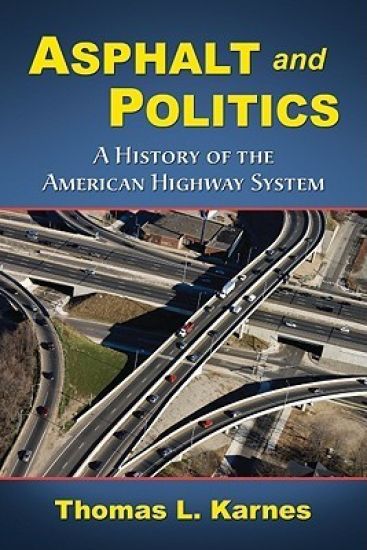
Asphalt and Politics

Asphalt and Politics

Thomas L. Karnes

McFarland Co Inc
2009
pokkari
From animal paths to superhighways, transportation has been the backbone of American expansion and growth. This examination of the interstate highway system in the United States, and the forces that shaped it, includes the introduction of the automobile, the Good Roads Movement, and the Lincoln Highway Association. The book offers an analysis of state and federal road funding, modern road-building options, and the successes and failures of the current highway system. Instructors considering this book for use in a course may request an examination copy here.
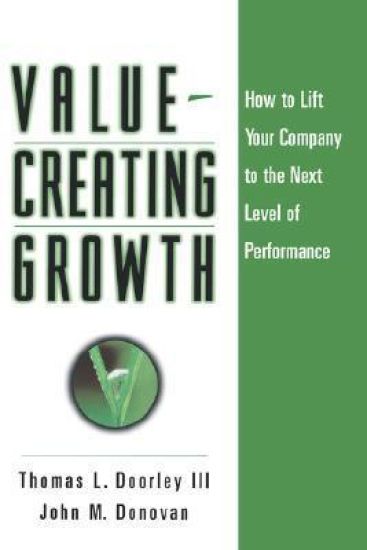
Value-Creating Growth

Value-Creating Growth

Thomas L. Doorley; John M. Donovan

Jossey-Bass Inc.,U.S.
1999
sidottu
When it comes to creating value for shareholders, customers, employees-for most everyone concerned-no company does it better than the company that grows. Now, in Value-Creating Growth, two acclaimed growth consultants distill twenty years of expertise into a practice-driven program any change leader can use to ensure sustained, dynamic growth for his or her organization. Packed with real-world examples, proven strategies, and a host of action-oriented tools, this is the first book that offers readers a systematic approach to transforming companies into first-class performers.
Transforming Women's Work

Transforming Women's Work

Thomas L. Dublin

Cornell University Press
1995
pokkari
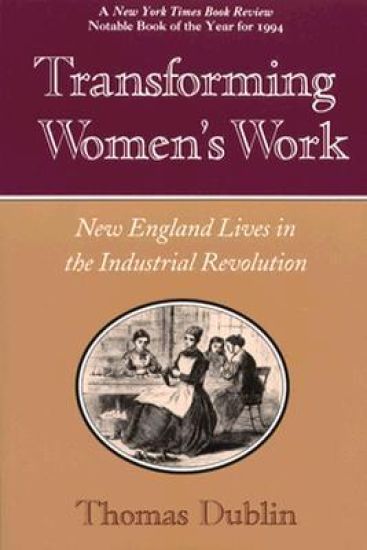
"I am not living upon my friends or doing housework for my board but am a factory girl," asserted Anna Mason in the early 1850s. Although many young women who worked in the textile mills found that the industrial revolution brought greater independence to their lives, most working women in nineteenth-century New England did not, according to Thomas Dublin. Sketching engaging portraits of women's experience in cottage industries, factories, domestic service, and village schools, Dublin demonstrates that the autonomy of working women actually diminished as growing numbers lived with their families and contributed their earnings to the household. From diaries, letters, account books, and censuses, Dublin reconstructs employment patterns across the century as he shows how wage work increasingly came to serve the needs of families, rather than of individual women. He first examines the case of rural women engaged in the cottage industries of weaving and palm-leaf hatmaking between 1820 and 1850. Next, he compares the employment experiences of women in the textile mills of Lowell and the shoe factories of Lynn. Following a discussion of Boston working women in the middle decades of the century-particularly domestic servants and garment workers-Dublin turns his attention to the lives of women teachers in three New Hampshire towns.
When the Mines Closed

When the Mines Closed

Thomas L. Dublin

Cornell University Press
1998
pokkari
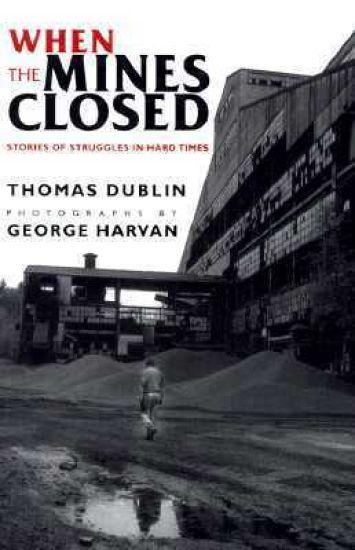
The anthracite region of northeastern Pennsylvania, five hundred square miles of rugged hills stretching between Tower City and Carbondale, harbored coal deposits that once heated virtually all the homes and businesses in Eastern cities. At its peak during World War I, the coal industry here employed 170,000 miners, and supported almost 1,000,000 people. Today, with coal workers numbering 1,500, only 5,000 people depend on the industry for their livelihood. Between these two points in time lies a story of industrial decline, of working people facing incremental and cataclysmic changes in their world. When the Mines Closed tells this story in the words of men and women who experienced these dramatic changes and in more than eighty photographs of these individuals, their families, and the larger community. Award-winning historian Thomas Dublin interviewed a cross-section of residents and migrants from the region, who gave their own accounts of their work and family lives before and after the mines closed. Most of the narrators, six men and seven women, came of age during the Great Depression and entered area mines or, in the case of the women, garment factories, in their teens. They describe the difficult choices they faced, and the long-standing ethnic, working-class values and traditions they drew upon, when after World War II the mines began to shut down. Some left the region, others commuted to work at a distance, still others struggled to find employment locally. The photographs taken by George Harvan, a lifelong resident of the area and the son of a Slovak-born coal miner, document residents' lives over the course of fifty years. Dublin's introductory essay offers a brief history of anthracite mining and the region and establishes a broader interpretive framework for the narratives and photographs.
The Face of Decline

The Face of Decline

Thomas L. Dublin; Walter Licht

Cornell University Press
2005
pokkari
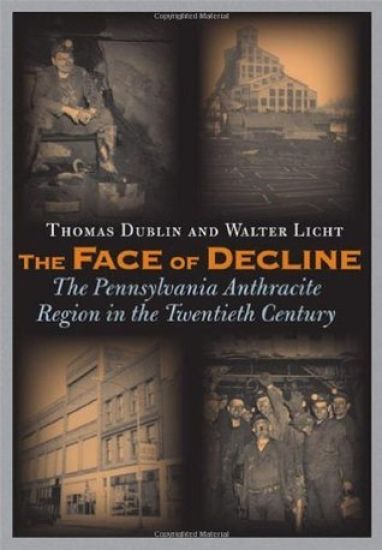
The anthracite coal region of Pennsylvania once prospered. Today, very little mining or industry remains, although residents have made valiant efforts to restore the fabric of their communities. In The Face of Decline, the noted historians Thomas Dublin and Walter Licht offer a sweeping history of this area over the course of the twentieth century. Combining business, labor, social, political, and environmental history, Dublin and Licht delve into coal communities to explore grassroots ethnic life and labor activism, economic revitalization, and the varied impact of economic decline across generations of mining families. The Face of Decline also features the responses to economic crisis of organized capital and labor, local business elites, redevelopment agencies, and state and federal governments. Dublin and Licht draw on a remarkable range of sources: oral histories and survey questionnaires; documentary photographs; the records of coal companies, local governments, and industrial development corporations; federal censuses; and community newspapers. The authors examine the impact of enduring economic decline across a wide region but focus especially on a small group of mining communities in the region's Panther Valley, from Jim Thorpe through Lansford to Tamaqua. The authors also place the anthracite region within a broader conceptual framework, comparing anthracite's decline to parallel developments in European coal basins and Appalachia and to deindustrialization in the United States more generally.
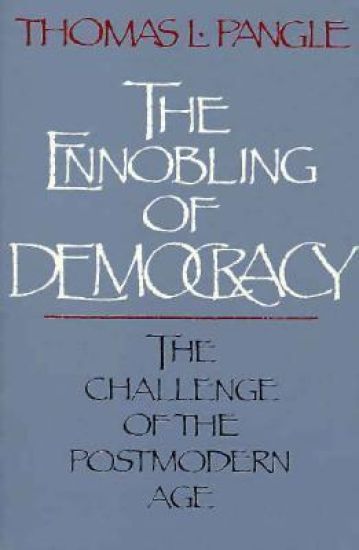
The Ennobling of Democracy

The Ennobling of Democracy

Thomas L. Pangle

Johns Hopkins University Press
1993
pokkari
With the end of the Cold War, says Thomas L. Pangle, liberal democracy was deprived of its traditional enemy, and forced to re-examine its internal structure and fundamental aims. One result has been the moral-relativist "postmodernism" of mainstream Western intellectuals. Focusing on Lyotard, Vattimo, and Rorty, The Ennobling of Democracy offers a searching critique of postmodernism and its implications for political life and thought. Pangle carefully examines the political dimensions of postmodernist teachings, including the rejection of the natural-rights doctrines of the Enlightenment, the discounting of public purposefulness, and the disenchantment with claims of civic virtue and reason. He argues that a serious challenge has been posed to postmodernism by the emerging democracies of Eastern Europe, which have directly experienced heroic political leadership, maintained a prominent place for religion, and preserved a belief in the virtues and duties of citizenship. They consequently make demands on Western thought that postmodernism has been unable to meet. Drawing on the classical republican ideal, Pangle opens the door to a bold new synthesis in political philosophy. He argues that by reappropriating classical civic rationalism-and especially classical philosophy of education-a framework may be established to integrate the most significant findings of modern rationalism into a conception of humanity that encompasses, in an unprecedented way, the entire scope of the human condition.
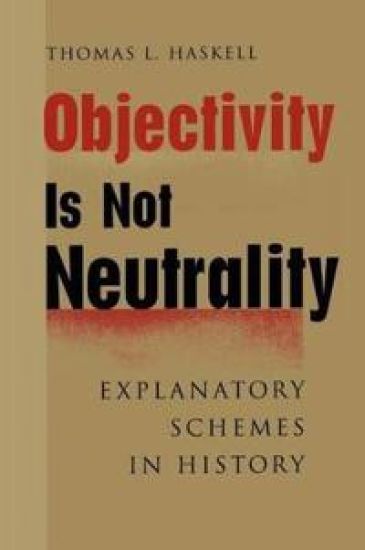
Objectivity Is Not Neutrality

Objectivity Is Not Neutrality

Thomas L. Haskell

Johns Hopkins University Press
2001
pokkari
In Objectivity Is Not Neutrality, Thomas L. Haskell argues for a moderate historicism that acknowledges the force of perspective and reaffirms the pluralistic practices of a liberal democratic society-even while upholding time-honored distinctions between fact and fiction, scholarship and propaganda, right and might. Haskell addresses questions that will interest philosophers and literary theorists no less than historians, exploring topics ranging from the productivity of slave labor to the cultural concomitants of capitalism, from John Stuart Mill's youthful "mental crisis" to the cognitive preconditions that set the stage for antislavery and other humanitarian reforms after 1750. He traces the surprisingly short history of the word responsibility, which turns out to be no older than the United States. He examines the reasons for the rising authority of professional experts in nineteenth-century America. And he wonders whether the epistemological radicalism of recent years leaves us with any adequate basis for justifying human rights-rights of academic freedom, for example, or the right not to be tortured. Written by a thoughtful critic of the historical profession, Objectivity Is Not Neutrality calls upon historians to think deeply about the nature of historical explanation and to acknowledge more fully than ever before the theoretical dimension of their work.
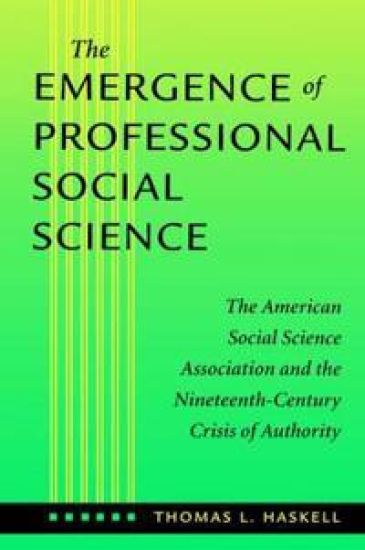
The Emergence of Professional Social Science

The Emergence of Professional Social Science

Thomas L. Haskell

Johns Hopkins University Press
2001
pokkari
Thomas L. Haskell's The Emergence of Professional Social Science signaled the beginning of his distinguished career as a historian of ideas and critic of historical logic. His first book, now available in this paperback edition with a new preface by the author, explores the background and premises of the American Social Science Association (ASSA)-the first American group dedicated to the "scientific" study of humanity and society. Haskell thus helps us to understand a sea change in American intellectual life-the rise of this thing called "social science," the power and implications of the new trend toward secular professionalism, and, ultimately, how it happened that commonsense modes of explanation in terms of conscious choices by individuals came to be overshadowed by a mode of explanation that systematically construes people as creatures of circumstance. How, Haskell asks in his conclusion, did the development of modern society alter "the way we explain human affairs and conceive of man?" This edition includes a new appendix, listing all articles appearing in the Journal of Social Science from 1869 to 1901.
Sir William Rowan Hamilton

Sir William Rowan Hamilton

Thomas L. Hankins

Johns Hopkins University Press
2004
pokkari
One of the most imaginative mathematicians of the nineteenth century, Sir William Rowan Hamilton (1805-1865) changed the course of modern algebra with his discovery of quaternions in 1843. Although Hamilton's work was largely theoretical, his ideas came to have invaluable practical applications with the advent of quantum mechanics in the twentieth century. In this acclaimed biography, Thomas L. Hankins brings together the many aspects of Hamilton's life and work-from his significant contributions to mathematics, optics, and mechanics to his passion for metaphysics, poetry, and politics-fully portraying the brilliant man whose faith and idealism guided him in everything he did.
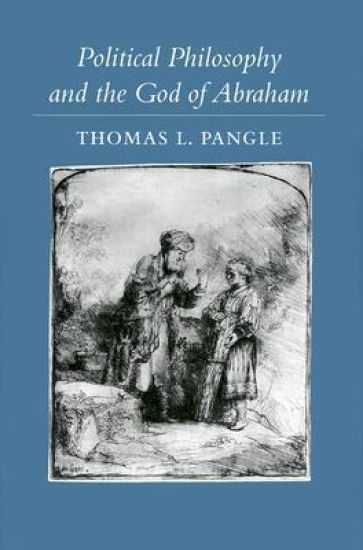
Political Philosophy and the God of Abraham

Political Philosophy and the God of Abraham

Thomas L. Pangle

Johns Hopkins University Press
2003
sidottu
In this book noted scholar Thomas L. Pangle brings back a lost and crucial dimension of political theory: the mutually illuminating encounter between skeptically rationalist political philosophy and faith-based political theology guided ultimately by the authority of the Bible. Focusing on the chapters of Genesis in which the foundation of the Bible is laid, Pangle provides an interpretive reading illuminated by the questions and concerns of the Socratic tradition and its medieval heirs in the Christian, Jewish, and Islamic worlds. He brings into contrast the rival interpretive framework set by the biblical criticism of the modern rationalists Hobbes and Spinoza, along with their heirs from Locke to Hegel. The full meaning of these diverse philosophic responses to the Bible is clarified through a dialogue with hermeneutic discussions by leading political theologians in the Judaic, Muslim, and Christian traditions, from Josephus and Augustine to our day. Profound and subtle in its argument, this book will be of interest not only to students and scholars of politics, philosophy, and religion but also to thoughtful readers in every walk of life who seek to deepen their understanding of the perplexing relationship between religious faith and philosophic reason.
Leo Strauss

Leo Strauss

Thomas L. Pangle

Johns Hopkins University Press
2006
sidottu
Leo Strauss's controversial writings have long exercised a profound subterranean cultural influence. Now their impact is emerging into broad daylight, where they have been met with a flurry of poorly informed, often wildly speculative, and sometimes rather paranoid pronouncements. This book, written as a corrective, is the first accurate, non-polemical, comprehensive guide to Strauss's mature political philosophy and its intellectual influence. Thomas L. Pangle opens a pathway into Strauss's major works with one question: How does Strauss's philosophic thinking contribute to our democracy's civic renewal and to our culture's deepening, critical self-understanding? This book includes a synoptic critical survey of writings from scholars who have extended Strauss's influence into the more practical, sub-philosophic fields of social and political science and commentary. Pangle shows how these analysts have in effect imported Straussian impulses into a "new" kind of political and social science.
Leo Strauss

Leo Strauss

Thomas L. Pangle

Johns Hopkins University Press
2006
pokkari
Leo Strauss's controversial writings have long exercised a profound subterranean cultural influence. Now their impact is emerging into broad daylight, where they have been met with a flurry of poorly informed, often wildly speculative, and sometimes rather paranoid pronouncements. This book, written as a corrective, is the first accurate, non-polemical, comprehensive guide to Strauss's mature political philosophy and its intellectual influence. Thomas L. Pangle opens a pathway into Strauss's major works with one question: How does Strauss's philosophic thinking contribute to our democracy's civic renewal and to our culture's deepening, critical self-understanding? This book includes a synoptic critical survey of writings from scholars who have extended Strauss's influence into the more practical, sub-philosophic fields of social and political science and commentary. Pangle shows how these analysts have in effect imported Straussian impulses into a "new" kind of political and social science.
Political Philosophy and the God of Abraham

Political Philosophy and the God of Abraham

Thomas L. Pangle

Johns Hopkins University Press
2007
pokkari
In this book noted scholar Thomas L. Pangle brings back a lost and crucial dimension of political theory: the mutually illuminating encounter between skeptically rationalist political philosophy and faith-based political theology guided ultimately by the authority of the Bible. Focusing on the chapters of Genesis in which the foundation of the Bible is laid, Pangle provides an interpretive reading illuminated by the questions and concerns of the Socratic tradition and its medieval heirs in the Christian, Jewish, and Islamic worlds. He brings into contrast the rival interpretive framework set by the biblical criticism of the modern rationalists Hobbes and Spinoza, along with their heirs from Locke to Hegel. The full meaning of these diverse philosophic responses to the Bible is clarified through a dialogue with hermeneutic discussions by leading political theologians in the Judaic, Muslim, and Christian traditions, from Josephus and Augustine to our day. Profound and subtle in its argument, this book will be of interest not only to students and scholars of politics, philosophy, and religion but also to thoughtful readers in every walk of life who seek to deepen their understanding of the perplexing relationship between religious faith and philosophic reason.
Poiesis and Possible Worlds

Poiesis and Possible Worlds

Thomas L. Martin

University of Toronto Press
2004
sidottu
In Poiesis and Possible Worlds, Thomas L. Martin makes a highly focused intervention in the debate about poststructuralist and postmodern theorizing and offers a philosophical approach to some of the controversial tenets of recent theorists. The result is an important addition to the existing literature on the usefulness of possible worlds theory for literature. Martin argues that literary studies remain mired in the anomalies of a linguistic methodology derived from early twentieth-century language philosophy, a view challenged not only by theoretical physics, but also by compelling advances in philosophic semantics. The possible-worlds theory of this book moves beyond the understanding of language as an inescapable medium and toward a view of language as calculus, a theoretical outlook that provides richer means to model a wide range of literary worlds. These possible-worlds insights apply to several fundamental issues in literary and critical theory: not to a theory of fiction as other possible-worlds theorists have suggested, but at a lower level to the definition of literature, to verbal figuration in the theory of metaphor, and to models of reading. Well written and argued, Poiesis and Possible World will be of particular interest to literary critics, aestheticians, and philosophers of language.
The Great School Debate

The Great School Debate

Thomas L. Good; Jennifer S. Braden

Routledge Member of the Taylor and Francis Group
1999
nidottu
This book examines reform in American education over the past fifty years and against this backdrop presents a compelling analysis of why contemporary voucher plans and charter schools have yet to fulfill the expectations of their advocates. It is the only book to date to attempt a comprehensive synthesis and analysis of the emerging research base on vouchers and charter schools. Suitable for courses in school policy, school reform, school leadership, or educational issues, it will also be of interest to anyone (parents, teachers, policymakers) directly involved with the charter school movement. Key features of this timely new book include the following: * A Historical Perspective--The early chapters look at American educational reform over the past fifty years and analyze why these efforts have fallen short of their goals. * Student Achievement--Chapter 3 provides an insightful assessment of American students' school achievement from 1970 to the present and, in the process, counters the widely held myth that, overall, student achievement has deteriorated. * Voucher Plans and Charter Schools--Chapter 4 looks specifically at choice and vouchers in American education while chapters 5-7 provide a comprehensive and balanced examination of the charter school movement. * Policy Recommendations--The book concludes with explicit policy suggestions that attempt to balance the educational needs of children and youth against the rights of schools to experiment. Suggestions for developing broader coalitions to support public education, particularly in the inner cities, are also offered.
The Great School Debate

The Great School Debate

Thomas L. Good; Jennifer S. Braden

Routledge Member of the Taylor and Francis Group
1999
sidottu
This book examines reform in American education over the past fifty years and against this backdrop presents a compelling analysis of why contemporary voucher plans and charter schools have yet to fulfill the expectations of their advocates. It is the only book to date to attempt a comprehensive synthesis and analysis of the emerging research base on vouchers and charter schools. Suitable for courses in school policy, school reform, school leadership, or educational issues, it will also be of interest to anyone (parents, teachers, policymakers) directly involved with the charter school movement. Key features of this timely new book include the following: * A Historical Perspective--The early chapters look at American educational reform over the past fifty years and analyze why these efforts have fallen short of their goals. * Student Achievement--Chapter 3 provides an insightful assessment of American students' school achievement from 1970 to the present and, in the process, counters the widely held myth that, overall, student achievement has deteriorated. * Voucher Plans and Charter Schools--Chapter 4 looks specifically at choice and vouchers in American education while chapters 5-7 provide a comprehensive and balanced examination of the charter school movement. * Policy Recommendations--The book concludes with explicit policy suggestions that attempt to balance the educational needs of children and youth against the rights of schools to experiment. Suggestions for developing broader coalitions to support public education, particularly in the inner cities, are also offered.