Kirjahaku
Etsi kirjoja tekijän nimen, kirjan nimen tai ISBN:n perusteella.
1000 tulosta hakusanalla Timo Graf
Mining finance houses were substantial public corporations with access to money markets in the City of London, the world’s leading capital market for mining. These institutions became dominant at the inception of colonial rule and, in varying forms, remained so throughout the twentieth century.Drawing on a rich corpus of primary sources, this book analyses the Western colonial origins of the mining industry and its post-colonial legacies in the Central African Copperbelt. It provides insights into the operations of the global business of mining: in particular, how these processes took place, why they were considered desirable by various interest groups, and the impact that these processes continue to have on physical and human environments in parts of the world where they took place. It also turns its gaze to the City of London looking at who the financiers were and the nature of the power which they wielded. A long-term perspective on mining finance reveals that thus far the colonial governments have been the main focus in the history of imperialism in Central Africa, with little focus in many instances on the mining finance houses which have outlived them.The book is a significant contribution to the economic, financial and business history of mining and extractive industries, Central Africa, the City of London and early forms of financial capitalism.
This book explores the decline of rural and peripheral areas in Japan, which results from an aging population, outmigration of the younger generations, and the economic decline of the primary sector. Based on extensive original research, the book examines in detail the case of the Noto peninsula. Allowing the locals to tell their stories, describe their problems, and come up with possible solutions, the book demonstrates the serious impact of rural decline on their daily life and work and highlights the struggle to sustain rural living in the globalized age. It argues that some recent innovations in global media, economy, technology, and ideology offer scope for reversing the decline, as some central government initiatives do, but that these are not always noticed, appreciated, and made use of by local people. The book also discusses the nature of the links between the peripheries and the centres – regional, national, and global – and how these often take the form of "internal colonialism."
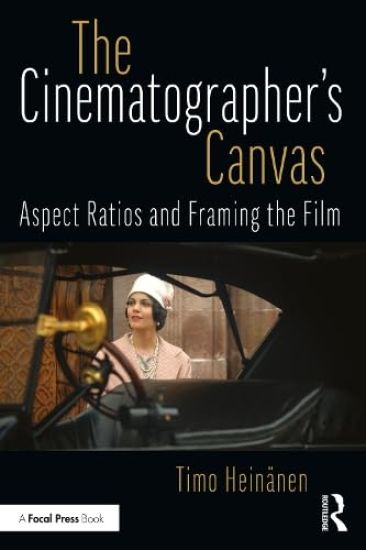
This is a groundbreaking book that sheds light on the roles of cinematographers in terms of using aspect ratios and framing in films. This book offers a fresh look on the processes associated with the creative side of filmmaking and the use of cinematic space.Based on the author’s own experience the book offers an insightful discussion between cinematographers based on questionnaires, interviews and correspondence with professional cinematographers and film students alike. It describes the different modes of activity such as pre production, collaboration and working with directors, the processes behind selecting an aspect ratio, and genres and expectancy. The chapters also focus on compositional elements, the concept of centre, balance and negative space. They look behind the act of framing, revealing what impact these visual frameworks have on the work of cinematographers and the overall storytelling experience. Readers will gain a deeper understanding of the artistic and technical decisions the cinematographers make, how these decisions impact their work, and their creativity in the visual narrative.This book will make ideal reading for students and practitioners of filmmaking, cinematography, composition and framing, and for anyone interested in film, creative processes and visual storytelling.
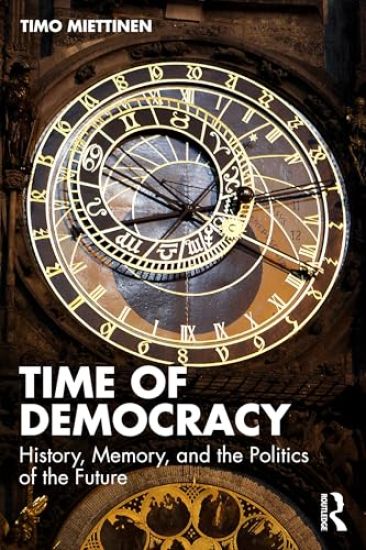
In Time of Democracy, Timo Miettinen takes readers on a fascinating journey through the history of democratic ideas, showing how our political systems are deeply shaped by the way we understand the past, imagine the future, and live in the present. From Renaissance thinkers such as Machiavelli to modern ideas of crisis and revolution, the book traces how democracy emerged from a new understanding of change, human agency, and historical progress. Miettinen defends the openness of the future against both totalitarian visions and nostalgic retreats, showing how democracy withers when history is used to shut down alternatives. Accessible, sharp, and packed with thought-provoking examples, Time of Democracy is perfect for students looking to connect big ideas from political theory, history, and philosophy to real-world issues, or simply curious about how time and history shape the way we live together. Whether you're studying democracy, European politics, or just curious about how time shapes the way we live together, this book offers fresh tools to think critically and creatively about the future of democratic life.
In der Bundesrepublik sind ber 200.000 Pers nlichkeiten ehrenamtlich f r die Industrie- und Handelskammern t tig, sei es als Pr ferinnern oder Pr fer oder als Mitglied der Vollversammlung. Auch der Pr sident und das Pr sidium der IHK sind ehrenamtlich t tig. Es stellt sich zwangsl ufig die Frage, ob und inwieweit Personen, die ein solches Ehrenamt bekleiden, pers nlich haften. Dieser Frage geht der Autor nach und erl utert zun chst den Aufbau, die Organisation der Industrie- und Handelskammern anhand ihres gesetztlichen Auftrags. Im Anschluss wird die Haftung der Organe der IHK, insbesondere des Ehrenamtes wissenschaftlich analysiert.
Mehr als nur ein Standard - wie die IBCS die Wahrnehmung von Geschäftsdaten erleichtern: Eine Eyetracking- und Laborstudie an der Technischen Universi
Timo Linde; Arne-Kristian Schulz; Dirk U. Proff
Independently Published
2019
nidottu
Die Stufe der höchsten Dringlichkeit: Kriminalroman
Timo Fischer
Independently Published
2019
nidottu
Kommissar Lenski bl tterte lustlos in der Akte. Zuoberst lag der Arztbrief, adressiert an die Haus rztin von Monika Walter. Der Arztbrief bestand aus einer Seite. In halbfett gedruckter Form wurden die verschiedenen Diagnosen aufgef hrt. Unter der berschrift "Epikrise" stand offenbar eine Zusammenfassung dessen, was Monika Walter in die Klinik gebracht und schlie lich hatte versterben lassen. Den d104 konnte Kommissar Lenski jedoch nicht verstehen. Er war gespickt mit lateinischen und griechischen Fachausdr cken. Hinter dem Arztbrief waren, unter einzelnen Rubriken verteilt, Befunde abgeheftet. Zuhinterst befanden sich die Patientenkurven von einer Normal- und einer Intensivstation, auf denen der t gliche Verlauf von Puls, Blutdruck, Fieber, verordneter Medikamente und der Krankheitsverlauf dokumentiert waren. Im Augenblick hatte er keine Ahnung, wie er sich dem Fall n hern konnte. Er hatte die Erfahrung gemacht, dass es nichts brachte, wenn man sich zu sehr an einem Problem festbiss und so schob er die Akte erstmal beiseite und holte andere Akten hervor, die sehr geduldig darauf gewartet hatten, abgeschlossen zu werden. Dieser Roman ist hochbrisant. Es geht um Organspende, um die Voraussetzungen daf r, um kriminelle Machenschaften von Transplantations rzten. Es geht um Schicksale von Patienten, die auf ein Spenderorgan warten und um den Kostendruck, dem Krankenh user ausgesetzt sind, wenn sie von Gesellschaften gef hrt werden, die Gewinne machen m ssen. Alle Personen und Gegebenheiten in diesem Roman sind frei erfunden. Aber der Autor hat als Arzt tiefen Einblick in die realen Abl ufe. Alles h tte also auch so oder so hnlich wirklich passieren k nnen.
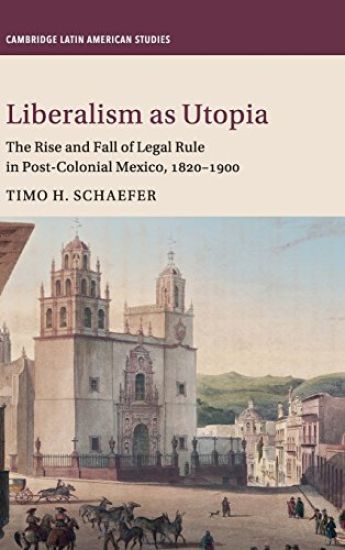
Liberalism as Utopia challenges widespread perceptions about the weakness of Mexico's nineteenth-century state. Schaefer argues that after the War of Independence non-elite Mexicans - peasants, day laborers, artisans, local merchants - pioneered an egalitarian form of legal rule by serving in the town governments and civic militias that became the local faces of the state's coercive authority. These institutions were effective because they embodied patriarchal norms of labor and care for the family that were premised on the legal equality of male, adult citizens. The book also examines the emergence of new, illiberal norms that challenged and at the end of the century, during the dictatorship of Porfirio Díaz, overwhelmed the egalitarianism of the early-republican period. By comparing the legal cultures of agricultural estates, mestizo towns and indigenous towns, Liberalism as Utopia also proposes a new way of understanding the social foundations of liberal and authoritarian pathways to state formation in the nineteenth-century world.
This Element provides an accessible introduction to ecosemiotics and demonstrates its pertinence for the study of today's unstable culture-nature relations. Ecosemiotics can be defined as the study of sign processes responsible for ecological phenomena. The arguments in this Element are developed in three steps that take inspiration from both humanities and biological sciences: 1) Showing the diversity, reach and effects of sign-mediated relations in the natural environment from the level of a single individual up the functioning of the ecosystem. 2) Demonstrating numerous ways in which prelinguistic semiotic relations are part of culture and identifying detrimental environmental effects that self-contained and purely symbol-based sign systems, texts and discourses bring along. 3) Demonstrating how ecosemiotic analysis centred on models and modelling can effectively map relations between texts and the natural environment, or the lack thereof, and how this methodology can be used artistically to initiate environmentally friendly cultural forms and practices.
This edited volume provides an assessment of an increasingly fragmented aid system. Development cooperation is fundamentally changing its character in the wake of global economic and political transformations and an ongoing debate about what constitutes, and how best to achieve, global development. This also has important implications for the setup of the aid architecture. The increasing number of donors and other actors as well as goals and instruments has created an environment that is increasingly difficult to manoeuvre. Critics describe today's aid architecture as 'fragmented': inefficient, overly complex and rigid in adapting to the dynamic landscape of international cooperation. By analysing the actions of donors and new development actors, this book gives important insights into how and why the aid architecture has moved in this direction. The contributors also discuss the associated costs, but also potential benefits of a diverse aid system, and provide someconcrete options for the way forward.
This book is about the process and, more generally, about the opportunities that peace research and the teaching of conflict resolution can offer academic diplomacy. As such the book is both an empirical and a theoretical project. While it aims at being the most comprehensive analysis of the conflict in West Kalimantan, it also launches a new theoretical approach, neo-pragmatism, and offers lessons for the prevention of conflicts elsewhere. While being based on the classical pragmatist theories of truth and explanation, the approach developed in this book incorporates the complications to social science theory caused by the 'discovery' of socially constructed realities, and concepts such as speech acts. Yet, instead of just theorizing speech acts and social constructs, the theoretical mission is to offer pragmatic, detailed, concrete prescriptions of what to do to deconstruct realities that threaten peace by the means available for research and scholars of peace.
Towards Glocal Social Work in the Era of Compressed Modernity
Timo Harrikari; Pirkko-Liisa Rauhala
Routledge
2018
sidottu
This book addresses the change of social work in the frame of modernisation. Through Mary Richmond’s classical idea of social work, the book seeks to set current societal trends affecting social work into the context of a long historical line, opening spaces for the new debates within the social work discipline as well as proposing and taking some new directions in the current era of compressed modernity. From the viewpoint of social work, there still is an individual in a situation, however, the situation has profoundly changed during the past hundred years.Divided into seven chapters, topics covered include, firstly, the rethinking of Richmond’s original idea, revisiting the modernisation theories and social transformations as well as discussion on the social work theories and mandates according to the chosen classics. Secondly, the book continues with sketching the pillars of compressed modernity and rethinking the global and local relations. During the era of glocalisation, polycentrism, digitalisation and hybridisation, the previous conceptualisations of social theory have to be reconsidered. Finally, a proposal for glocal social work vision is represented by setting questions which should be taken under scrutinity.Academics, researchers, practising social workers and students of social work, as well as of social policy, administration, social law and other social sciences, will find this book to be an essential text for understanding the current societal changes, trends and tendencies. The book provides a lot of information for policymakers and citizens interested in the background knowledge for the contemporary societal situation.
The annual number of battle deaths from interstate and intra-state conflicts in East Asia has declined by 95% since 1979. During the past three decades, East Asia has been more peaceful than Europe, the Americas or any continent, in terms of battle deaths per capita. When generating theories on peace and war, studies almost never look at the experiences of East Asia. Yet the region by focusing on a commitment to development, is a social reality that is less paranoid, less militaristic and more cooperative. Since 1979 there has been a commonly accepted rule to keep domestic issues domestic so that external military interference, that often caused the majority of battle deaths, was not needed. Thus the emergence of the long peace of East Asia is historically specific, and cannot be generalized by studying objective, material conditions independent of common perceptions and common interpretations. This does not mean that the East Asian experience is not relevant for other regions in the world, but that generalizations should not be attempted to be drawn from the material conditions, but rather from the lived experience and socially constructed realities of East Asia. Since East Asia is a spectacular case of pacification, and since it has not contributed much to our theories of peace and conflict, The Long Peace of East Asia is an important book for studies on peace and war.
Action theory and practical philosophy have their well-grounded tradition both in Finland and in Poland. This text is a collection of PRACTICAL PHILOSOPHY AND ACTION THEORY Praxiology: The International Annual of Practical Philosophy and Methodology Volume 2. This volume is divided into three parts: the first one being, so to speak, a ‘business card’ of Finland’s contemporary practical philosophy, the second one being a ‘business card’ of the Poland’s present praxiology, and a collection of contributions from other philosophical environments related to the topics.