Kirjojen hintavertailu. Mukana 12 402 286 kirjaa ja 12 kauppaa.

Kirjahaku

Etsi kirjoja tekijän nimen, kirjan nimen tai ISBN:n perusteella.

1000 tulosta hakusanalla Torsten T. Will

Normal Findings in CT and MRI, A1, print

Normal Findings in CT and MRI, A1, print

Torsten Bert Moeller; Emil Reif

Thieme Publishing Group
1999
nidottu
The key for any beginning radiologist who wishes to recognize pathological findings is to first acquire an ability to distinguish them from normal ones. This outstanding guide gives beginning radiologists the tools they need to systematically approach and recognize normal MR and CT images. Highlights include: Reference-quality images from the author's own teaching files show all standard normal findings as seen in CT and MRIChecklists in each section offer the reader a systematic way to approach the imagesThorough guidelines to help beginning radiologists dictate their reportsLists of standard measurements and tips for ruling out pathology
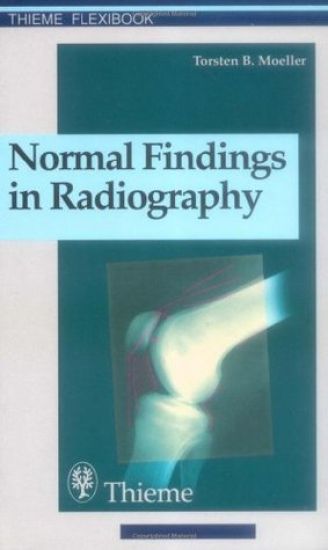
Normal Findings in Radiography

Normal Findings in Radiography

Torsten Bert Moeller

Thieme Publishing Group
1999
pokkari
The method of making findings and the systematic method of interpreting images are still relevant today. This book deals with a subject that is seemingly trivial: normal findings in radiology. However, the normal is also the frequent, but not always the simple. Every radiologist has experienced difficulties in the systematics of imaging and with phrasing the diagnosis. This book is intended to answer three questions: How should the diagnosis be phrased? Which general scheme can I use to evaluate an image; how can I check for the degree of normality? Which data allow me to evidence normality, and what measurements should be taken?In spite of the introduction of digital X-ray imaging, the interpretation of conventional X-rays has not basically changed during the past ten years, which is evidenced by the development of this book. Since its first publication in 1987, it has gone through several unchanged reprints. In the 2nd German edition the text has hardly been changed; however, several new images have been added. The method of making findings and the systematic method of interpreting images are still relevant today. Consequently, the strict and systematic organization of the book was left unchanged. The new layout leads to a clearer accessibility of the material for the reader.
Pocket Atlas of Sectional Anatomy, Volume I: Head and Neck

Pocket Atlas of Sectional Anatomy, Volume I: Head and Neck

Torsten Bert Möller; Emil Reif

Thieme Publishing Group
2013
pokkari
This comprehensive, easy-to-consult pocket atlas is renowned for its superb illustrations and ability to depict sectional anatomy in every plane. Together with its two companion volumes, it provides a highly specialized navigational tool for all clinicians who need to master radiologic anatomy and accurately interpret CT and MR images. Special features of Pocket Atlas of Sectional Anatomy:Didactic organization in two-page units, with high-quality radiographs on one side and brilliant, full-color diagrams on the other Hundreds of high-resolution CT and MR images made with the latest generation of scanners (e.g., 3T MRI, 64-slice CT) Consistent color coding, making it easy to identify similar structures across several slices Concise, easy-to-read labeling of all figuresUpdates for the 4th edition of Volume I: New cranial CT imaging sequences of the axial and coronal temporal bone Expanded MR section, with all new 3T MR images of the temporal lobe and hippocampus, basilar artery, cranial nerves, cavernous sinus, and more New arterial MR angiography sequences of the neck and additional larynx images Compact, easy-to-use, highly visual, and designed for quick recall, this book is ideal for use in both the clinical and study settings.
Pocket Atlas of Sectional Anatomy, Vol. II: Thorax, Heart, Abdomen and Pelvis

Pocket Atlas of Sectional Anatomy, Vol. II: Thorax, Heart, Abdomen and Pelvis

Torsten Bert Moeller; Emil Reif

Thieme Publishing Group
2013
nidottu
This comprehensive, easy-to-consult pocket atlas is renowned for its superb illustrations and ability to depict sectional anatomy in every plane. Together with its two companion volumes, it provides a highly specialized navigational tool for all clinicians who need to master radiologic anatomy and accurately interpret CT and MR images. Special features of Pocket Atlas of Sectional Anatomy:Didactic organization in two-page units, with high-quality radiographs on one side and brilliant, full-color diagrams on the other Hundreds of high-resolution CT and MR images made with the latest generation of scanners (e.g., 3T MRI, 64-slice CT) Color-coded schematic drawings that indicate the level of each section Consistent color coding, making it easy to identify similar structures across several slicesUpdates for the 4th edition of Volume II: CT imaging of the chest and abdomen in all 3 planes: axial, sagittal, and coronal New back-cover foldout featuring pulmonary and hepatic segments and lymph node stations Follows standard international classifications of the American Heart Association for cardiac vessels and the AJCC/UICC for mediastinal lymph nodes Compact, easy-to-use, highly visual, and designed for quick recall, this book is ideal for use in both the clinical and study settings.
Pocket Atlas of Ophthalmology

Pocket Atlas of Ophthalmology

Torsten Schlote; Matthias Grueb; Joerg Mielke; Jens Martin Rohrbach

Thieme Publishing Group
2006
pokkari
Portable, practical information at a glance In ophthalmology, visual diagnosis is the most crucial part of an examination. This handy atlas is designed to help busy clinicians identify clinical signs and symptoms, establish differential diagnoses, and work through complex clinical questions - efficiently and accurately. The Pocket Atlas of Ophthalmology features:More than 500 photographs, line drawings, and diagramsPrecise clinical descriptions of all major disordersColor-coded tabs for easy accessEasy-to-follow bulleted lists and flow chartsSide-by-side comparison charts for differential diagnosisSuccinct overviews of ocular anatomy and physiologyValuable tips and techniques for diagnosis and treatmentChapters on drug side effects and eye diseases in developing countries Also useful as a study guide or patient information aid, the atlas also includes a detailed index and numerous cross-references. Compact, durable, and packed with information, this volume slides into any lab coat pocket, making it the ideal clinical companion for all eye care professionals.
Pocket Atlas of Sectional Anatomy, Volume III: Spine, Extremities, Joints

Pocket Atlas of Sectional Anatomy, Volume III: Spine, Extremities, Joints

Torsten Bert Möller; Emil Reif

Thieme Publishing Group
2016
nidottu
Full multiplanar coverage of the spine, extremities, and joints! Renowned for its superb illustrations and highly practical information, the third volume of this classic reference reflects the very latest in state-of-the-art imaging technology. Together with Volumes 1 and 2, this compact and portable book provides a highly specialized navigational tool for clinicians seeking to master the ability to recognize anatomical structures and accurately interpret CT and MR images. Highlights of Volume 3: New CT and MR images of the highest qualityDidactic organization using two-page units, with radiographs on one page and full-color illustrations on the nextConcise, easy-to-read labeling on all figuresColor-coded, schematic diagrams that indicate the level of each sectionSectional enlargements for detailed classification of the anatomical structureComprehensive, compact, and portable, this popular book is ideal for use in both the classroom and clinical setting.
Atlas of Sectional Anatomy

Atlas of Sectional Anatomy

Torsten Bert Möller; Emil Reif

Thieme Publishing Group
2009
sidottu
A handy, full-color resource for interpreting musculoskeletal MRI scans with confidence This superbly illustrated atlas provides a comprehensive presentation of the normal sectional anatomy of the musculoskeletal system to aid in the diagnosis of diseases affecting the joints, soft tissues, bones, and bone marrow. A precise, full-color drawing accompanies each high-quality sectional image, helping the reader to gain a solid understanding of the topographic anatomy and to differentiate between normal and pathologic conditions. Following examples of whole-body imaging, the atlas offers complete representations of the spinal column and the upper and lower extremities. The contiguous images of the extremities in transverse sections facilitate the identification of structures extending beyond the joints. Key features: Top-quality MRI scans, including whole-body views, produced with the most current, high-performance equipment Full-color illustrations drawn by the authors for optimal precision and accuracy Easy identification of anatomic structures through a uniform color code in the drawings Contiguous cross-sectional anatomy of the extremities Information on the location and direction of each slice for rapid orientation Atlas of Sectional Anatomy: The Musculoskeletal System is an invaluable reference for the daily practice of radiologists, radiology residents, and radiologic technologists.
Pocket Atlas of Radiographic Anatomy

Pocket Atlas of Radiographic Anatomy

Torsten Bert Möller; Emil Reif

THIEME PUBLISHING GROUP
2025
nidottu
Radiographic anatomy at your fingertips. The Pocket Atlas of Radiographic Anatomy precisely describes the anatomical structures shown on conventional X-ray images and on the most important arthrographic and angiographic examinations. The double-page spread format makes the book extremely user-friendly: The X-ray image is directly juxtaposed with a detailed drawing showing the clinically relevant anatomical structures. This enables simple, clear, and rapid identification and naming of the anatomical structures shown on the X-ray images. Ideal for quick reference, the expanded 4th edition has been supplemented with new images, such as full-length views of the spine and leg, making it an indispensable resource for medical professionals and students alike.
Grundfreiheiten und Privatrecht

Grundfreiheiten und Privatrecht

Torsten Körber

Mohr Siebeck
2004
sidottu
Torsten Körber untersucht und verdeutlicht den Einfluß der Grundfreiheiten des EG-Vertrages (Warenverkehrs-, Dienstleistungs-, Personenverkehrs- und Kapitalverkehrsfreiheit) auf das deutsche Privatrecht und den Privatrechtsverkehr. Zu diesem Zweck analysiert der Verfasser die rechtlichen und wirtschaftlichen Strukturen des Europäischen Binnenmarktes als Spielfeld für Zusammenspiel und Konflikt von Grundfreiheiten und Privatrecht. Darauf aufbauend systematisiert er die EuGH-Rechtsprechung, um die immer noch äußerst undeutlichen Konturen der Grundfreiheitendogmatik zu schärfen. In der Vergangenheit eingetretenen Fehleinschätzungen wird durch eine klare und enge Fassung der Verbotsreichweite begegnet. Auf dieser Grundlage werden die Aspekte positiver und negativer Einwirkung der Grundfreiheiten auf die Setzung, Auslegung und Anwendung staatlichen Rechts durch Gesetzgeber und Zivilgerichte der Mitgliedstaaten verdeutlicht. Zahlreiche Beispiele aus dem materiellen und internationalen Privatrecht verdeutlichen die gewonnenen grundsätzlichen Erkenntnisse. Schwerpunkte bilden das Wettbewerbs- und Gesellschaftsrecht sowie das deutsche IPR. Abschließend geht der Autor der unmittelbaren Einwirkung der Grundfreiheiten auf den Privatrechtsverkehr (d.h. ihrer unmittelbaren Drittwirkung) nach.
Von Leporius bis zu Leo dem Großen

Von Leporius bis zu Leo dem Großen

Torsten Krannich

Mohr Siebeck
2005
nidottu
Torsten Krannich untersucht die Christologie lateinischsprachiger Theologen zu Beginn des fünften Jahrhunderts, die in Südgallien und in Italien lebten. Er stellt die christologischen Entwürfe der drei Mönche Leporius, Johannes Cassian und Vinzenz von Lérins, sowie die der drei Päpste Caelestin I., Xystus III. und Leo dem Großen vor den eutychianischen Streitigkeiten vor. Der Zeitraum der Arbeit umfaßt damit die Jahre 417/418 n.Chr. bis 448 n.Chr. Dabei bilden die Auseinandersetzung um die Christologie des Nestorius, des Patriarchen von Konstantinopel, sowie die Christologie Augustins den dogmen- und theologiegeschichtlichen Hintergrund. Dennoch gilt es, die Theologen vor allem in und aus ihren eigenen historischen und systematisch-theologischen Zusammenhängen zu verstehen. Im Zentrum der Arbeit steht die Frage, wie es den einzelnen gelang, die Verhältnisbestimmung zwischen göttlicher und menschlicher Natur in Jesus Christus zu formulieren. Der Autor übersetzt erstmalig den Libellus emendationis des Leporius vollständig in eine moderne Fremdsprache und kommentiert ihn.