Kirjojen hintavertailu. Mukana 11 534 854 kirjaa ja 12 kauppaa.

Kirjahaku

Etsi kirjoja tekijän nimen, kirjan nimen tai ISBN:n perusteella.

1000 tulosta hakusanalla Tracy Wainwright

The Tracy diamonds (Edition1)

The Tracy diamonds (Edition1)

Thomas E Sanders

Alpha Editions
2024
nidottu
Twenty Talks to Teachers, is a classical book and has been considered important throughout the human history. So that this book is never forgotten we at Alpha Editions have made efforts in its preservation by republishing this again in a modern format book for present and future generations. This whole book has been reformatted, retyped and designed. These books are not made of scanned copies of their original work and hence the text is clear and readable.
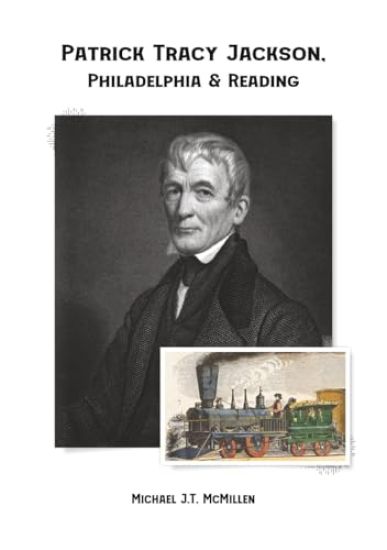
Patrick Tracy Jackson, Philadelphia & Reading

Patrick Tracy Jackson, Philadelphia & Reading

Michael J T McMillen

River Stone Publishing Group
2025
pokkari
After the Panic of 1837, the Locks & Canals machine shop had little work; it was to be sold or converted to a twist mill. The L&C treasurer, Patrick Tracy Jackson, strove to keep the shop busy pending sale or conversion. An 1841 plea to Jackson from Elihu Chauncey, president of the Philadelphia & Reading railroad, seemed salvation. Despite incomplete infrastructure, the P&R would begin operating in 1842. It urgently needed coal cars and locomotives to carry anthracite from Pennsylvania fields to Philadelphia. But its financial situation was dire, its debt in default, its assets being seized by sheriffs. It struggled to borrow. Its bridges suffered arson; its trains were derailed. Statutory completion deadlines loomed. Despite the risks, L&C built P&R cars and engines.There were conditions to award of the teased building contracts. Chauncey wanted L&C to make loans to the P&R. L&C had no interest in lending. Jackson sought P&R equity enabling participation in two infant industries: railroads and coal. Chauncey concocted a surreptitious scheme to acquire P&R stock from the Bank of the United States for sale to L&C, thereby diminishing the bank's power over the P&R.Nine months later, the P&R and L&C entered into the 1842 Running Gear Contract for running gear for wood jimmies. Developing a financial structure for the locomotives transaction consumed a year: the Engines Contract for locomotives and coal cars was signed in 1843. For the contracts, Jackson developed unique financial structures to protect L&C, as builder and financier, while allowing P&R use of the equipment for revenue generation. How could L&C sell equipment to, and ensure receipt and retention of payments from, an insolvent railroad (the P&R) that had not yet, or had only recently, commenced operations, during a severe economic depression or other adverse financial circumstances?The transaction went badly. Neither Jackson nor the P&R anticipated new iron coal cars or Baldwin's flexible beam truck: they rendered small L&C engines inadequate. Builders of large engines were paid; L&C received little. Payment defaults were continuous (for years), diminishing L&C's ability to sell the machine shop.This is a story of desperation, debt, and default: of balancing on the brink of bankruptcy. Jackson began with payment admonitions, eventually including favonian, then whetted, threats of resort to legal remedies. L&C acquired P&R stock and bonds and aligned with P&R stockholders and bond holders. His focus expanded beyond the equipment debt to the P&R's financial health, especially elimination of floating debt. In 1845, L&C and P&R bond holders initiated one of the first audits of managerial custodianship in U.S. corporate history. A Pennsylvania law was enacted allowing bond holders voting rights on a parity with stockholders.When further efforts at suasion and blandishment failed, Jackson sought legal advice from the eminent Philadelphia lawyer Horace Binney. Binney and Jackson developed an elegant four-step plan to take control of the trusts and debt under the Rolling Stock Contracts and neutralize the P&R. The plan derived from contract terms, threats of legal remedies (including personal liability for trustees), and extra-legal mechanisms. Within two months, L&C took control of the remedies relating to the P&R debt from the trustees, neutralized the P&R, and forced a P&R financial restructuring. Its value enhanced, L&C rid itself of the P&R debt. But more was needed.
Patrick Tracy Jackson, Philadelphia & Reading

Patrick Tracy Jackson, Philadelphia & Reading

Michael J T McMillen

River Stone Publishing Group
2025
pokkari
After the Panic of 1837, the Locks & Canals machine shop had little work; it was to be sold or converted to a twist mill. The L&C treasurer, Patrick Tracy Jackson, strove to keep the shop busy pending sale or conversion. An 1841 plea to Jackson from Elihu Chauncey, president of the Philadelphia & Reading railroad, seemed salvation. Despite incomplete infrastructure, the P&R would begin operating in 1842. It urgently needed coal cars and locomotives to carry anthracite from Pennsylvania fields to Philadelphia. But its financial situation was dire, its debt in default, its assets being seized by sheriffs. It struggled to borrow. Its bridges suffered arson; its trains were derailed. Statutory completion deadlines loomed. Despite the risks, L&C built P&R cars and engines.There were conditions to award of the teased building contracts. Chauncey wanted L&C to make loans to the P&R. L&C had no interest in lending. Jackson sought P&R equity enabling participation in two infant industries: railroads and coal. Chauncey concocted a surreptitious scheme to acquire P&R stock from the Bank of the United States for sale to L&C, thereby diminishing the bank's power over the P&R.Nine months later, the P&R and L&C entered into the 1842 Running Gear Contract for running gear for wood jimmies. Developing a financial structure for the locomotives transaction consumed a year: the Engines Contract for locomotives and coal cars was signed in 1843. For the contracts, Jackson developed unique financial structures to protect L&C, as builder and financier, while allowing P&R use of the equipment for revenue generation. How could L&C sell equipment to, and ensure receipt and retention of payments from, an insolvent railroad (the P&R) that had not yet, or had only recently, commenced operations, during a severe economic depression or other adverse financial circumstances?The transaction went badly. Neither Jackson nor the P&R anticipated new iron coal cars or Baldwin's flexible beam truck: they rendered small L&C engines inadequate. Builders of large engines were paid; L&C received little. Payment defaults were continuous (for years), diminishing L&C's ability to sell the machine shop.This is a story of desperation, debt, and default: of balancing on the brink of bankruptcy. Jackson began with payment admonitions, eventually including favonian, then whetted, threats of resort to legal remedies. L&C acquired P&R stock and bonds and aligned with P&R stockholders and bond holders. His focus expanded beyond the equipment debt to the P&R's financial health, especially elimination of floating debt. In 1845, L&C and P&R bond holders initiated one of the first audits of managerial custodianship in U.S. corporate history. A Pennsylvania law was enacted allowing bond holders voting rights on a parity with stockholders.When further efforts at suasion and blandishment failed, Jackson sought legal advice from the eminent Philadelphia lawyer Horace Binney. Binney and Jackson developed an elegant four-step plan to take control of the trusts and debt under the Rolling Stock Contracts and neutralize the P&R. The plan derived from contract terms, threats of legal remedies (including personal liability for trustees), and extra-legal mechanisms. Within two months, L&C took control of the remedies relating to the P&R debt from the trustees, neutralized the P&R, and forced a P&R financial restructuring. Its value enhanced, L&C rid itself of the P&R debt. But more was needed.

Patrick Tracy Jackson, Philadelphia & Reading

Patrick Tracy Jackson, Philadelphia & Reading

Michael J T McMillen

River Stone Publishing Group
2025
sidottu
After the Panic of 1837, the Locks & Canals machine shop had little work; it was to be sold or converted to a twist mill. The L&C treasurer, Patrick Tracy Jackson, strove to keep the shop busy pending sale or conversion. An 1841 plea to Jackson from Elihu Chauncey, president of the Philadelphia & Reading railroad, seemed salvation. Despite incomplete infrastructure, the P&R would begin operating in 1842. It urgently needed coal cars and locomotives to carry anthracite from Pennsylvania fields to Philadelphia. But its financial situation was dire, its debt in default, its assets being seized by sheriffs. It struggled to borrow. Its bridges suffered arson; its trains were derailed. Statutory completion deadlines loomed. Despite the risks, L&C built P&R cars and engines.There were conditions to award of the teased building contracts. Chauncey wanted L&C to make loans to the P&R. L&C had no interest in lending. Jackson sought P&R equity enabling participation in two infant industries: railroads and coal. Chauncey concocted a surreptitious scheme to acquire P&R stock from the Bank of the United States for sale to L&C, thereby diminishing the bank's power over the P&R.Nine months later, the P&R and L&C entered into the 1842 Running Gear Contract for running gear for wood jimmies. Developing a financial structure for the locomotives transaction consumed a year: the Engines Contract for locomotives and coal cars was signed in 1843. For the contracts, Jackson developed unique financial structures to protect L&C, as builder and financier, while allowing P&R use of the equipment for revenue generation. How could L&C sell equipment to, and ensure receipt and retention of payments from, an insolvent railroad (the P&R) that had not yet, or had only recently, commenced operations, during a severe economic depression or other adverse financial circumstances?The transaction went badly. Neither Jackson nor the P&R anticipated new iron coal cars or Baldwin's flexible beam truck: they rendered small L&C engines inadequate. Builders of large engines were paid; L&C received little. Payment defaults were continuous (for years), diminishing L&C's ability to sell the machine shop.This is a story of desperation, debt, and default: of balancing on the brink of bankruptcy. Jackson began with payment admonitions, eventually including favonian, then whetted, threats of resort to legal remedies. L&C acquired P&R stock and bonds and aligned with P&R stockholders and bond holders. His focus expanded beyond the equipment debt to the P&R's financial health, especially elimination of floating debt. In 1845, L&C and P&R bond holders initiated one of the first audits of managerial custodianship in U.S. corporate history. A Pennsylvania law was enacted allowing bond holders voting rights on a parity with stockholders.When further efforts at suasion and blandishment failed, Jackson sought legal advice from the eminent Philadelphia lawyer Horace Binney. Binney and Jackson developed an elegant four-step plan to take control of the trusts and debt under the Rolling Stock Contracts and neutralize the P&R. The plan derived from contract terms, threats of legal remedies (including personal liability for trustees), and extra-legal mechanisms. Within two months, L&C took control of the remedies relating to the P&R debt from the trustees, neutralized the P&R, and forced a P&R financial restructuring. Its value enhanced, L&C rid itself of the P&R debt. But more was needed.
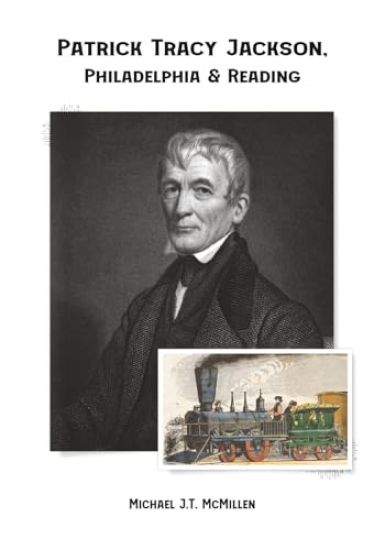
Patrick Tracy Jackson, Philadelphia & Reading

Patrick Tracy Jackson, Philadelphia & Reading

Michael J T McMillen

River Stone Publishing Group
2025
pokkari
After the Panic of 1837, the Locks & Canals machine shop had little work; it was to be sold or converted to a twist mill. The L&C treasurer, Patrick Tracy Jackson, strove to keep the shop busy pending sale or conversion. An 1841 plea to Jackson from Elihu Chauncey, president of the Philadelphia & Reading railroad, seemed salvation. Despite incomplete infrastructure, the P&R would begin operating in 1842. It urgently needed coal cars and locomotives to carry anthracite from Pennsylvania fields to Philadelphia. But its financial situation was dire, its debt in default, its assets being seized by sheriffs. It struggled to borrow. Its bridges suffered arson; its trains were derailed. Statutory completion deadlines loomed. Despite the risks, L&C built P&R cars and engines.There were conditions to award of the teased building contracts. Chauncey wanted L&C to make loans to the P&R. L&C had no interest in lending. Jackson sought P&R equity enabling participation in two infant industries: railroads and coal. Chauncey concocted a surreptitious scheme to acquire P&R stock from the Bank of the United States for sale to L&C, thereby diminishing the bank's power over the P&R.Nine months later, the P&R and L&C entered into the 1842 Running Gear Contract for running gear for wood jimmies. Developing a financial structure for the locomotives transaction consumed a year: the Engines Contract for locomotives and coal cars was signed in 1843. For the contracts, Jackson developed unique financial structures to protect L&C, as builder and financier, while allowing P&R use of the equipment for revenue generation. How could L&C sell equipment to, and ensure receipt and retention of payments from, an insolvent railroad (the P&R) that had not yet, or had only recently, commenced operations, during a severe economic depression or other adverse financial circumstances?The transaction went badly. Neither Jackson nor the P&R anticipated new iron coal cars or Baldwin's flexible beam truck: they rendered small L&C engines inadequate. Builders of large engines were paid; L&C received little. Payment defaults were continuous (for years), diminishing L&C's ability to sell the machine shop.This is a story of desperation, debt, and default: of balancing on the brink of bankruptcy. Jackson began with payment admonitions, eventually including favonian, then whetted, threats of resort to legal remedies. L&C acquired P&R stock and bonds and aligned with P&R stockholders and bond holders. His focus expanded beyond the equipment debt to the P&R's financial health, especially elimination of floating debt. In 1845, L&C and P&R bond holders initiated one of the first audits of managerial custodianship in U.S. corporate history. A Pennsylvania law was enacted allowing bond holders voting rights on a parity with stockholders.When further efforts at suasion and blandishment failed, Jackson sought legal advice from the eminent Philadelphia lawyer Horace Binney. Binney and Jackson developed an elegant four-step plan to take control of the trusts and debt under the Rolling Stock Contracts and neutralize the P&R. The plan derived from contract terms, threats of legal remedies (including personal liability for trustees), and extra-legal mechanisms. Within two months, L&C took control of the remedies relating to the P&R debt from the trustees, neutralized the P&R, and forced a P&R financial restructuring. Its value enhanced, L&C rid itself of the P&R debt. But more was needed.
Story of Tracy Beaker

Story of Tracy Beaker

Jacqueline Wilson

Vintage
2013
pokkari
Discover timeless favourites from The Jungle Book and Aliceâ??s Adventures in Wonderland to modern classics such as The Boy in the Striped Pyjamas and The Curious Incident of the Dog in the Night-Time.
The Legacy of Tracy J Putnam and H. Houston Merritt

The Legacy of Tracy J Putnam and H. Houston Merritt

Lewis P Rowland M.D.

Oxford University Press Inc
2008
sidottu
Tracy Putnam and H. Houston Merritt co-discovered the effectiveness of Dilantin in controlling epilepsy, a dramatic find that is still invaluable today. Now, in this engaging volume, eminent neurologist Lewis P. Rowland, MD, tells the unique story of these two key figures and their outstanding contributions to science. Rowland reveals that Putnam was a brilliant and imaginative experimentalist, but he clashed with others--including powerful neurosurgeons--and ended up dying in relative obscurity. Merritt was the practical one, an observer, fact-collector and recorder, a practitioner of what is now called "evidence-based medicine". From his early days Merritt was a popular and remarkable diagnostician, and went on to be one of the most influential neurologists in the United States, a man who trained a generation of neurologists. As Dr. Rowland recounts this dual biography, he also sheds light on the origins of modern neurology, drug development, the growth of neuroscience and clinical investigation, academic anti-Semitism, the difficult struggle to translate basic science into clinical practice, the need for controls in therapeutic trials, and many other issues.
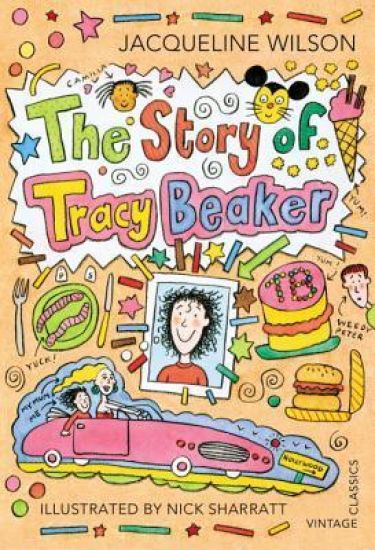
The Story of Tracy Beaker

The Story of Tracy Beaker

Jacqueline Wilson

Penguin Random House Children's UK
2025
sidottu
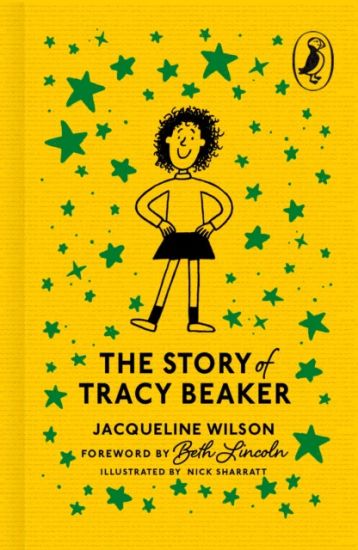
Celebrating 85 years of Sparking ImaginationsA beautiful clothbound edition of the much-loved modern classic The Story of Tracy Beaker. Bound in real cloth with two coloured foils and sprayed coloured edges, this deluxe edition is a perfect gift or collector’s item. Part of an eight book set published to mark the 85th anniversary of Puffin Books. With a brand-new foreword from Beth Lincoln.'I'm Tracy Beaker. This is a book all about me. I'd read it if I were you. It's the most incredible dynamic heart-rending story. Honest.'Tracy is ten years old. She lives in a Children's Home but would like a real home one day, with a real family. Meet Tracy, follow her story and share her hopes for the future in this beautifully observed, touching and often very funny tale, all told in Tracy's own words.Collect all eight titles in the Puffin Clothbound 85th Anniversary CollectionTHE STORY OF TRACY BEAKER by Jacqueline Wilson with a foreword by Beth LincolnDIARY OF A WIMPY KID by Jeff Kinney with a foreword by Dapo AdeolaCHARLOTTE’S WEB by E.B. White with a foreword by Jordan LeesMATILDA by Roald Dahl with a foreword by Robin StevensTHE EXTREMELY EMBARRASSING LIFE OF LOTTIE BROOKS by Katie Kirby with a foreword by Nadia ShireenPERCY JACKSON AND THE OLYMPIANS: THE LIGHTNING THIEF by Rick Riordan with a foreword by Nazneen Ahmed PathakPIG-HEART BOY by Malorie Blackman with a foreword by Adam KayWONDER by R.J. Palacio with a foreword by Tom Fletcher
The Story of Tracy Beaker

The Story of Tracy Beaker

Jacqueline Wilson

Penguin Random House Children's UK
2006
pokkari
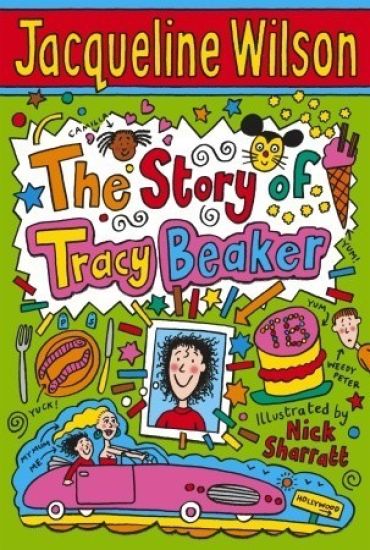
Tracy is back on TV in My Mum Tracy Beaker and The Beaker Girls! Watch the major TV series on CBBC and iPlayer. The original classic and much-loved tale featuring Jacqueline Wilson's most popular character, the one-and-only Tracy Beaker. 'I'm Tracy Beaker. This is a book all about me. I'd read it if I were you. It's the most incredible dynamic heart-rending story. Honest.'Tracy is ten years old. She lives in a Children's Home but would like a real home one day, with a real family. Meet Tracy, follow her story and share her hopes for the future in this beautifully observed, touching and often very funny tale, all told in Tracy's own words.'Tracy is lively and spirited and her narrative funny and moving' - The Bookseller
My Mum Tracy Beaker

My Mum Tracy Beaker

Jacqueline Wilson

Yearling (imprint of Random House Children's Books)
2019
pokkari
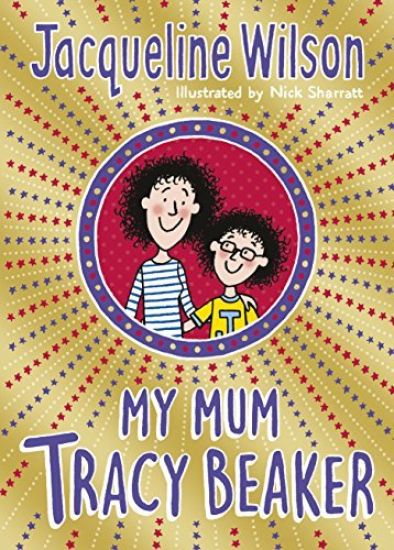
Everyone's favourite feisty heroine - Tracy Beaker is BACK in this entertaining novel featuring her daughter Jess. Now a major TV series on CBBC and iPlayer.There is no hero fiercer or more iconic than Tracy Beaker.Now meet Tracy's daughter, Jess in this heart-warming tale of unconventional families and unconditional love.Jess and Tracy Beaker are the perfect team. They do everything together. Jess thinks Tracy is the best mum ever, even when she shouts at her teachers! Tracy has made the perfect home for Jess, leaving The Dumping Ground far behind her. Yes, it's tiny, a bit mouldy and the Duke Estate is a bit scary. But it's their happy home.Until Sean Godfrey, Tracy's rich boyfriend, whisks them away to a whirlwind life of fast cars and celebrity stardom. Will Jess's brilliant mum turn into a new person altogether?And will Tracy realise that her childhood dream might not be what she needs after all?_____Shortlisted in the UK Author Category in the National Book Awards 2018! One of The Observer's Best Children's Books of 2018!
The History of Camp Tracy: Japanese WWII POWs and the Future of Strategic Interrogation
The United States' Global War on Terrorism is in its sixth year with no end in sight. Intelligence-gathering is crucial to the successful prosecution of this struggle. These days, though, the mere mentioning of detention and interrogation evokes scandalous and degrading images. So we have the dilemma of determining how the United States can successfully obtain necessary information from a foreign and hostile enemy without alienating its own citizenry and the international community. Part of the resolution to that dilemma may lie right here. In his graphic account of Camp Tracy, US Army Major Alexander D. Corbin looks back at a time when the United States fought and won against an enemy that was profoundly different from Americans in appearance, culture, and religion. His in-depth analysis illustrates many parallels between this past enemy and today's adversaries. It argues convincingly that the successful tactics and techniques of the past can still be applied today and in the future.
Lethal Injections: Elizabeth Tracy Mae Wettlaufer, Canada's Serial Killer Nurse
Canada's Serial Killer Nurse Tells All "I had been killing people using an insulin overdose, okay." That's what registered nurse Elizabeth Wettlaufer told her friends, her pastor, and her doctors. On October 5, 2016, in Woodstock, Ontario, she told the police all about it. World War II veteran James Silcox was "the first one to die as a result of what I did." After killing him with an insulin overdose, the nurse went home and played computer games. "The doctor wants you to have your vitamin shot," the nurse told Maurice Granat before administering the insulin overdose that killed him. After giving Helen Matheson her blueberry pie, nurse Wettlaufer overdosed the woman. "After I did it, I got that laughter," she told police, and she laughed when Helen died. Nurse Wettlaufer told Mary Zurawinski the injection was "for pain" but it killed her as intended. And after getting the news, nurse Wettlaufer departed on a Caribbean cruise. As the nurse told police, Gladys Millard took longer to die than some others. "Take your medicine," the registered nurse told Arpad Horvath as she injected the insulin overdose that killed him. Nurse Wettlaufer also told police she killed Maureen Pickering and Helen Young. She told police how, when and why she killed her victims. The nurse told police she attempted to kill at least four others, and that she never "got caught." What would be the serial killer's penalty for inflicting so much death and suffering? Read all about it in Lethal Injections.